
TL;DR:
- UV lights in HVAC systems enhance indoor air quality by targeting microorganisms but require proper design, installation, and maintenance. They function best as part of a layered approach including filtration and ventilation, not as standalone solutions. Regular upkeep and professional assessment ensure optimal performance and safety for Kansas City homeowners.
UV lights built into HVAC systems have become one of the most talked-about upgrades in home air quality, and it’s easy to see why. Kansas City homeowners dealing with humidity, seasonal allergens, and tightly sealed homes are looking for real solutions. But there’s a widespread misunderstanding that UV lights alone can fully clean the air in your home. The reality is more practical and more powerful: UV technology works best as part of a carefully planned, multi-layer IAQ approach that includes filtration, ventilation, and routine maintenance. This article breaks down exactly what UV lights do, how well they perform, and how to use them effectively in your Kansas City home.
Table of Contents
- What do UV lights actually do in HVAC systems?
- How effective are HVAC UV lights for indoor air quality?
- Why UV lights are just one layer in your air quality plan
- Safety and maintenance: Getting HVAC UV right in your Kansas City home
- A Kansas City expert’s take: What most guides miss about HVAC UV
- Explore indoor air upgrades with Kansas City experts
- Frequently asked questions
Key Takeaways
| Point | Details |
|---|---|
| UV lights target microbes | Coil and upper-air UV remove mold, bacteria, and some viruses in HVAC systems. |
| Effectiveness needs proper dose | UV performance depends on installation, dosage, and regular upkeep. |
| Multi-layer approach works best | ASHRAE guidelines say UV is most effective when combined with quality filtration and ventilation. |
| Safety matters | Proper commissioning and safe exposure levels are crucial for family health. |
| Expert help ensures results | Consulting professionals improves both air quality outcomes and home safety for Kansas City residents. |
What do UV lights actually do in HVAC systems?
Now that you know UV lights aren’t a standalone solution, let’s break down exactly what they do and where they work in your Kansas City home.
HVAC UV systems use a technology called UVGI, which stands for ultraviolet germicidal irradiation. This uses UV-C light, a specific wavelength of ultraviolet energy, to damage the DNA of microorganisms. When a microbe’s DNA is disrupted, it can no longer reproduce or cause harm. That’s the core mechanism behind every UV light system sold for home HVAC use.
There are two main approaches, and they target different problems in different locations. Two common HVAC/IAQ UVGI approaches are coil UV for preventing microbial growth on wet cooling coils and drain pans, and in-duct or upper-room UV to inactivate pathogens in the air stream or occupied-room air. Understanding which approach fits your situation is the starting point for any smart UV investment.
Coil UV is the more common residential application. Your air conditioning system’s cooling coil is a dark, damp environment that mold and bacteria love. A UV lamp mounted in the air handler shines continuously on the coil surface, keeping it clean between professional service visits.
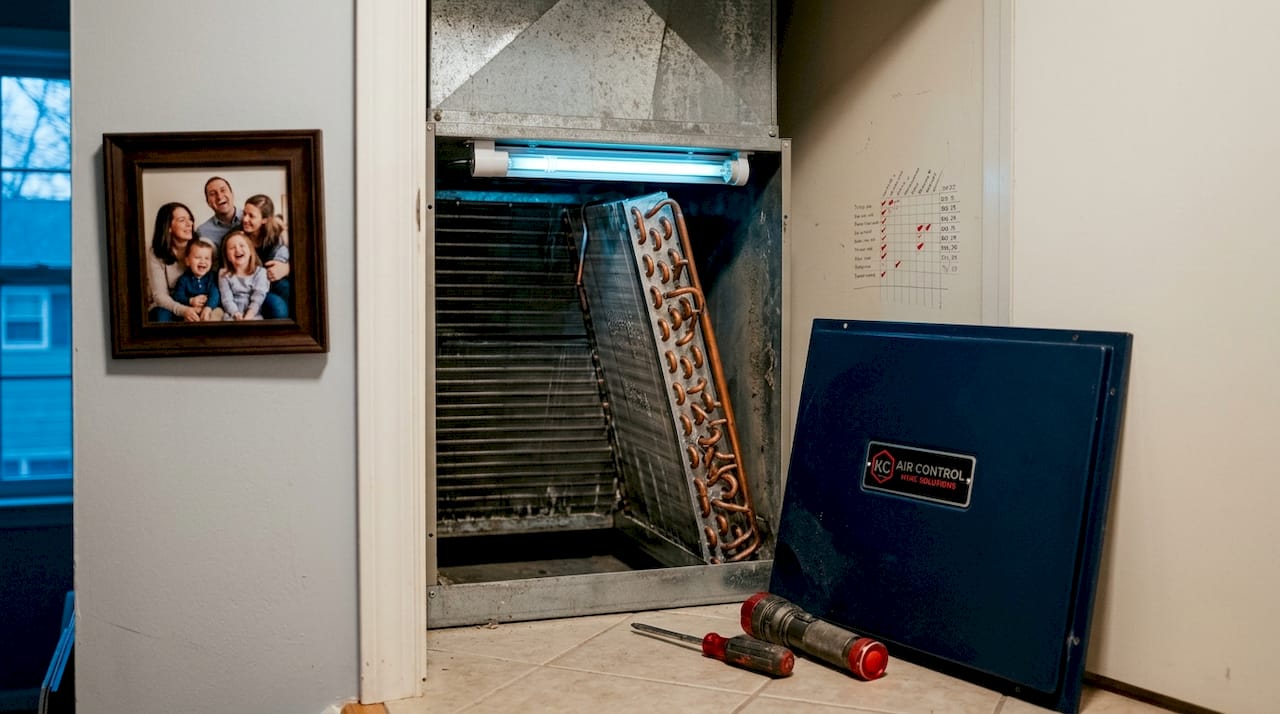
In-duct UV installs lights inside the ductwork. As air cycles through your system, it passes through the UV-treated zone. This approach targets airborne pathogens before they reach your living spaces.
Here’s a quick summary of how the three main types compare:
| UV type | Where it’s installed | What it targets | Best use case |
|---|---|---|---|
| Coil UV | Inside air handler, aimed at coil | Mold, biofilm, bacteria on coil surface | Preventing coil contamination |
| In-duct UV | Inside ductwork | Airborne bacteria, some viruses | Reducing airborne pathogen load |
| Upper-room UV | High on walls in occupied rooms | Airborne pathogens in room air | Commercial and some advanced residential |
The most common microbial threats that UVGI can address in home HVAC settings include:
- Mold spores accumulating on coil and drain pan surfaces
- Common household bacteria circulating through the air system
- Certain viruses that are sensitive to UV-C wavelengths
- Airborne biofilm-forming organisms that reduce HVAC efficiency
One important clarification: UV lights do not filter particles like dust, pet dander, or pollen. That job belongs to your air filter. UV targets living microorganisms. Both play different, essential roles in your home’s air quality system.
How effective are HVAC UV lights for indoor air quality?
Understanding the different UV approaches, it’s essential to see how effective these lights actually are, and what it takes to get results in a real-world setting.
Effectiveness is not just about turning a UV lamp on and walking away. It comes down to UV dose, which is the combination of light intensity (measured in microwatts per square centimeter, or µW/cm²) and the amount of time a microorganism is exposed to that light. A UV system that lacks the right dose for your specific application simply won’t deliver.
UV-C coil treatment is dose-dependent, using irradiance and placement concepts to address mold and biofilm risk on cooling coils. For residential coil UV applications, the industry commonly targets a minimum irradiance in the range of 50 to 100 µW/cm² measured at the coil surface. Anything below that threshold may not reliably prevent mold growth, especially during Kansas City’s humid summer months when coils are running constantly.
For in-duct and upper-room UV applications, the dose requirements are different and so are the safety standards. Upper-room UVGI guidance emphasizes proper design to create a defined upper-zone irradiation region while protecting occupants, with recommended fluence ranges for effective pathogen control.
Safe exposure standard: In spaces where people are present, occupant-zone UV-C exposure must remain below 0.2 µW/cm² to prevent harm to skin and eyes. This is a critical design requirement, not an afterthought.
Here’s how the dose requirements and safety thresholds compare between the two main application types:
| UV application | Target irradiance at treatment zone | Occupant-zone safety limit | Typical residential use |
|---|---|---|---|
| Coil surface UV | 50 to 100 µW/cm² at coil | N/A (no occupant exposure) | Very common |
| In-duct UV | Varies by duct size and airflow | N/A (sealed system) | Common |
| Upper-room UV | 30 to 50 µW/cm² in upper zone | Below 0.2 µW/cm² at occupant level | Less common residentially |
Pro Tip: When evaluating any UV system for your home, ask your HVAC technician for documentation on expected irradiance levels at the target surface. A reputable installer can show you the manufacturer’s photometric data to confirm the system will meet effective dose thresholds in your specific air handler setup.
One factor that Kansas City homeowners often overlook is how your system’s home HVAC system effectiveness directly affects UV performance. A system with restricted airflow, dirty filters, or damaged ductwork won’t move air through the UV zone consistently, reducing how much exposure microorganisms actually receive.
Why UV lights are just one layer in your air quality plan
So, how should Kansas City homeowners realistically use UV lights in their air quality strategy?
The honest answer is this: UV lights should be a valued component, not the centerpiece. UVGI is not a replacement for ventilation and filtration. ASHRAE Standard 241 frames infectious aerosol control as requiring an equivalent clean airflow achieved by combinations of ventilation, mechanical filtration, and air cleaning technologies, UV included. This is the national standard that guides professional HVAC design, and it’s the framework we follow for every IAQ recommendation we make.
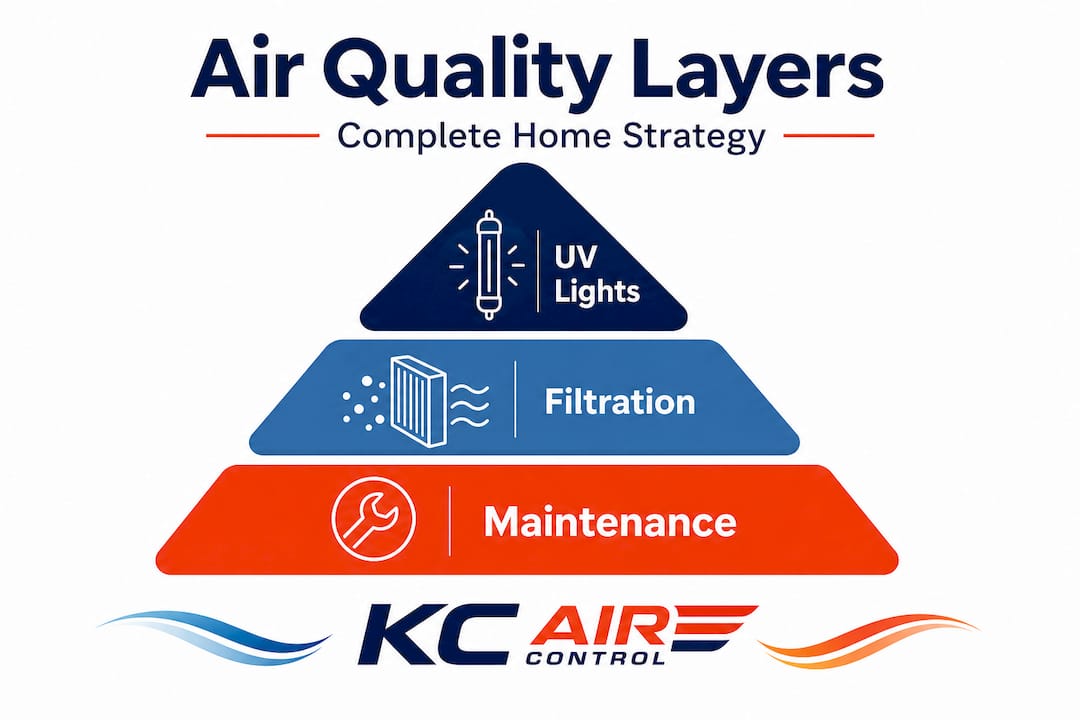
Think of your home’s air quality plan as having three essential pillars:
- UV air cleaning: Targets and inactivates biological threats like mold and bacteria that filters can’t neutralize on their own
- High-quality filtration: Removes particulate matter including dust, pollen, pet dander, and mold spores before they recirculate; look for MERV 11 to 13 filters for residential use without restricting airflow
- Proper ventilation: Brings fresh outdoor air in and dilutes indoor pollutants; this is especially important in Kansas City where windows stay closed during extreme heat and cold
These three elements work together. UV handles the microbial threat that filtration alone misses. Filtration handles particles that UV cannot inactivate. Ventilation manages the overall concentration of airborne contaminants. Remove any one pillar and the other two work harder with less overall effect.
Kansas City’s seasonal climate creates specific challenges for indoor air quality. During summer, high outdoor humidity drives up indoor moisture levels, creating ideal conditions for mold growth on HVAC components. During winter, homes are tightly sealed for weeks at a time, concentrating any airborne contaminants that are present. A layered approach to indoor air quality solutions is the right fit for this environment, not a single-technology fix.
Pro Tip: Staying consistent with your HVAC maintenance checklist matters just as much as the technology you install. Replacing filters on schedule and keeping ductwork clean ensures your UV lights are working in a system that can actually deliver clean air throughout your home.
Safety and maintenance: Getting HVAC UV right in your Kansas City home
After understanding where UV fits, you need to ensure your system is safe and actually delivering cleaner air.
UV-C light is powerful enough to damage human skin and eyes with direct exposure. That’s why installation, commissioning, and ongoing maintenance all require careful attention. Upper-room UVGI success hinges on verified performance and safety commissioning, including documenting equivalent clean airflow and checking occupant-zone exposure, not simply installing a UV fixture and hoping for the best.
Here’s how a safe UV system integration should look from start to finish:
- Assessment: A qualified technician evaluates your home’s HVAC layout, airflow patterns, and current air quality concerns to determine the right UV type and placement for your specific system.
- Design: The technician selects a UV product with documented irradiance output and positions it to deliver the required dose at the target surface or air stream while keeping UV out of occupied zones.
- Installation: The UV system is mounted and wired according to manufacturer specifications, with all access panels and safety interlocks in place to prevent accidental exposure during servicing.
- Testing and commissioning: Irradiance levels are verified using a UV meter, and occupant-zone exposure is confirmed to be within safe limits. This documentation is your proof that the system is working as designed.
- Ongoing monitoring: The technician establishes a maintenance schedule, including when bulbs need replacement and what signs to watch for that indicate reduced performance.
For maintenance, here’s what a solid routine looks like for residential UV systems:
- Bulb replacement: Most UV lamps lose significant output after 9,000 to 12,000 hours of operation, typically 12 to 24 months for a continuously running system. Replacing on schedule is essential because the lamp may still glow while output has dropped below effective levels.
- Visual inspection: Check the lamp monthly for physical damage, discoloration, or debris buildup on the lamp surface that could block UV output.
- Lens and reflector cleaning: Some systems use a quartz sleeve or reflector to direct UV output. These surfaces should be cleaned during annual HVAC service to maintain efficiency.
- System documentation review: Compare current performance against the original commissioning records at each annual inspection to catch any decline in system effectiveness early.
Pro Tip: Keep a log of your UV bulb replacement dates and any service notes from your technician. Documenting system performance over time gives you clear evidence that your investment is working and makes it easier to schedule a regular HVAC inspection at the right intervals. You can also review UV bulb replacement tips and explore professional HVAC installation guidance for deeper reference.
A Kansas City expert’s take: What most guides miss about HVAC UV
Let’s step back and share our local, real-world experience on what truly matters with HVAC UV lights.
After working with Kansas City homeowners for over 70 years, we’ve seen a clear pattern: UV systems that are bought online, self-installed, and never serviced consistently underperform. Homeowners invest in the technology expecting results, then assume the system is working because the lamp is lit. That assumption is where most UV investments fail.
The uncomfortable truth is that UV solutions in homes rarely reach their full potential when treated as plug-and-play upgrades. UV-C output degrades over time. Lamps installed in the wrong position relative to the coil surface or airflow may not achieve effective dose levels. And without any commissioning or measurement, there’s no way to know if your UV system is protecting your family or just adding to your electric bill.
Our HVAC tune-up advice consistently points to the same conclusion: long-term indoor air quality improvement requires commitment to maintenance, system integration, and periodic reassessment. This is especially true for UV systems, where the visible glow of a lamp gives false confidence that everything is working as intended.
Most homeowners also underestimate how much the surrounding HVAC system affects UV performance. A UV lamp in a system with a clogged filter, leaky ducts, or an undersized blower won’t deliver clean air regardless of its rated output. That’s why we always evaluate the full system before recommending any air quality upgrade.
The right mindset is to treat UV as a precision tool in a larger strategy, not a one-time purchase that solves everything. When it’s properly installed, correctly sized, and regularly maintained as part of a broader IAQ plan, UVGI genuinely improves your home’s air. That’s the standard we hold every installation to, and it’s the standard you should expect from any HVAC provider you trust.
Explore indoor air upgrades with Kansas City experts
If you’re ready to apply what you’ve learned, local professionals can help you build a safer, healthier home environment. Getting a professional home IAQ evaluation is the best first step to understanding what your home actually needs.

At KC Air Control, our team can assess your current HVAC setup, recommend the right UV solution for your home’s specific conditions, and handle installation and commissioning the right way. We also provide duct cleaning services to complement UV installation, removing accumulated debris that could otherwise limit air quality improvements. Our indoor air quality experts are ready to build a complete air quality plan around your home, your budget, and your family’s health needs. Whether you’re starting from scratch or upgrading an existing system, explore our full range of HVAC home comfort solutions to see how we can help you breathe easier year-round.
Frequently asked questions
Can UV lights in my HVAC system kill mold and viruses?
Yes, UV lights can help kill or inactivate mold, bacteria, and some viruses on coils and in the air when properly installed and maintained. UVGI approaches include both coil UV for preventing microbial growth and in-duct UV for inactivating pathogens in the air stream.
Are HVAC UV lights safe for my family and pets?
When designed and installed to industry standards, occupant-zone exposure is kept well below safe limits, making HVAC UV systems safe. Proper design guidance creates a defined upper-zone irradiation region specifically to protect occupants from harmful UV-C exposure.
Do UV lights replace the need for air filters in my HVAC system?
No, UV lights are not a replacement for filters; using both together is recommended for cleaner, healthier air. ASHRAE Standard 241 specifically requires combining ventilation, mechanical filtration, and UV air cleaning for effective infectious aerosol control.
How often do HVAC UV bulbs need to be replaced?
Most UV bulbs need replacement every 12 to 24 months for optimal performance, but always follow the manufacturer’s guidance. Even when a bulb still glows, UV-C output may have dropped below the level needed for effective microbial control.
Do UV lights increase my HVAC energy bills?
The energy use is minimal compared to overall HVAC operating costs, typically equivalent to a standard light bulb. Added benefits, such as cleaner coils and reduced biofilm buildup, can actually improve system efficiency and reduce the frequency of professional coil cleaning services.
Recommended
- HVAC impact on Kansas City rentals: comfort, compliance, ROI – KC Air Control – Heating & Cooling
- Most Common HVAC Questions Kansas City Homeowners Ask – KC Air Control – Heating & Cooling
- Optimize your HVAC maintenance workflow for KC homes – KC Air Control – Heating & Cooling
- HVAC inspections for Kansas City homeowners: 2026 guide – KC Air Control – Heating & Cooling