

TL;DR:
- Many homeowners can save money by repairing their existing AC rather than rushing to replace it, especially if it is under 10 years old. Proper sizing and professional installation are essential for maximizing efficiency and comfort with a new system, along with taking advantage of local rebates and incentives. Conducting regular maintenance and inspections helps identify fixable issues early, avoiding unnecessary expenses and ensuring optimal performance.
Many homeowners assume that a sweaty, uncomfortable summer means one thing: time to buy a new air conditioner. But that’s not always the right call. Homeowners often upgrade an AC to reduce energy use and improve comfort, especially when the existing system is older or has rising bills. What most people don’t realize is that smarter decisions, backed by the right information, can save you thousands of dollars, whether that means repairing what you have or upgrading at exactly the right time with the right system.
Table of Contents
- When is it time to upgrade your AC?
- Efficiency, comfort, and the real benefits of upgrading
- Avoiding common pitfalls: The importance of proper sizing and installation
- How rebates and incentives make upgrading affordable in Kansas City
- The real reason most homeowners get AC upgrades wrong
- Upgrade your comfort and efficiency with Kansas City AC experts
- Frequently asked questions
Key Takeaways
| Point | Details |
|---|---|
| Address root cause first | Maintenance often solves comfort or cost issues before a full upgrade is needed. |
| Modern AC brings savings | Upgrading to an efficient, properly sized AC lowers energy bills and boosts comfort. |
| Proper installation is critical | Getting the right system and professional setup maximizes efficiency and avoids common errors. |
| Leverage Kansas City rebates | Local incentives and rebates can make new, high-efficiency ACs much more affordable. |
| Ask for a load calculation | A professional sizing assessment ensures the new system matches your home’s needs. |
When is it time to upgrade your AC?
Now that you know the common motivations for considering an upgrade, let’s distinguish maintenance needs from true replacement triggers. Not every warm house or high utility bill means your air conditioner needs to go. Before you spend money on a new system, it’s worth knowing what the real warning signs look like.
True signs that replacement makes sense:
- Your system is more than 10 years old and losing efficiency year over year
- You’re calling for repairs two or more times per cooling season
- Your energy bills keep climbing even though your usage hasn’t changed
- The system uses older refrigerants, such as R-22, which are being phased out due to environmental regulations
- Some rooms cool well while others stay warm and stuffy, regardless of thermostat settings
These are the situations where replacement starts making financial sense. An older system working harder to do less is costing you money every month it runs.
That said, many comfort problems have nothing to do with the equipment’s age or condition. Before deciding on replacement, homeowners should check simple causes like a dirty filter and schedule a tune-up. Clogged filters, blocked vents, and low refrigerant levels are all fixable problems that can restore your system’s performance at a fraction of the cost of a new unit.
“Comfort issues often come from maintenance or airflow problems, not just the unit itself. A thorough inspection can tell you what’s actually wrong before you commit to a major purchase.” — HVAC service professional insight
Regular AC tune-ups can catch small problems before they become expensive ones. A professional technician will clean the coils, check refrigerant levels, inspect electrical connections, and confirm the system is running at peak efficiency. Understanding HVAC tune-up benefits is key to seeing why this step often comes before any discussion of replacement. You can also brush up on AC maintenance basics to understand what’s involved between annual service visits.
Pro Tip: If you notice reduced cooling or higher bills, schedule a diagnostic service call before assuming you need a new system. A trained technician can identify whether you’re dealing with a fixable issue or a genuine end-of-life situation. Knowing the signs you need HVAC repair helps you ask the right questions.
It’s also worth noting that roof condition and AC performance can be linked. Poor insulation from an aging roof can make your AC work overtime, creating comfort problems that have nothing to do with the equipment itself.
Efficiency, comfort, and the real benefits of upgrading
With a clearer idea of when replacement may be necessary, let’s examine the actual benefits you get from a modern AC system. When you do upgrade, the difference is not just about staying cooler. It’s about your whole home working better.
Modern air conditioners are significantly more energy-efficient than systems made even a decade ago. Upgrading reduces energy use and improves comfort, particularly when an existing system is aging or driving up bills. Newer models use advanced compressor technology, variable-speed fans, and better refrigerants to deliver consistent temperatures throughout your home while using less electricity.
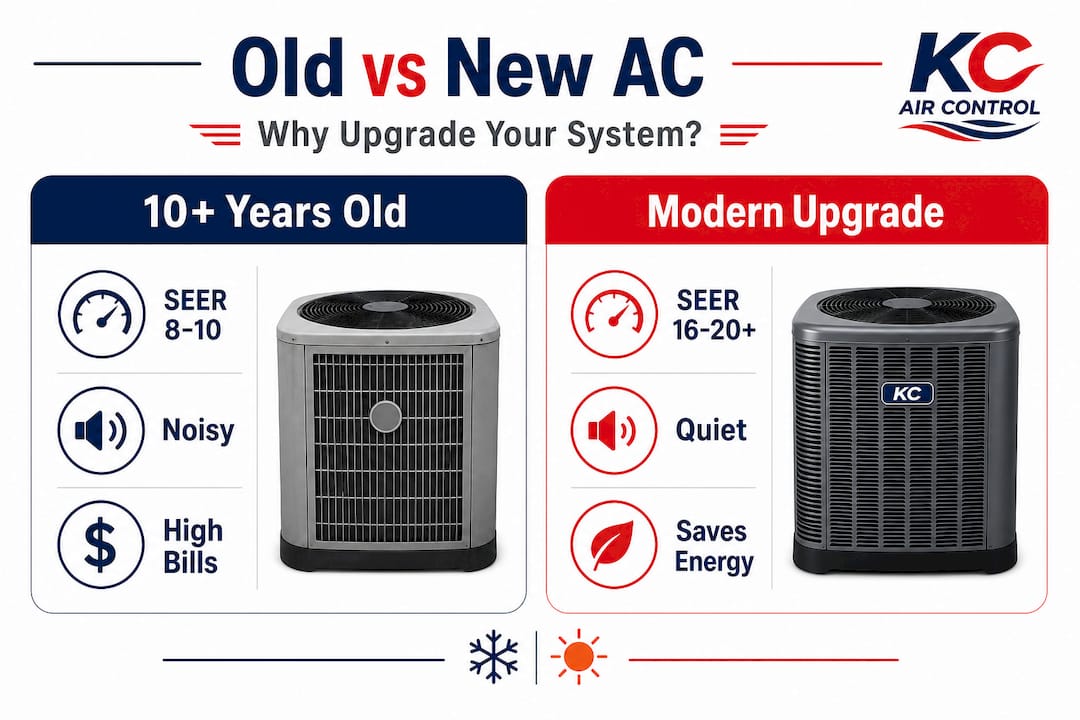
Equipment older than 10 years is often less efficient, more prone to failure, and may use refrigerants subject to ongoing regulatory changes, making replacement both financially and operationally attractive. This is not a sales pitch. It is a practical reality backed by utility data.
Key benefits of upgrading to a modern AC system:
- Lower monthly energy bills due to higher SEER (Seasonal Energy Efficiency Ratio) ratings
- More consistent room-to-room temperatures with better airflow management
- Quieter operation compared to older single-stage compressor systems
- Reduced environmental impact through the use of newer, cleaner refrigerants
- Better humidity control, which matters a lot during Kansas City summers
| Feature | Older system (10+ years) | Modern high-efficiency system |
|---|---|---|
| SEER rating | 8 to 10 | 16 to 20+ |
| Refrigerant type | R-22 (phased out) | R-410A or R-32 |
| Typical annual failure risk | Higher | Significantly lower |
| Monthly energy cost | Higher | 20 to 40% lower |
| Humidity control | Basic | Advanced |
This comparison makes the financial case clear. Pairing a new installation with a thorough energy-efficient HVAC guide helps you understand exactly what to look for in your next system. The long-term payoff from lower bills and better comfort is one of the most consistent reasons Kansas City homeowners decide to upgrade.
Avoiding common pitfalls: The importance of proper sizing and installation
While new equipment brings major benefits, those gains depend on making sure the system is properly matched to your home. Let’s look at sizing and installation issues, because this is where a lot of upgrades go sideways.
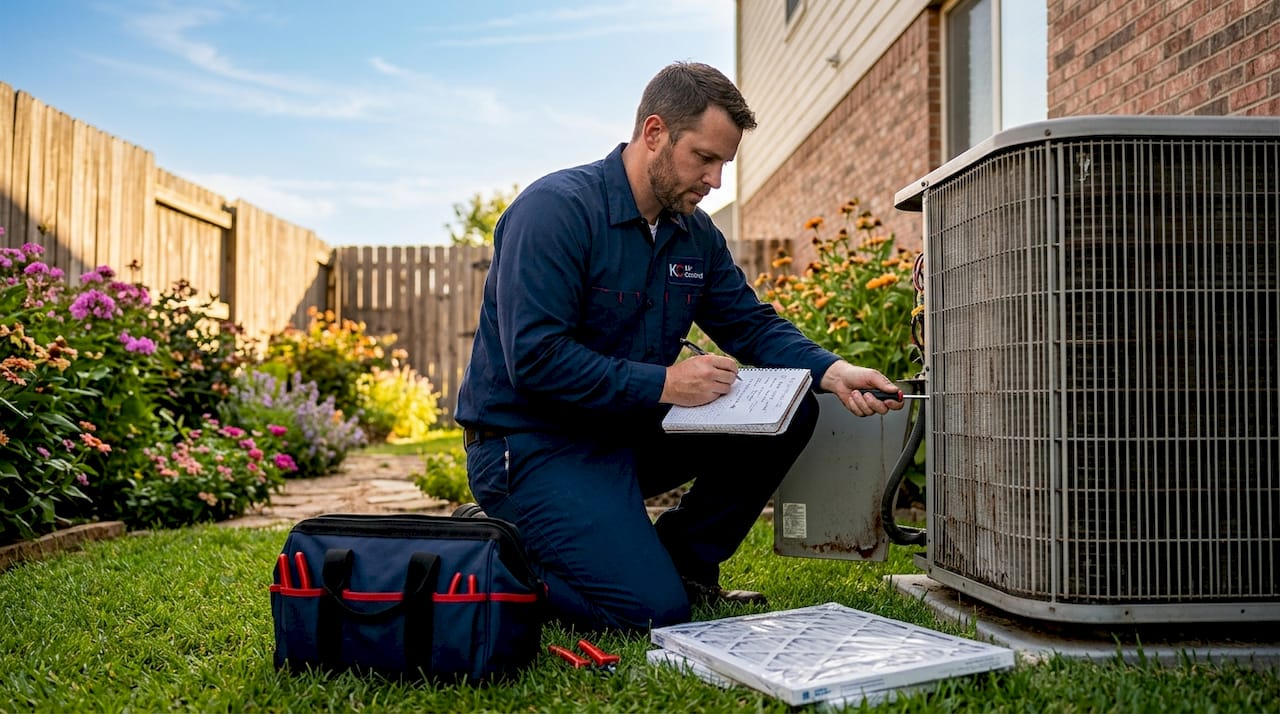
Here’s something most people don’t expect: you can buy the most efficient air conditioner on the market and still end up with uncomfortable rooms and high bills. How? By putting in the wrong size unit. Efficiency upgrades depend heavily on correct sizing and proper installation. Replacing with a more efficient unit can still waste energy if the system is too large or too small for your home.
An oversized AC will cool the air quickly but cycle off before it removes enough humidity. You end up with a cold, clammy house. An undersized unit runs constantly, never fully cools the space, and wears out faster. Neither scenario saves you money. Both cause discomfort.
Steps to ensure proper HVAC sizing and installation:
- Request a Manual J load calculation. This is the industry standard method for determining the right system size based on your home’s square footage, insulation, windows, and local climate.
- Ask your technician to inspect your ductwork. Leaky or undersized ducts can undermine even the best new equipment. Duct performance matters.
- Review the installation proposal carefully. Make sure it includes refrigerant line sizing, drain line routing, and electrical requirements specific to your home.
- Confirm your technician is licensed and certified. Improper installation voids manufacturer warranties and creates performance problems that are expensive to fix later.
- Schedule a post-installation check. A good HVAC company will return to verify airflow, temperatures, and system performance after installation is complete.
| Installation factor | Done correctly | Done incorrectly |
|---|---|---|
| System sizing | Efficient and comfortable | Short-cycling or underperforming |
| Ductwork inspection | Even airflow throughout home | Hot and cold spots persist |
| Refrigerant charge | Optimal efficiency | Higher bills, poor cooling |
| Electrical connections | Safe and reliable operation | Tripped breakers, component damage |
Pro Tip: Never let an HVAC contractor size your new system based only on your old system’s size. Your home’s load requirements may have changed due to added insulation, new windows, or home additions. Always request a written load calculation. A reliable HVAC installation guide can walk you through what a proper installation process should look like in Kansas City.
How rebates and incentives make upgrading affordable in Kansas City
Knowing the importance of proper installation, let’s see how local rebates and incentives can make upgrading surprisingly affordable in Kansas City. The upfront cost of a new air conditioner is the most common reason homeowners hesitate. But what many people don’t know is how much financial help is actually available right here in the metro area.
Utility programs in Kansas City can directly reduce the upfront cost of replacing your system with high-efficiency cooling equipment. This includes rebates tied to qualifying systems that meet specific efficiency thresholds. When you stack those utility rebates with manufacturer promotions and available federal tax credits for energy-efficient home improvements, the real out-of-pocket cost of upgrading drops considerably.
Evergy’s rebate program highlights:
Local utilities like Evergy offer rebates for high-efficiency HVAC equipment because older systems are less efficient and more failure-prone. Qualifying for those rebates typically involves meeting a few key requirements:
- The new system must meet a minimum SEER rating (often 15 or higher for central AC)
- Installation must be performed by a licensed, participating contractor
- You must submit a rebate application within a specified time window after installation
- The equipment must be new, not a refurbished or previously installed unit
- Some programs require pre-approval before installation begins, so timing matters
Statistic callout: Qualifying Kansas City area homeowners may receive rebates of $1,000 or more when replacing older systems with high-efficiency models through local utility programs. That’s meaningful money back in your pocket, on top of monthly savings from lower bills.
These programs change periodically, so working with an experienced local HVAC company gives you an advantage. We stay current on available HVAC special offers and help our customers navigate the rebate process from start to finish. Pairing a smart upgrade with practical energy-saving tips is how Kansas City homeowners get the most from their investment.
The real reason most homeowners get AC upgrades wrong
Even with all the technical information available, it’s easy to miss some crucial pitfalls and opportunities. Here’s what most guides don’t tell you, and what 70-plus years in this industry has taught us.
The most common mistake we see is homeowners replacing their AC before trying a simple fix. A system that isn’t cooling as well as it should may not need replacement at all. Maintenance and airflow checks such as replacing dirty filters or scheduling a tune-up can restore comfort without replacing equipment. That’s money staying in your pocket.
The second mistake is rushing the upgrade without getting the installation right. Homeowners focus on brand names and efficiency ratings but overlook the installation process itself. Correct sizing and home load evaluation are central to achieving the energy savings and comfort improvements the new system promises. A poorly installed high-efficiency system will perform worse than a properly installed mid-range one. Every time.
The third mistake, and arguably the most costly, is failing to check for rebates and incentives before committing. Homeowners leave real money on the table by not knowing what programs are available or missing application deadlines. In Kansas City, that can mean missing out on $1,000 or more in rebates that would have reduced the true cost of the upgrade significantly.
Our advice: get a second opinion before you commit to a replacement. Review the expert repair tips that tell you when repair is still the smarter choice. Ask your contractor to provide a written load calculation. And check with your utility company or a trusted local HVAC professional about what rebate programs are currently active.
The homeowners who make smart upgrades are the ones who take a breath, gather the right information, and then act with confidence. Rushing the decision almost always costs more in the long run, whether through a system that underperforms, a missed rebate, or an installation that creates new problems.
Upgrade your comfort and efficiency with Kansas City AC experts
If you’ve been thinking about upgrading your air conditioner, or wondering whether a repair might be enough, KC Air Control is here to help you sort it out. We’ve been serving Kansas City homeowners for more than 70 years, and we know what it takes to match the right solution to your home’s actual needs.
Our team handles everything from emergency HVAC repair options to full system upgrades, with expert guidance on local rebates built into our process. We make sure your new system is sized correctly, installed properly, and set up to deliver the savings and comfort you’re counting on. Not sure where to start? Schedule an AC tune-up to find out whether your current system still has life in it, or whether an upgrade makes more financial sense right now. Ready to explore your options and find energy-saving upgrades that qualify for local rebates? Contact us today and let’s build a plan that works for your home and your budget.
Frequently asked questions
Does upgrading my AC really lower my energy bills?
Yes, replacing old or inefficient units with a properly sized, efficient model can noticeably lower your bills. Homeowners who upgrade typically see reduced energy use and improved comfort, especially when the existing system is older or has been driving up costs.
What are signs I should replace instead of repair my AC?
Frequent breakdowns, rising energy bills, and equipment over 10 years old suggest replacement may be a smarter investment. Equipment older than 10 years is often less efficient, more prone to failure, and may use refrigerants facing regulatory changes.
Are there rebates for AC upgrades in Kansas City?
Yes, several programs offer rebates of $1,000 or more for qualifying high-efficiency air conditioning systems. Utility programs in Kansas City can directly reduce the upfront cost of replacing your system with qualifying high-efficiency equipment.
Can better maintenance delay the need for an upgrade?
Yes, filter changes and professional tune-ups can resolve many issues and restore comfort without replacement. Checking simple causes like a dirty filter before deciding on replacement is always the right first step.
Why does proper AC sizing matter so much?
If your new AC is too large or small, it can waste energy and reduce comfort even if it’s an efficient model. Correct sizing and installation are central to achieving the energy savings and comfort improvements a new system promises.
Recommended
- Why upgrade your HVAC? Boost comfort & cut energy bills – KC Air Control – Heating & Cooling
- Why upgrade heating systems? Unlock savings and comfort – KC Air Control – Heating & Cooling
- How HVAC systems optimize home comfort and energy efficiency – KC Air Control – Heating & Cooling
- Energy efficient HVAC: lower bills and better comfort – KC Air Control – Heating & Cooling