
TL;DR:
- High-efficiency HVAC systems can save homeowners 20-50% on energy costs annually.
- Proper installation, sizing, and maintenance are essential to maximize system performance and savings.
- Kansas City homeowners should consider SEER2 16+ systems, dual-fuel options, and available rebates.
Not all HVAC systems are created equal, and your energy bill proves it. Many Kansas City homeowners assume that any new system will deliver similar savings, but the gap between a standard unit and a high-efficiency one can mean hundreds of dollars a year. Energy-efficient HVAC systems provide the same comfort using less energy, measured by ratings like SEER2, HSPF2, and AFUE. With Kansas City’s hot summers and cold winters, choosing the right system and maintaining it properly is one of the smartest investments you can make for your home. This guide walks you through what efficiency really means, which systems work best here, and how to maximize your savings.
Table of Contents
- What is energy efficient HVAC?
- Types of energy efficient HVAC systems for Kansas City homes
- How much can you save? Real numbers and rebates
- Maximizing your HVAC investment: Maintenance, installation, and energy habits
- The hidden truth: Efficiency is more than the label
- Take the next step: Kansas City HVAC experts ready to help
- Frequently asked questions
Explore Our Energy-Efficient HVAC Guide for KC Homeowners
| Point | Details |
|---|---|
| Efficiency cuts costs | Energy efficient HVAC can reduce utility bills by 20-50% in Kansas City homes. |
| Choose the right system | Heat pumps, high-efficiency furnaces, and ERVs each work best in different situations. |
| Rebates available | Evergy and others offer rebates of $400-$1000 for qualifying upgrades. |
| Maintenance matters | Regular service and smart controls prevent energy waste and maximize your investment. |
| Local expertise helps | Professional sizing, installation, and advice make the biggest impact for the long term. |
What is energy efficient HVAC?
HVAC stands for heating, ventilation, and air conditioning. It covers every system in your home that controls temperature, airflow, and air quality. An energy efficient HVAC system does the same job as a standard one but uses significantly less electricity or gas to get there. Think of it like a car that gets 40 miles per gallon versus one that gets 20. Same destination, half the fuel cost.
Efficiency is measured by specific ratings, and knowing them helps you choose the right HVAC system for your Kansas City home. Here are the three main ones:
- SEER2 (Seasonal Energy Efficiency Ratio 2): Measures cooling efficiency. Higher numbers mean less energy used per unit of cooling.
- HSPF2 (Heating Seasonal Performance Factor 2): Measures heat pump heating efficiency. Again, higher is better.
- AFUE (Annual Fuel Utilization Efficiency): Measures furnace efficiency as a percentage. A 95% AFUE furnace converts 95 cents of every dollar of fuel into heat.
Here is how the ratings stack up across efficiency tiers:
| Rating | Minimum standard | Average system | High efficiency |
|---|---|---|---|
| SEER2 (cooling) | 13.4 | 15-16 | 20+ |
| HSPF2 (heat pumps) | 7.5 | 8.5 | 10+ |
| AFUE (furnaces) | 80% | 90% | 95-98% |
The real-world impact of upgrading is significant. Switching from a minimum-standard system to a high-efficiency one can save 20-50% energy on your heating and cooling costs. For a typical Kansas City household, that translates to $140 to $300 per year, every year, for the life of the system.
Types of energy efficient HVAC systems for Kansas City homes
With a clear picture of what efficiency means, let’s look at the actual HVAC technologies available for your Kansas City home. Each system type has its strengths, and the best choice depends on your home’s layout, your budget, and how extreme your local winters get.
Key system types include air-source heat pumps (200-400% efficient), high-efficiency furnaces (95%+ AFUE), ductless mini-splits (no duct losses), and energy recovery ventilators, or ERVs, which recover up to 80% of thermal energy from outgoing air.
Here is a quick comparison to help you evaluate your options:
| System type | Efficiency | Upfront cost | Best use case | Rebate eligible |
|---|---|---|---|---|
| Air-source heat pump | 200-400% | Moderate-high | Mild to moderate climates | Yes |
| High-efficiency furnace | 95-98% AFUE | Moderate | Cold Kansas City winters | Yes |
| Ductless mini-split | High SEER2 | Moderate | Additions, no ductwork | Yes |
| ERV | Recovers 80% heat | Lower | Whole-home ventilation | Sometimes |
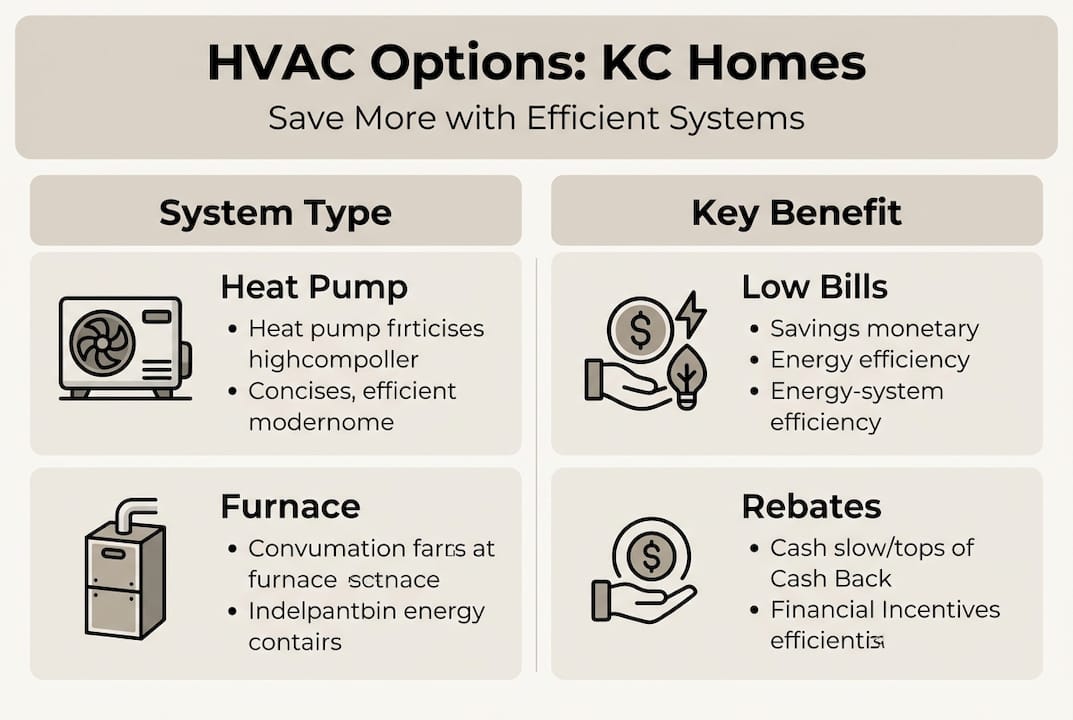
For Kansas City specifically, dual-fuel systems are worth serious consideration. A dual-fuel setup pairs an electric heat pump for mild weather with a gas furnace that kicks in during extreme cold. This approach gives you the efficiency of a heat pump most of the year while keeping you warm when temperatures drop hard in January.
Before you schedule an HVAC installation, there are a few things to keep in mind:
- Heat pumps work best when temperatures stay above 25-30°F, making dual-fuel ideal for KC winters.
- Mini-splits are excellent for home additions or rooms that never seem to stay comfortable.
- ERVs improve indoor air quality while recovering heat, reducing the load on your main system.
Pro Tip: Bigger is not always better. An oversized system short-cycles, meaning it turns on and off too frequently, which wastes energy and wears out components faster. Always get a proper load calculation before sizing any new system.
How much can you save? Real numbers and rebates
Once you know your system options, the next big question is how much you can actually save and what cash incentives are out there. The numbers are more encouraging than most homeowners expect.
Upgrading to a high-efficiency system saves 20-50% on energy, which works out to $140-$300 per year for a typical Kansas City home. Over a 15-year system lifespan, that adds up to $2,100 to $4,500 in savings before you factor in any rebates.
Here is what Kansas City homeowners can typically expect to save by upgrade type:
- Moving from SEER2 13.4 to SEER2 16: Around 15-20% cooling cost reduction.
- Moving from 80% AFUE to 95% AFUE furnace: Around 15% heating cost reduction.
- Adding a smart thermostat to any system: An additional 10-15% savings on top.
- Switching to a heat pump from electric resistance heat: Up to 50% reduction in heating costs.
Evergy, the primary utility provider for many Kansas City residents, offers rebates of $400-$1000 for qualifying high-efficiency systems. Their FastTrack PAYS program provides upfront rebates for SEER2 15 and above systems, with higher rebates for SEER2 20+ units. This program can significantly reduce your out-of-pocket cost at installation.
For help understanding how to combine rebates with financing and incentives, it pays to work with a local HVAC contractor who knows the current Evergy program requirements.
One important note: efficiency ratings have diminishing returns at the top end. Going from SEER2 16 to SEER2 20 saves more than going from SEER2 20 to SEER2 25. The cost jump at the highest ratings often extends your payback period, so balance the numbers carefully.
Pro Tip: Pairing a new high-efficiency system with a smart thermostat gives you the fastest payback period. Smart thermostats learn your schedule and reduce runtime during unoccupied hours, adding meaningful savings on top of your system upgrade.
Maximizing your HVAC investment: Maintenance, installation, and energy habits
After understanding savings and rebates, it’s crucial to make those gains last with the right upkeep, installation, and daily habits. A high-efficiency system that is poorly installed or neglected will underperform a well-maintained average system within just a few years.
Follow these steps to protect your investment:
- Assess your home’s needs first. Before buying any system, have a contractor perform a Manual J load calculation. This determines the exact heating and cooling capacity your home requires.
- Hire a qualified installer. Poor installation is the number one reason high-efficiency systems fail to deliver promised savings. Improper refrigerant charge, leaky ductwork, and incorrect airflow settings all destroy efficiency.
- Schedule annual tune-ups. A professional HVAC tune-up catches small problems before they become expensive ones and keeps your system running at peak efficiency.
- Change filters seasonally. A clogged filter forces your system to work harder, raising energy use and shortening equipment life. Check filters every 1-3 months depending on your home.
- Optimize your thermostat settings. Use seasonal maintenance steps and program your thermostat to reduce heating and cooling when you are away or asleep.
Proper maintenance and pairing with smart thermostats saves 10-15% on energy costs, according to efficient maintenance practices. That is real money back in your pocket every year with minimal effort.
Installation errors are more common than most homeowners realize. Leaky ducts alone can waste 20-30% of your conditioned air before it ever reaches a room. Review maintenance tips to understand what to look for after installation.
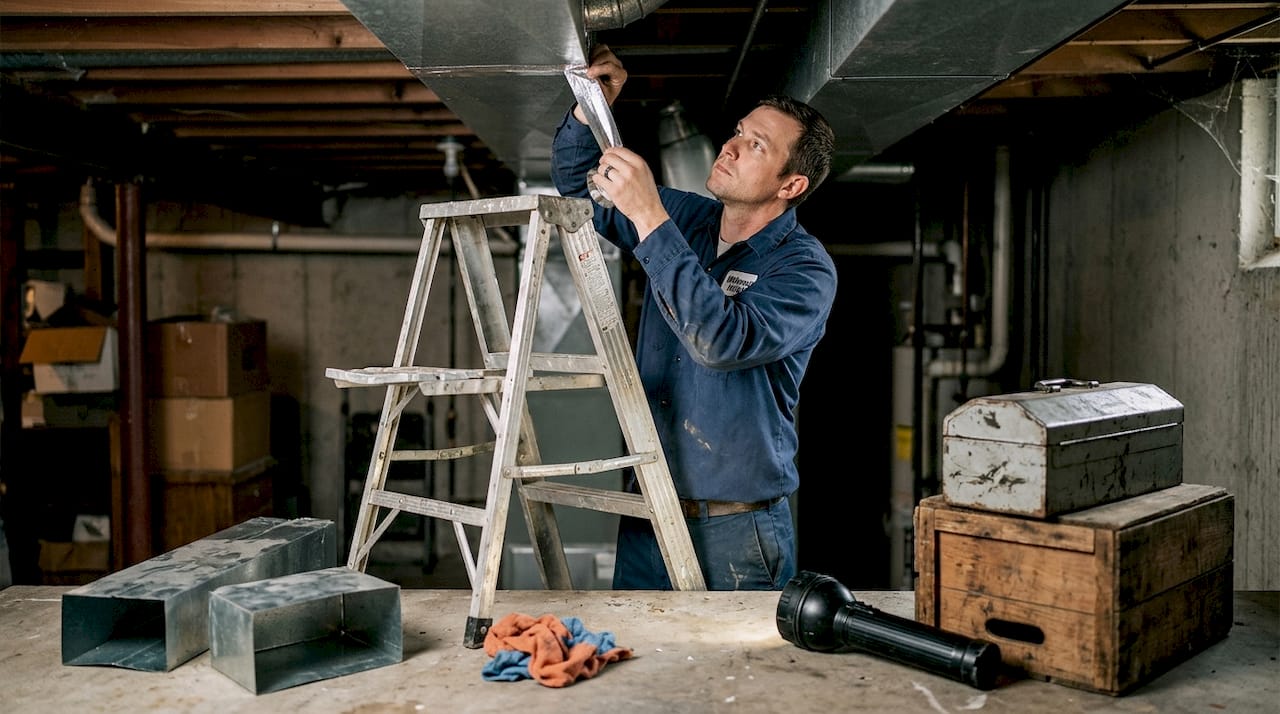
Pro Tip: One of the most common mistakes KC homeowners make is skipping the post-installation inspection. Always ask your contractor to verify refrigerant levels, duct sealing, and airflow balance after a new system goes in. It takes an hour and can prevent years of underperformance.
The hidden truth: Efficiency is more than the label
Here is something most efficiency guides skip over entirely: a SEER2 20 system installed incorrectly will cost you more to run than a SEER2 16 system installed properly. The rating on the label is a laboratory result, not a guarantee of real-world performance in your specific home.
We have seen this pattern repeatedly across Kansas City homes. Homeowners invest in top-rated equipment, skip the load calculation, and end up with an oversized unit that short-cycles all summer. The result is higher humidity, uneven temperatures, and energy bills that do not match the brochure.
Extreme cold also exposes the limits of heat pumps without proper backup. Kansas City winters can push below 10°F, where many heat pumps lose efficiency fast. That is why choosing what’s right for your home means factoring in your specific climate zone, home size, insulation level, and duct condition, not just chasing the highest rating available.
The most efficient system for your home is the one sized correctly, installed by a qualified professional, and matched to how you actually live. Numbers matter, but context matters more.
Take the next step: Kansas City HVAC experts ready to help
You now have a solid understanding of energy efficient HVAC, the systems that work best in Kansas City, and how to protect your investment for years to come. The next step is putting that knowledge to work with a trusted local team.

At KC Air Control, we bring over 70 years of experience helping Kansas City homeowners find the right systems, qualify for rebates, and keep their equipment running efficiently. Whether you need furnace repair services, a full HVAC installation, or just want to get on a seasonal maintenance schedule, our team is ready to help. Contact us today to schedule your assessment and start saving.
Frequently asked questions
What is a good SEER2 rating for Kansas City homes?
A SEER2 rating of 16 or higher is ideal for Kansas City, balancing comfort, efficiency, and rebate eligibility. Systems rated SEER2 20 and above qualify for the highest Evergy rebate tiers.
How much can upgrading save me on energy bills?
Upgrading to a high-efficiency HVAC system can save 20-50% energy, or roughly $140-$300 per year for a typical Kansas City household. Savings vary based on your current system, home size, and usage habits.
Are there incentives or rebates for efficient HVAC in Kansas City?
Yes, Evergy offers rebates from $400 to $1000 for qualifying high-efficiency systems, with additional financing options available through their FastTrack PAYS program.
How do I keep my HVAC system running efficiently?
Schedule annual professional maintenance, change filters every 1-3 months, and use a smart thermostat. These steps alone can save 10-15% on your annual energy costs.
Recommended
- Energy efficient HVAC installation guide for KC homeowners – KC Air Control – Heating & Cooling
- HVAC estimates in Kansas City: 2026 homeowner guide – KC Air Control – Heating & Cooling
- Optimize your HVAC maintenance workflow for KC homes – KC Air Control – Heating & Cooling
- How to choose the right HVAC system for your KC home – KC Air Control – Heating & Cooling
Pingback: Advances in shutter technology for modern UK homes