

Many Kansas City homeowners receive HVAC quotes that seem straightforward until hidden fees appear or critical details are missing. You might think all contractors provide the same information, but estimates vary widely in transparency and completeness. This guide clarifies what a reliable HVAC estimate includes, how professionals calculate costs, and which red flags signal trouble. You’ll learn to interpret proposals confidently, compare options fairly, and make informed decisions that protect your investment. By understanding these fundamentals, you’ll save money and avoid surprises when heating or cooling your home in 2026.
Table of Contents
- What Is An HVAC Estimate And What Should It Include?
- How Do Contractors Calculate HVAC Estimates?
- Common Pitfalls And Red Flags In HVAC Estimates
- Applying HVAC Estimate Insights: A Practical Guide For KC Homeowners
- Find Trusted HVAC Estimates And Services In Kansas City
Guide contents: 2026 Kansas City HVAC cost estimates
| Point | Details |
|---|---|
| Complete estimates matter | Itemized proposals prevent surprise costs and reveal exactly what you pay for in equipment, labor, permits, and warranties. |
| Manual J drives accuracy | Professional load calculations determine proper system sizing, ensuring efficiency and comfort while avoiding costly mistakes. |
| Apply the $5,000 rule | Multiply your system’s age by repair cost; if the result exceeds $5,000, replacement typically saves more money long-term. |
| Red flags signal problems | Missing specifications, no written quotes, pressure tactics, and unusually low bids often hide excluded costs or poor workmanship. |
| Compare three detailed quotes | Multiple itemized proposals reveal fair pricing and help you evaluate equipment quality, warranties, and contractor reliability. |
What is an HVAC estimate and what should it include?
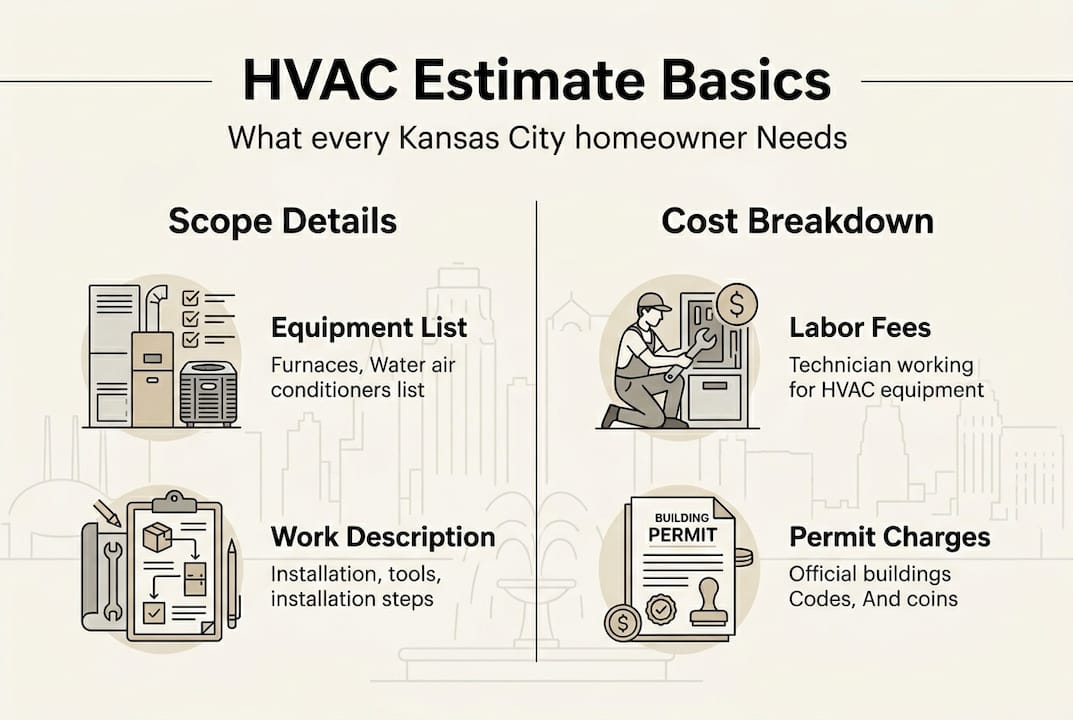
An HVAC estimate is a detailed, itemized proposal from a licensed contractor outlining scope of work, equipment specifications, labor, materials, permits, warranties, and total cost for repairs, installations, or maintenance. This transparency prevents surprise fees and helps you understand exactly what you’re purchasing. Without these details, you risk paying for unclear services or discovering excluded costs after work begins.
A complete estimate must include several core components. Equipment specifications should list the exact model number, brand, and efficiency ratings like SEER for cooling or AFUE for furnace heating. SEER measures how efficiently an air conditioner converts electricity into cooling, while AFUE indicates what percentage of fuel becomes heat in your furnace. Higher numbers mean better efficiency and lower utility bills.
Labor costs, materials, permit fees, and disposal charges should appear as separate line items. Kansas City requires permits for most HVAC installations and replacements, ensuring work meets safety codes. Contractors should also specify warranty coverage for both equipment and installation labor, typically ranging from one year to lifetime depending on components. Timeline estimates help you plan around the work schedule.
Demand this level of detail from every contractor. Vague proposals like “new AC system: $6,500” leave too much room for misunderstanding. You need to know whether that price includes ductwork modifications, thermostat upgrades, or old equipment removal. Itemization also makes comparing quotes straightforward, since you can see exactly where price differences occur.
Understanding what is HVAC and home comfort helps you evaluate whether proposed equipment matches your home’s needs. A contractor who skips explanations or rushes through technical details may not prioritize your long term satisfaction. Insist on clarity before signing any agreement.
How do contractors calculate HVAC estimates?
Professional contractors create estimates using load calculations, quantity takeoffs from blueprints, and base cost ranges adjusted by multipliers for size, efficiency, region, and complexity, plus labor comprising 25 to 40 percent of total costs. This systematic approach ensures accurate pricing and proper equipment sizing for your specific home.
The process starts with a Manual J load calculation, which determines how many tons of heating and cooling capacity your home requires. Contractors measure square footage, insulation levels, window types, ceiling heights, and local climate data. Skipping this step often results in oversized or undersized systems that waste energy or fail to maintain comfort.
Estimation follows five key steps. First, contractors establish a base cost for standard equipment and installation. Second, they apply size multipliers based on tonnage needed, since larger systems cost more. Third, efficiency multipliers adjust for SEER or AFUE ratings you select. Fourth, regional factors account for Kansas City permit costs and labor rates. Fifth, complexity multipliers address challenges like difficult attic access or extensive ductwork modifications.
Labor typically represents 35 to 55 percent of your total investment, covering installation hours, crew expertise, and project management. Materials include refrigerant, copper lines, electrical components, and mounting hardware. Overhead and profit margins allow contractors to maintain quality standards, insurance coverage, and business operations. Kansas City permit fees usually range from $50 to $150 depending on project scope.
Extra costs often emerge from ductwork repairs, asbestos abatement, electrical panel upgrades, or disposal fees for old equipment. These should appear as separate line items rather than hidden within base pricing. The table below summarizes typical multiplier ranges contractors use when calculating your estimate.
| Multiplier Type | Typical Range | Impact on Cost |
|---|---|---|
| System Size | 1.0 to 2.5x | Larger tonnage increases equipment and labor |
| Efficiency Rating | 1.0 to 1.8x | Higher SEER/AFUE adds upfront cost, reduces bills |
| Regional Factors | 0.9 to 1.3x | Local labor rates and permit fees vary by area |
| Installation Complexity | 1.0 to 2.0x | Difficult access or extensive modifications increase labor |
Pro Tip: Verify that your contractor uses Manual J calculations by asking to see the load summary. Missing load data is a red flag that sizing might be guesswork rather than science.
Professional HVAC installation in Kansas City requires this level of precision. Contractors who provide detailed breakdowns demonstrate expertise and accountability. Those who offer only round numbers or refuse to explain their math may be cutting corners that cost you later.
Common pitfalls and red flags in HVAC estimates
Homeowners face several warning signs that indicate incomplete or misleading proposals. Red flags include no Manual J calculation, vague equipment specifications, missing permits or warranties, pressure sales tactics, and low bids that fall 30 percent under market rates. Recognizing these issues protects you from costly mistakes and unscrupulous contractors.
Missing Manual J load calculations represent the most serious red flag. Without proper sizing data, your system may run inefficiently, break down prematurely, or fail to maintain comfortable temperatures. Contractors who estimate tonnage by square footage alone ignore crucial factors like insulation quality and window orientation. This guesswork approach wastes your money on utility bills and repairs.
Vague equipment descriptions like “high efficiency AC unit” provide no accountability. You need exact model numbers and SEER ratings to verify quality and compare warranties. Similarly, estimates that exclude permits, disposal fees, or duct testing often balloon in cost once work begins. These omissions aren’t oversights but deliberate tactics to appear cheaper than competitors.
Unusually low bids tempt budget conscious homeowners but frequently exclude critical services. A quote 30 percent below others may skip proper refrigerant charging, electrical upgrades, or warranty registration. Some contractors use cheap equipment that fails quickly or employ untrained crews who damage your home. Short warranty periods under one year signal lack of confidence in workmanship.
Pressure sales tactics like “today only” pricing or scare tactics about imminent system failure deserve skepticism. Legitimate contractors provide written proposals you can review carefully and compare against other options. Rushing your decision benefits the contractor, not you.
“Demand itemized quotes showing Manual J proof, specific equipment models, and full inclusions like permits, disposal, and duct testing. Compare at least three proposals to identify fair pricing and comprehensive scopes. The lowest bid rarely delivers the best value.”
Getting three detailed, comparable quotes remains your best defense against these pitfalls. Each proposal should break down costs identically so you can evaluate differences fairly. Ask contractors to explain any unusual charges or missing items. Those who become defensive or evasive about their pricing likely have something to hide.
Pro Tip: Request references from recent customers and verify contractor licensing through Missouri or Kansas state boards. Online reviews reveal patterns of poor communication or hidden fees that estimates don’t show.
Optimizing your HVAC maintenance workflow starts with choosing honest contractors who prioritize transparency. Red flags in estimates often predict problems throughout the entire service relationship. Trust your instincts when something feels wrong.
Applying HVAC estimate insights: a practical guide for KC homeowners
Kansas City homeowners can use specific decision frameworks to act confidently on HVAC estimates. The $5,000 rule provides clear guidance: multiply your system’s age by the repair cost, and if the result exceeds $5,000, replacement typically offers better value than continued repairs. This calculation accounts for diminishing efficiency and escalating maintenance expenses in aging equipment.
For example, a 12 year old furnace needing $600 in repairs yields $7,200 using this formula, suggesting replacement makes financial sense. Newer, efficient systems reduce utility bills and include warranties that eliminate repair costs for years. Continuing to patch old equipment often leads to another breakdown within months, compounding your expenses.
Follow these practical steps when gathering estimates. First, verify each contractor holds current licensing and insurance through state databases. Second, insist on in home assessments rather than phone quotes, since accurate estimates require seeing your home’s specific conditions. Third, schedule estimates during off peak seasons like spring or fall when contractors have more availability and may offer better pricing.
Comparing quotes requires apples to apples evaluation. Ensure each proposal includes identical scope items like permit fees, disposal, duct testing, and warranty terms. Price differences should reflect equipment quality or efficiency ratings, not missing services. The table below helps you weigh repair versus replacement decisions.
| Factor | Repair | Replace |
|---|---|---|
| Upfront Cost | $200 to $2,000 | $4,000 to $12,000 |
| Timeline | 1 to 2 days | 2 to 5 days |
| Energy Efficiency | Maintains current level | Improves 20 to 40 percent |
| Warranty Coverage | Parts only, 90 days to 1 year | Full system, 5 to 10 years |
| Long Term Value | Temporary fix, more repairs likely | Eliminates repairs, lowers bills |
Ask contractors specific questions about their proposals. How do efficiency ratings translate to monthly savings? What happens if unexpected issues arise during installation? Which components carry the longest warranties? Detailed answers demonstrate expertise and build trust.
HVAC maintenance and home comfort programs reduce long term costs by catching small problems before they become expensive emergencies. Annual tune ups extend equipment life and maintain efficiency. Many contractors offer maintenance plans that include priority service and discounted repairs.
Pro Tip: Invest in preventive maintenance rather than waiting for breakdowns. Regular filter changes, coil cleaning, and system inspections cost far less than emergency repairs during Kansas City’s hottest or coldest days.
HVAC inspections for Kansas City homeowners provide objective assessments of system condition. Independent inspections before major repairs help you verify contractor recommendations and avoid unnecessary replacements. This small investment protects you from inflated estimates or premature equipment sales.
Schedule estimates when you can dedicate time to ask questions and review proposals carefully. Rushed decisions often overlook important details or red flags. Taking control of the estimate process ensures you get fair pricing and quality service.
Find trusted HVAC estimates and services in Kansas City
Working with licensed professionals ensures accurate estimates and quality installations tailored to Kansas City homes. Air Control brings over 70 years of expertise in HVAC repair, installation, and maintenance, delivering transparent proposals that include Manual J load calculations and itemized costs. Our team understands local climate demands and building codes, providing solutions that maximize comfort and efficiency.

Schedule a free in home assessment to receive a precise, itemized quote showing exactly what your project includes. We break down equipment specifications, labor, permits, warranties, and timelines so you can make informed decisions without surprises. Our maintenance plans keep your system running efficiently year round, preventing costly emergency repairs and extending equipment life.
Learn more about what is HVAC and home comfort to understand how proper system selection impacts your daily life. Explore our HVAC maintenance and home comfort services to discover preventive care options. When you’re ready for installation, our guide on how to install an HVAC system explains the process from assessment through final testing. Contact us today to experience the difference that transparency and expertise make.
Frequently asked questions
What is included in an HVAC estimate?
A complete HVAC estimate itemizes scope of work, specific equipment models with efficiency ratings, labor costs, materials, permit fees, disposal charges, warranty terms, and project timeline. This transparency allows you to understand exactly what you’re purchasing and compare proposals fairly. Vague estimates lacking these details often hide excluded costs that appear later as surprise charges.
How accurate are HVAC estimates?
Estimate accuracy depends on detailed Manual J load calculations and comprehensive itemization of all project components. Professional contractors who measure your home’s specific conditions provide reliable pricing within 5 to 10 percent of final costs. Estimates can vary significantly based on home size, desired efficiency levels, installation complexity, and regional factors like Kansas City permit requirements. Generic quotes without in home assessments rarely prove accurate.
When should I replace my HVAC system instead of repairing?
Apply the $5,000 rule by multiplying your system’s age by the repair cost; if the result exceeds $5,000, replacement typically offers better long term value. Systems over 15 years old often require frequent repairs that accumulate quickly while operating inefficiently. Replacement provides modern efficiency that reduces utility bills, includes comprehensive warranties, and eliminates ongoing repair expenses. Consider furnace repair options to evaluate whether your current system justifies continued investment.
Why do I need multiple HVAC quotes?
Multiple quotes ensure competitive pricing and reveal which contractors provide comprehensive scopes versus those who exclude critical services. Comparing three detailed proposals helps you identify fair market rates and evaluate equipment quality, warranty terms, and contractor expertise. This process protects you from overpriced services or suspiciously low bids that hide excluded costs. Apples to apples comparisons require identical itemization across all proposals.
How can I verify if an estimate is fair?
Check that estimates include Manual J load calculations showing proper system sizing and list specific equipment models with efficiency ratings. Confirm all proposals include permits, disposal fees, duct testing, and labor warranties covering at least one year. Compare pricing against two or three other detailed quotes to identify market rates. Beware of bids 30 percent below competitors, which often exclude critical services or use inferior equipment. Verify contractor licensing through state databases and request recent customer references. Professional HVAC installation requires transparency and accountability that fair estimates demonstrate clearly.
Recommended
- HVAC inspections for Kansas City homeowners: 2026 guide – KC Air Control – Heating & Cooling
- Common HVAC emergencies and repairs in Kansas City 2026 – KC Air Control – Heating & Cooling
- Regular HVAC Servicing Cuts Kansas City Bills 30% in 2026 – Air Control
- Optimize your HVAC maintenance workflow for KC homes – KC Air Control – Heating & Cooling