
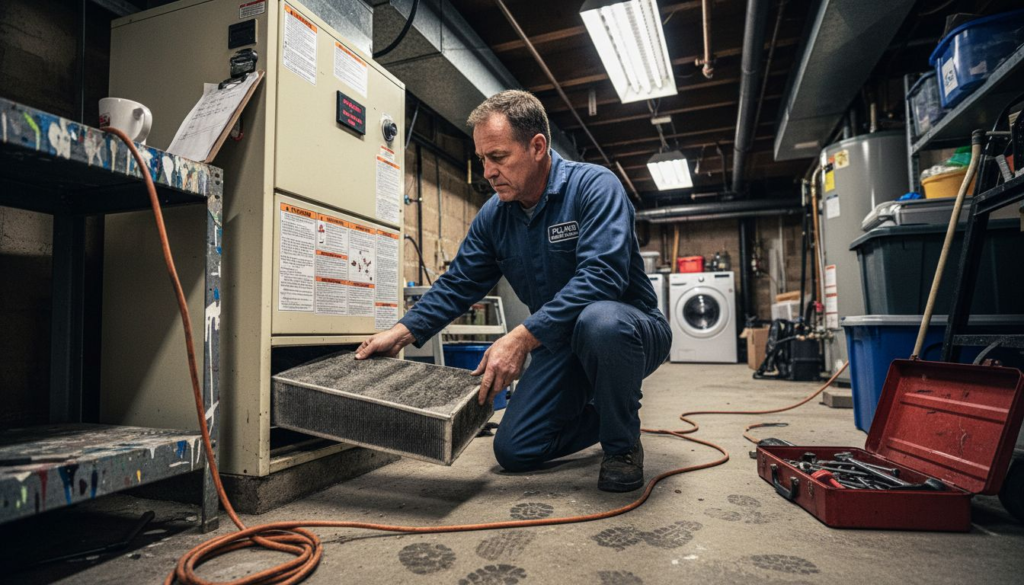
Every Kansas City homeowner knows the frustration of a furnace failing on the coldest winter night or an air conditioner quitting during a summer heatwave. These breakdowns are more than inconvenient—they often signal overlooked maintenance issues that could have been avoided. With regular HVAC upkeep, you protect your investment, enjoy consistent comfort, and avoid emergency repairs. This guide shares modern practices for maintaining system efficiency and reliability, helping you extend your system’s life and keep your home safe in every season.
Table of Contents
- Defining HVAC Maintenance For Homeowners
- Types Of HVAC Maintenance Services Explained
- Essential Tasks In Routine HVAC Upkeep
- Risks Of Skipping Regular HVAC Maintenance
- Cost Savings And Lifespan Benefits Revealed
HVAC Maintenance Overview: Key Topics and Tasks
| Point | Details |
|---|---|
| Importance of HVAC Maintenance | Regular upkeep safeguards your investment and enhances indoor air quality by preventing costly breakdowns. |
| Routine Inspections | Schedule annual or biannual inspections to detect potential issues before they escalate into emergencies. |
| Energy Efficiency Savings | Consistent maintenance can lead to 10-15% savings on energy bills, significantly cutting costs over time. |
| Safety Considerations | Neglecting maintenance may lead to safety hazards such as carbon monoxide leaks or electrical fires, which require immediate attention. |
Defining HVAC Maintenance for Homeowners
HVAC maintenance means actively caring for your heating, cooling, and ventilation systems to keep them running smoothly. It’s not just about comfort—it’s about protecting your investment and your home’s health.
Your HVAC system works year-round, cycling air through ducts, filters, and coils. Understanding how these components work together helps you recognize when something needs attention.
What HVAC Maintenance Actually Includes
HVAC maintenance covers three main areas:
- Preventive care: Regular inspections, filter changes, and cleaning to catch problems early
- System operation: Ensuring your furnace, air conditioner, and ventilation work efficiently
- Component upkeep: Maintaining filters, coils, ducts, and other parts that affect performance
Think of it like car maintenance. You change oil regularly, rotate tires, and check fluid levels. Your HVAC system needs the same proactive attention.
Why Maintenance Matters in Kansas City
Kansas City’s weather swings are brutal on HVAC systems. Summer heat pushes air conditioners to their limits, while winter cold demands reliable furnace performance. Systems that aren’t maintained break down exactly when you need them most.
Regular maintenance prevents breakdowns during extreme temperatures and extends your system’s lifespan by years.
How air flows through filters and coils directly affects indoor air quality and system efficiency. When filters clog and coils get dirty, your system works harder, uses more energy, and delivers less comfort.
The Real Benefits
Maintained systems deliver three immediate benefits:
- Consistent comfort: No temperature swings or cold spots in winter
- Lower energy bills: Efficient systems use 10-15% less energy than neglected ones
- Fewer emergency repairs: Catching problems early prevents costly breakdowns
According to ASHRAE’s standards on HVAC maintenance, proper upkeep enhances system reliability and safety while maintaining comfort and efficiency. Kansas City homeowners who maintain their systems skip the middle-of-July AC failure or January furnace breakdown.
What You’re Actually Responsible For
You don’t need to be an expert, but you should handle basic tasks:
- Changing or cleaning filters every 1-3 months
- Keeping vents and returns clear of furniture and clutter
- Noticing unusual sounds, smells, or performance changes
- Scheduling professional maintenance twice yearly
KC Air Control handles the technical work—refrigerant checks, coil cleaning, electrical inspections, and system diagnostics. You handle the simple stuff that keeps everything running between visits.
Pro tip: Set phone reminders for filter changes during seasonal transitions (spring and fall). Clean filters are the single easiest way to maintain efficiency and prevent costly repairs.
Types of HVAC Maintenance Services Explained
Not all HVAC maintenance is the same. Different service types address different needs, from routine upkeep to fixing problems before they start. Understanding what each service does helps you decide what your system needs.
Think of it this way: some services keep your system healthy, while others catch problems early, and still others fix what’s broken. Kansas City homeowners benefit most from a mix of all three.
Routine Inspections
Routine inspections are your system’s checkup. A technician examines components, checks connections, and spots issues developing before they become emergencies.
During an inspection, technicians look for:
- Refrigerant leaks or low levels
- Worn belts or electrical connections
- Thermostat calibration issues
- Ductwork damage or blockages
- Compressor and motor performance
Inspections take 60-90 minutes and typically cost less than emergency repairs. Catching a refrigerant leak during inspection costs hundreds. Missing it costs thousands.
Preventive Maintenance
Preventive maintenance stops problems before they happen. This includes filter changes, coil cleaning, lubrication, and seasonal tune-ups that keep everything running smoothly.
According to maintenance standards for system reliability, preventive services enhance efficiency and extend equipment lifespan significantly. Scheduling maintenance twice yearly—spring and fall—prevents mid-season breakdowns.
Common preventive tasks:
- Filter replacement or cleaning
- Coil cleaning and chemical treatment
- Lubrication of moving parts
- Condenser cleaning and fin straightening
- Electrical connection inspection
Preventive maintenance costs a fraction of emergency repairs and keeps your system operating at peak efficiency year-round.
Corrective Maintenance
Corrective maintenance fixes what’s broken. When your air conditioner stops cooling or your furnace won’t ignite, corrective service gets it working again.
This is the most expensive type because it addresses problems that have already developed. Parts may have failed, compressors may be damaged, or multiple components may need replacement.
Predictive Maintenance
Predictive maintenance uses testing and monitoring to identify problems developing inside components before they fail completely. Technicians measure electrical current, check refrigerant pressures, and analyze system performance data.
This approach catches subtle problems—like a compressor struggling under load—before it burns out. It’s particularly valuable for newer, high-efficiency systems.
Seasonal and Specialty Services
Seasonal services prepare your system for summer cooling or winter heating. Specialty services address specific concerns like duct cleaning and testing for indoor air quality or humidifier maintenance.
Kansas City’s extreme seasons demand seasonal maintenance. Spring tune-ups prepare AC units for summer heat. Fall inspections ensure furnaces handle winter cold.
Pro tip: Schedule spring maintenance in March and fall maintenance in September, before Kansas City’s seasonal weather extremes hit. This timing catches problems with time to fix them rather than during peak demand.
Here’s a quick comparison of the four main types of HVAC maintenance services:
| Service Type | When It Is Used | Key Benefit | Typical Cost Impact |
|---|---|---|---|
| Routine Inspections | Scheduled annually or biannually | Early problem detection | Low, prevents major costs |
| Preventive Maintenance | Spring and fall, before peak seasons | Boosts efficiency and lifespan | Modest, leads to energy savings |
| Corrective Maintenance | After a breakdown or failure | Restores lost functionality | High, often emergency pricing |
| Predictive Maintenance | For newer systems, ongoing | Avoids surprise failures | Moderate, adds peace of mind |
Essential Tasks in Routine HVAC Upkeep
Routine HVAC upkeep keeps your system running reliably and efficiently. These are the tasks that prevent small problems from becoming expensive emergencies. Most are simple enough for homeowners to handle themselves.
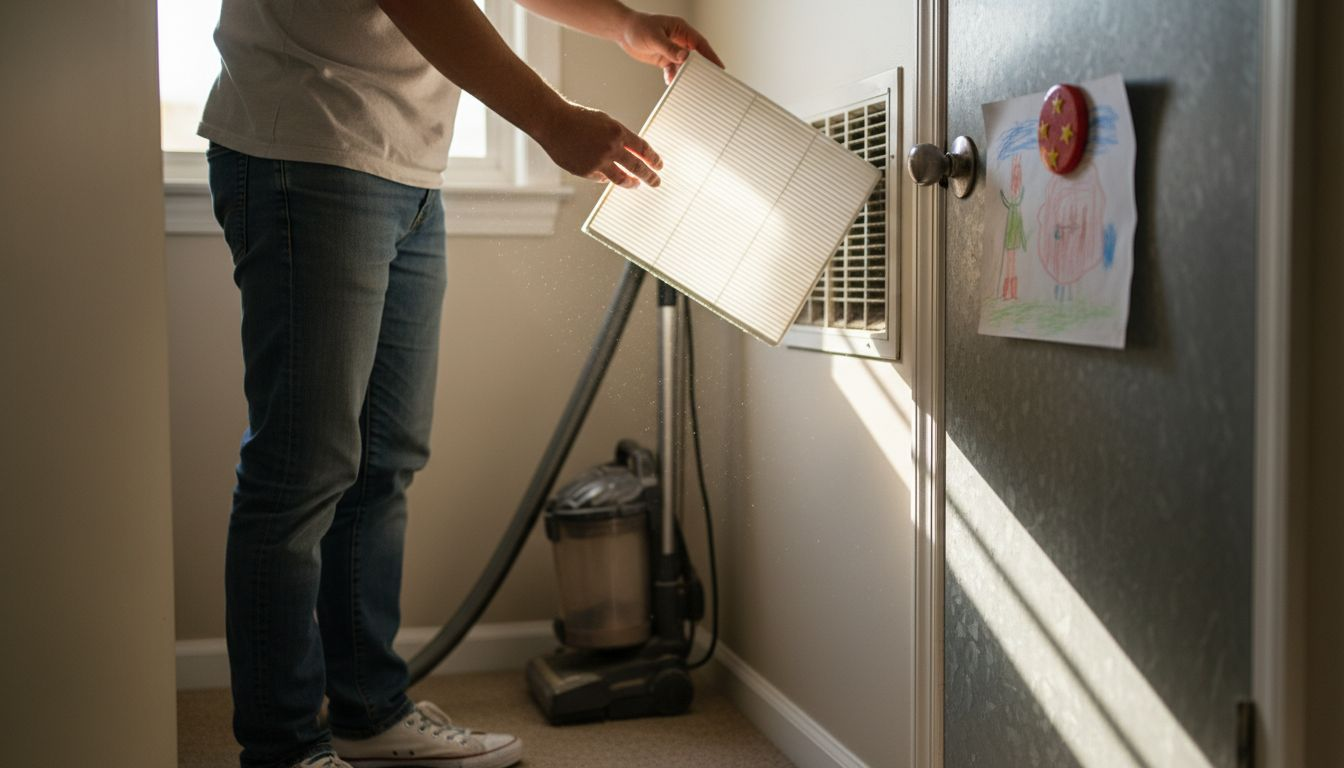
The best part? Regular upkeep costs far less than major repairs. A $20 filter replacement beats a $2,000 compressor replacement every time.
Filter Replacement and Cleaning
Air filter replacement is the single most important task you can do. Dirty filters block airflow, force your system to work harder, and reduce efficiency by 15-20%.
You should replace or clean filters every 1-3 months depending on several factors:
- Your filter type (fiberglass, pleated, or washable)
- Pets in your home (double the frequency if you have dogs or cats)
- Dust levels in Kansas City air
- System runtime (higher usage requires more frequent changes)
A clean filter improves airflow, reduces strain on components, and keeps dust from circulating through your home. Many homeowners don’t realize filters affect indoor air quality too.
Checking and Calibrating Thermostat Function
Your thermostat controls everything. If it’s not working correctly, your system can’t maintain consistent comfort or operate efficiently.
Test your thermostat by:
- Setting it to heating mode and watching your furnace start
- Switching to cooling mode and confirming AC activation
- Verifying temperature readings match an independent thermometer
- Checking that the display responds to adjustments
Drift in thermostat readings creates comfort gaps and wastes energy. A thermostat reading 2 degrees high causes your AC to run less, leaving your home hot in summer.
Register and Vent Maintenance
Vents and registers must stay clear for proper airflow. Blocked vents create temperature imbalances and force your system to work inefficiently.
Regularly:
- Vacuum dust and debris from vents and registers
- Ensure furniture isn’t blocking return air vents
- Check that vents aren’t closed or partially blocked
- Inspect visible ductwork for obvious damage
Refrigerant Level and Connection Checks
Regular inspection of refrigerant levels and connections prevents cooling problems and system damage. Low refrigerant levels indicate leaks that reduce cooling capacity and increase compressor strain.
Only certified technicians should handle refrigerant, but you can watch for signs of problems: reduced cooling, ice on outdoor units, or unusual hissing sounds.
Lubrication of Moving Parts
Motors and bearings need lubrication to prevent friction wear. Without proper lubrication, moving parts wear quickly and fail prematurely.
KC Air Control handles this during annual maintenance visits. It’s not a DIY task but remains essential for system longevity.
Consistent upkeep prevents 80% of HVAC problems before they start, saving thousands in emergency repairs.
Pro tip: Create a calendar reminder for filter replacement on the first day of each season. This simple habit prevents most efficiency problems and catches system issues early.
Risks of Skipping Regular HVAC Maintenance
Skipping HVAC maintenance feels like saving money in the short term. In reality, it costs you thousands in the long run. Neglected systems fail faster, use more energy, and create uncomfortable homes.
Kansas City homeowners who skip maintenance often face mid-season emergencies when they can least afford them. That’s not coincidence—it’s predictable physics.
Rising Energy Bills and Efficiency Loss
A poorly maintained HVAC system wastes energy constantly. Dirty filters force your system to work 15-20% harder than necessary. Clogged coils reduce heat transfer efficiency. Refrigerant leaks mean your AC can’t cool properly.
These problems accumulate silently. Your energy bills creep up month after month while you wonder why.
Homeowners often pay $300-500 extra annually in wasted energy costs just from skipped filter changes. That’s money burned for no comfort benefit.
Premature Equipment Failure and Costly Repairs
Neglecting maintenance increases wear and tear on critical components, leading to premature equipment failure. When parts fail unexpectedly, repair bills spike dramatically.
Common expensive failures from skipped maintenance:
- Compressor failure: $1,500-2,500 (or full system replacement $5,000-10,000)
- Motor burnout: $800-1,500
- Capacitor or contactor failure: $300-700
- Refrigerant leaks: $300-1,000+ depending on severity
One missed annual service often leads to a single failure that costs more than five years of maintenance.
Reduced Comfort and Indoor Air Quality
Maintenance isn’t just about energy—it’s about livability. Dirty filters circulate dust, allergens, and particles throughout your home. You breathe worse air. Allergies worsen. Sleep quality suffers.
Unmaintained systems also struggle to maintain consistent temperatures. You get cold spots in winter and hot spots in summer. Your family lives with discomfort you could have easily prevented.
Shortened System Lifespan
A well-maintained HVAC system lasts 15-20 years. A neglected one might fail at 10 years. That’s a $7,000-10,000 replacement cost you didn’t plan for.
Regular maintenance extends equipment life significantly. The investment pays for itself just through avoided premature replacement.
Skipping maintenance costs $3,000-15,000 more over a system’s lifetime than maintaining it properly.
Safety Hazards
Neglected furnaces can develop carbon monoxide leaks. Unchecked electrical connections can cause fires. These aren’t just comfort issues—they’re safety emergencies.
HVAC systems should be inspected annually for these hazards. Ignoring this creates genuine danger for your family.
Pro tip: Budget $200-300 annually for maintenance now, or budget $2,000-5,000 for emergency repairs later. The math is simple: maintenance always wins.
Cost Savings and Lifespan Benefits Revealed
Maintenance spending feels like an expense until you see the actual numbers. Homeowners who maintain their systems consistently save thousands compared to those who neglect them. The return on investment is immediate and measurable.
Think of it as insurance that pays dividends. You spend a little now to avoid spending a lot later.
Energy Efficiency and Monthly Savings
A maintained HVAC system runs 10-15% more efficiently than a neglected one. On average, Kansas City homeowners spend $1,200-1,800 annually on heating and cooling.
That efficiency gap translates directly to your utility bill:
- 15% efficiency loss = $180-270 extra per year
- Over 10 years = $1,800-2,700 in wasted energy costs
- Over 15 years = $2,700-4,050 in wasted energy costs
A $150 annual maintenance visit saves you $180-270 annually in energy costs alone. Your maintenance pays for itself in the first year.
Extended Equipment Lifespan
A well-maintained HVAC system lasts 15-20 years. A neglected system might survive 10 years. That 5-10 year difference represents a $7,000-12,000 replacement cost.
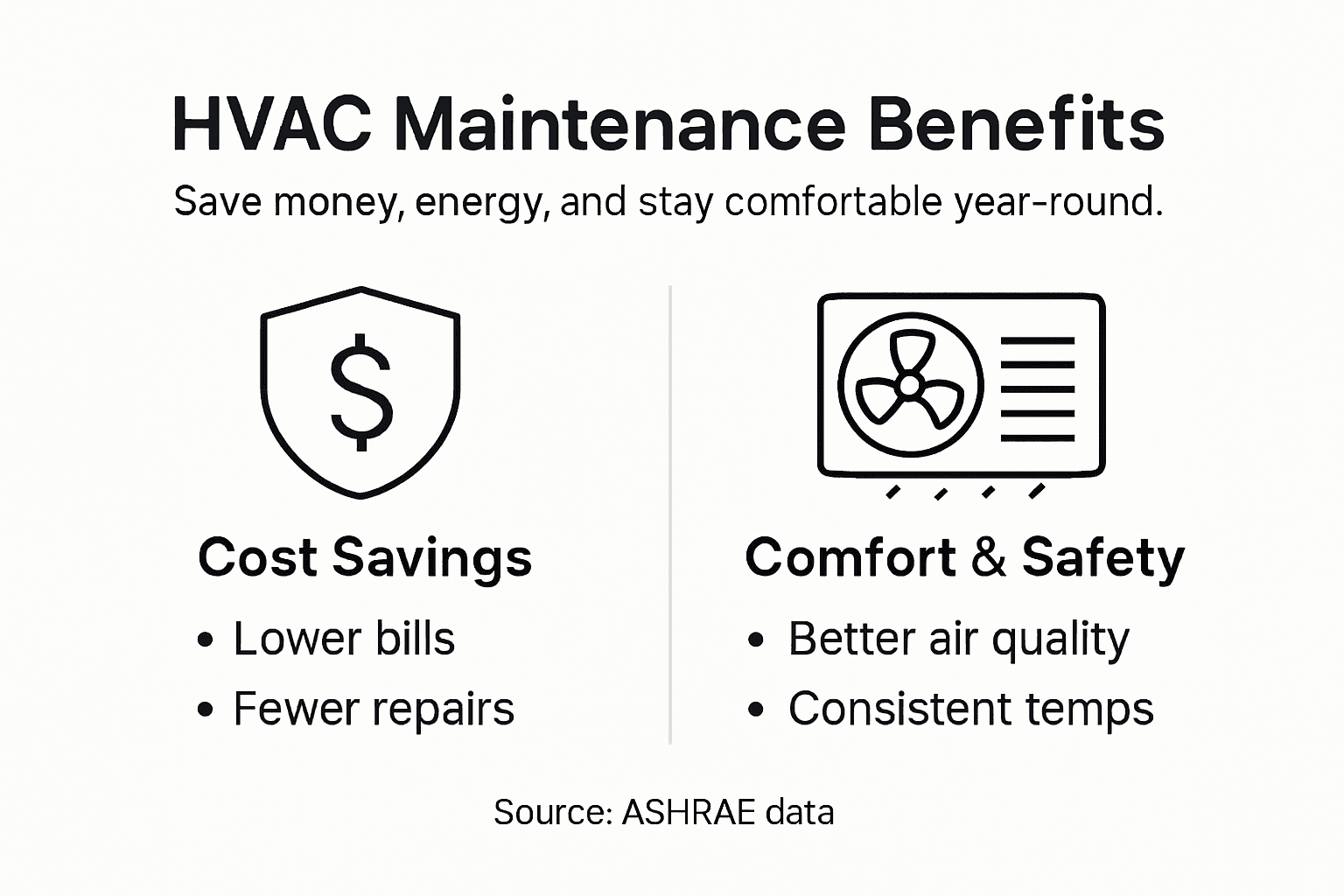
Planned preventative maintenance enhances system longevity while reducing operating costs significantly. Regular filter changes, coil cleaning, and component inspections prevent the wear that triggers premature failure.
Spending $300-400 annually on maintenance over 15 years ($4,500-6,000 total) beats replacing a system at year 10 for $8,000-10,000.
Avoided Emergency Repair Costs
Maintained systems fail far less frequently. When they do need repair, it’s usually minor and scheduled, not emergency-level and expensive.
Common emergency repair costs that maintenance prevents:
- Compressor replacement: $1,500-2,500
- Motor burnout: $800-1,500
- Refrigerant leak repair: $300-1,000
- Electrical failures: $500-1,200
One emergency repair often costs more than 5-10 years of preventive maintenance. And you pay it at the worst possible time—summer heat or winter cold.
Real-World Savings Example
Here’s what Kansas City homeowners typically experience:
- Annual maintenance cost: $300-400
- Annual energy savings: $180-270
- Net annual cost: $30-220
- 15-year total investment: $4,500-6,000
- System replacement cost avoided: $8,000-10,000
- Emergency repairs prevented: $2,000-5,000
- Total 15-year savings: $4,000-10,500
Maintenance costs $300-400 annually but saves $4,000-10,500 over your system’s lifetime.
Peace of Mind Value
Beyond dollars and cents, maintenance provides comfort. You know your system won’t fail during a Kansas City summer heat wave or winter cold snap. Your family stays comfortable. You sleep better.
You’re not stressed about unexpected $3,000 repairs. You’re not dealing with emergency service calls. That peace of mind has real value.
Pro tip: Track your energy bills for six months before scheduling maintenance, then compare post-maintenance bills. You’ll see the savings immediately and understand exactly what efficient operation costs.
Protect Your Home Comfort with Expert HVAC Maintenance from KC Air Control
The challenges of maintaining your HVAC system in Kansas City demand attention that only trusted professionals can provide. With issues like fluctuating temperatures, rising energy bills, and costly repairs looming, staying ahead through consistent maintenance is essential. This article highlights the importance of routine inspections, preventive care, and filter upkeep to boost efficiency and extend equipment lifespan. Don’t let unexpected breakdowns disrupt your family’s comfort.
Discover how KC Air Control can help you tackle these pain points before they start. Explore our Importance Of Maintenance – Air Control resources to learn more about keeping your HVAC system in top shape. Ready to make your home comfortable and energy-efficient year-round Visit KC Air Control now to schedule your maintenance service with experienced technicians who prioritize your safety and savings. Take control of your home’s climate today by booking a service and enjoy the peace of mind that comes with expert care.
Frequently Asked Questions
What is HVAC maintenance?
HVAC maintenance refers to the active care and servicing of your heating, cooling, and ventilation systems to ensure they operate efficiently, extend lifespan, and maintain indoor air quality.
Why is HVAC maintenance important?
Regular HVAC maintenance is crucial as it prevents unexpected breakdowns, increases energy efficiency, improves indoor air quality, and ensures consistent comfort in your home.
How often should I schedule HVAC maintenance?
You should schedule professional HVAC maintenance at least twice a year—once in the spring for your air conditioning system and once in the fall for your heating system. This helps prepare your system for seasonal demands.
What basic tasks can I perform for HVAC maintenance?
As a homeowner, you can handle simple tasks like changing or cleaning filters every 1-3 months, ensuring vents are clear of obstructions, checking thermostat functionality, and scheduling professional inspections and maintenance.
Pingback: Regular HVAC Servicing Cuts Kansas City Bills 30% in 2026 - KC Air Control - Heating & Cooling
Pingback: Why regular AC tune ups save Kansas City homeowners money - KC Air Control - Heating & Cooling
Pingback: Smart HVAC budgeting: save money and boost comfort in Kansas City - KC Air Control - Heating & Cooling