
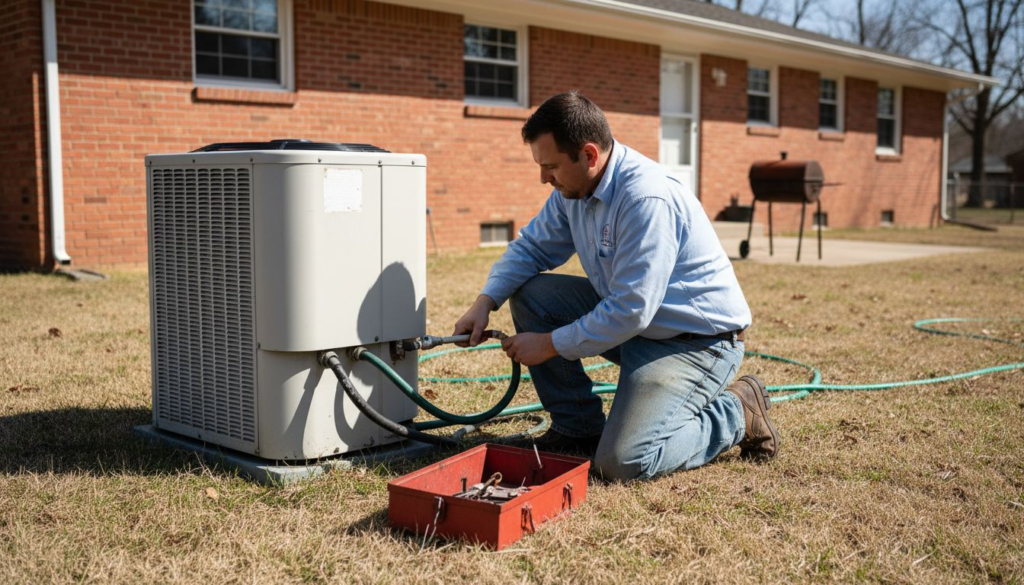
Sweating through a Kansas City summer or shivering in a drafty home feels frustrating when your HVAC system is not performing as it should. Comfort, health, and rising energy bills all depend on how well your Heating, Ventilation, and Air Conditioning work together year-round. By understanding the core purpose of HVAC—thermal comfort and clean indoor air—you gain the power to make better decisions for maintenance, repair, and upgrades that keep your family comfortable and your home running efficiently.
Table of Contents
- Defining HVAC: Purpose and Core Functions
- Types of HVAC Systems for Homes
- How HVAC Systems Operate Efficiently
- Key Maintenance Needs and Common Issues
- Costs, Risks, and What Homeowners Should Avoid
Key Takeaways
| Point | Details |
|---|---|
| Understand HVAC Functions | HVAC systems control temperature, humidity, air quality, and air distribution, crucial for comfort and health. |
| Choose the Right System | Selecting the appropriate HVAC system depends on your home’s layout, climate, and budget; consult professionals for proper sizing and installation. |
| Regular Maintenance is Key | Schedule routine maintenance to prevent costly repairs and ensure your system operates efficiently year-round. |
| Be Cautious with DIY Installations | DIY installations can lead to significant issues; opting for professional installation protects your investment and ensures adherence to safety codes. |
Defining HVAC: Purpose and Core Functions
HVAC stands for Heating, Ventilation, and Air Conditioning—three interconnected systems that work together to create a comfortable living environment inside your Kansas City home.
These systems control four critical factors that affect how you feel indoors: temperature, humidity, air quality, and air distribution. Without proper HVAC function, your home becomes uncomfortable and unhealthy.
What Each Component Does
Heating adds warmth to your home during cold Kansas winters. Your furnace burns fuel or uses electricity to generate heat that spreads throughout your living spaces.
Ventilation brings fresh outdoor air inside while removing stale, polluted air. This exchange prevents buildup of odors, moisture, and harmful pollutants that accumulate in sealed spaces.
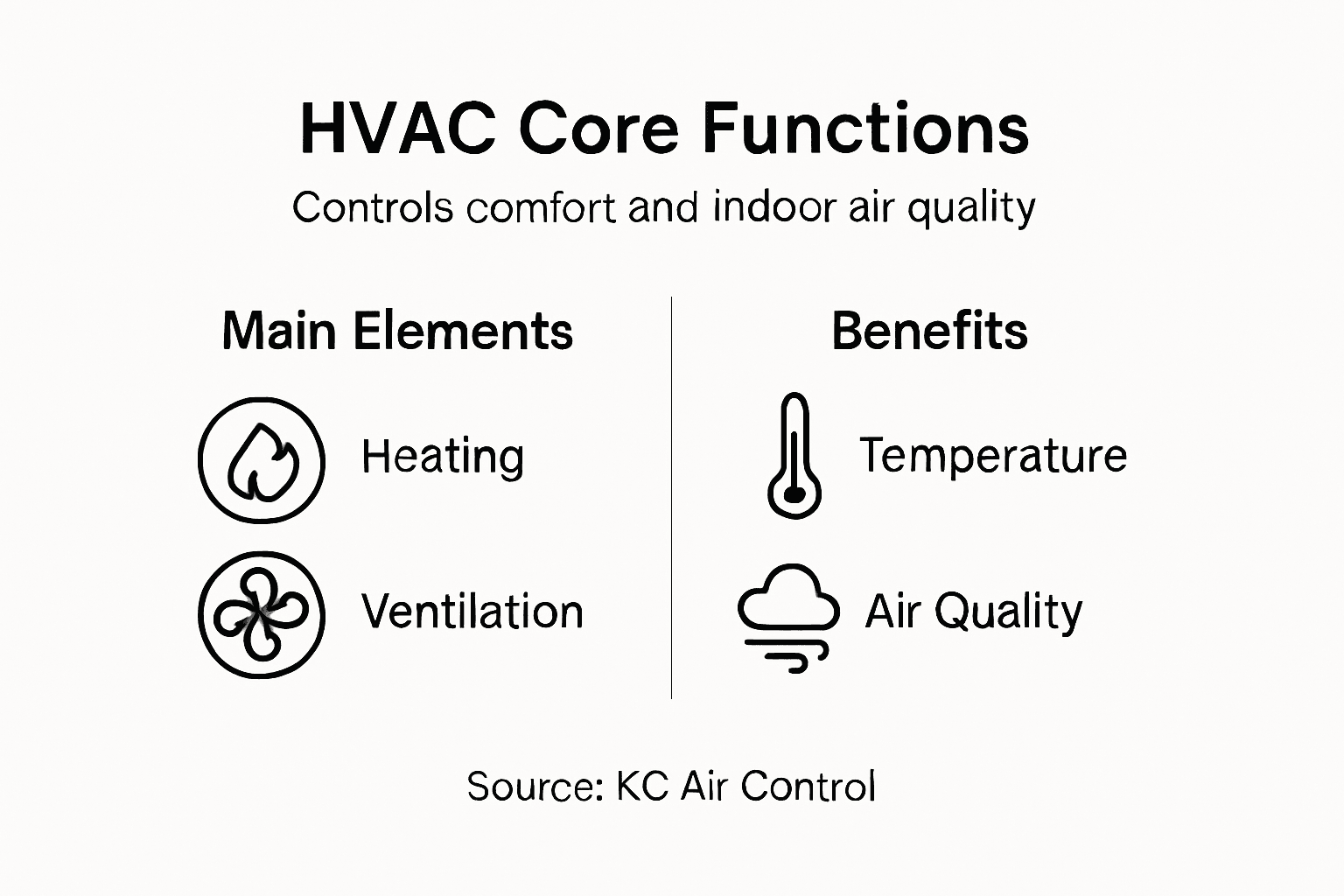
Air Conditioning cools your home and removes excess humidity during summer months. The system circulates refrigerant through copper coils to absorb heat from indoor air.
Core Functions You Depend On
Think of your HVAC system as the lungs and circulatory system of your home. Here’s what it actually does:
- Maintains consistent, comfortable temperatures year-round
- Reduces humidity levels to prevent mold and dust mite growth
- Filters and purifies indoor air for healthier breathing
- Distributes heated or cooled air evenly throughout all rooms
- Removes odors, allergens, and contaminants from your living space
The main goal of HVAC is thermal comfort—where you feel neither too hot nor too cold—while maintaining air quality that protects your family’s health.
When proper HVAC design and maintenance happen consistently, your system achieves energy efficiency and supports occupant health. A well-functioning HVAC system means fewer energy bills, fewer sick days, and better sleep at night.
Most Kansas City homeowners don’t think about their HVAC systems until something breaks. But this system runs nearly every day, managing the climate that affects your comfort, health, and energy costs.
Pro tip:Schedule routine HVAC maintenance before each heating and cooling season to catch small problems before they become expensive repairs and keep your system running at peak efficiency.
Types of HVAC Systems for Homes
Not all HVAC systems are created equal. The right system for your Kansas City home depends on your home’s layout, age, climate needs, and budget.
Understanding your options helps you make informed decisions about what works best for your family’s comfort and wallet.
Split Systems: The Most Common Choice
Split systems remain the standard in most American homes. They consist of two main units: an outdoor condenser and an indoor air handler connected by refrigerant lines.
This setup works for homes with existing ductwork that distributes cooled or heated air through walls and ceilings. Your furnace handles heating while the air conditioning unit manages cooling.
Split systems are affordable, reliable, and easy to repair when problems arise. Most Kansas City homes built before 2000 use this configuration.
Hybrid Split Systems: Best of Both Worlds
Hybrid split systems combine a heat pump with a traditional furnace. The heat pump handles most heating and cooling needs, then switches to the furnace when temperatures drop below freezing.
This approach maximizes efficiency during mild weather while maintaining comfort in harsh Kansas winters. You get lower energy bills without sacrificing performance during extreme cold.
Ductless Mini-Split Systems: Flexible and Efficient
If your home lacks ductwork or you’re adding a new room, ductless mini-split systems offer zone-by-zone comfort. Each room has its own wall-mounted unit controlled independently.
These systems work especially well for home additions, finished basements, or homes with room-to-room temperature disputes. You only heat or cool the spaces you’re actually using.
Geothermal Systems: Maximum Efficiency
Geothermal systems tap into stable underground temperatures to heat and cool your home with remarkable efficiency. They cost more upfront but deliver 25-50% energy savings over traditional systems.

These systems make sense for Kansas City homeowners committed to long-term energy savings and environmental responsibility.
Here’s how the main home HVAC system types compare on key criteria:
| System Type | Best for Homes With | Upfront Cost | Energy Efficiency |
|---|---|---|---|
| Split System | Existing ductwork | Moderate | Good |
| Hybrid Split | Ductwork, cold climates | Moderately high | Very good |
| Ductless Mini-Split | No ducts, add-ons | Higher per zone | Excellent (zoned) |
| Geothermal | Land for ground loop | High | Superior (25-50% savings) |
Choosing Your System
Consider these factors when selecting a system type:
- Existing ductwork and home layout
- Local climate demands and seasonal temperature extremes
- Budget for installation and long-term operating costs
- Energy efficiency priorities and goals
- Size and configuration of your living spaces
The best HVAC system is the one that matches your home’s structure, your climate, and your comfort priorities while staying within your budget.
When installing a new HVAC system, professional sizing and proper installation make all the difference in performance and longevity.
Pro tip:Get quotes from multiple HVAC contractors on different system types before deciding—comparing options prevents costly mistakes and ensures you select the right equipment for your specific home and needs.
How HVAC Systems Operate Efficiently
Your HVAC system doesn’t just turn on and off randomly. Modern systems use smart controls and dynamic adjustments to keep your home comfortable while minimizing energy waste.
Understanding how efficiency works helps you recognize when your system needs attention and how to maintain peak performance year-round.
Dynamic Control and Smart Adjustments
Dynamic control means your HVAC system continuously adapts to changing conditions. Temperature sensors, humidity monitors, and occupancy detectors feed real-time information to the system’s brain.
Based on this data, your system adjusts heating, cooling, and ventilation intensity. If nobody’s home, it scales back. When you arrive on a cold winter evening, it ramps up.
This constant adjustment prevents the energy waste of running at full capacity all day. You maintain comfort without paying for unnecessary operation.
Sensible and Latent Cooling Strategies
Sensible cooling removes heat from your home—that’s the temperature drop you feel. Your air conditioner pulls heat out of indoor air and releases it outside.
Latent cooling removes humidity. Kansas City summers get sticky, and removing moisture makes your home feel more comfortable at the same temperature.
High-performance systems balance both simultaneously, achieving energy recovery and improved efficiency through coordinated heating, cooling, and dehumidification.
Thermostat and Zoning Control
Your thermostat is the command center. It receives temperature data from throughout your home and tells the system when to heat, cool, or rest.
Zoned systems take this further by dividing your home into separate areas with individual controls. You might heat the upstairs bedroom while keeping the downstairs cooler.
This prevents energy waste heating or cooling unused rooms.
The Role of Ventilation
Efficient ventilation balances fresh air intake with energy conservation. Your system brings in outside air while exhausting stale indoor air.
Smart ventilation rates adjust based on occupancy and air quality sensors. You get the fresh air you need without wasting heated or cooled air.
Key Efficiency Features
- Variable-speed motors that run at lower speeds when full capacity isn’t needed
- Two-stage or modulating compressors that adjust cooling output
- Programmable thermostats that follow your daily schedule
- Energy recovery ventilation systems that capture heat before exhaustion
- Proper insulation and ductwork sealing to prevent air leaks
Real-time control algorithms can improve efficiency by over 30%, making smart adjustments one of the most powerful tools for reducing energy consumption.
When regular maintenance keeps components clean and properly calibrated, your system operates at peak efficiency throughout its lifespan.
Pro tip:Set your thermostat 7-10 degrees lower in winter and higher in summer when away or sleeping—programmable thermostats automate this, cutting energy use significantly without sacrificing comfort.
Key Maintenance Needs and Common Issues
Your HVAC system works hard year-round. Without regular maintenance, small problems snowball into expensive repairs and system failures that leave your family uncomfortable.
Knowing what to maintain and what problems to watch for keeps your system running reliably for decades.
Air Filter Replacement: The Foundation of Maintenance
Air filters trap dust, pollen, and debris before they reach your system. A clogged filter makes your HVAC work harder, wastes energy, and reduces indoor air quality.
Replace or clean filters every 1-3 months depending on household dust levels and pet hair. Kansas City homes with pets or allergy sufferers need more frequent changes.
This single task prevents most common efficiency problems. Set a calendar reminder to check filters monthly.
These common HVAC maintenance issues may impact comfort, cost, and system lifespan:
| Issue | Potential Impact | Professional Solution |
|---|---|---|
| Clogged air filter | Reduced airflow, energy loss | Replace or clean filter regularly |
| Dirty coils | Poor cooling, higher bills | Annual coil and drain cleaning |
| Refrigerant leak | Low cooling, system damage | Leak detection and recharge |
| Bad thermostat | Inaccurate temperatures | Calibration or replacement |
| Duct leaks | Uneven temperatures, loss | Seal or repair ductwork |
Coil Cleaning and Condensate Issues
Evaporator coils in your indoor unit collect moisture that drains away. Over time, dust accumulation and algae growth block proper drainage.
Clogged drainage lines cause water to back up, creating mold growth and potentially damaging your home. Professional HVAC maintenance includes coil cleaning and duct inspection to prevent these costly problems.
Condenser coils on outdoor units also need cleaning to maintain cooling efficiency.
Refrigerant Leaks and System Performance
Refrigerant leaks happen gradually through microscopic cracks in copper lines. Your system cools less effectively, runs longer, and wastes energy.
Unlike oil in a car, refrigerant doesn’t get used up—if you’re low, something’s leaking. Professional diagnosis finds and repairs leaks before they cause complete system failure.
Thermostat Calibration
Your thermostat tells your system when to run. If it reads temperature inaccurately, your system runs when it shouldn’t or fails to run when you need it.
Professional technicians calibrate thermostats to ensure accurate temperature readings and proper system cycling.
Common Issues to Watch For
- Reduced airflow through vents suggests filter clogs, ductwork leaks, or blower problems
- Unusual noises indicate loose components, bearing wear, or compressor issues
- Uneven temperatures across rooms point to zoning problems or ductwork damage
- Higher than normal bills signal efficiency loss from various causes
- Moisture or musty odors suggest condensate drainage or mold growth problems
Preventive maintenance reduces energy costs up to 30%, extends equipment lifespan, and prevents emergency failures that strike at the worst times.
Regular professional inspections catch problems early when repairs cost less and damage stays minimal. Spring and fall are ideal maintenance windows before demanding heating and cooling seasons arrive.
Pro tip:Schedule professional HVAC maintenance twice yearly—spring before cooling season and fall before heating season—to catch small problems before they become expensive emergencies.
Costs, Risks, and What Homeowners Should Avoid
HVAC systems represent a significant investment in your Kansas City home. Understanding costs, avoiding common pitfalls, and making smart choices protects your budget and ensures long-term comfort.
Skipping proper planning or taking shortcuts creates expensive problems that far exceed initial savings.
Understanding HVAC System Costs
New system installation typically ranges from $5,000 to $15,000 depending on system type, size, and complexity. This includes equipment, labor, ductwork modifications, and permits.
Energy-efficient upgrades cost more upfront but deliver significant returns. Newer, properly sized HVAC systems reduce energy use by 20% or more, cutting utility bills substantially over time.
A system that costs $2,000 more initially but saves $1,200 yearly in energy bills pays for itself in less than two years.
The DIY Installation Trap
DIY HVAC installation seems tempting to save labor costs. Don’t. This is where homeowners make expensive mistakes.
Improper equipment sizing, incorrect installation, and safety hazards void warranties and increase repair costs significantly. A $500 labor savings becomes a $5,000 problem when the system fails prematurely.
Building codes exist for safety and efficiency reasons. Installation mistakes can compromise system performance, reduce lifespan, and create safety risks for your family.
Professional Installation Protects Your Investment
Professional installation ensures proper equipment sizing, correct refrigerant charge, proper ductwork connections, and electrical safety. Licensed technicians follow building codes and manufacturer specifications.
Professional work comes with warranties covering both equipment and labor. This protection matters when repairs or replacements become necessary.
Risks of Neglecting Maintenance
Skipping regular maintenance creates cascading problems that accelerate deterioration.
- Higher energy bills from declining efficiency
- Reduced comfort as performance degrades
- Shortened equipment lifespan from stress and wear
- Emergency repairs at inconvenient times and premium pricing
- System failure during extreme weather when you need it most
Proper equipment sizing and professional installation prevent efficiency losses and increased risks that cost thousands more than investing correctly from the start.
A well-maintained system lasts 15-20 years. Neglected systems fail in 10-12 years, requiring early replacement.
What to Avoid
Don’t accept lowest-price bids without understanding what’s included. Don’t skip the maintenance plan. Don’t install oversized or undersized systems. Don’t postpone repairs when warning signs appear.
Pro tip:Get written quotes from at least three licensed contractors detailing equipment specifications, labor scope, warranties, and financing options—comparing apples to apples prevents costly mistakes and ensures fair pricing.
Ensure Your Home Comfort with Expert HVAC Solutions from KC Air Control
Your HVAC system plays a crucial role in maintaining consistent temperatures, improving indoor air quality, and keeping your Kansas City home comfortable year-round. Without proper maintenance and professional care, issues like clogged filters, refrigerant leaks, and inefficient heating or cooling can leave you facing discomfort and high energy bills. At KC Air Control, we understand these challenges and offer trusted heating, cooling, and air quality solutions backed by over 70 years of experience.

Don’t wait for your HVAC system to break down or lose efficiency. Take control now by exploring our comprehensive Importance Of Maintenance – Air Control services designed to prevent costly repairs and extend your system’s lifespan. Visit us today at https://kcaircontrol.com and schedule your professional inspection or service to protect your family’s comfort and health this season.
Frequently Asked Questions
What does HVAC stand for, and what are its main components?
HVAC stands for Heating, Ventilation, and Air Conditioning. These three systems work together to maintain indoor comfort by regulating temperature, humidity, air quality, and air distribution.
How does an HVAC system affect indoor air quality?
An HVAC system helps improve indoor air quality by ventilating stale air, filtering out pollutants, and removing excess humidity. This process helps prevent the buildup of allergens and unpleasant odors, contributing to a healthier living environment.
What types of HVAC systems are available for homes?
The main types of HVAC systems include split systems, hybrid split systems, ductless mini-split systems, and geothermal systems. Each type has its advantages and is suitable for different home layouts and climates.
Why is regular HVAC maintenance important?
Regular HVAC maintenance is crucial for prolonging the system’s lifespan, enhancing energy efficiency, and preventing costly repairs. Routine checks help catch small issues before they escalate, ensuring your home stays comfortable year-round.