
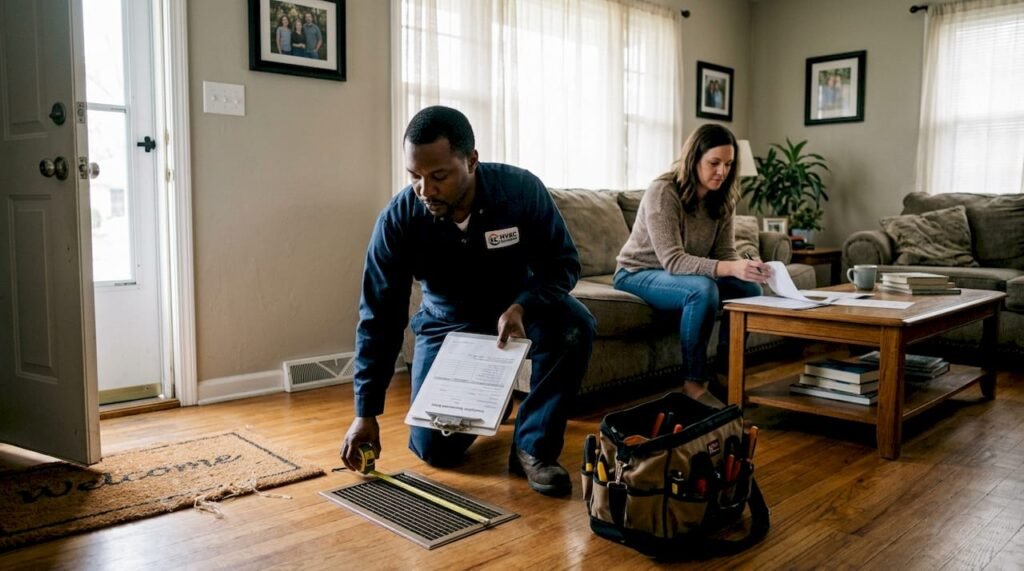
High energy bills and uncomfortable rooms often signal that your HVAC system is working harder than it should. Outdated or improperly installed equipment wastes energy and leaves you paying more while getting less comfort. This guide walks you through the essential steps for energy-efficient HVAC installation in Kansas City, from accurate sizing and professional planning to final commissioning and available rebates. You’ll learn how to prepare your home, choose the right system, and verify that your new equipment delivers maximum efficiency and lasting savings.
Energy-Efficient HVAC Installation Guide Contents for KC Homeowners
- Key takeaways
- Understanding proper HVAC sizing and initial planning
- Step-by-step installation process and critical quality checks
- Cost considerations and available incentives for Kansas City homeowners
- Choosing the right HVAC type and ensuring lasting efficiency
- Get expert help installing your energy-efficient HVAC system
- Frequently asked questions
Key Takeaways
| Point | Details |
|---|---|
| Accurate sizing | Manual J load calculations determine exact heating and cooling needs to prevent energy waste and shorten equipment life. |
| Planning and commissioning | Start planning at least 2 to 3 months before install to complete load calculations and schedule thorough commissioning. |
| Short installation window | A full system replacement typically takes 1 to 2 days with professional installation and final testing. |
| KC rebates | Kansas City offers rebates and tax incentives that lower installation costs. |
Understanding proper HVAC sizing and initial planning
Accurate sizing forms the foundation of every efficient HVAC installation. Proper sizing using Manual J load calculations accounts for your home’s size, insulation quality, window types, local climate, and occupancy patterns to determine exact heating and cooling requirements. This calculation prevents the common mistakes of oversizing or undersizing equipment, both of which lead to higher energy use, short cycling, poor humidity control, and shortened equipment life.
Incorrect sizing creates serious problems. Oversized systems cycle on and off too frequently, wasting energy and wearing out components faster. These systems typically last around 10 years instead of the expected 15 years you’d get from properly sized equipment. Undersized systems run continuously without reaching target temperatures, driving up bills and leaving you uncomfortable. The HVAC system installation process requires attention to these details from the start.
Manual J is required by IECC building codes in Kansas City to qualify for permits and rebates. Beyond Manual J, professionals will perform Manual S calculations for equipment selection, matching your load requirements to specific models and capacities. If you’re installing new ductwork or modifying existing ducts, Manual D calculations ensure proper duct sizing and layout for balanced airflow throughout your home.
Proper planning catches errors before they become expensive problems. Common mistakes include ignoring solar gain from large south-facing windows, overlooking occupancy patterns that affect cooling loads, and failing to account for future insulation upgrades. Each of these factors changes your heating and cooling needs, sometimes significantly.
Pro Tip: Start planning your HVAC installation at least 2-3 months before you need it. This timeline gives professionals adequate time to conduct thorough load calculations, order the right equipment, and schedule installation during optimal weather windows when demand is lower and crews can focus on quality work.
Step-by-step installation process and critical quality checks
Professional HVAC installation follows a structured workflow that ensures energy efficiency and warranty compliance. The installation process begins with consultation, moves through precise calculations, and ends with comprehensive commissioning that verifies every component performs as designed. Understanding these steps helps you recognize quality work and ask the right questions.
- Initial consultation to discuss your comfort goals, budget, and any specific concerns about noise, air quality, or existing system problems
- Manual J load calculation to confirm exact heating and cooling capacity requirements for your home
- Equipment selection using Manual S guidelines that match Kansas City’s climate zone and your home’s characteristics
- Ductwork design or verification with Manual D calculations if ducts are new, modified, or suspected of poor performance
- Professional installation including proper refrigerant charging, electrical connections, condensate drainage, and airflow balancing
- System commissioning with final testing, adjustment, and documentation to ensure all components meet specifications
| Installation Phase | Typical Duration | Primary Purpose |
|---|---|---|
| Consultation and assessment | 1-2 hours | Understand needs and evaluate existing conditions |
| Load calculations | 2-4 hours | Determine precise equipment sizing requirements |
| Equipment removal and prep | 2-4 hours | Remove old system and prepare installation area |
| New system installation | 6-10 hours | Install equipment, connect components, charge refrigerant |
| Commissioning and testing | 2-3 hours | Verify performance and adjust for optimal efficiency |
The entire process typically takes 1-2 days for a complete system replacement. Adequate space around both indoor and outdoor units is critical for proper airflow and future maintenance access. Professional expertise matters because improper installation voids warranties and creates performance problems that cost you money every month. Refrigerant charging requires precise measurements, airflow balancing demands specialized tools, and commissioning involves detailed testing that DIY approaches simply cannot replicate.
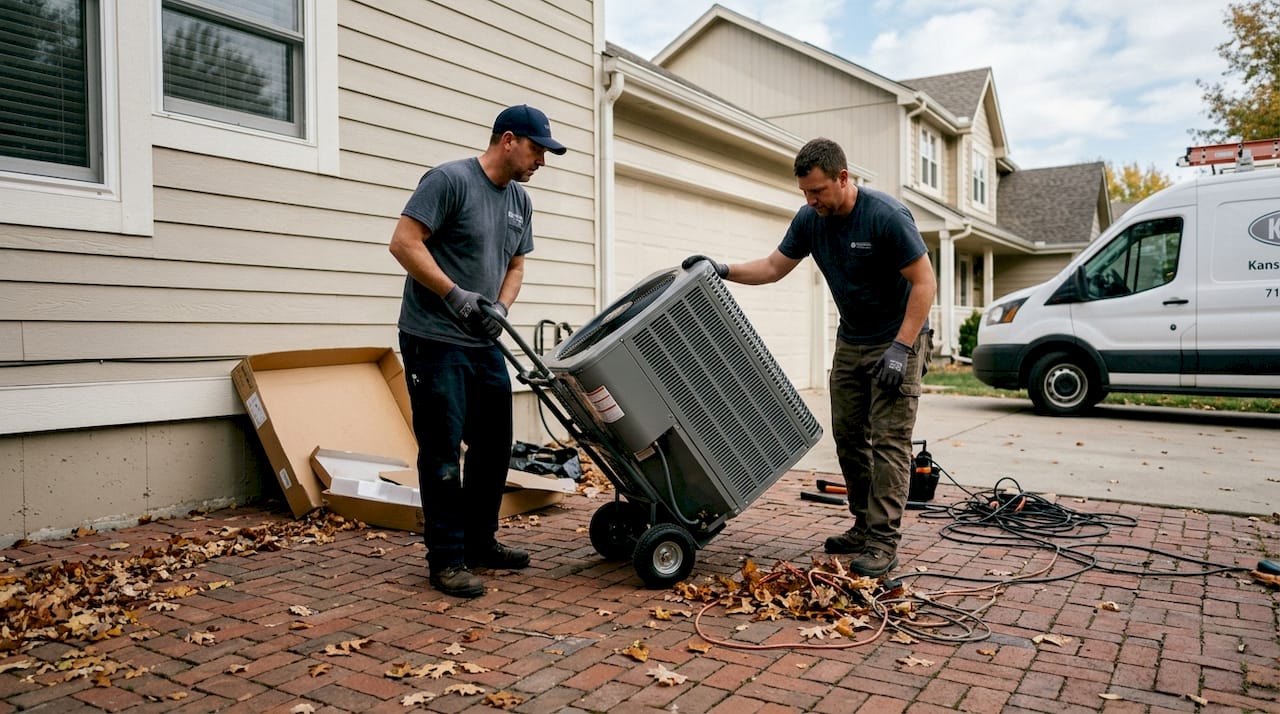
Pro Tip: Clear a 3-foot radius around both your indoor air handler and outdoor condenser before installation day. Remove stored items, trim vegetation, and ensure technicians have unobstructed access to electrical panels and existing ductwork. This preparation speeds installation and helps crews focus on quality instead of navigating obstacles.
Cost considerations and available incentives for Kansas City homeowners
Understanding the financial picture helps you make informed decisions about energy-efficient HVAC installation. Full HVAC system replacement in Kansas City ranges from $10,000 to $20,000 depending on equipment quality, system type, and installation complexity. Heat pump installations average about $5,200, offering high efficiency and lower operating costs in Kansas City’s relatively mild winters. High-efficiency systems carry higher upfront costs but reduce monthly energy bills by 20-50%, creating substantial savings over the system’s 15-20 year lifespan.
Local and federal incentives significantly reduce your net investment. The federal IRA tax credit provides 30% back on qualifying heat pumps and high-efficiency furnaces, up to $2,000 per system. Kansas City utility companies offer additional rebates: Evergy and Spire KC provide $400-$1,000 for systems meeting specific SEER2 efficiency ratings, typically 15-20+ depending on equipment type. These incentives stack, meaning you can combine federal credits with local utility rebates for maximum savings.
| System Type | Average Cost | Efficiency Rating | Available Rebates | Net Cost After Incentives |
|---|---|---|---|---|
| Heat Pump | $5,200 | 16+ SEER2, 9+ HSPF2 | $2,000 federal + $600 local | $2,600 |
| High-Efficiency Furnace | $4,500 | 96+ AFUE | $2,000 federal + $400 local | $2,100 |
| Dual-Fuel Hybrid | $8,500 | Combined ratings | $2,000 federal + $800 local | $5,700 |
Maximizing your financial incentives requires strategic planning:
- Schedule a pre-installation consultation with qualified contractors to verify equipment qualifies for all available rebates
- Combine HVAC rebates with separate incentives for duct sealing, insulation upgrades, and smart thermostats
- Submit rebate applications promptly after installation with all required documentation and proof of purchase
- Consider financing options that allow you to start saving on energy bills immediately while spreading installation costs
- Time your installation during utility promotional periods when rebate amounts may increase
The HVAC tune-up and cost savings potential extends beyond installation. Regular maintenance preserves efficiency and prevents small problems from becoming expensive repairs.
Pro Tip: Request a detailed quote that separates equipment costs, labor, and any additional work like duct modifications or electrical upgrades. This breakdown helps you understand where your money goes and makes it easier to compare quotes from multiple contractors. Ask specifically which rebates your chosen equipment qualifies for and whether the contractor handles rebate paperwork or if you need to submit applications yourself.
Choosing the right HVAC type and ensuring lasting efficiency
Selecting the optimal system type for Kansas City’s climate requires balancing efficiency, comfort, and cost. Heat pumps deliver excellent efficiency in mild winters with HSPF ratings above 8, but their heating capacity drops significantly when temperatures fall below 35°F. Furnaces provide reliable, fast heat during cold snaps, making them a dependable choice for Kansas City’s occasional winter extremes. Dual-fuel hybrid systems combine both technologies, automatically switching between the heat pump and gas furnace based on outdoor temperature and energy costs, delivering 30-60% energy savings by optimizing which system runs.
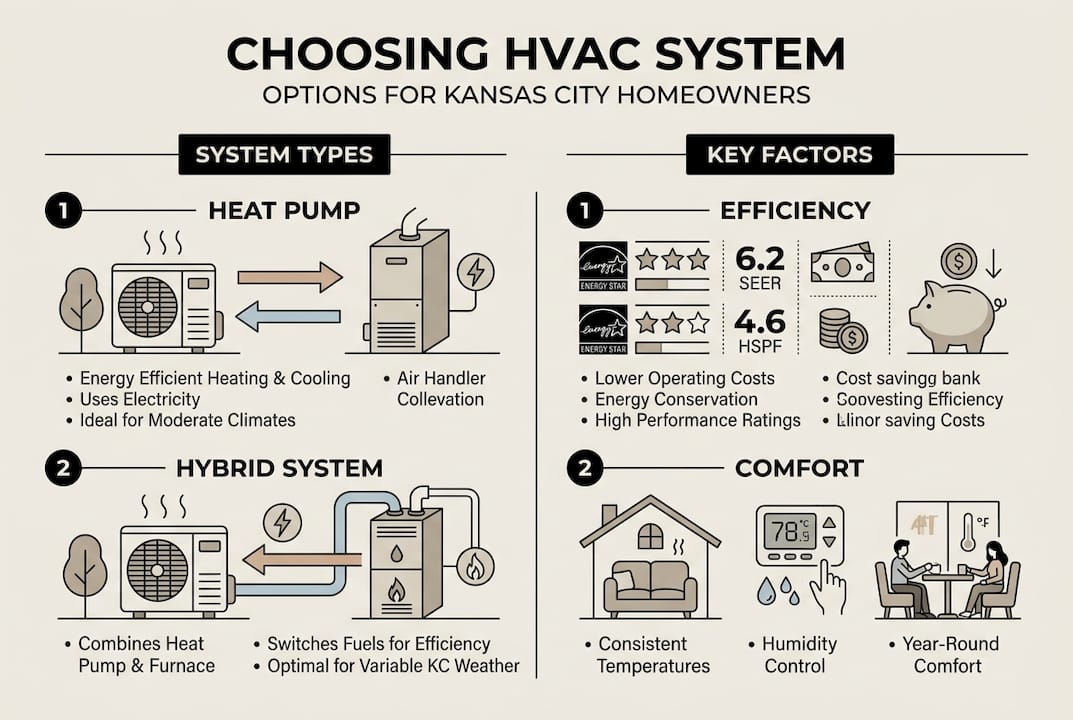
Your home’s existing infrastructure affects system choice and performance. Duct sealing and insulation are critical for achieving rated efficiency, and older homes often need duct retrofits to eliminate leaks that waste 20-30% of conditioned air. Properly sealed and insulated ducts last 20-30 years and dramatically improve system efficiency. Variable-speed compressors and electronically commutated motors enhance both efficiency and humidity control, important features for Kansas City’s humid summers.
Kansas City’s summer humidity requires careful attention during system selection and installation. Oversized air conditioners cool spaces too quickly without adequate dehumidification, leaving you with cold, clammy indoor air and potential mold growth. Proper sizing, variable-speed operation, and sometimes supplemental dehumidification equipment maintain comfortable humidity levels between 30-50% while maximizing energy efficiency.
Factors for selecting your HVAC type:
- Local climate patterns including typical winter lows and summer humidity levels
- Existing ductwork condition and whether modifications or sealing are needed
- Available space for equipment installation both indoors and outdoors
- Budget for initial installation and projected operating costs over 15-20 years
- Efficiency goals and desired payback period for energy savings
- Utility rate structures and time-of-use pricing that may favor specific fuel types
Professional commissioning is non-negotiable for achieving rated efficiency and equipment lifespan. Technicians must precisely balance airflow across all supply registers, verify refrigerant charge matches manufacturer specifications, test safety controls, and document baseline performance. Skipping commissioning or attempting DIY installation typically results in 15-30% efficiency loss, voided warranties, and equipment that fails years before its expected lifespan.
The furnace maintenance checklist provides ongoing care guidance that protects your investment and maintains peak performance year after year.
Get expert help installing your energy-efficient HVAC system
Installing an energy-efficient HVAC system requires expertise that goes beyond basic mechanical skills. Professional HVAC installation in Kansas City ensures accurate sizing, proper commissioning, and compliance with all codes and rebate requirements. KC Air Control’s technicians bring over 70 years of combined experience to every installation, helping Kansas City homeowners maximize energy savings while securing all available rebates and incentives.

Our team handles the complete HVAC system installation process from initial load calculations through final commissioning and performance verification. We work with you to select equipment that matches your home’s needs and your efficiency goals, then install it correctly the first time to protect your warranty and your investment. Regular HVAC tune-ups from trusted professionals keep your system running efficiently for years, preventing small issues from becoming expensive problems.
Contact KC Air Control today to schedule your installation consultation. Our experts will assess your home, explain your options, and provide a detailed quote that includes all available rebates and incentives. Experience the comfort and savings that come from professional installation done right.
Frequently asked questions
What is the best HVAC system type for Kansas City homes?
Dual-fuel hybrid systems typically offer the best overall value for Kansas City, automatically switching between an efficient heat pump and a gas furnace based on outdoor temperature. Heat pumps handle mild weather efficiently while furnaces provide reliable heat during cold snaps. Your choice should also consider your home’s insulation quality and existing ductwork condition, as these factors significantly impact system performance.
How much can I save with an energy-efficient HVAC installation?
High-efficiency HVAC systems reduce energy consumption by 20-50% compared to older equipment, translating to $400-$1,200 in annual savings for typical Kansas City homes. When you combine these ongoing savings with federal tax credits up to $2,000 and local utility rebates of $400-$1,000, the total financial benefit over the system’s lifespan can exceed $10,000. Your actual savings depend on your current system’s efficiency, your home’s size, and your usage patterns.
Why is professional HVAC installation important?
Professional installers perform required Manual J load calculations and comprehensive commissioning that optimize system performance and efficiency. DIY or poor-quality installations risk improper refrigerant charging, unbalanced airflow, and safety issues that void manufacturer warranties and increase energy costs by 15-30%. Professional installation also ensures compliance with local building codes and rebate program requirements, protecting your investment and maximizing available incentives.
Are there rebates available for energy-efficient HVAC systems in Kansas City?
Yes, Kansas City homeowners can access substantial incentives for energy-efficient HVAC installations. The federal IRA program offers 30% tax credits up to $2,000 for qualifying heat pumps and high-efficiency furnaces. Local utilities Evergy and Spire KC provide additional rebates ranging from $400 to $1,000 depending on your system’s SEER2 or AFUE efficiency ratings. These incentives stack, and you can often combine them with separate rebates for duct sealing and insulation improvements.
Recommended
- Optimize your HVAC maintenance workflow for KC homes – KC Air Control – Heating & Cooling
- Why professional HVAC installation matters in Kansas City – KC Air Control – Heating & Cooling
- HVAC inspections for Kansas City homeowners: 2026 guide – KC Air Control – Heating & Cooling
- Seasonal HVAC Maintenance Steps for Home Energy Savings – Air Control