

Your current HVAC system might feel like it’s doing its job, but if it’s more than a decade old, it could be quietly costing you far more than you realize. Older systems use up to 30% more energy than modern, high-efficiency units, and that gap shows up directly on your monthly utility bill. Beyond the money, aging equipment struggles to keep your home consistently comfortable, especially through Kansas City’s demanding weather. This article walks you through the real reasons homeowners upgrade, the benefits you’ll notice right away, and how to tell when the time is right for your home.
Comprehensive HVAC Upgrade Guide: Benefits, Signs & Savings
- Reasons homeowners should consider HVAC system upgrades
- How new HVAC systems improve comfort and air quality
- Signs it’s time to upgrade your HVAC system
- Financial impact: energy savings, rebates, and property value
- The real reason most HVAC upgrades pay off in Kansas City
- Ready to upgrade? Get expert help for your Kansas City home
- Frequently asked questions
Key Takeaways
| Point | Details |
|---|---|
| Save on energy | Upgraded HVAC systems can cut utility bills by up to 30 percent each year. |
| Comfort and air quality | New systems create more consistent temperatures and cleaner indoor air. |
| Know the signs | Symptoms like rising bills, uneven heating or cooling, and frequent fixes mean it may be time for an upgrade. |
| Boost home value | Efficient HVAC upgrades can strengthen your home’s resale value and appeal to buyers. |
Reasons homeowners should consider HVAC system upgrades
Now that the true costs of older HVAC systems are clear, let’s dig into what drives local homeowners to make an upgrade. The motivations go well beyond just saving a few dollars each month.
Energy efficiency is the biggest driver. Modern systems carry higher SEER (Seasonal Energy Efficiency Ratio) ratings, which measure how efficiently a unit cools your home relative to the energy it uses. The higher the SEER rating, the less energy your system needs to do the same job. Pairing a high-SEER unit with routine steps to boost HVAC efficiency can dramatically cut your monthly costs.
Kansas City’s climate is particularly tough on HVAC equipment. Hot, humid summers and cold winters push aging systems to their limits, leading to more frequent breakdowns and higher operating costs. A newer system is built to handle those extremes reliably, season after season.
Here are the core reasons Kansas City homeowners choose to upgrade:
- Lower energy bills from HVAC efficiency standards that modern units are built to meet
- More consistent temperatures throughout every room in the house
- Better humidity control, which matters a lot during Kansas City summers
- Fewer repairs and emergency calls, saving you time and stress
- Improved indoor air quality through better filtration options
- Higher home resale value, since buyers notice and value efficient systems
Proper maintaining HVAC systems also extends the life of your new equipment, so you protect your investment from day one.
Statistic: Homeowners who upgrade to a high-efficiency HVAC system and commit to scheduling HVAC maintenance annually can see energy savings that offset upgrade costs within a few years.
Pro Tip: When comparing new systems, look for units with a SEER rating of 16 or higher. In Kansas City’s climate, the efficiency gains from a higher-rated system add up faster than in milder regions.
How new HVAC systems improve comfort and air quality
Understanding the main motives for upgrading, it’s important to see how new technology translates to everyday benefits inside your home.
Modern HVAC units feature variable speed motors and advanced filtration, which are two upgrades that make a noticeable difference in daily comfort. Variable speed motors adjust output continuously rather than simply switching on and off, which means your home stays at a steadier temperature without the blasts of hot or cold air that older systems produce.
Here’s a side-by-side look at how older and newer systems compare:
| Feature | Older system (10+ years) | New high-efficiency system |
|---|---|---|
| Temperature consistency | Uneven, frequent swings | Steady, room-to-room balance |
| Humidity control | Limited | Precise, automatic adjustment |
| Air filtration | Basic filter only | Advanced multi-stage filtration |
| Noise level | Loud cycling on/off | Quiet, variable-speed operation |
| Energy use | High, fixed output | Lower, adjusts to actual need |
| Repair frequency | Increasing over time | Minimal with regular maintenance |
For families with allergies or asthma, the filtration improvement alone can be significant. New systems can capture much finer particles, including dust, pollen, and pet dander, which older systems simply pass through. Exploring indoor air quality improvements alongside a system upgrade gives you the most complete solution for your family’s health.
The benefits of upgrading include:
- Fewer hot and cold spots in rooms that always felt uncomfortable
- Reduced indoor humidity that makes summer heat feel worse
- Quieter operation that doesn’t disrupt sleep or conversation
- Cleaner air that supports better respiratory health
If you want to understand what energy efficient HVAC installation looks like in practice, the options available in 2026 are more accessible and cost-effective than many homeowners expect.
Signs it’s time to upgrade your HVAC system
Now that we know the capabilities of new systems, how do you know when it’s time to upgrade? Here’s how to spot the signs.
Many homeowners hold on to aging equipment because it still runs. But running and running well are very different things. Here are the clearest indicators that it’s time to move on:
- Your system is 15 years old or older. Most HVAC systems are designed to last 15 to 20 years. Past that point, efficiency drops and repair costs climb. Knowing when to replace your furnace can save you from a costly emergency replacement in the middle of winter.
- You’re calling for repairs every season. One repair is normal. Repeated repairs on the same system signal that components are failing and the unit is near the end of its useful life.
- Your energy bills keep rising with no change in usage. Unexpected bill spikes and frequent breakdowns are among the most reliable warning signs that a system is losing efficiency fast.
- You notice uneven temperatures or weak airflow. If some rooms are always too warm or too cold, your system is struggling to distribute conditioned air properly.
- The system is unusually loud. Banging, rattling, or grinding sounds mean internal components are worn. These noises tend to get worse, not better.
Familiarizing yourself with common HVAC repair warning signs helps you catch problems early and decide whether repair or replacement makes more sense financially.
Pro Tip: A simple rule of thumb: if a single repair costs more than half the price of a new system, replacement is almost always the smarter financial decision. Ask your technician to walk you through both options before committing.
Financial impact: energy savings, rebates, and property value
Spotting warning signs is important, but the final piece for most homeowners is the financial picture. Here’s how upgrading could impact your wallet and your home’s value.
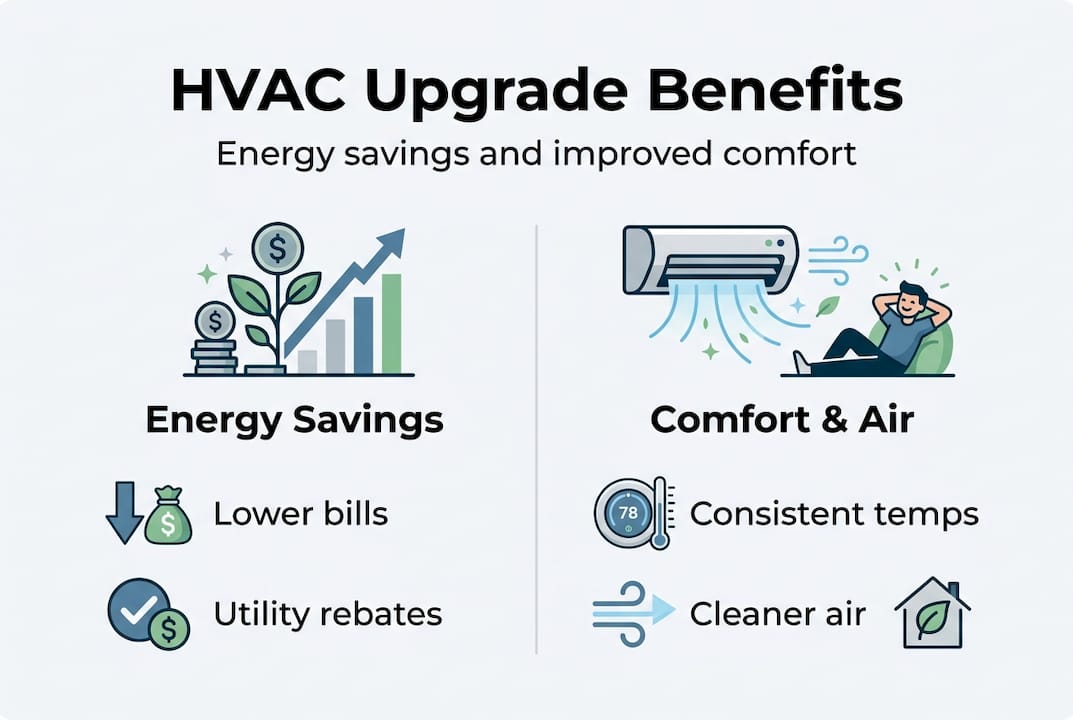
The numbers make a strong case. A new high-efficiency system can reduce energy bills by 20 to 30% compared to an older unit. For a Kansas City home spending $200 per month on heating and cooling, that’s $40 to $60 back in your pocket every single month.
| Financial factor | Estimated impact |
|---|---|
| Annual energy savings | $480 to $720 per year |
| Utility rebates (varies by provider) | $100 to $500 one-time |
| Federal tax credits (2026) | Up to 30% of equipment cost |
| Home resale value increase | $5,000 to $10,000 on average |
Rebates are real and worth pursuing. HVAC upgrade rebates are offered through many utility companies and government programs, and in 2026, federal incentives for energy-efficient equipment remain strong. Your HVAC contractor can often help you identify and apply for available programs.
Key financial benefits to keep in mind:
- Lower monthly utility costs that start immediately after installation
- One-time rebates that reduce your net upgrade cost
- Tax credits that apply to qualifying high-efficiency equipment
- A higher asking price when you sell, since buyers factor in utility costs
Understanding how HVAC’s effect on financing works can also help you plan your purchase. And if you want to plan your budget before committing, getting HVAC estimate costs from a local expert gives you a clear picture of what to expect.
The real reason most HVAC upgrades pay off in Kansas City
The numbers are compelling, but they don’t tell the whole story. In our experience working with Kansas City homeowners for over 70 years, the biggest gains from an upgrade aren’t always visible on a spreadsheet.
Comfort is hard to put a dollar amount on. When your system runs quietly, holds a steady temperature, and doesn’t leave you waking up to a freezing house in January, that matters. So does knowing your family is breathing cleaner air every day. These are the benefits homeowners tell us they notice most after upgrading.
Kansas City’s long heating and cooling seasons also mean efficiency gains compound faster here than in more temperate climates. You’re running your system hard for many months of the year. Every percentage point of efficiency improvement adds up quickly.
There’s also peace of mind. A new system comes with a manufacturer’s warranty, which means fewer unexpected repair bills and no late-night calls wondering if the system will make it through the week. When you focus on optimizing home comfort, the investment in a reliable, modern system is one of the most practical decisions a homeowner can make.
Ready to upgrade? Get expert help for your Kansas City home
If you’re ready to experience these benefits for yourself, here’s where you can get help from trusted Kansas City HVAC experts.
At KC Air Control, we’ve been helping Kansas City homeowners get more from their HVAC systems for over 70 years. Whether you need a full system replacement, a tune-up before the season changes, or just want an honest estimate, we’re here to help.

Our team can walk you through efficient HVAC upgrades that fit your home and your budget, help you identify available rebates, and handle everything from installation to follow-up maintenance. We also offer furnace repair services and emergency HVAC repair when you need fast, reliable help. Schedule your estimate online today and take the first step toward a more comfortable, efficient home.
Frequently asked questions
How much can I save on energy bills by upgrading my HVAC system?
Upgrading to a high-efficiency unit can cut energy bills by 20 to 30%, which adds up to hundreds of dollars in annual savings for most Kansas City households.
Are there rebates or incentives for new HVAC installations in Kansas City?
Yes, utility and government rebates are available for energy-efficient HVAC upgrades, and federal tax credits for qualifying equipment remain in place through 2026.
How do I know if my HVAC system needs to be replaced?
If your system is over 15 years old, requires repeated repairs, or you’re seeing unexpected energy bill spikes, those are strong signals that replacement makes more sense than another repair.
Will a new HVAC system improve my home’s air quality?
Modern systems with advanced multi-stage filtration can significantly reduce indoor allergens, dust, and pollutants that older, basic-filter systems allow to circulate.
Does upgrading my HVAC system increase home value?
High-efficiency HVAC systems are a recognized selling point, and efficiency upgrades can boost property value by several thousand dollars, making them a smart investment before listing your home.
Recommended
- How HVAC systems optimize home comfort and energy efficiency – KC Air Control – Heating & Cooling
- HVAC tune-up: boost efficiency and lower costs in 2026 – KC Air Control – Heating & Cooling
- Why replace your furnace? Savings, comfort, and smart timing – KC Air Control – Heating & Cooling
- HVAC Maintenance: Boosting Home Comfort and Savings – Air Control
Pingback: Why upgrade your HVAC? Cut bills and breathe easier in 2026 - KC Air Control - Heating & Cooling