
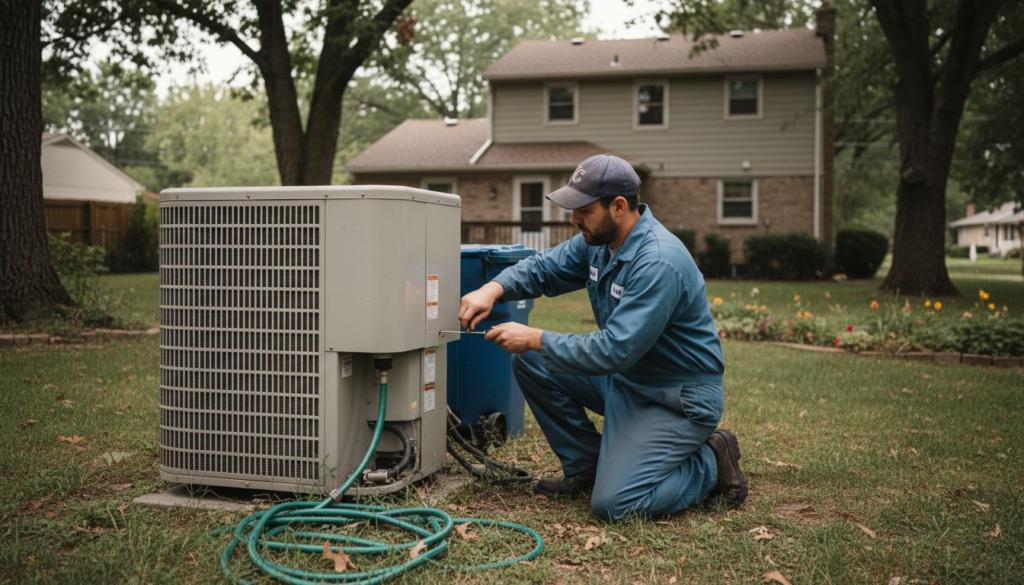
Regular AC tune-ups can improve your system’s energy efficiency by 15%, directly lowering your cooling bills. Neglecting maintenance leads to sky-high utility costs and inconvenient breakdowns during Kansas City’s hottest months. This guide explains why professional tune-ups matter, what technicians inspect, and how seasonal maintenance protects your investment while keeping your home comfortable all summer long.
Kansas City AC Tune-Up Guide: Benefits, Timing & FAQs
- Understanding The Importance Of Regular AC Tune-Ups
- Key Components Checked And Serviced During An AC Tune-Up
- Quantified Benefits: Energy Savings, Longevity, And Repair Reduction
- Common Misconceptions About AC Tune-Ups Debunked
- Seasonal Timing And Local Considerations For Kansas City Homeowners
- Practical Guide: How To Prepare And What To Expect From Your AC Tune-Up Service
- Keep Your Kansas City Home Cool With Expert AC Tune-Ups
- Frequently Asked Questions About AC Tune-Ups
Key takeaways
| Point | Details |
|---|---|
| Energy savings | Tune-ups boost AC efficiency by approximately 15%, cutting monthly cooling costs. |
| Essential inspections | Technicians check coils, refrigerant levels, filters, and electrical connections during service. |
| Fewer emergencies | Homes with annual maintenance experience 20% fewer emergency repair calls. |
| Professional advantage | Trained technicians identify hidden issues that DIY cleaning misses completely. |
| Seasonal timing | Kansas City homeowners should schedule tune-ups each spring before hot weather arrives. |
Understanding the importance of regular AC tune-ups
Professional AC tune-ups deliver measurable improvements in energy efficiency and system reliability. Your cooling system works harder in Kansas City’s humid summers, making preventive maintenance essential. Regular maintenance enhances home comfort by ensuring consistent temperatures and better air quality throughout your living spaces.
Energy savings represent the most immediate benefit. Well-maintained systems consume less electricity to achieve the same cooling output. The 15% efficiency improvement translates to noticeable reductions in your monthly utility bills during peak cooling season.
Reliable performance prevents uncomfortable breakdowns when you need cooling most. Kansas City’s summer heat and humidity create ideal conditions for AC strain and premature wear. Components degrade faster under continuous heavy loads, making professional inspections critical for catching problems early.
System longevity extends significantly with consistent care. Properly maintained units often operate efficiently for several additional years beyond typical lifespans. This delayed replacement cost represents substantial long-term savings for homeowners.
Pro Tip: Schedule your annual tune-up in early spring before temperatures climb. This timing ensures your system receives attention before peak demand season when HVAC companies book solid and emergency repairs become costlier.
Understanding why maintenance matters helps you make informed decisions about protecting your cooling investment. The Energy Saver Guide provides additional resources on maximizing home energy efficiency through proper HVAC care.
Key components checked and serviced during an AC tune-up
Professional technicians follow systematic procedures during comprehensive tune-ups. Understanding what happens during service helps you recognize the value of professional maintenance versus simple DIY tasks.
A typical AC tune-up includes several critical inspection and service tasks:
- Coil cleaning removes dirt and debris that block heat transfer
- Refrigerant level checks ensure optimal cooling capacity
- Filter replacement improves airflow and indoor air quality
- Electrical component testing prevents potential safety hazards
- Condensate drain clearing prevents water damage and mold growth
- Thermostat calibration ensures accurate temperature control
Each component directly influences your system’s efficiency and reliability. Dirty coils force your compressor to work harder, consuming more electricity for less cooling. Low refrigerant levels indicate leaks that require professional repair to prevent compressor damage.
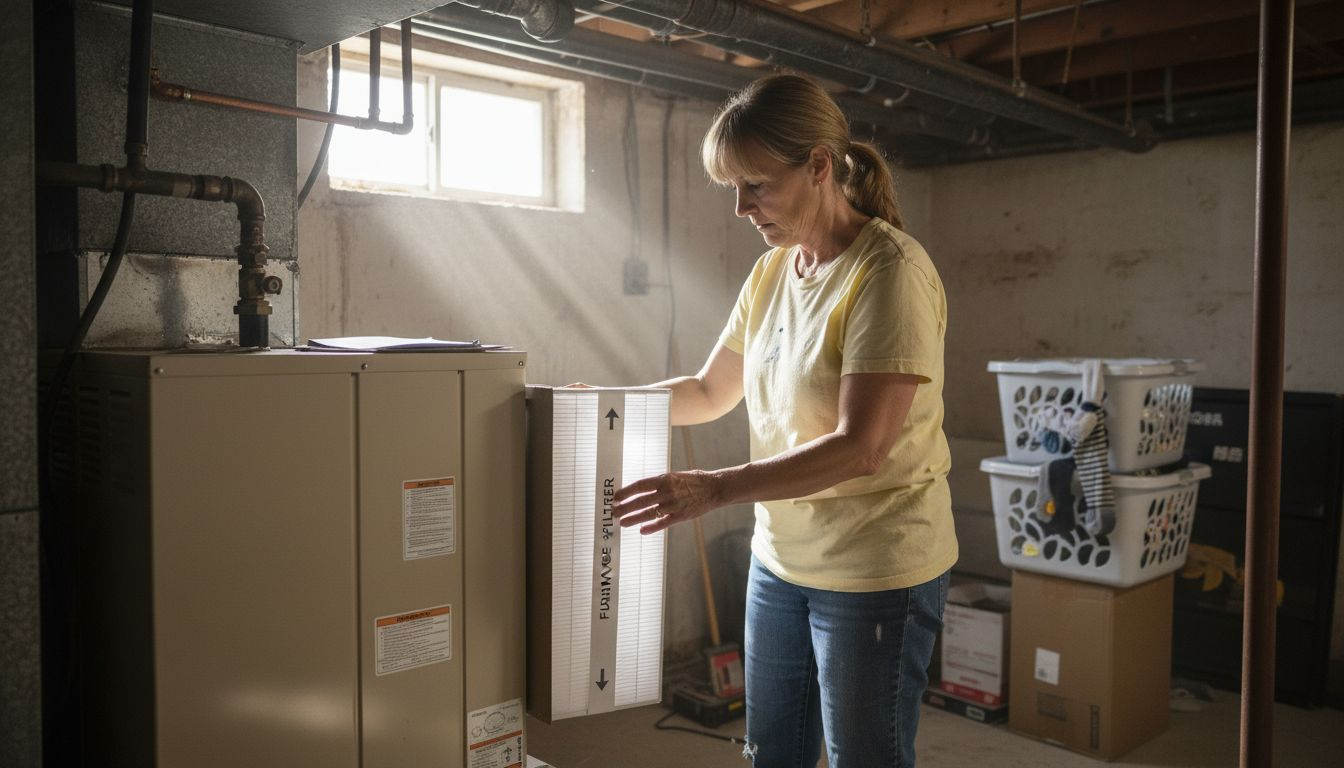
Filter changes alone can improve airflow by over 25% in systems with clogged filters. Better airflow means your AC runs shorter cycles to reach desired temperatures, reducing energy consumption. Clean filters also trap more dust, pollen, and allergens, significantly improving indoor air quality for your family.
| Service Task | Primary Benefit | Impact on Efficiency |
|---|---|---|
| Coil cleaning | Maximizes heat exchange | 8-12% improvement |
| Refrigerant check | Ensures cooling capacity | Prevents 20% loss |
| Filter replacement | Improves airflow | 5-15% improvement |
| Electrical testing | Prevents failures | Maintains reliability |
Electrical connections loosen over time from vibration and thermal cycling. Loose connections create resistance, generating heat and wasting energy. Severe cases can cause component failures or create fire hazards.
Pro Tip: Ask your technician to show you the condition of your coils and filters during service. Visual evidence helps you understand why professional AC maintenance catches issues DIY cleaning misses.
Comprehensive tune-ups address every system component that affects performance. This thorough approach prevents small problems from escalating into expensive repairs. The importance of regular maintenance becomes clear when you consider how interconnected AC components function together.
Quantified benefits: energy savings, longevity, and repair reduction
Data proves the financial value of consistent AC maintenance. Understanding these numbers helps you evaluate tune-ups as an investment rather than an expense.
Energy efficiency improvements deliver immediate savings. The typical 15% efficiency boost means a homeowner spending $200 monthly on summer cooling saves $30 per month, or $90 to $120 per cooling season. Over five years, this represents $450 to $600 in utility savings from a service costing $100 to $150 annually.
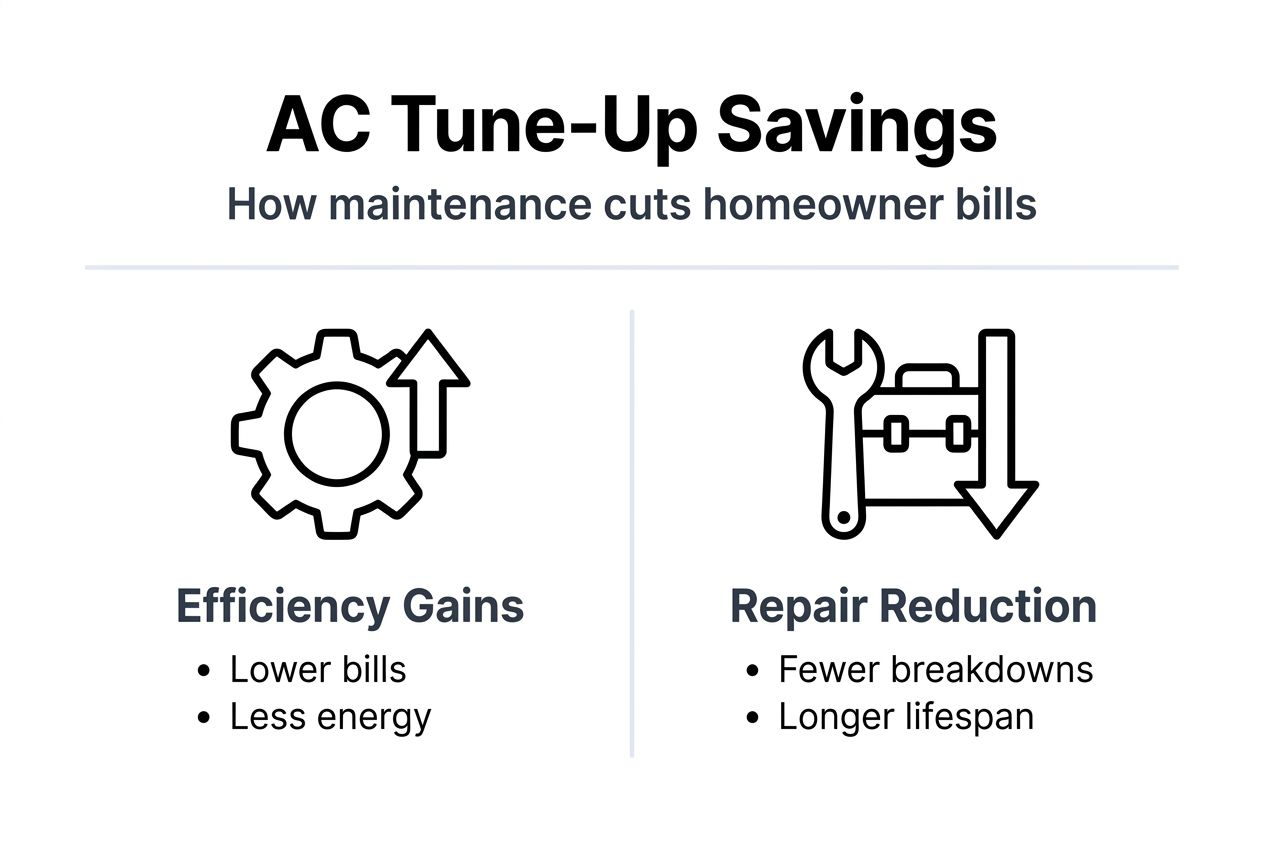
Emergency repair frequency drops dramatically with preventive care. Homes with annual tune-ups experience 20% fewer emergency repairs over five years compared to homes without maintenance. Considering that emergency service calls often cost $300 to $600, avoiding even one emergency pays for multiple years of tune-ups.
| Maintenance Benefit | Quantified Impact | Financial Value |
|---|---|---|
| Energy savings | 15% efficiency gain | $90-120 per season |
| Repair reduction | 20% fewer emergencies | $300-600 saved per avoided call |
| Extended lifespan | 3-5 additional years | $4,000-7,000 delayed replacement |
| Warranty protection | Maintains coverage | Protects $1,000+ potential claims |
System longevity represents the largest financial impact. AC replacement costs range from $4,000 to $7,000 for typical residential systems. Extending your unit’s lifespan by even three years through proper maintenance delays this major expense, providing substantial return on your tune-up investment.
Lower total repair costs accumulate over time. Well-maintained systems experience fewer component failures requiring replacement. Compressors, capacitors, and motors last longer when operating under optimal conditions without excessive strain from dirty coils or low refrigerant.
Regular maintenance transforms your AC from a liability requiring constant attention into a reliable asset that quietly performs its job year after year with minimal intervention.
Many manufacturers require proof of annual maintenance to honor warranty claims. Skipping tune-ups can void coverage worth thousands of dollars. Documentation from professional service protects your investment and ensures warranty protection remains valid.
Regular HVAC servicing provides measurable returns through multiple financial channels. The cumulative savings from efficiency, avoided repairs, and extended lifespan far exceed the modest annual maintenance cost. Understanding the emergency repair workflow helps you appreciate how preventive care avoids stressful situations during heat waves.
The Energy Saver Guide offers additional strategies for maximizing home energy efficiency alongside proper HVAC maintenance practices.
Common misconceptions about AC tune-ups debunked
Homeowners often hold incorrect beliefs about AC maintenance that prevent them from scheduling necessary service. Addressing these myths helps you make informed decisions about protecting your cooling system.
DIY cleaning cannot replace professional tune-ups. While changing filters and hosing off outdoor units helps, homeowners typically miss 30% of issues requiring specialized tools and training to detect. Refrigerant levels, electrical connections, and internal component wear require professional assessment.
Tune-ups prevent problems rather than just fixing existing symptoms. Many homeowners wait until their AC stops working to call for service. Professional maintenance identifies developing issues before they cause failures, avoiding emergency repairs during the hottest days when you need cooling most.
Older AC units still benefit significantly from tune-ups. Some believe aging systems are not worth maintaining, but proper care extends lifespan and improves efficiency regardless of age. A 10-year-old system receiving regular maintenance outperforms a 5-year-old neglected unit.
- New systems need maintenance from year one to protect warranties
- Skipping filter changes reduces airflow by up to 25%
- Refrigerant does not need annual replacement if levels remain stable
- Tune-ups find problems DIY inspections cannot detect
- Professional equipment measures performance metrics homeowners cannot assess
Filter neglect creates cascading problems throughout your system. Restricted airflow forces your blower motor to work harder, consuming more energy and wearing out faster. Dirty filters also allow dust to accumulate on coils, further reducing efficiency and heat transfer capacity.
Refrigerant levels should remain constant in properly functioning systems. If your AC needs refrigerant added annually, you have a leak requiring repair. Simply adding refrigerant without fixing leaks wastes money and harms the environment while leaving the underlying problem unresolved.
Understanding what AC maintenance involves helps you separate fact from fiction about tune-up necessity and effectiveness. Professional service provides value that DIY efforts cannot replicate, regardless of your system’s age or current performance level.
Seasonal timing and local considerations for Kansas City homeowners
Kansas City’s climate creates specific maintenance timing needs for optimal AC performance. Understanding local weather patterns helps you schedule service for maximum benefit.
Spring represents the ideal tune-up window for Kansas City homes. Scheduling service in March or April ensures your system receives attention before temperatures climb and cooling demand increases. Early timing also means HVAC companies have better availability and can provide more flexible scheduling.
Kansas City’s humid summers place exceptional strain on air conditioning systems. High humidity forces your AC to remove moisture from indoor air while cooling, creating additional workload. This increased demand accelerates wear on components like compressors, motors, and capacitors.
- Schedule tune-ups between March and early May
- Avoid waiting until the first hot day when HVAC companies book solid
- Early maintenance prevents mid-summer breakdowns during heat waves
- Kansas City humidity increases condensate production requiring drain maintenance
- Spring service allows time for repairs before peak cooling season
Timing maintenance before peak season provides several advantages. If your technician discovers needed repairs, you have time to address them without suffering through hot days while waiting for parts or service. Emergency repairs during July heat waves cost more and create uncomfortable delays.
Aligning maintenance with seasonal weather patterns builds a reliable annual cycle. Many homeowners schedule their spring AC tune-up alongside their fall furnace maintenance, creating a complete HVAC care routine that protects both systems year-round.
Local climate considerations make professional maintenance especially valuable. Kansas City’s temperature swings, humidity levels, and storm activity all contribute to AC wear that benefits from expert attention. Understanding AC tune-up timing specific to Kansas City ensures your system stays ready for whatever weather arrives.
Seasonal HVAC maintenance follows predictable patterns aligned with local climate demands. Establishing this routine protects your investment while ensuring consistent home comfort throughout the year.
Practical guide: how to prepare and what to expect from your AC tune-up service
Proper preparation ensures your tune-up appointment proceeds smoothly and efficiently. Understanding the service process helps you make the most of professional maintenance.
- Schedule your tune-up in early spring before peak season arrives
- Clear debris and vegetation from around your outdoor unit
- Ensure technicians can access your indoor air handler or furnace
- Make a list of any performance concerns to discuss during service
- Review your last service report if available
- Plan to be home during the appointment for questions and recommendations
Clearing access around your outdoor unit saves time and ensures thorough service. Remove leaves, grass clippings, and debris that accumulate around the condenser. Trim back bushes or plants to provide at least two feet of clearance on all sides.
During the appointment, your technician will systematically inspect and service each component. The process typically takes 60 to 90 minutes for thorough service. Technicians test system operation, measure performance metrics, and document findings for your records.
Ask questions about your system’s condition and any recommended repairs. Professional technicians can explain what they found, why certain repairs matter, and how urgent each issue is. Understanding these recommendations helps you prioritize maintenance spending.
Pro Tip: Take photos of your AC model and serial number plate before scheduling service. This information helps HVAC companies prepare properly and bring any commonly needed parts to your appointment.
Post tune-up care maintains the improvements from professional service. Change filters on the schedule your technician recommends, typically every 30 to 90 days depending on your home. Keep outdoor units clear of debris between annual services.
Maintenance records provide valuable history for future service. Save your service reports showing what was inspected, cleaned, and repaired. These records help technicians track your system’s condition over time and prove maintenance for warranty claims.
Ready to schedule professional service? Book your AC tune-up online for convenient scheduling that fits your timeline and ensures your system receives expert care before summer heat arrives.
Keep your Kansas City home cool with expert AC tune-ups
Your cooling system deserves professional attention to deliver reliable performance when Kansas City temperatures soar. After understanding how tune-ups boost efficiency, prevent breakdowns, and save money, the next step is scheduling service with experienced local technicians.

Professional maintenance provides value that DIY efforts cannot match. Specialized diagnostic equipment measures refrigerant pressures, electrical current draw, and temperature differentials that reveal developing problems before they cause failures. Trained technicians spot subtle signs of wear that homeowners miss during casual inspections.
Spring scheduling ensures your AC stands ready for summer’s demands. Early service appointments provide flexible timing and allow repairs to proceed without the urgency of mid-summer heat waves. Proactive maintenance prevents the stress and expense of emergency repairs when you need cooling most.
KC Air Control delivers trusted AC tune-up services backed by over 70 years of HVAC expertise. Our technicians use systematic procedures to inspect every component affecting your system’s performance and efficiency. We explain findings clearly and provide straightforward recommendations for keeping your home comfortable.
Easy online booking gets your maintenance scheduled quickly without phone tag. Select a convenient appointment time, and our team will ensure your AC receives the expert care it needs to perform reliably all summer long.
Frequently asked questions about AC tune-ups
How often should Kansas City homeowners schedule AC tune-ups?
Annual tune-ups provide optimal protection for residential air conditioning systems. Schedule service each spring before cooling season begins, ideally between March and early May. This timing ensures your AC receives attention before peak demand while HVAC companies maintain better availability.
What is the difference between DIY maintenance and professional tune-ups?
Homeowners can change filters and clear debris from outdoor units, but professional service includes refrigerant checks, electrical testing, coil cleaning, and performance measurements requiring specialized tools. Technicians identify developing problems that DIY inspections miss, preventing costly failures.
What signs indicate your AC needs immediate professional attention?
Warm air from vents, unusual noises, frequent cycling, higher utility bills, weak airflow, and moisture around the unit all signal problems requiring professional diagnosis. Do not wait for complete failure, as early intervention prevents more extensive damage and higher repair costs.
How do AC tune-ups improve indoor air quality?
Professional maintenance includes filter replacement, coil cleaning, and condensate drain service that directly affect air quality. Clean filters trap more allergens and dust while proper drainage prevents mold growth. Well-maintained systems also control humidity more effectively, creating healthier indoor environments.
Do tune-ups really save enough money to justify the cost?
Yes, the typical 15% efficiency improvement saves $90 to $120 per cooling season on utility bills. Homes with annual maintenance also experience 20% fewer emergency repairs over five years. Extended system lifespan from proper care delays replacement costs of $4,000 to $7,000, providing substantial return on modest maintenance investment.