

TL;DR:
- Indoor air inside Kansas City homes can be more polluted than outdoor air, with pollutants often 2 to 5 times higher. Improving IAQ involves source control, proper ventilation, and effective filtration, especially considering local risks like radon and humidity. Regular maintenance, professional testing, and targeted upgrades are essential for healthier, cleaner indoor environments.
The air inside your Kansas City home may be far more problematic than the air outside, even on a high-pollen spring day. Indoor pollutant levels can be 2 to 5 times higher than outdoor concentrations, and most of us spend about 90% of our time indoors. Many homeowners assume a working HVAC system means clean air. That’s not always the case. This guide will walk you through what indoor air quality (IAQ) really means, which pollutants are most common in KC homes, how air is measured and tested, how poor IAQ affects your health, and what you can actually do to fix it.
Table of Contents
- What is indoor air quality?
- Common indoor air pollutants in homes
- How indoor air quality is measured and evaluated
- How poor air quality impacts your health and comfort
- How to improve your home’s indoor air quality
- A Kansas City pro’s take: IAQ insights most guides miss
- Need help improving your home’s air? Air Control is here
- Frequently asked questions
Key Takeaways
| Point | Details |
|---|---|
| IAQ affects health daily | Indoor air often has more pollutants than outdoor air, impacting your well-being even if you don’t notice symptoms. |
| Know your home’s pollutants | Kansas City homes may harbor mold, radon, dust, and VOCs—identifying and addressing these is essential. |
| Smart upgrades boost IAQ | Simple steps like using high-MERV HVAC filters, regular tune-ups, and controlling sources can drastically improve air quality. |
| Professional solutions available | Local HVAC experts offer assessments and practical upgrades to ensure ongoing clean air for your family. |
What is indoor air quality?
Now that you know the numbers, let’s clarify what indoor air quality actually means.
Indoor air quality refers to the air characteristics within buildings and structures, particularly as they relate to the health, comfort, and performance of the people inside. This covers everything from temperature and humidity to the concentration of invisible chemical compounds and particles floating through your living room.
“IAQ refers to the characteristics of the air within buildings and structures, particularly as it relates to the health, comfort, and performance of occupants.” — U.S. Environmental Protection Agency
Many homeowners think IAQ is only a concern in industrial or commercial settings. In reality, it’s just as relevant, often more so, in your own home. Residential buildings can trap pollutants from cooking, cleaning products, building materials, pets, and outdoor sources that seep through gaps and ductwork.
Understanding what affects indoor air quality in your specific home is the starting point for making real improvements. Factors like your home’s age, ventilation system, and even your daily habits all play a role. In Kansas City, seasonal humidity swings and older housing stock add additional layers of complexity that homeowners need to account for.
Common indoor air pollutants in homes
Knowing what IAQ means, it’s important to identify the specific threats inside your home.
Common indoor pollutants include particulate matter (PM2.5 and PM10), volatile organic compounds (VOCs), carbon monoxide (CO), radon, mold, bacteria, viruses, pollen, pet dander, and combustion byproducts. Each of these can show up in your home without any visible warning signs.
Here’s a breakdown of the most common pollutants and where they typically come from in KC homes:
| Pollutant | Common source in KC homes | Primary health concern |
|---|---|---|
| PM2.5 / PM10 | Dust, smoke, outdoor air infiltration | Respiratory irritation, asthma |
| VOCs | Paints, cleaning sprays, new furniture | Headaches, eye irritation, long-term organ damage |
| Carbon monoxide | Gas appliances, attached garages | Dizziness, nausea, fatal at high levels |
| Radon | Soil beneath homes (common in Midwest) | Lung cancer with long-term exposure |
| Mold spores | Basements, bathrooms, after flooding | Allergies, respiratory illness |
| Pet dander | Cats, dogs, and other animals | Allergy flares, asthma triggers |
| Pollen | Infiltration through windows and doors | Seasonal allergies |
Kansas City’s climate creates specific risks worth highlighting. Heavy spring rains and summer humidity drive mold growth in basements and crawlspaces. The Missouri River valley’s geography means pollen counts are seasonally high. And the region’s older housing stock often has aging ductwork that collects dust and debris over decades.
Key pollutants to watch for in your home:
- Mold and mildew: Especially in lower levels of homes after wet seasons
- Radon: A colorless, odorless gas that rises from the soil and can accumulate in basements
- VOCs: Released from everyday products like air fresheners, carpets, and aerosol sprays
- Pet dander: Tiny protein particles from skin flakes and saliva that trigger allergies
- Combustion byproducts: From gas stoves, fireplaces, or attached garages
Understanding how HVAC systems impact air quality is essential because your system can either circulate these pollutants throughout every room or help filter them out, depending on its condition and filtration setup. Research on duct cleaning and allergies shows that debris accumulation in ductwork can be a persistent allergen source that no filter alone can fix.
How indoor air quality is measured and evaluated
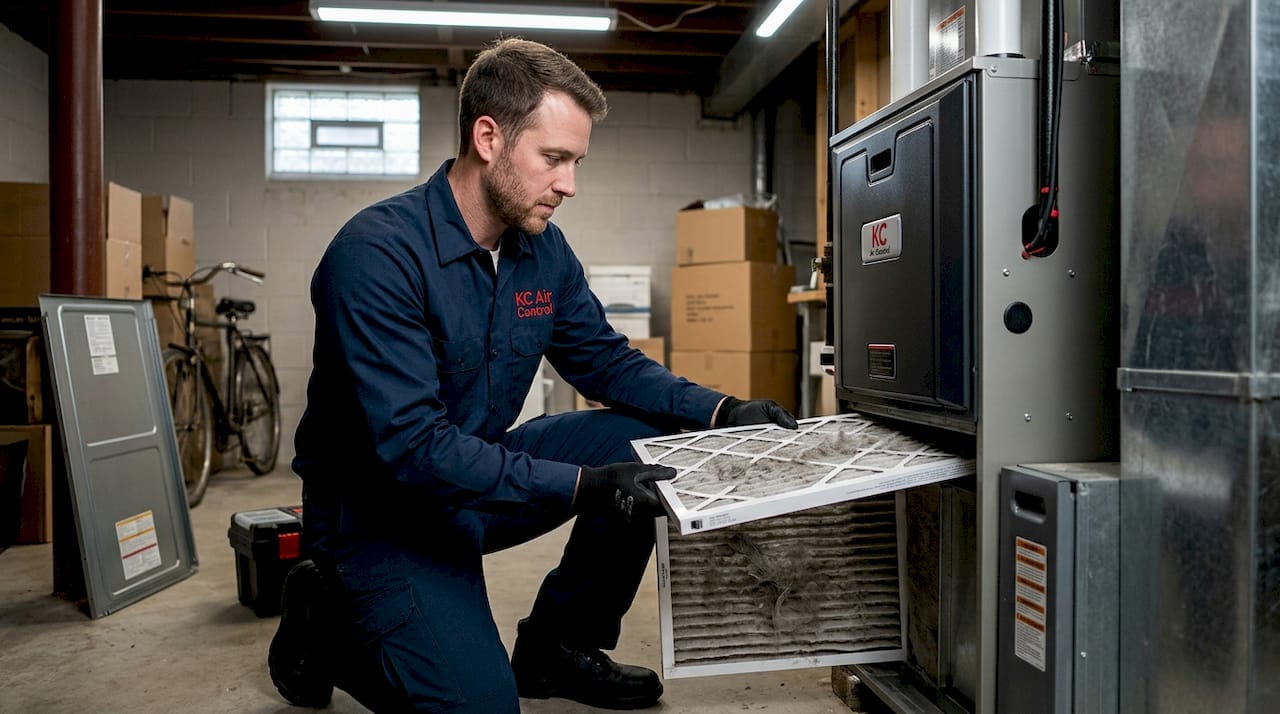
With so many pollutants, how do you know if your air is healthy? Here’s how professionals and experts measure IAQ.
One of the most common mistakes homeowners make is assuming that a single number tells the whole story. Carbon dioxide (CO2) levels, for example, are often used as a quick ventilation indicator. CO2 below 1,000 ppm (parts per million) suggests adequate ventilation per person, but it’s not a complete picture of IAQ. Your air could be low in CO2 and still contain elevated radon, VOCs, or mold spores.
The World Health Organization (WHO) and the EPA publish specific guideline values for individual pollutants. These benchmarks help professionals evaluate whether a home’s air meets acceptable safety thresholds.
| Pollutant | WHO guideline | What it means for your home |
|---|---|---|
| Carbon monoxide | 10 mg/m³ (8 hour mean) | Levels above this require immediate action |
| Formaldehyde | 0.1 mg/m³ (30 min) | Common in pressed wood furniture and flooring |
| PM2.5 (annual mean) | Below 5 µg/m³ | Most US homes exceed this without knowing |
| Radon | No fully safe level identified | Testing is the only way to know your exposure |
Stat callout: The WHO has determined there is no fully safe threshold for certain pollutants, including radon. This means even low levels carry some risk, and testing is the only way to know where your home stands.
For homeowners who want to monitor air quality on their own, there are practical options available today. Smart IAQ monitors from brands like Airthings or IQAir can track CO2, VOCs, humidity, and PM2.5 in real time. Basic radon test kits are available at hardware stores for under $30. These tools don’t replace professional assessments, but they give you a starting point.
Pro Tip: Place a smart IAQ sensor in the room where your family spends the most time, such as the living room or a bedroom. This gives you a real picture of daily exposure rather than a snapshot from one test.
For homeowners with specific health concerns or older homes, professional IAQ testing is the most accurate path. Certified HVAC technicians can test for a full range of pollutants and recommend solutions based on your actual results. You can get answers to common IAQ questions before you commit to a full professional assessment.
How poor air quality impacts your health and comfort
Once you know what’s in your air and how to measure it, the next question is: does it really matter? Here’s why IAQ should be a priority for every homeowner.
The short answer is yes. Poor IAQ affects your health, your daily comfort, and even your energy bills. The impacts are not always dramatic or immediate. In many cases, they show up as persistent low-grade symptoms that homeowners attribute to stress, aging, or seasonal illness.
Here’s a look at how poor IAQ affects your household from the short term to the long term:
- Immediate symptoms: Eye irritation, runny nose, headaches, fatigue, and dry skin often appear within hours of exposure to elevated pollutant levels.
- Ongoing respiratory issues: Prolonged exposure to dust, pet dander, and mold can trigger or worsen asthma and chronic allergies, especially in children.
- Cognitive effects: Elevated CO2 and VOC levels are linked to reduced concentration and mental fatigue, which matters for anyone working or studying at home.
- Long-term illness risk: Radon is the second leading cause of lung cancer in the United States. Long-term mold exposure can cause serious respiratory illness.
- Reduced sleep quality: Poor air in bedrooms, particularly elevated CO2 or mold spores, disrupts sleep even when the cause is not obvious.
“People spend approximately 90% of their time indoors, and indoor pollutant levels can be 2 to 5 times higher than outdoor levels.” — U.S. EPA
Vulnerable groups feel these effects most acutely. Young children whose lungs are still developing, elderly residents with reduced immune function, and anyone with a pre-existing respiratory condition like asthma or COPD face the highest risks from prolonged IAQ problems.
There is also an energy cost angle that surprises many homeowners. When ductwork is clogged with dust and debris, your HVAC system has to work harder to move air through the home. This raises energy consumption and your monthly utility bills. Cleaner air systems run more efficiently. Exploring ways to boost home comfort through IAQ improvements often delivers energy savings as a bonus.
How to improve your home’s indoor air quality
So, what can you do today to breathe easier in your own home? Let’s break down the steps.
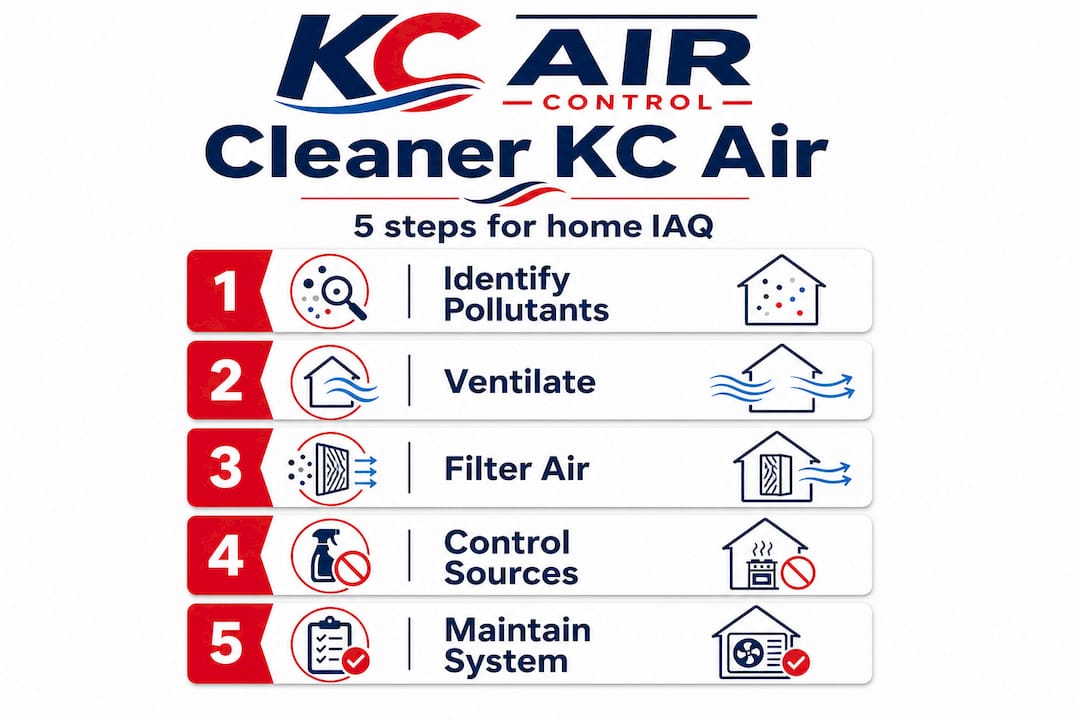
The three primary strategies to improve IAQ are source control, ventilation, and air cleaning or filtration. Addressing all three gives you the best results. Relying on just one approach, such as running an air purifier without fixing the source of a problem, is far less effective.
Source control means removing or reducing the origin of pollutants. This is the most effective strategy, and it costs little to nothing in many cases. Practical steps include:
- Store paints, solvents, and cleaning products in sealed containers or in a garage
- Choose low-VOC products for cleaning, painting, and furniture
- Never smoke indoors
- Test for radon, especially if you have an unfinished basement
- Fix plumbing leaks and moisture issues immediately to prevent mold growth
- Vacuum regularly with a HEPA-filter vacuum to reduce pet dander and dust
Ventilation brings fresh outdoor air into your home and pushes stale, polluted air out. Opening windows when weather allows is a simple step. However, Kansas City’s winter cold, summer heat, and high spring pollen counts limit when this is practical. A whole-home ventilation system or energy recovery ventilator (ERV) installed as part of your HVAC setup can solve this year-round.
Air cleaning and filtration is where your HVAC system plays a major role. Upgrading to a high-MERV filter significantly improves particle capture without requiring a full system replacement. UV light systems installed inside the air handler can neutralize bacteria and mold spores as air circulates. These upgrades represent strong value for most Kansas City households.
Pro Tip: Check your HVAC filter every 30 days during heavy-use months like January and July. Replace it when it looks gray and clogged, not just on a calendar schedule. A dirty filter restricts airflow and lets pollutants slip through.
Two common homeowner mistakes are worth calling out. First, using scented candles or chemical air fresheners to address odors. These products mask smells while often adding VOCs to your air, making the actual problem worse. Second, skipping professional duct cleaning for years. Even with regular filter changes, debris accumulates in ductwork over time. Periodic professional duct cleaning adds real value by removing what filters cannot reach.
When it comes to larger investments, upgrading your HVAC system or scheduling HVAC tune-ups for cleaner air are moves that pay off in comfort, health, and energy efficiency over time.
A Kansas City pro’s take: IAQ insights most guides miss
Most online guides about indoor air quality give you accurate but generic information. What they miss is the local and practical reality that we see every day in KC homes.
Here’s the honest take: you probably do not need to replace your HVAC system to get dramatically cleaner air. In our experience, a combination of smart source control, a higher-MERV filter, regular maintenance, and targeted upgrades like UV systems or humidifiers handles about 90% of what a full replacement would accomplish, at a fraction of the cost. Many homeowners spend thousands on new equipment when what they really need is a $150 filter upgrade and a professional cleaning.
Kansas City has two IAQ concerns that generic guides consistently underemphasize. The first is radon. The Midwest, including the greater KC metro area, sits on geology that produces elevated radon levels. This is not a scare tactic. It is a documented regional risk that warrants a simple, inexpensive test. The second is humidity. Kansas City summers are humid enough to encourage mold growth in any home without proper moisture management. A whole-home dehumidifier or an HVAC system calibrated to manage humidity correctly makes a real difference.
We also see homeowners who have invested in air purifiers but never addressed their ductwork. Portable purifiers clean the air in one room. Your ducts distribute whatever is inside them, including years of accumulated dust and debris, to every room in the house. Retrofitting your HVAC with better filtration and having ducts professionally inspected is a smarter investment than stacking air purifiers in every room.
The single biggest takeaway? Consistent maintenance moves the needle more than any one-time upgrade. Schedule your tune-ups, change your filters, test for radon, and address moisture at the source. That approach will give your family measurably cleaner air year after year.
Need help improving your home’s air? Air Control is here
If this guide has raised questions about what’s actually in your home’s air, you’re not alone. Many Kansas City homeowners are surprised to learn how much their HVAC setup, ductwork, and daily habits influence the air they breathe every day.

At KC Air Control, we bring over 70 years of local experience to every assessment, upgrade, and service call. Our team can evaluate your current system, recommend the right filtration or IAQ upgrades for your home, and handle professional duct cleaning that makes a real difference for your family’s comfort and health. Whether you need a targeted fix or a full IAQ evaluation, our KC indoor air quality experts are ready to help. When you’re ready to take action, book HVAC service online in minutes and let’s get your home’s air where it should be.
Frequently asked questions
What are the top signs of poor indoor air quality in my home?
Persistent odors, excessive dust buildup, increased allergy symptoms, visible mold, and humidity issues are all warning signs. According to the EPA, common indoor pollutants like VOCs, particulate matter, and mold can accumulate quietly before symptoms become obvious.
Is opening windows enough to improve indoor air quality?
Opening windows helps with ventilation, but it’s rarely enough on its own. The EPA identifies source control, ventilation, and filtration as the three pillars of IAQ improvement, and ventilation alone doesn’t address pollutants already embedded in your home.
Should I be worried about radon in Kansas City?
Yes. The Midwest has elevated radon geology, and radon is a recognized indoor pollutant with no safe lower threshold according to current research. A basic test kit or professional assessment is strongly recommended for any KC home with a basement.
Will changing my HVAC filter really make a difference?
Absolutely, especially if you upgrade to a higher-MERV rating. High-MERV filters enhance filtration significantly without requiring a full system replacement, capturing smaller particles including pet dander, pollen, and fine dust.
How often should air ducts be cleaned?
Most homes benefit from a professional duct inspection and cleaning every three to five years. If you notice increased dust, musty odors, or worsening allergy symptoms, it’s worth scheduling a cleaning sooner rather than waiting for a set interval.
Recommended
- HVAC strategies to optimize indoor comfort in KC homes – KC Air Control – Heating & Cooling
- Indoor Air Quality – Air Control
- HVAC inspections for Kansas City homeowners: 2026 guide – KC Air Control – Heating & Cooling
- Most Common HVAC Questions Kansas City Homeowners Ask – KC Air Control – Heating & Cooling