

TL;DR:
- Replacing an aging air conditioner in Kansas City requires careful consideration of system size, efficiency, and local rebate programs. Homeowners should recognize warning signs like frequent breakdowns and rising energy bills to decide when replacement is necessary. Proper load calculation and installation process, including duct assessment and verified performance, ensure maximum comfort and long-term savings.
Replacing an aging air conditioner in Kansas City is rarely simple. Between the region’s brutal summer humidity, rising energy costs, and a market full of competing systems and financing options, it’s easy to feel stuck before you even get a quote. This guide walks you through every decision you’ll face, from figuring out whether replacement actually makes sense, to choosing the right system size and efficiency rating, to taking advantage of rebates and financing programs available right here in the Kansas City area. By the end, you’ll have a clear, confident action plan and the knowledge to avoid the most costly mistakes.
Table of Contents
- Signs it’s time to replace your air conditioner
- How to choose the right air conditioner: Sizing, SEER2, and comfort
- Kansas City energy efficiency and upgrade financing options
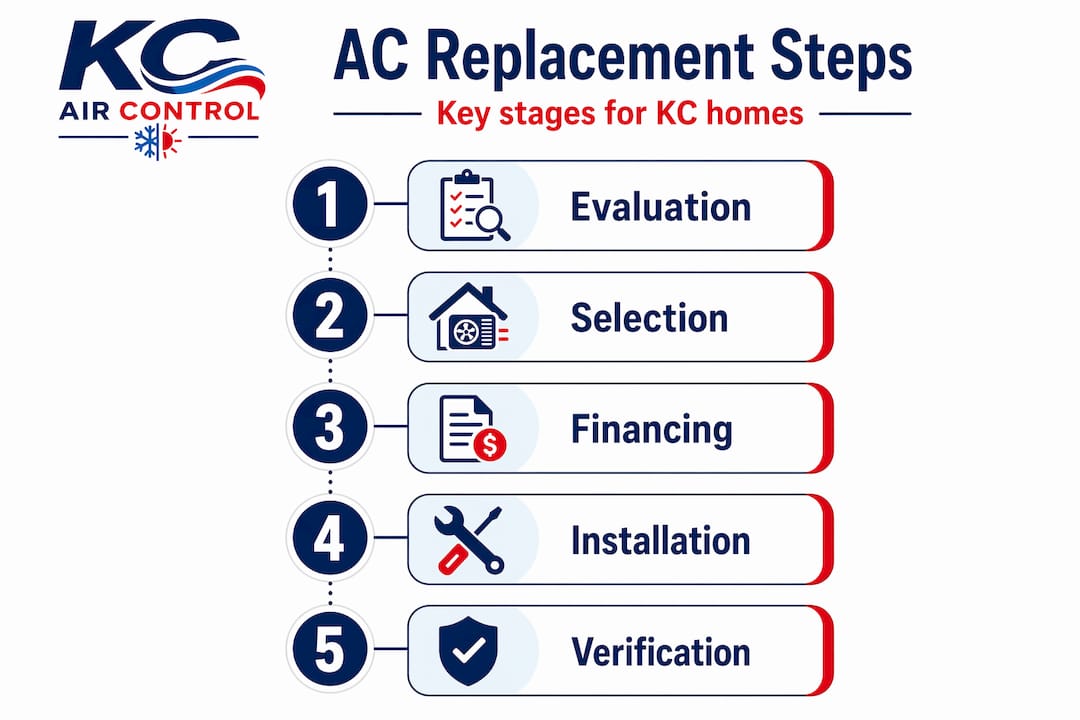
- Step-by-step process: How to replace your air conditioner in Kansas City
- What most AC replacement guides miss about maximizing efficiency
- Ready for comfort? Get expert AC replacement help in Kansas City
- Frequently asked questions
Key Takeaways
| Point | Details |
|---|---|
| Replace at the right time | Replacing before major failure saves money on urgent repairs and unnecessary bills. |
| Correct sizing is critical | A Manual J calculation ensures your new AC delivers comfort, energy savings, and reliability. |
| SEER2 and staging matter | Match efficiency rating and equipment type to your comfort and humidity goals for Kansas City weather. |
| Smart financing is available | Kansas City utility programs can make energy-efficient upgrades more affordable than many homeowners realize. |
| Quality installation ensures results | Insist on full ductwork and system verification after installation for best comfort and lower bills. |
Signs it’s time to replace your air conditioner
Knowing when to stop repairing and start replacing is the first and most important decision you’ll make. Many homeowners keep throwing money at an aging system because a new unit feels like a big commitment. But there are specific warning signs that make the math undeniable.
Watch for these clear red flags:
- Frequent breakdowns: If your system needs a repair every season, those costs stack up fast.
- Rising energy bills: An older, declining AC works harder for the same results, and your utility bill shows it.
- Short-cycling: This is when your system turns on and off repeatedly in short bursts rather than completing a full cooling cycle. It wastes energy and wears out the equipment faster.
- Uneven cooling: Hot spots or rooms that never cool properly often point to a system struggling to keep up.
- Persistent humidity: A functioning AC removes moisture from your home. If your indoor air feels muggy even when the system runs, efficiency and capacity have dropped.
Kansas City’s heat and humidity place above-average stress on HVAC systems. Summers here can hold temperatures above 90°F for weeks while humidity climbs past uncomfortable levels. That combination accelerates wear on components, especially compressors and coils.
A good framework for the repair vs. replace decision involves three clear steps: determine whether repair or replacement makes financial sense, right-size your new equipment using a proper load calculation, and match your system’s efficiency features to your actual comfort goals.
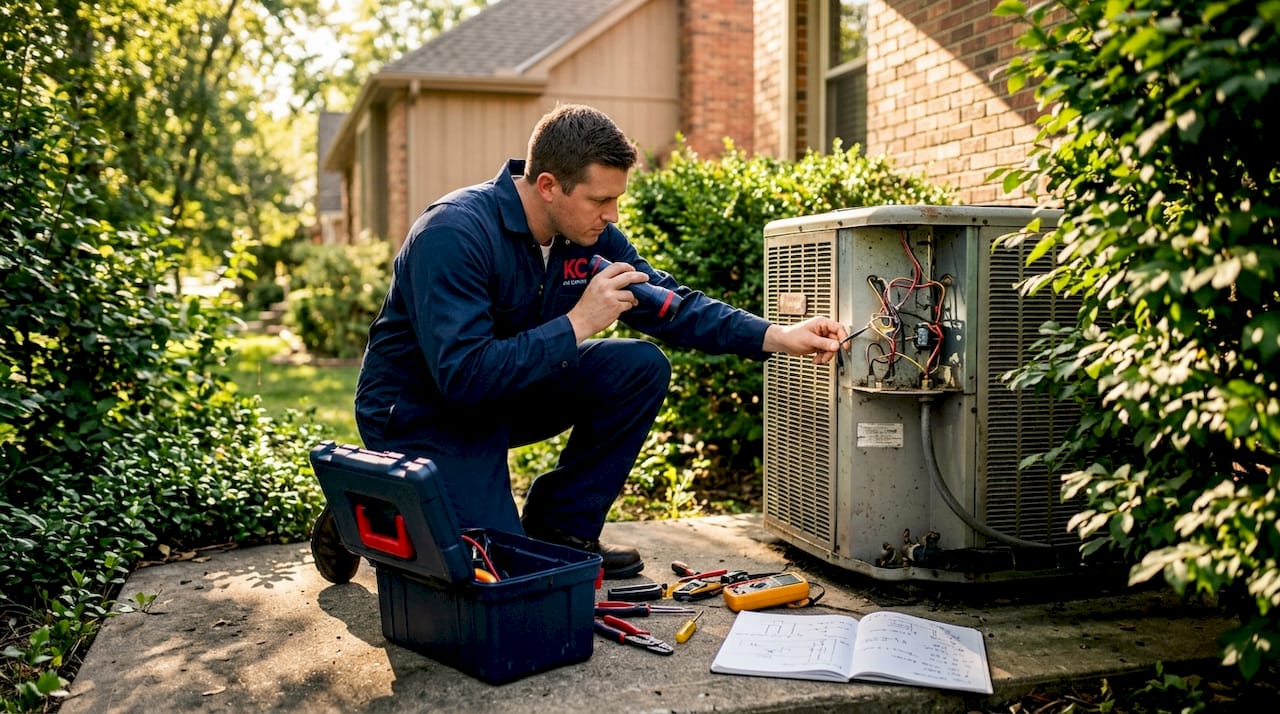
You can also review common signs of AC trouble to evaluate where your system stands before calling anyone.
Pro Tip: Add up your repair costs over the past two years. If that total is approaching 50% of the price of a new system, replacement almost always wins financially and reliably.
How to choose the right air conditioner: Sizing, SEER2, and comfort
Once you’ve decided replacement is the right move, your next challenge is choosing the right system. This is where many homeowners get tripped up, either by oversimplifying the decision or by focusing only on price.
Why correct sizing matters more than you think
A system that’s too large cools your home too quickly without running long enough to pull moisture out of the air. That leaves your home feeling cold but still clammy, which is a real problem in Kansas City summers. A system that’s too small runs constantly and still can’t keep up on the hottest days.
The right way to size a system is with a Manual J load calculation. Rather than just counting your home’s square footage, a Manual J sizing guide accounts for your home’s insulation levels, window sizes and orientations, ceiling heights, local climate data, and the number of people living in the home. This is how professionals determine the exact BTU (British Thermal Unit) output your system needs to deliver.
Warning: An oversized AC unit is one of the most common and avoidable mistakes in residential HVAC. Oversized equipment causes short-cycling and poor humidity control even if the efficiency rating looks impressive on paper.
Understanding SEER2 ratings
SEER2 stands for Seasonal Energy Efficiency Ratio 2, and it became the standard efficiency metric for air conditioners starting in 2023. Higher SEER2 numbers mean more cooling output per unit of electricity used. A system with a SEER2 of 18 will cost less to operate monthly than a comparable unit rated at 14, assuming both are correctly sized.
But here’s what many shoppers miss: a high SEER2 rating does not automatically translate to savings if the system is the wrong size for your home. Sizing and efficiency work together. Skipping proper load calculation and then buying the highest SEER2 unit you can afford is a strategy that leads to disappointment.
Comparing system types
Here’s a practical comparison to help you understand your main equipment options:
| System type | How it works | Best for | Humidity control |
|---|---|---|---|
| Single-stage | Runs at full capacity or off | Budget-focused upgrades | Basic |
| Multi-speed | Switches between 2 or more speeds | Balanced efficiency and comfort | Good |
| Variable-speed | Continuously adjusts output | Maximum comfort and savings | Excellent |
Variable-speed systems are particularly well suited for Kansas City’s climate because they run at lower speeds for longer periods, which pulls significantly more moisture out of your home’s air.
Here are the key factors to work through when evaluating system options:
- Confirm your current system’s size and whether it performed well for your home’s comfort.
- Request a Manual J calculation, not a square-footage estimate, from every contractor you interview.
- Evaluate SEER2 ratings within the context of your correctly sized equipment.
- Consider variable-speed or multi-speed options if humidity control is a priority.
- Review how each system choice affects energy efficient HVAC tips and long-term operating costs.
Pro Tip: If a contractor quotes you a system size based only on your home’s square footage, ask them to do a proper Manual J calculation before you accept the proposal. Any reputable installer will do this without hesitation.
Kansas City energy efficiency and upgrade financing options
Getting a high-efficiency system installed doesn’t have to mean a large out-of-pocket expense. Kansas City homeowners have access to some genuinely useful programs that can reduce your upfront cost and make monthly payments manageable.
Evergy FastTrack HVAC PAYS program
One of the most valuable options available locally is Evergy’s FastTrack HVAC PAYS program. This program is designed for homeowners who want to upgrade to a high-efficiency system without taking on a traditional loan.
Here’s how it works differently from standard financing:
- Up-front rebate: Qualifying high-efficiency central AC systems can earn rebates exceeding $1,000 directly off your installation cost.
- On-bill repayment: Instead of a separate loan, remaining costs are added as a monthly charge directly to your Evergy utility bill.
- No traditional credit check: Approval is based on your utility account history, not your credit score.
- Tied to the property: In many cases, the payment obligation transfers with the home if you sell, which can actually be a selling point for buyers.
| Program | Rebate available | Repayment method | Credit check required |
|---|---|---|---|
| Evergy FastTrack HVAC PAYS | Up to $1,000+ | Monthly utility bill charge | No |
| Dealer financing (0% promotional) | Varies | Monthly installments | Yes |
| Federal tax credit (25C) | Up to 30% of cost | Annual tax filing | No |
| Manufacturer rebates | Varies by brand | Instant at point of sale | No |
Tips for maximizing eligibility and savings
Before you commit to any program, take these steps:
- Verify that your home is in Evergy’s service area and that your account is in good standing.
- Confirm that the equipment you’re considering meets the program’s minimum efficiency requirements.
- Ask your contractor to document the projected energy savings the program’s assumptions are based on.
- Compare the total cost through on-bill financing against a dealer’s 0% promotional financing offer to see which saves you more over time.
Pairing program rebates with affordable HVAC financing options from your installer can reduce what you actually pay out of pocket significantly. The combination of a rebate plus low or no-interest financing makes upgrading to a variable-speed, high-SEER2 system achievable for most budgets. You can also review energy-saving tips to keep your operating costs as low as possible after your new system is installed.
Step-by-step process: How to replace your air conditioner in Kansas City
With your knowledge of system options and financing programs in place, here is a clear, ordered process for moving through your replacement without missing anything important.
-
Evaluate your current system. Note its age, repair history, and any comfort complaints. Gather your utility bills from the past 12 months for comparison.
-
Research local contractors. Look for licensed, insured HVAC contractors with documented experience in Kansas City. Read reviews that mention sizing accuracy and post-installation follow-up, not just price.
-
Request quotes with full scope. Ask each contractor to provide a written proposal that includes the Manual J calculation results, the specific equipment model, ductwork assessment findings, and what the installation startup and testing process looks like.
-
Compare system options using the criteria from earlier. Use the single-stage vs. multi-speed vs. variable-speed comparison to match the system to your comfort priorities. A good AC replacement guide covers system options, sizing considerations, and financing approaches that will help you compare quotes more effectively.
-
Finalize your financing. Apply for the Evergy FastTrack HVAC PAYS program or your chosen dealer financing and confirm the rebate amount before signing.
-
Schedule and confirm installation details. Confirm the installation date, how long the job will take, and whether duct sealing or balancing is included.
-
Inspect the work during and after installation. Watch for proper refrigerant handling, secure electrical connections, and whether the contractor checks airflow at every register.
-
Request a post-installation verification test. This is when the contractor measures actual system performance against the design specs to confirm everything is operating as expected. If existing duct system assumptions are wrong, you can lose efficiency and comfort even with a higher-SEER2 unit, so this step is critical.
| Step | Key action | What to verify |
|---|---|---|
| Evaluation | System age and repair history | Bills, comfort complaints |
| Contractor selection | Licensing, reviews, experience | Manual J offered |
| Quote review | Written scope, sizing method | Equipment model, duct check |
| Financing | Rebates + financing confirmed | Total cost, monthly payment |
| Installation | Airflow and refrigerant checks | All registers tested |
| Verification | Post-install performance test | Temp and humidity outputs |
Pro Tip: Never accept a verbal scope of work. Get every detail in writing before the job starts, and specifically ask whether post-install system testing and startup verification are included in the quoted price.
What most AC replacement guides miss about maximizing efficiency
Here’s our honest take after years of serving Kansas City homeowners: most efficiency problems aren’t equipment problems. They’re installation and process problems.
We see it regularly. A homeowner invests in a top-rated, high-SEER2 system and then calls us six months later because their bills are still high and one side of the house never cools properly. Nine times out of ten, the root cause is a duct system that was never assessed, a load calculation that was never done, or a startup test that was skipped because the installer was moving on to the next job.
The uncomfortable truth is that equipment brand and efficiency rating matter far less than the process behind the installation. A properly done Manual J and duct assessment will outperform a premium system installed without those checks every single time when it comes to real-world comfort and energy savings.
What we recommend is simple: treat the quote process like an interview. Ask directly how each contractor determines system size. If the answer is “based on your square footage and what you have now,” that’s a red flag. The right answer involves an on-site evaluation and documented Manual J details before any equipment is recommended.
Ask for duct inspection findings in writing. Ask whether the installation price includes airflow balancing and a post-startup performance check. These questions separate contractors who prioritize your long-term comfort from those focused on moving equipment quickly.
The reward for asking the right questions upfront is a system that delivers the savings and comfort it promised, from the first summer through the tenth.
Ready for comfort? Get expert AC replacement help in Kansas City
You now have a complete framework: recognize when replacement is right, choose the correctly sized and rated system, access Kansas City rebates and financing, and follow a proven installation process from start to finish.

If you’re ready to take the next step, the KC Air Control team is here to help. We’ve been serving Kansas City homeowners for over 70 years, and we bring genuine expertise to every sizing calculation, equipment recommendation, and installation we complete. Whether you’re planning ahead or dealing with an unexpected breakdown, we offer professional HVAC installation and fast emergency HVAC repair choices to keep you comfortable. Schedule your free consultation today and let’s find the right solution for your home.
Frequently asked questions
What is SEER2 and why does it matter for AC replacement?
SEER2 is the current U.S. efficiency standard for air conditioners, replacing the older SEER rating starting in 2023. A higher SEER2 number means more cooling output per dollar of electricity, so it directly affects your monthly energy costs.
Should I replace my AC or just repair it?
If your system is over 10 years old and needs frequent repairs, replacement usually saves more money over time. A strong starting point is the repair vs. replace decision framework, which helps you weigh current repair costs against the investment in new equipment.
How do Kansas City utility rebates and financing for AC upgrades work?
Programs like Evergy’s FastTrack HVAC PAYS offer up-front rebates of $1,000 or more on qualifying high-efficiency central AC systems, with remaining costs billed monthly through your utility bill rather than a traditional credit-based loan.
Should I trust a quote based just on my house’s square footage?
No. Always request a Manual J load calculation and duct inspection from any contractor you’re seriously considering. Square footage alone doesn’t account for your home’s insulation, windows, or local climate conditions, which means the size recommendation will almost certainly be off.
Recommended
- Energy efficient HVAC installation guide for KC homeowners – KC Air Control – Heating & Cooling
- How to Fix Your AC: Step-by-Step Guide for Kansas City Homeowners – KC Air Control – Heating & Cooling
- HVAC estimates in Kansas City: 2026 homeowner guide – KC Air Control – Heating & Cooling
- How to choose the right HVAC system for your KC home – KC Air Control – Heating & Cooling