
TL;DR:
- HVAC zoning divides a home into independently controlled climate zones for tailored comfort.
- It offers targeted comfort and potential energy savings, especially in large or multi-story homes.
- Proper installation and maintenance are crucial to avoid inefficiencies and system failures.
More heating and cooling does not automatically mean a more comfortable home. Many Kansas City homeowners run their HVAC system at full capacity and still deal with a stuffy upstairs, a freezing basement, or a sunroom that never feels right. HVAC zoning solves this by dividing your home into separate, independently controlled areas. It sounds technical, but the core idea is straightforward: different rooms get different temperatures based on how you actually use them. This guide covers how zoning works, what it costs, how it compares to alternatives, and whether it’s the right move for your home.
Table of Contents
- What is HVAC zoning and how does it work?
- Pros and cons of HVAC zoning systems
- HVAC zoning versus dual systems and smart thermostats: Which is better?
- When does HVAC zoning make sense for your Kansas City home?
- Maintenance, potential issues, and upkeep for HVAC zoning
- Our take: Why understanding your home matters more than just zoning
- Ready to improve your home comfort? Let KC Air Control help
- Frequently asked questions
Key Takeaways
| Point | Details |
|---|---|
| Tailored comfort | HVAC zoning lets you control temperatures in different parts of your home independently. |
| Cost versus complexity | Zoning costs more upfront than traditional systems but may save on long-term energy bills. |
| Know your alternatives | Dual systems and smart thermostats are options, but each has trade-offs in cost, maintenance, and effectiveness. |
| Maintenance impacts results | More moving parts require regular maintenance to keep zoning systems efficient. |
What is HVAC zoning and how does it work?
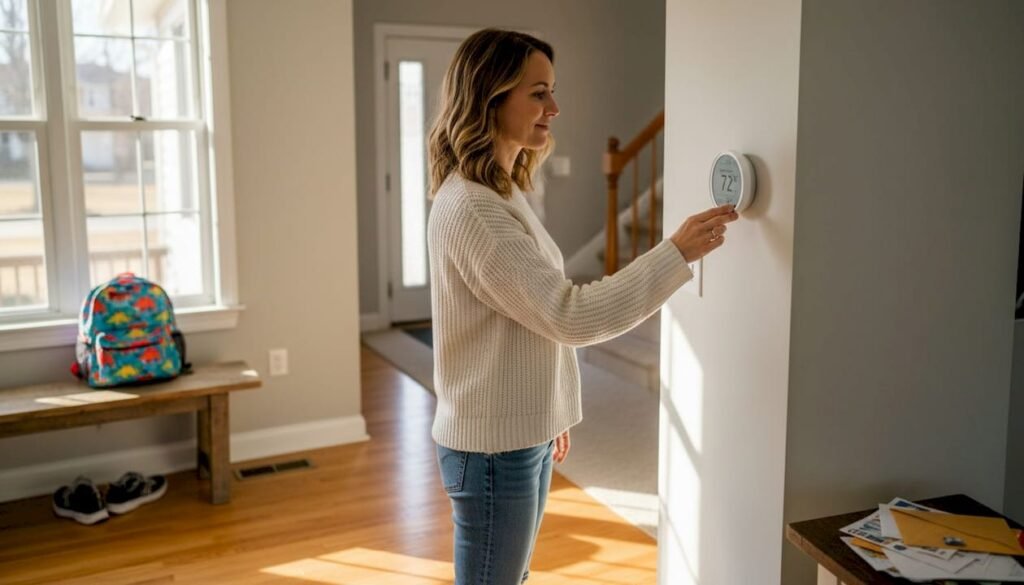
HVAC zoning is the practice of dividing your home into distinct climate areas, called zones, each controlled by its own thermostat. Instead of one thermostat dictating the temperature for your entire house, each zone responds to its own settings independently. Your bedroom can stay cool at night while your living room stays warmer. Your home office can run at full capacity during work hours while empty guest rooms stay off.
Three core components make this possible:
- Thermostats: Each zone has its own thermostat, which senses the temperature in that specific area and sends signals to the control panel.
- Dampers: These are motorized valves installed inside your ductwork. They open or close to direct airflow to specific zones based on demand.
- Control panel: This is the brain of the system. It coordinates signals from all thermostats and tells dampers when to open or close.
When zone A calls for cooling, the control panel opens the dampers leading to that area and closes others. The HVAC unit runs as normal, but airflow is targeted. This is what makes zoning more efficient in homes where some areas need heating or cooling far more than others.
One important limitation to know: a single zoned HVAC system can’t heat or cool all zones at the same time at full capacity. If every zone calls for conditioning simultaneously, the system may underperform or create pressure issues in the ductwork. Understanding how smart HVAC works alongside zoning helps you plan a system that avoids this pitfall.
Pro Tip: Zoning delivers the most value in multi-story homes, large square footage properties, or homes with additions, finished basements, or sunrooms that have always been hard to keep comfortable.
Pros and cons of HVAC zoning systems
Zoning has real advantages, but it also comes with trade-offs you should understand before committing.
Benefits of HVAC zoning:
- Targeted comfort: Each family member can set the temperature in their space without affecting the rest of the house.
- Potential energy savings: Conditioning only occupied zones reduces unnecessary HVAC runtime.
- Flexible design: Zoning adapts well to challenging layouts, including homes with high ceilings, large windows, or room additions.
- Extended equipment life: Running the system more efficiently puts less strain on the unit over time.
Drawbacks of HVAC zoning:
- Higher upfront installation costs compared to a standard single-zone system.
- More components mean more potential points of failure.
- Requires professional design and installation to avoid ductwork pressure problems.
- Efficiency gains disappear quickly if the system is poorly sized or incorrectly installed.
Cost is one of the biggest factors homeowners weigh. Zoning system installation typically runs between $1,700 and $15,000, depending on how many zones you need and how complex your ductwork is. That range is wide, but it’s often still less than what you’d pay to install two completely separate HVAC units.
“The upfront investment in zoning can feel significant, but when it’s properly designed for your home, the long-term comfort and efficiency benefits often outweigh the initial cost.” This is the trade-off every homeowner should evaluate before deciding.
If you’re already thinking about upgrading your HVAC, adding zoning during an installation is typically more affordable than retrofitting it later.
Pro Tip: Before hiring anyone, ask your contractor how many zoning systems they’ve installed and whether they’ve worked on homes similar to yours in size and layout. Local experience matters more than you’d think.
| Feature | Zoned system | Standard single-zone |
|---|---|---|
| Upfront cost | Higher | Lower |
| Comfort control | Zone-by-zone | Whole house only |
| Energy efficiency | Better (when designed well) | Moderate |
| Maintenance needs | More complex | Simpler |
| Best for | Large or multi-story homes | Small, open-concept homes |
HVAC zoning versus dual systems and smart thermostats: Which is better?
When homeowners want better temperature control, three options usually come up: zoning a single system, installing two separate HVAC systems, or adding smart thermostats with wireless sensors. Each has its place.
Dual HVAC systems involve installing two completely independent heating and cooling units, each serving a designated area of the home. This gives you true simultaneous conditioning in different areas without the ductwork pressure issues that can affect zoned single systems. However, dual systems cost significantly more upfront and require two sets of equipment to maintain.
Smart thermostats with sensors are the most affordable starting point. Wi-Fi connected thermostats paired with room sensors can adjust airflow based on occupancy and temperature readings in multiple rooms. They don’t require damper installation but offer limited control compared to full zoning.
Zoning is typically less expensive than installing two separate HVAC systems, though both carry unique limitations worth considering.
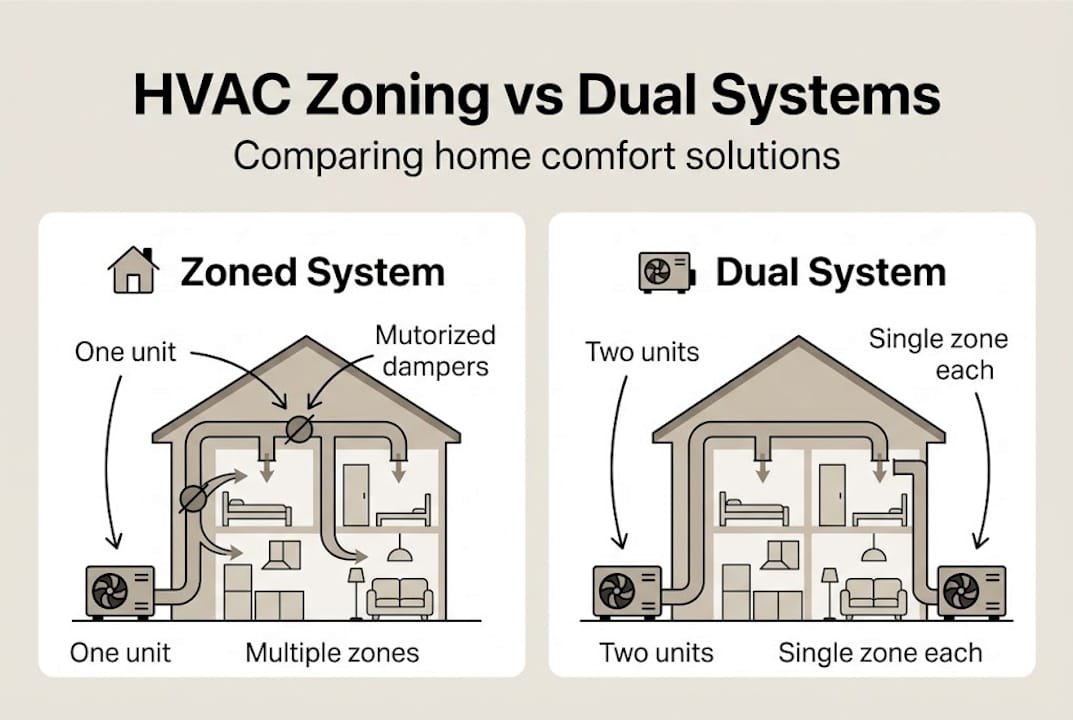
Here’s how the three options stack up:
| Option | Avg. cost | Simultaneous zones | Maintenance | Best for |
|---|---|---|---|---|
| HVAC zoning | $1,700 to $15,000 | No | Moderate to high | Multi-story or large homes |
| Dual systems | $10,000 to $30,000+ | Yes | High (two units) | Very large or split-level homes |
| Smart thermostats | $150 to $500 | Limited | Low | Smaller homes, budget-conscious |
The right choice depends on your home’s layout and your budget. Here’s a quick way to think through it:
- Small home, mild discomfort: Start with smart thermostats for HVAC and room sensors.
- Multi-story or large home with uneven temps: HVAC zoning is likely your best balance of cost and comfort.
- Large home where zones must run simultaneously at full power: Dual systems may be worth the investment.
When does HVAC zoning make sense for your Kansas City home?
Kansas City weather puts real pressure on HVAC systems. Summers are hot and humid, winters are cold, and the temperature swings between seasons can be dramatic. That context matters when deciding whether zoning is worth it for your home.
Zoning tends to work best for:
- Multi-story homes where heat naturally rises and upper floors stay warmer than lower ones.
- Homes with finished basements that are used regularly and need consistent conditioning.
- Properties with sunrooms, additions, or bonus rooms that have always been harder to keep comfortable.
- Large homes over 2,000 square feet where one thermostat simply can’t read conditions accurately for the whole house.
- Homes with frequently unused rooms that don’t need to be conditioned to the same level as occupied spaces.
Zoning may not be the right call if you have a small, open-concept home where airflow moves freely between spaces. In those cases, regular HVAC maintenance and proper sizing often resolve comfort issues more effectively and at lower cost.
It’s also worth remembering that zoning’s efficiency depends heavily on your home’s specific layout and how the system is designed. A poorly matched zoning setup can actually reduce efficiency rather than improve it.
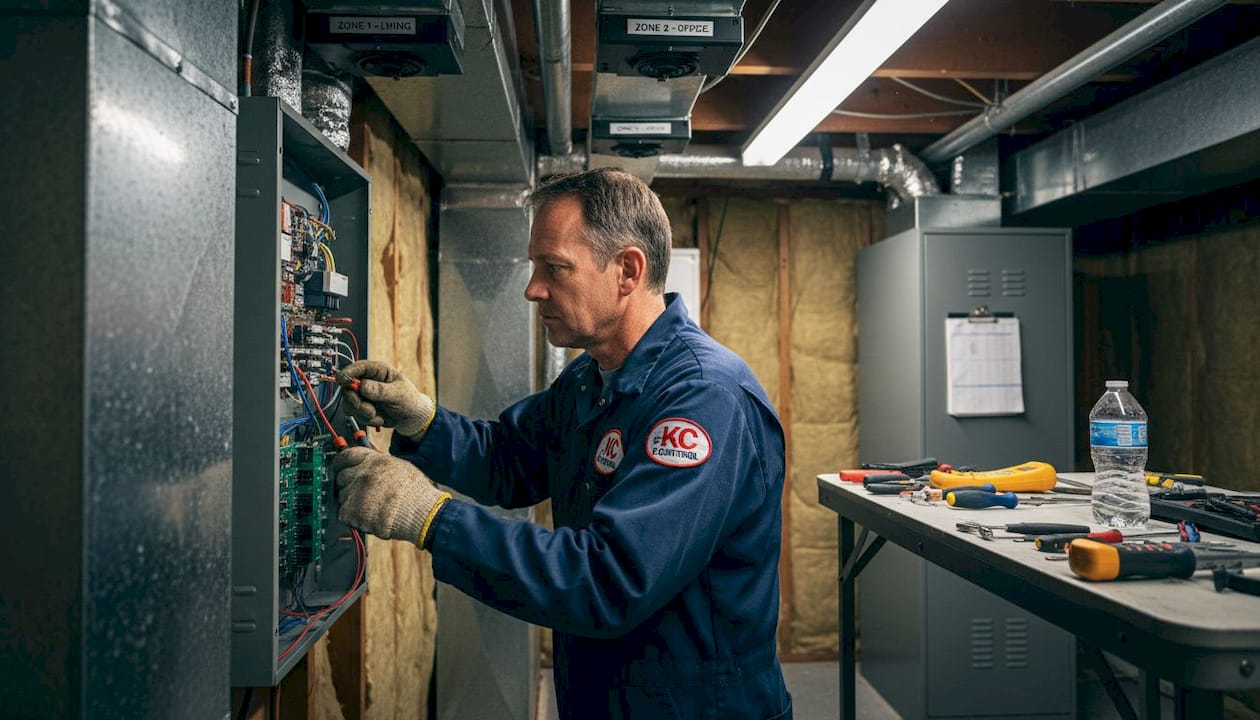
Pro Tip: Before investing in zoning, schedule a professional home comfort audit. A qualified HVAC technician can identify whether your discomfort comes from zoning needs, insulation gaps, ductwork leaks, or equipment sizing problems.
Maintenance, potential issues, and upkeep for HVAC zoning
Zoning systems are not set-it-and-forget-it. The added components that make zoning work also create more opportunities for something to go wrong. Going in with clear expectations makes ownership much smoother.
Common issues homeowners experience with zoning systems include:
- Zones not responding: A thermostat loses connection with the control panel or the damper in that zone fails to open or close properly.
- Thermostat miscalibration: A thermostat in one zone reads temperatures inaccurately, causing that zone to overcool or overheat.
- Damper failure: Motorized dampers have moving parts. Over time, they can stick open, stick closed, or lose motor function.
- Pressure imbalances: If too many zones close simultaneously, excess air pressure builds in the ductwork, causing noise and strain on the air handler.
- Control panel errors: The central controller can experience software or wiring faults that affect the whole system.
Because zoning adds complexity to your HVAC setup, professional maintenance becomes more important, not less. Annual checkups that include inspection of dampers, thermostats, and the control panel are strongly recommended.
When choosing an HVAC service provider, look for technicians who have direct experience with zoning systems. Not every HVAC company works on them regularly. Ask specifically whether they service the brand of control panel and thermostats in your system.
Stay on top of HVAC maintenance tips year-round, and don’t ignore small signs like a zone that seems slow to respond or unusual sounds from the ductwork. Catching common HVAC problems early keeps repair costs down and extends the life of your system significantly.
Our take: Why understanding your home matters more than just zoning
After working with Kansas City homeowners for decades, we’ve seen one pattern repeat: homeowners invest in zoning to solve a comfort problem, and the system underdelivers because the real issue was something else entirely. A leaky duct, a poorly insulated attic, or an undersized unit can make any zoning system look bad.
Zoning is a genuinely useful tool. But it works best when it’s the right tool for the actual problem. Kansas City’s older housing stock, mixed architectural styles, and wide seasonal temperature swings mean that one solution rarely fits all homes. Sometimes, smart HVAC solutions or targeted insulation upgrades deliver a bigger comfort improvement than zoning at a fraction of the cost.
Our honest advice: spend time understanding how your family uses your home before making any major investment. Which rooms feel wrong? When? For how long? That information is worth more than any quick fix. A proper evaluation turns that understanding into the right recommendation, whether that’s zoning or something simpler.
Ready to improve your home comfort? Let KC Air Control help
If uneven temperatures have been frustrating your household, you don’t have to figure this out alone. KC Air Control has been helping Kansas City homeowners find the right comfort solutions for over 70 years, and we bring that experience to every evaluation.

Whether you need expert advice on zoning, a review of your best furnace repair services, or a scheduled HVAC tune-up for efficiency before the next Kansas City season hits, our team is ready to help. KC Air Control offers honest assessments, professional installations, and reliable follow-up service so your home stays comfortable year-round. Reach out today to schedule your evaluation.
Frequently asked questions
How much does HVAC zoning cost in the Kansas City area?
Most installations cost between $1,700 and $15,000 depending on how many zones you need and the complexity of your existing ductwork and system.
What are the signs I might benefit from HVAC zoning?
Persistent hot or cold spots, multi-story layouts, and rooms that sit empty most of the year are strong indicators that zoning could improve your home’s comfort and efficiency.
Is HVAC zoning more efficient than a dual system?
Zoning is typically less expensive than two separate systems, but it can’t condition all zones at full capacity simultaneously, which can reduce efficiency if demand spikes across every zone at once.
What kind of maintenance does a zoned HVAC system need?
Zoning adds complexity and failure points, so annual professional inspections of dampers, thermostats, and the control panel are essential to keeping the system running reliably.
Recommended
- How HVAC systems optimize home comfort and energy efficiency – KC Air Control – Heating & Cooling
- Smart HVAC explained: boost comfort, cut energy bills – KC Air Control – Heating & Cooling
- Energy efficient HVAC: lower bills and better comfort – KC Air Control – Heating & Cooling
- Energy efficient HVAC installation guide for KC homeowners – KC Air Control – Heating & Cooling