
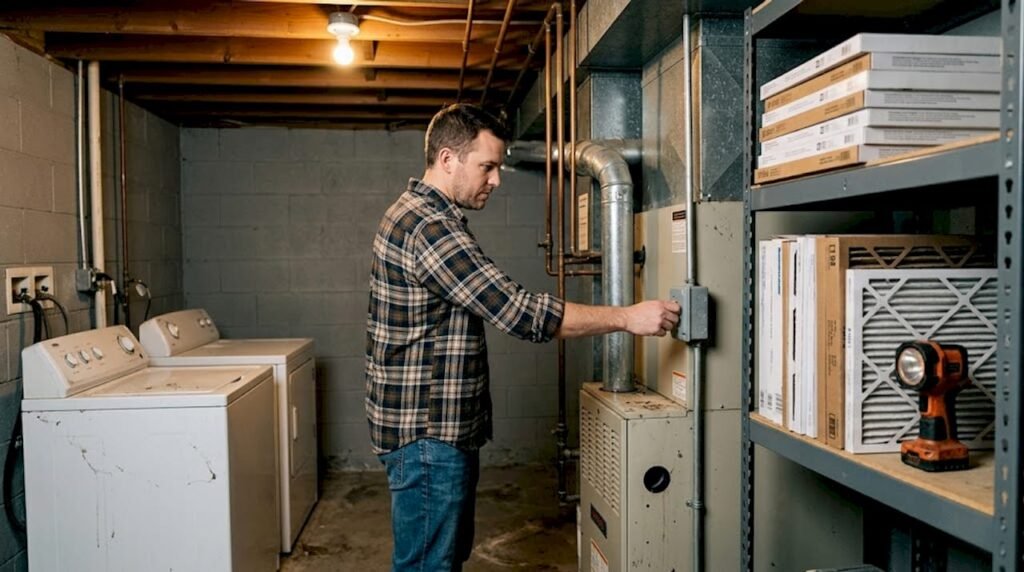
TL;DR:
- Most furnace issues can be resolved quickly with proper troubleshooting steps.
- Checking and replacing clogged air filters is the most common and simple fix.
- Homeowners should know when to call professionals for safety and complex problems.
You wake up on a bitter January morning in Kansas City and the house is freezing. The furnace is silent. Before you call for help or panic, know this: most furnace failures have a clear cause, and many can be resolved in under an hour with the right approach. This guide walks you through a practical, step-by-step workflow built for Kansas City’s tough winters. You’ll cover the essential prep work, the quick checks that restore heat most of the time, winter-specific failures, and the clear signals that tell you it’s time to call a professional.
KC Furnace Troubleshooting Workflow: At-a-Glance Outline
- Gather your essentials: What you need before starting
- Initial checks: Quick wins that solve most furnace problems
- Deep freeze workflow: Troubleshooting Kansas City’s harsh winter failures
- When to call a professional: Red flags and efficient escalation
- Editorial perspective: Why structured troubleshooting changes everything
- The next step: Trusted furnace repair for Kansas City homes
- Frequently asked questions
Key Takeaways
| Point | Details |
|---|---|
| Start with safety | Always turn off power and check for gas leaks before inspecting your furnace. |
| Change filters regularly | A dirty filter is the #1 cause of furnace shutdowns and is an easy fix homeowners can handle. |
| Act fast in deep freezes | Check for snow or ice blocking vents to avoid extended downtime in Kansas City winters. |
| Know escalation signs | Unusual noises, pooled water, or error codes mean it’s time to call a professional. |
Gather your essentials: What you need before starting
Now that you understand the value of a clear, step-by-step approach, let’s get you set up for success. Rushing to the furnace without the right tools or safety knowledge wastes time and can create risk. A few minutes of preparation puts you in control from the start.
Here’s what to collect before you begin:
- Flashlight – furnace compartments are dark, and you’ll need to see clearly inside
- New air filter – have a spare on hand at all times; size is printed on the filter edge
- Work gloves – protect your hands from sharp sheet metal edges
- Flathead and Phillips screwdrivers – for removing access panels
- Owner’s manual – your specific model’s error codes and reset instructions live here
- Smartphone – for photos of error codes, vent conditions, or unusual damage
| Tool or material | Why it matters |
|---|---|
| Flashlight | Illuminates dark blower and heat exchanger areas |
| Replacement air filter | Ready to swap if the current one is clogged |
| Work gloves | Prevents cuts from sharp metal edges |
| Screwdrivers | Needed to remove and resecure access panels |
| Owner’s manual | Contains model-specific error codes and reset steps |
| Smartphone | Documents issues and speeds up service calls |
Before touching anything, turn off power to the furnace at the disconnect switch or breaker. This is non-negotiable. Once power is off, locate your model and serial number, usually found on a label inside the front panel or on the side of the unit. Write it down now so you have it ready if a technician needs it.
Air filter condition is where most homeowners overlook an easy fix. Following good winter furnace maintenance tips means keeping a spare filter stocked before winter arrives. As noted in the Emergency HVAC Repair Workflow KC: 35% Faster Fixes, clogged air filters cause 25 to 29% of service calls and are linked to shutdowns, short cycling, and overheating. Replace filters every one to three months to stay ahead of this.
Pro Tip: Buy a three-pack of filters at the start of each season. Store them near the furnace so you never have to search when it counts.
Initial checks: Quick wins that solve most furnace problems
With your essentials ready, focus on the first critical checks that often restore heat immediately. These steps address the most common causes of furnace failure and follow the same sequence professional technicians use.
- Check the thermostat. Set it to Heat, not Cool or Fan Only. Raise the temperature at least five degrees above the current room temperature. Replace the thermostat batteries if it looks blank or unresponsive.
- Confirm power to the furnace. Look for the power switch near the furnace, which often looks like a standard light switch. Make sure it’s in the ON position. Check your electrical panel for a tripped breaker.
- Inspect the air filter. Pull it out and hold it up to light. If you can’t see light through it, it’s clogged. According to the Emergency HVAC Repair Workflow KC: 35% Faster Fixes, dirty filters resolve roughly 25% of no-heat complaints, and 29% of homeowners never change them. Swap it out now.
- Secure the access panel. Many furnaces have a safety switch that prevents operation if the front panel is loose or open. Press it firmly until it clicks shut.
- Use the reset button. If the furnace still won’t run, locate the reset button on the burner assembly and press it once. Wait 30 seconds before trying to restart. Pressing it more than once can flood the system with fuel.
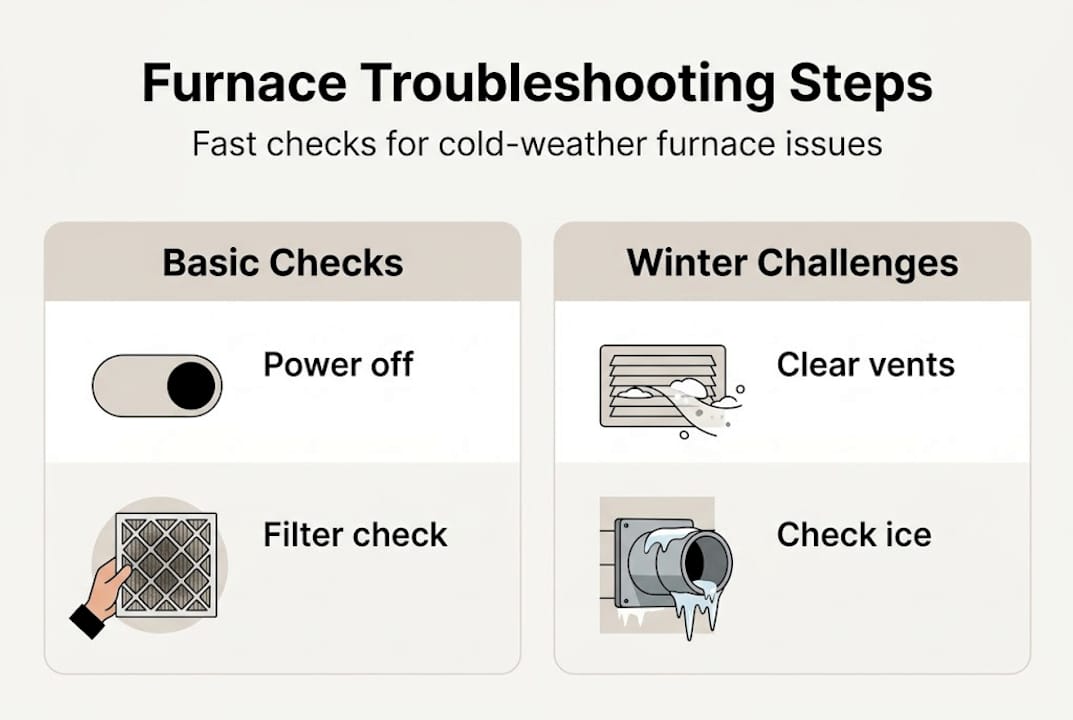
Use this troubleshooting checklist to make sure you haven’t missed a step, and keep a printed copy of your furnace maintenance checklist nearby for future reference.
Pro Tip: Always replace the air filter before calling for service. A technician who arrives and finds a clogged filter will still charge a service fee. A clean filter takes two minutes and costs a few dollars.
Deep freeze workflow: Troubleshooting Kansas City’s harsh winter failures
Once you’ve run basic checks, address the winter-specific challenges that can affect Kansas City homes during deep freezes. When temperatures drop below 10°F, your furnace faces conditions that don’t exist in spring or fall.
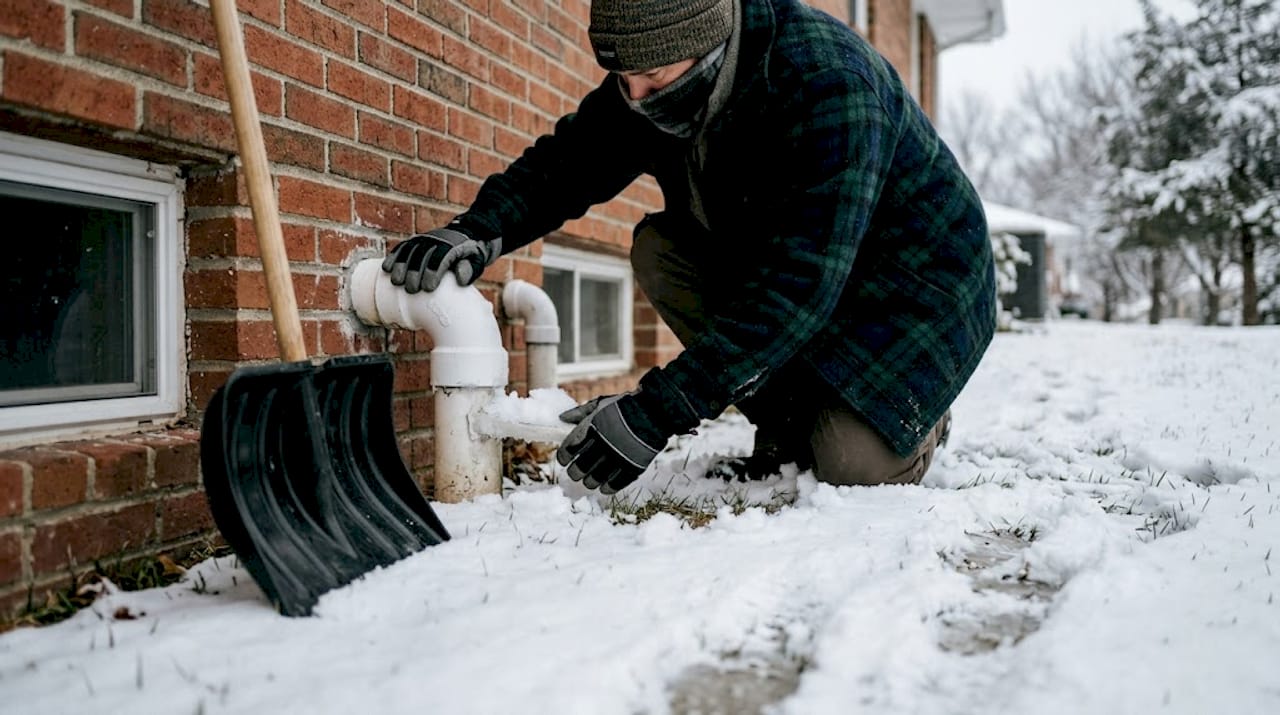
Snow and ice can physically block your furnace’s exhaust or intake pipes, which vent through the side of the house or roof. When a vent is blocked, the furnace’s safety system shuts everything down. Condensate drain lines, which carry moisture from high-efficiency furnaces to a floor drain, can also freeze solid in extreme cold.
| Issue | Typical cause | Quick fix | Urgency |
|---|---|---|---|
| Blocked exhaust vent | Snow or ice pack | Clear with gloved hands or soft brush | High, act within the hour |
| Frozen condensate drain | Extreme cold | Warm the line with a hair dryer (low heat) | High, needed for operation |
| Tripped limit switch | Overheating from poor airflow | Replace filter, reset limit switch | Medium |
| Short cycling | Dirty filter or blocked vent | Clear blockage, replace filter | Medium |
| No ignition | Dirty flame sensor | Call a pro; don’t attempt cleaning without training | High |
To check the exterior vents, go outside and look for the white PVC pipes near the foundation. Remove any snow or ice with your hands or a soft brush. Never use sharp tools near the pipes. Check for visible ice inside the opening.
Safety notice: Never attempt repairs beyond your expertise. If you smell gas or see water pooling inside the unit, leave the home immediately and call your gas utility or a licensed technician. Do not use any electrical switches.
A structured workflow matters more than most homeowners realize. The Emergency HVAC Repair Workflow KC: 35% Faster Fixes shows that structured workflows cut repair time by 35% because technicians prioritize vent clearing, condensate lines, and power supply before anything else. Following the same sequence at home puts you ahead. Review this emergency furnace repair guide for deeper detail on urgent winter scenarios, and bookmark resources on maintaining your furnace to prevent repeat issues.
When to call a professional: Red flags and efficient escalation
Some issues signal a need for immediate professional intervention. Knowing when to stop and call saves you from making a problem worse and protects your family.
Stop troubleshooting and call right away if you notice any of these:
- Gas smell – leave the home immediately and call your utility before doing anything else
- Loud banging, scraping, or rattling – usually a mechanical failure inside the blower or heat exchanger
- Water pooling inside the unit – a cracked heat exchanger or condensate failure that needs expert eyes
- Repeated safety shutoffs – if the furnace keeps shutting off after resets, something is forcing the safety switch to trigger
- No power at all despite confirmed breaker – points to a failed control board or wiring issue
- Yellow or flickering pilot flame – should be steady blue; yellow indicates combustion problems
When you call for service, have this information ready: your furnace model and serial number, a list of every step you already tried, any error codes on the display, and photos of anything unusual you spotted. That preparation makes a real difference. The Emergency HVAC Repair Workflow KC: 35% Faster Fixes confirms that prepping for service cuts total downtime, with emergency pros arriving within 2 to 4 hours in Kansas City winters.
Pro Tip: Use your smartphone to photograph error codes and any ice on the vent before you call. Text or email those photos to the technician so they arrive with a head start on diagnosis.
Understanding the importance of emergency HVAC service helps you act with confidence rather than hesitation, and knowing your way around HVAC troubleshooting means you’ll be a more informed caller when the time comes.
Editorial perspective: Why structured troubleshooting changes everything
Having worked through each step, let’s consider how a disciplined workflow sets apart successful troubleshooting from a frustrating, expensive spiral. In our experience working with Kansas City homeowners, the most common mistake isn’t a lack of knowledge. It’s skipping steps. Someone resets the furnace without checking the filter, gets heat for 20 minutes, and calls us when it shuts off again. That scenario repeats itself every winter.
Local technicians use the same sequence every time: confirm power, check the filter, assess ventilation, then look deeper. It works because each step rules out the most common cause before moving to a complex one. Skipping ahead almost always means doubling back.
The other hard-won lesson is this: document everything. Homeowners who take notes or photos at each step not only feel more confident, they give technicians a clearer picture when help is needed. That saves time on both ends. The Kansas City furnace repair guide reinforces this approach with model-specific guidance. Discipline in troubleshooting isn’t just good practice. It’s the difference between a 30-minute fix and a two-day ordeal.
The next step: Trusted furnace repair for Kansas City homes
If you’ve worked through the workflow but still need support, expert help is just a call away. There are moments when the problem is beyond what a homeowner should handle alone, and that’s completely normal. What matters is acting quickly to protect your home and family from the cold.

At KC Air Control, we’ve been serving Kansas City homeowners for over 70 years with reliable, honest furnace repair. Whether you need fast emergency repair options or want to schedule a full diagnostic with one of the best furnace repair services in the area, our team is ready. Visit our Kansas City furnace repair page to schedule online or call us directly. We’ll get your heat back fast.
Frequently asked questions
What’s the most common reason a furnace stops working in Kansas City?
Dirty or clogged filters are the leading cause of furnace shutdowns, responsible for up to 29% of service calls. Replacing your filter regularly is the single most effective prevention step.
How do I know if my furnace vent is blocked by snow or ice?
Go outside and look at the white PVC exhaust pipes near the foundation. Visible snow or ice at the opening is a clear sign, and a blocked vent will typically trigger a safety shutdown that stops all heating.
How quickly can I get emergency furnace service in winter?
Most Kansas City HVAC professionals arrive within 2 to 4 hours for emergency furnace calls, especially during deep freezes when demand is high. Having your model info ready speeds up the process.
Can I troubleshoot a furnace safely if I smell gas?
No. Leave the home immediately without using any light switches or electronics, and call your gas utility or 911 from outside. Do not return until the property is cleared by a professional.
Recommended
- Step-by-Step Furnace Repair Guide for Kansas City Homes – KC Air Control – Heating & Cooling
- Essential Winter Furnace Maintenance Tips for KC Homes – KC Air Control – Heating & Cooling
- Emergency HVAC Repair Workflow KC: 35% Faster Fixes – Air Control
- Common HVAC problems and solutions for Kansas City homes – KC Air Control – Heating & Cooling