
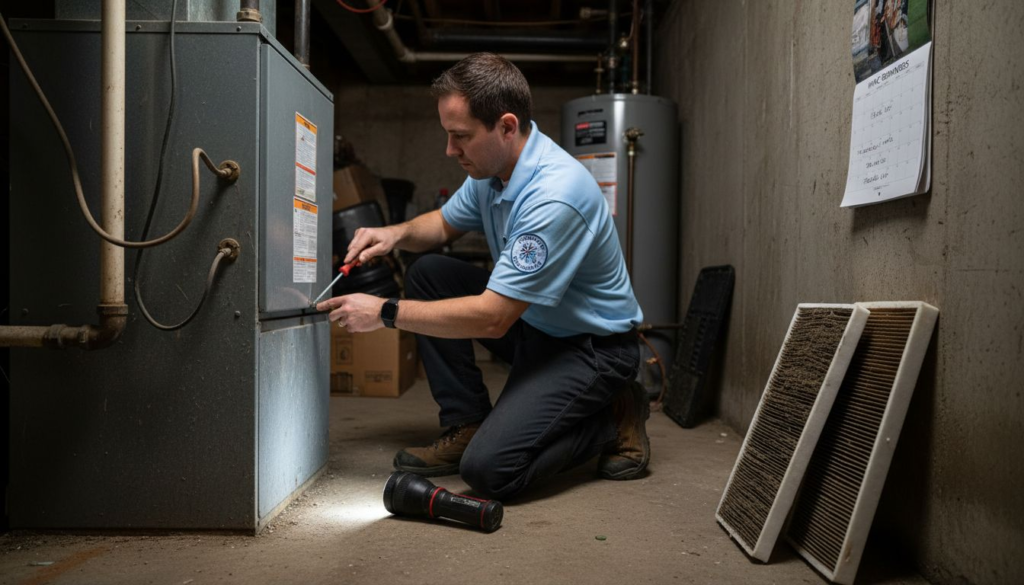
Skipping furnace maintenance doesn’t just reduce comfort during Kansas City’s brutal winters. It quietly inflates your heating bills and raises emergency repair costs by 30% to 50% compared to scheduled servicing. Many homeowners overlook hidden inefficiencies until a breakdown happens on the coldest night of the year. This guide reveals how regular HVAC maintenance can lower your bills, prevent costly repairs, and keep your family safe and warm all winter long.
Quick Links: Your Complete Furnace Maintenance Guide
- Introduction To Furnace Maintenance
- How Furnace Maintenance Enhances Efficiency
- Why Maintenance Prevents Costly Repairs
- Safety Benefits Of Furnace Maintenance
- How Maintenance Extends Furnace Lifespan
- Common Misconceptions And Clarifications
- What Furnace Maintenance Entails
- Optimal Timing And Frequency Of Maintenance
- Health And Air Quality Benefits
- Keep Your Furnace In Peak Condition With Air Control
- Frequently Asked Questions
Key Takeaways
| Point | Details |
|---|---|
| Energy Savings | Regular maintenance reduces heating energy costs by 10% to 15% annually. |
| Repair Prevention | Scheduled upkeep catches component wear early, preventing expensive emergency breakdowns. |
| Safety Assurance | Professional inspections detect carbon monoxide leaks and fire hazards before they endanger your home. |
| Lifespan Extension | Maintained furnaces often last 20+ years versus significantly shorter lifespans when neglected. |
| Hidden Issues | Professionals uncover inefficiencies and mechanical problems that DIY checks miss entirely. |
Introduction to Furnace Maintenance
Furnace maintenance involves comprehensive inspection, cleaning, and minor repairs designed to keep your heating system running efficiently throughout the season. In Kansas City, where winter temperatures regularly drop below freezing, your furnace works harder and longer than in milder climates. This increased demand elevates the risk of breakdowns without proper upkeep. Understanding what maintenance entails helps you protect your investment and comfort.
Most Kansas City homes rely on gas or electric forced air systems. Both types need seasonal HVAC maintenance to handle the workload. Regular servicing addresses wear before it causes failures.
Key maintenance activities include:
- Filter replacement to maintain airflow and indoor air quality
- Burner cleaning to optimize fuel combustion and heat output
- Thermostat calibration ensuring accurate temperature control
- Safety inspections identifying potential hazards like gas leaks or electrical issues
- Component lubrication reducing friction and mechanical wear
These tasks keep your system reliable when you need it most. Furnace repair becomes necessary when maintenance is skipped, often at the worst possible moment. The benefits of furnace maintenance extend far beyond avoiding inconvenience. You gain measurable improvements in efficiency, safety, and home comfort.
How Furnace Maintenance Enhances Efficiency
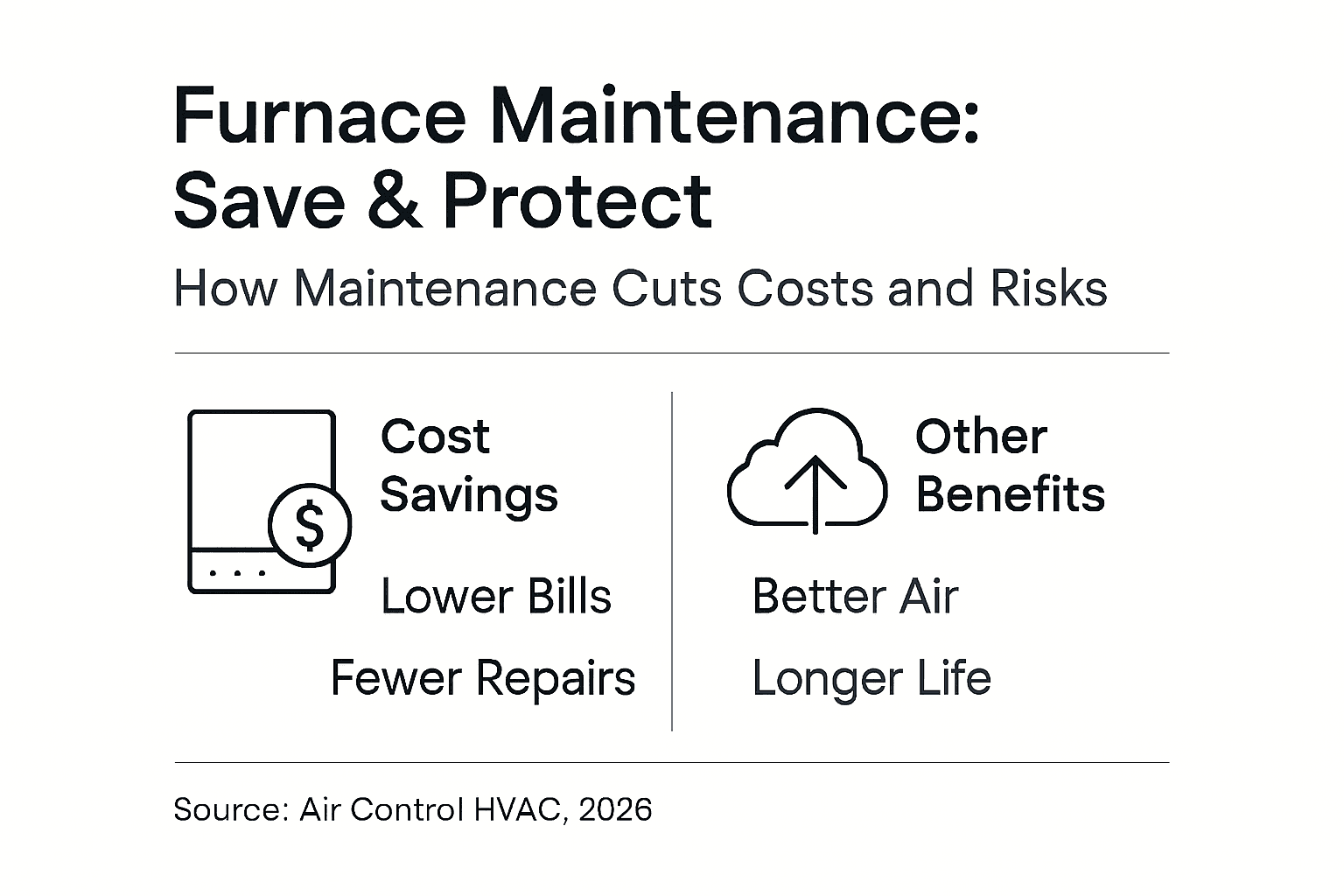
Maintenance directly improves how efficiently your furnace converts fuel into heat. Clean burners and fresh filters optimize combustion and airflow, delivering more warmth per dollar spent. Dirty components force your system to work harder, wasting energy and raising bills.
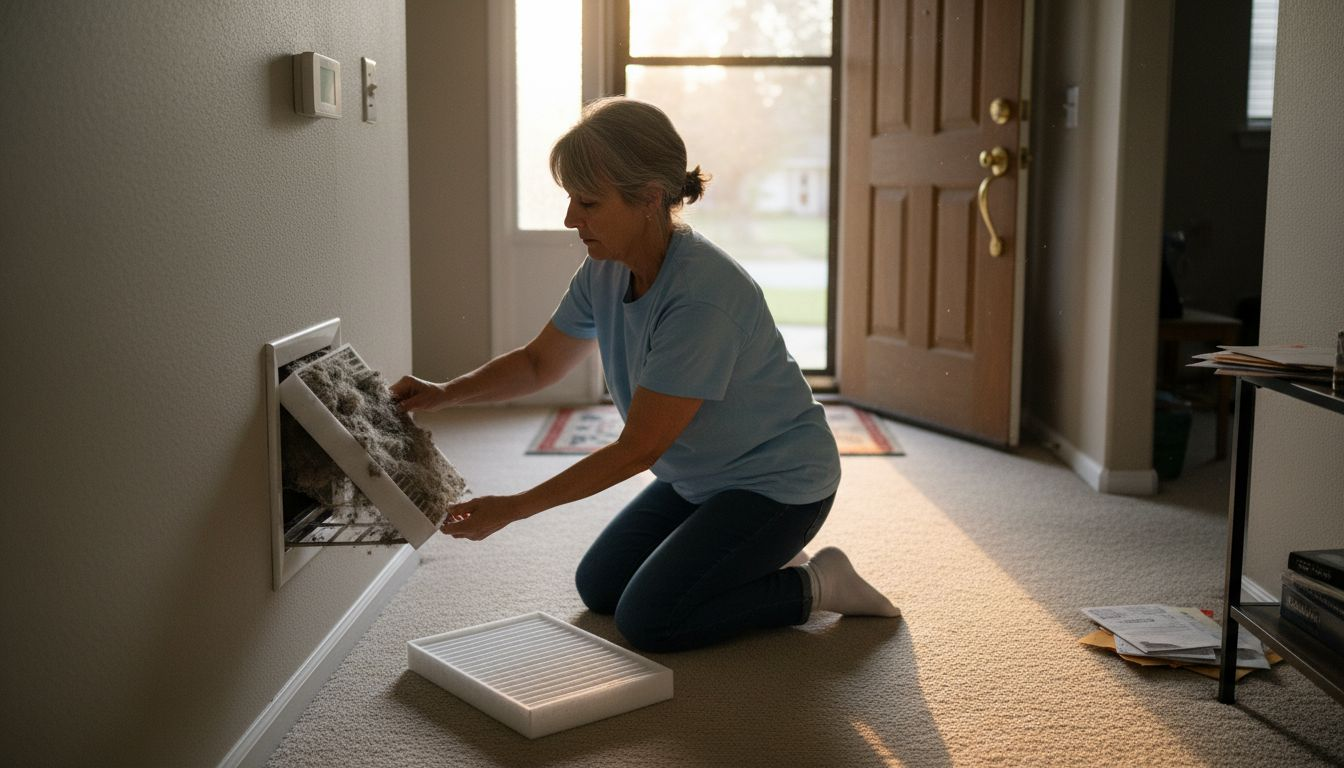
Replacing filters and cleaning burners reduces energy waste by up to 15%. Blocked filters restrict airflow, causing the blower motor to strain and consume excess electricity. Dirty burners produce incomplete combustion, sending unburned fuel up the flue instead of heating your home. Both problems vanish with routine upkeep.
Precise thermostat and control adjustments ensure your furnace runs heating cycles efficiently. Calibration prevents short cycling, where the system turns on and off too frequently. Short cycling wastes energy and accelerates component wear. A properly tuned furnace maintains steady temperatures without overworking.
Efficiency improvements appear on your utility bills within the first heating season. Homeowners who schedule annual furnace tune ups consistently report lower heating costs.
Pro Tip: Change your filter every three months during heating season to maintain peak airflow and efficiency between professional services.
Why Maintenance Prevents Costly Repairs
Scheduled maintenance catches component wear before catastrophic failure occurs. Technicians identify issues like worn belts, failing motors, or corroded electrical connections during inspections. Addressing these problems costs far less than emergency repairs when your furnace quits on a frigid January night.
Component degradation happens gradually, reducing performance long before total failure. A heat exchanger develops small cracks. A blower motor bearing starts grinding. Ignition components weaken. Without maintenance, these problems worsen until your system stops working entirely. Routine inspections reveal deterioration early, allowing affordable repairs that extend equipment life.
Emergency repair costs run 30% to 50% higher than scheduled maintenance expenses. Emergency service calls carry premium pricing, especially during peak winter demand. Parts may require expedited shipping. You might need temporary heating solutions while waiting for repairs. All these factors inflate costs dramatically.
Common issues caught during maintenance:
- Cracked heat exchangers that leak carbon monoxide
- Failing blower motors causing inadequate airflow
- Corroded electrical connections creating fire hazards
- Worn drive belts about to snap
- Clogged condensate drains risking water damage
| Service Type | Average Cost | Timing | Risk Level |
|---|---|---|---|
| Scheduled Annual Maintenance | $100 to $150 | Planned, convenient | Low |
| Emergency Breakdown Repair | $300 to $600+ | Urgent, inconvenient | High |
The cost difference is stark. Regular furnace repair services through maintenance plans prevent emergencies. A furnace troubleshooting checklist helps identify warning signs between professional visits. Following an HVAC maintenance checklist keeps your system reliable year round.
Pro Tip: Keep records of all maintenance and repairs. Documentation helps technicians spot patterns and predict future service needs.
Safety Benefits of Furnace Maintenance
Your furnace poses serious safety risks when not properly maintained. Heat exchanger inspections during annual service prevent deadly carbon monoxide leaks that endanger your family. Carbon monoxide is colorless and odorless, making detection impossible without working alarms or professional inspection.
Poor furnace maintenance links to significant percentages of home heating fires and carbon monoxide incidents. Soot accumulation on burners and heat exchangers creates fire hazards. Overheating components can ignite nearby combustible materials. Faulty electrical connections spark fires inside the cabinet. Regular inspections identify and eliminate these dangers.
Maintenance reduces fire hazards through thorough cleaning and testing. Technicians remove flammable debris, verify proper ventilation, and confirm safe operation of all safety controls. They test for gas leaks and ensure exhaust systems vent properly.
Regular furnace maintenance is key to preventing home heating disasters and protecting families from carbon monoxide poisoning.
Safety checks during professional furnace tune ups include:
- Heat exchanger integrity testing for cracks or corrosion
- Carbon monoxide level measurements in exhaust and living spaces
- Gas line leak detection at all connections
- Flame sensor calibration ensuring proper shutdown if flames extinguish
- Limit switch testing preventing dangerous overheating
Properly maintained furnaces keep your family safe throughout Kansas City’s long winters. Installing carbon monoxide detectors provides additional protection, but they cannot replace professional inspections. Improving indoor air quality through maintenance creates a healthier home environment overall.
How Maintenance Extends Furnace Lifespan
Regular maintenance significantly prolongs your furnace’s operational life. Well maintained systems routinely reach 20 to 25 years, while neglected units often fail after 10 to 15 years. This difference represents thousands of dollars in delayed replacement costs and improved return on your original investment.
Consistent upkeep reduces mechanical stress on all components. Lubricated parts experience less friction. Clean systems run cooler, preventing heat related failures. Calibrated controls prevent damaging operational conditions. Each maintenance visit preserves your equipment’s remaining lifespan.
| Maintenance Level | Expected Lifespan | Reliability | Replacement Timeline |
|---|---|---|---|
| Annual Professional Service | 20 to 25 years | High | 2041 to 2046 |
| Occasional Service | 15 to 18 years | Moderate | 2036 to 2039 |
| Neglected | 10 to 15 years | Low | 2031 to 2036 |
Delaying replacement saves substantial money. A new furnace installation costs $3,000 to $6,000 or more depending on efficiency and features. Extending your current system’s life through regular tune ups defers this major expense while maintaining reliable heating.
Reliability improves dramatically with maintenance. Systems that receive annual service experience fewer unexpected breakdowns. You avoid the stress and discomfort of mid winter failures. Consistent performance means stable heating costs without efficiency degradation over time.
Furnace maintenance directly impacts longevity by preventing premature wear. Think of it like car maintenance. Regular oil changes extend engine life far beyond neglected vehicles. Your furnace operates on the same principle.
Common Misconceptions and Clarifications
Many homeowners hold mistaken beliefs about furnace maintenance that lead to poor decisions and higher costs. Clearing up these misconceptions helps you make informed choices about your heating system care.
1. Maintenance only matters after problems appear. False. Maintenance is preventive, not reactive. Waiting for issues means you are already facing reduced efficiency, higher bills, and imminent breakdowns. Annual service before problems develop saves money and prevents emergencies.
2. DIY visual checks and filter changes provide sufficient maintenance. False. While changing filters helps, professionals detect hidden inefficiencies and hazards during comprehensive inspections. Specialized tools measure combustion efficiency, test safety controls, and identify problems invisible to homeowners. DIY efforts complement but cannot replace professional service.
3. Skipping maintenance has minimal impact on costs or safety. False. Neglect dramatically increases both expenses and risks. Energy waste from dirty components adds 10% to 15% to heating bills annually. Safety hazards like carbon monoxide leaks and fire risks multiply without inspections. Emergency repair costs dwarf maintenance expenses. The financial and safety impacts are substantial and well documented.
Understanding what professional furnace maintenance actually involves dispels these myths. Technicians perform dozens of checks and adjustments that homeowners cannot replicate. Investing in annual service protects your family, your budget, and your comfort reliably.
What Furnace Maintenance Entails
Professional furnace maintenance follows a comprehensive checklist ensuring every critical component receives attention. Understanding what technicians do during service visits helps you appreciate the value and thoroughness of professional care.
1. Filter inspection and replacement. Technicians assess filter condition and install fresh filters to maintain proper airflow. Clean filters prevent dust buildup on internal components and improve indoor air quality.
2. Burner cleaning and adjustment. Burners are cleaned of soot and debris, then adjusted for optimal flame pattern and combustion efficiency. Proper burner operation maximizes heat output and minimizes fuel waste.
3. Heat exchanger inspection. Visual and operational tests check for cracks, corrosion, or other damage that could leak carbon monoxide into your home. This critical safety check protects your family from deadly gas exposure.
4. Blower motor and belt examination. Motors are tested for proper operation, lubricated if needed, and checked for excessive wear. Belts are inspected for cracks or looseness and adjusted or replaced as necessary.
5. Thermostat calibration. Temperature accuracy is verified and adjusted to ensure your furnace responds correctly to heating demands. Proper calibration prevents temperature swings and efficiency losses.
6. Electrical connection tightening. All electrical terminals are inspected and tightened to prevent arcing, overheating, and fire hazards. Loose connections cause failures and safety issues.
7. Safety control testing. Limit switches, flame sensors, and pressure switches are tested to confirm they will shut down the system if dangerous conditions develop. These controls are your primary safety protection.
8. Condensate drain cleaning. For high efficiency furnaces, condensate drains are cleared to prevent water backup and potential damage to your system and home.
A complete furnace tune up typically takes 60 to 90 minutes. Technicians document findings and recommend any needed repairs. This thorough approach catches problems early and keeps your system running safely and efficiently.
Optimal Timing and Frequency of Maintenance
Scheduling furnace maintenance at the right time maximizes benefits and ensures your system is ready when cold weather arrives. Kansas City homeowners should plan service strategically to avoid last minute rushes and guarantee peak performance.
Annual professional maintenance before winter is essential. Schedule your service in September or October, before heating season begins. This timing allows repairs if needed without emergency pressure. Technicians have better availability during fall, and you avoid the rush when temperatures drop.
Filter changes should occur every three months during heating season. Most homes need new filters in November, February, and May. Homes with pets, allergies, or high dust levels may require monthly changes. Regular filter replacement maintains airflow between professional visits.
Biannual servicing benefits certain situations:
- Furnaces older than 15 years experiencing increased wear
- Homes with exceptionally heavy heating usage due to size or insulation issues
- Systems showing signs of declining performance between annual services
Consistent timing creates a maintenance rhythm that becomes routine. Mark your calendar each year for fall furnace service. Establish reminders for quarterly filter changes. This disciplined approach prevents neglect and ensures continuous protection.
Many HVAC companies offer maintenance plans with scheduled reminders and priority service. These programs remove the burden of remembering and often provide discounts on service and repairs. Enrolling simplifies maintenance scheduling and improves compliance.
Health and Air Quality Benefits
Furnace maintenance delivers significant indoor air quality improvements that benefit your family’s respiratory health throughout winter. Clean heating systems reduce airborne contaminants that worsen during cold months when homes remain sealed against outdoor air.
Indoor air quality improves after furnace maintenance, reducing allergens and particulates by up to 50%. Dirty filters and ductwork accumulate dust, pollen, pet dander, and mold spores. When your furnace runs, it circulates these irritants throughout your home. Professional cleaning eliminates this reservoir of contaminants.
Improved air quality reduces respiratory irritations especially during winter when people spend more time indoors. Families with asthma, allergies, or other breathing sensitivities notice measurable relief. Even healthy individuals benefit from cleaner air through better sleep quality and fewer cold symptoms.
Maintenance complements professional duct cleaning for maximum air quality improvement. While furnace service addresses the heating equipment itself, duct cleaning removes accumulated debris from your entire air distribution system. Together, these services create a comprehensive approach to healthy indoor air.
Air quality benefits from maintenance include:
- Reduced airborne dust and particulates circulating through your home
- Lower mold spore counts from clean, dry system components
- Decreased allergen concentrations improving comfort for sensitive individuals
- Better humidity control preventing dry air irritation in winter
Prioritizing furnace maintenance and air quality creates a healthier home environment. Your heating system affects the air your family breathes every day. Keeping it clean protects both comfort and wellness throughout Kansas City’s long heating season.
Keep Your Furnace in Peak Condition with Air Control
Don’t wait until a breakdown leaves you shivering during the next Kansas City cold snap. Professional annual furnace tune ups optimize efficiency and safety, delivering the cost savings and reliability you have learned about in this guide.
Our experienced technicians provide comprehensive maintenance that catches problems before they become expensive emergencies. We also offer expert furnace repair services to address any issues threatening your comfort this winter. With over 70 years of trusted service in the Kansas City area, we understand local heating challenges and deliver solutions that work.
Scheduling your furnace maintenance is quick and convenient. Book your service online today and enjoy peace of mind knowing your heating system will perform reliably all season long. Protect your investment, lower your bills, and keep your family safe and warm with professional care from Air Control.
Frequently Asked Questions
When should I schedule furnace maintenance?
Schedule annual furnace maintenance in September or October, before Kansas City’s heating season begins. This timing ensures your system is ready when temperatures drop and allows time for any necessary repairs without emergency pressure. Early fall scheduling also means better technician availability and no waiting during peak winter demand.
Can I perform furnace maintenance myself?
Homeowners can handle basic tasks like filter changes and visual inspections, but professional maintenance is essential for safety and efficiency. Technicians use specialized tools to test combustion efficiency, measure carbon monoxide levels, and inspect heat exchangers for dangerous cracks. Professional tune ups catch hidden problems that DIY efforts miss entirely.
How much can regular maintenance save on heating bills?
Regular furnace maintenance typically reduces heating energy costs by 10% to 15% annually. Clean filters and burners optimize fuel use and airflow, while calibrated controls prevent energy wasting operational issues. For an average Kansas City home spending $1,200 yearly on heating, maintenance saves $120 to $180 each winter.
Is furnace maintenance really necessary every year?
Yes, annual maintenance is necessary to maintain safety, efficiency, and reliability. Components wear continuously during heating season, and problems develop gradually between service visits. Yearly inspections catch deterioration early, preventing expensive breakdowns and safety hazards. Skipping maintenance voids most manufacturer warranties and dramatically increases failure risk.
What signs indicate I need immediate furnace service?
Contact professional repair services immediately if you notice unusual noises like grinding or squealing, yellow burner flames instead of blue, frequent cycling on and off, weak airflow, or rising heating bills despite unchanged usage. Strange odors, especially gas smells or burning electrical scents, require urgent attention. Never ignore carbon monoxide detector alarms.
The MWBET8888App is a must-have if you’re already using their site. Makes everything so much smoother. Easy access to games and withdrawals. Get it here: mwbet8888app