
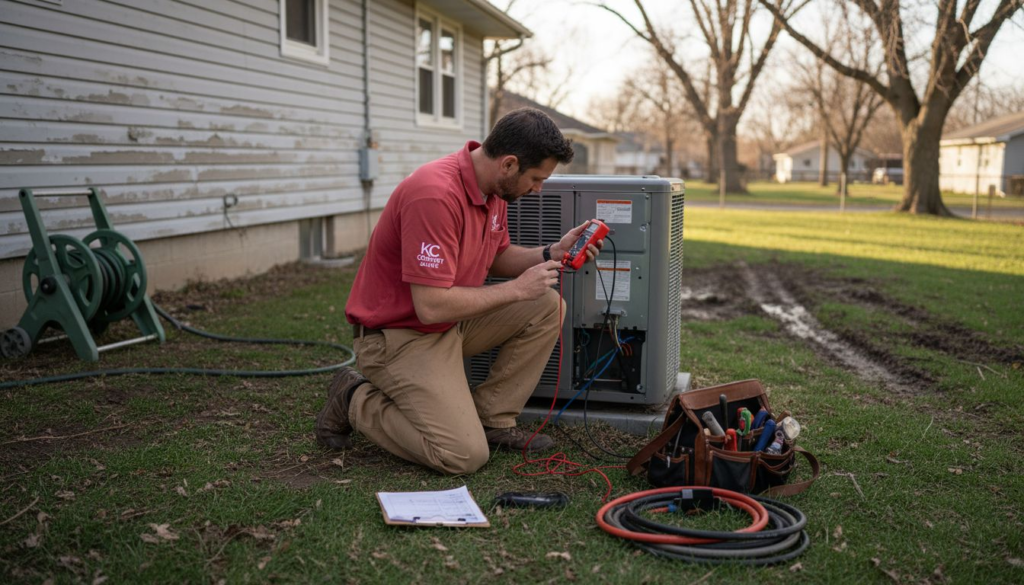
Your furnace dies at 2 AM during a Kansas City winter freeze, or your air conditioner stops working on a sweltering July afternoon. These aren’t just inconveniences—they’re emergencies that threaten your family’s safety and comfort. Emergency HVAC service provides rapid repair when your heating or cooling system fails unexpectedly, typically within hours rather than days. Understanding when to call for urgent help and why speed matters can prevent serious health risks, property damage, and escalating repair costs.
Table of Contents
- Understanding HVAC Emergencies
- Health And Safety Risks Of Delayed HVAC Repair
- Technical Causes And Common Failures Leading To Emergency HVAC Service
- Costs And Tradeoffs: Emergency HVAC Repairs Vs Scheduled Maintenance
- Common Misconceptions About Emergency HVAC Service
- Practical Decision Framework For Homeowners: When To Call Emergency HVAC Service
- Ensuring Home Comfort And Safety Through Timely Emergency HVAC Service
- Get Fast, Trusted Emergency HVAC Repair In Kansas City
Key takeaways
| Point | Details |
|---|---|
| Emergency HVAC service prevents health risks and home damage | Rapid response restores safe indoor temperatures and air quality before conditions deteriorate. |
| Delaying repairs increases costs and safety hazards | Immediate repair reduces risk of escalating damage by 30-50% compared to waiting. |
| Not all HVAC issues require emergency service | Use severity, health risk, and property damage potential to assess true urgency. |
| Immediate repair restores comfort and air quality | Professional technicians diagnose root causes and fix systems correctly the first time. |
| Use specific signs to decide when to call emergency service | Complete shutdown, extreme temperatures, strange odors, or hazardous conditions warrant immediate action. |
Understanding HVAC emergencies
Emergency HVAC service means urgent repair delivered within hours when your system fails completely or creates unsafe conditions. Unlike scheduled maintenance or routine repairs that can wait days or weeks, emergencies demand immediate professional attention to restore comfort and safety.
Typical triggers include total system shutdown during extreme weather, refrigerant leaks causing ice buildup, electrical failures creating fire hazards, or furnace malfunctions producing carbon monoxide. When indoor temperatures drop dangerously or climb to unsafe levels, your home becomes a health risk zone. Vulnerable family members, including children, elderly relatives, and those with respiratory conditions, face the greatest danger.
Delayed response amplifies damage. A minor refrigerant leak becomes a compressor failure. A clogged filter ignored during a heatwave forces your system to overheat and shut down permanently. Immediate repair reduces risk of escalating damage by 30-50%, protecting both your family and your investment.
Common scenarios requiring emergency calls include:
- Complete heating failure when outdoor temperatures fall below freezing
- Air conditioning shutdown during heat advisories above 95°F
- Strange burning smells or visible smoke from HVAC equipment
- Loud grinding, banging, or screeching noises indicating mechanical breakdown
- Water pooling around your furnace or AC unit
- Thermostat unresponsive despite new batteries and reset attempts
Acting swiftly matters. Each hour without climate control worsens indoor conditions and stresses your system further. Our emergency furnace repair guide for Kansas City walks you through initial steps before help arrives. Regular attention through scheduled HVAC maintenance reduces emergency likelihood, but when crisis strikes, speed determines outcomes.
Pro Tip: Keep your HVAC model number and age documented with emergency contact information so technicians arrive prepared with the right parts and tools.
Health and safety risks of delayed HVAC repair
Your HVAC system does more than regulate temperature—it protects health by controlling air quality and maintaining safe living conditions. When systems fail, consequences escalate rapidly.
Indoor temperatures drop below 65°F in 3-6 hours during winter heating failures in Kansas City’s climate. At these levels, hypothermia risk increases, especially for infants, elderly adults, and people with circulatory conditions. Blood pressure rises as bodies struggle to stay warm. Conversely, summer cooling failures send indoor temperatures soaring above 85°F within hours, causing heat exhaustion, dehydration, and dangerous stress on cardiovascular systems.
Ventilation suffers immediately when HVAC systems stop. Indoor air quality deteriorates by 20-30% within 48 hours of system failure as stale air accumulates pollutants, allergens, and excess humidity. Mold spores multiply in damp conditions. Dust and pet dander settle without circulation. Respiratory symptoms worsen for asthma and allergy sufferers.
Vulnerable populations face compounded risks:
- Young children regulate body temperature less efficiently and breathe faster, inhaling more airborne contaminants
- Elderly individuals with compromised immune systems struggle with temperature extremes and poor air quality
- People with chronic respiratory conditions experience immediate symptom flares
- Pets suffer silently from temperature stress and air quality decline
“When heating fails in winter, every hour of delay increases hypothermia risk for vulnerable family members while forcing healthy adults to layer clothing and huddle in single rooms. The safety margin disappears faster than most homeowners realize.”
Immediate professional repair restores protective climate control before health impacts become severe. Technicians trained in improving indoor air quality address both temperature and ventilation issues during emergency service, ensuring your home environment supports rather than threatens wellbeing.
Technical causes and common failures leading to emergency HVAC service
Understanding what breaks helps you recognize warning signs before total failure. Most HVAC emergencies stem from predictable mechanical and electrical problems.
Compressor failures top the emergency list. Your AC compressor pumps refrigerant through the system, and when it seizes due to electrical overload or mechanical wear, cooling stops instantly. Furnace heat exchangers crack from thermal stress, potentially leaking carbon monoxide. Blower motors burn out from bearing failure or electrical shorts, halting air circulation completely.
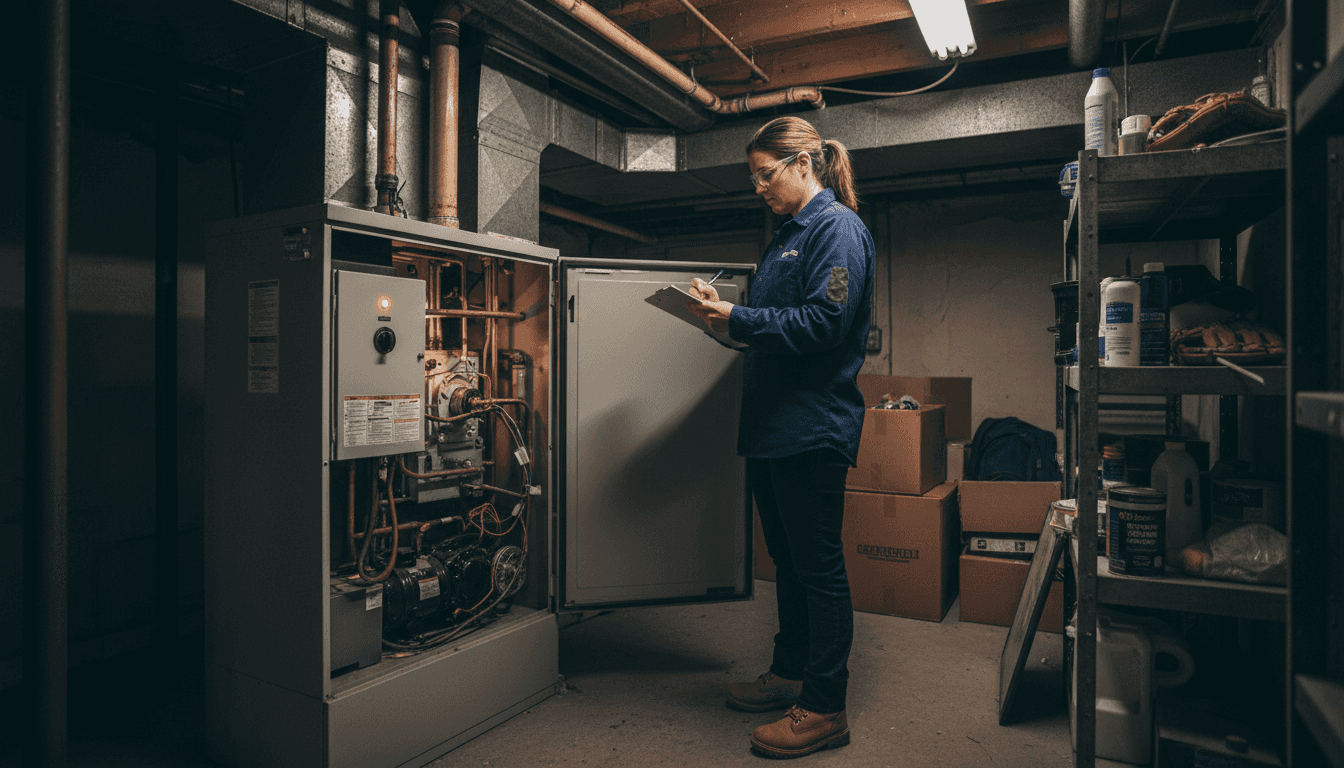
Refrigerant leaks create cascading problems. Low refrigerant forces compressors to work harder, accelerating wear. Ice forms on coils, blocking airflow. System efficiency plummets before shutdown. Electrical faults, including failed capacitors, tripped breakers, and corroded wiring, cut power to critical components without warning.
Warning signs indicating imminent emergency:
- Unusual noises: grinding suggests bearing failure, banging indicates loose components, hissing signals refrigerant leaks
- Performance decline: weak airflow, inconsistent temperatures, or frequent cycling
- Visible ice accumulation on outdoor units during cooling season
- Burning odors from vents or equipment cabinets
- Erratic thermostat behavior or system refusing to start
Professional diagnostics beat DIY attempts during emergencies. Technicians use specialized tools to pinpoint root causes quickly. They carry replacement parts for common failures. They understand electrical safety and refrigerant handling regulations. Attempting emergency repairs yourself risks electric shock, refrigerant exposure, further equipment damage, and voided warranties.
Our emergency HVAC troubleshooting tips for homeowners cover safe steps you can take while waiting for professional help, including checking breakers, changing filters, and clearing debris from outdoor units.
Pro Tip: Note any unusual sounds or smells in the weeks before failure. These early warnings help technicians diagnose problems faster during emergency calls.
Costs and tradeoffs: emergency HVAC repairs vs scheduled maintenance
Financial considerations matter, but understanding true costs requires looking beyond service call prices. Emergency repairs and scheduled maintenance serve different purposes with distinct tradeoffs.
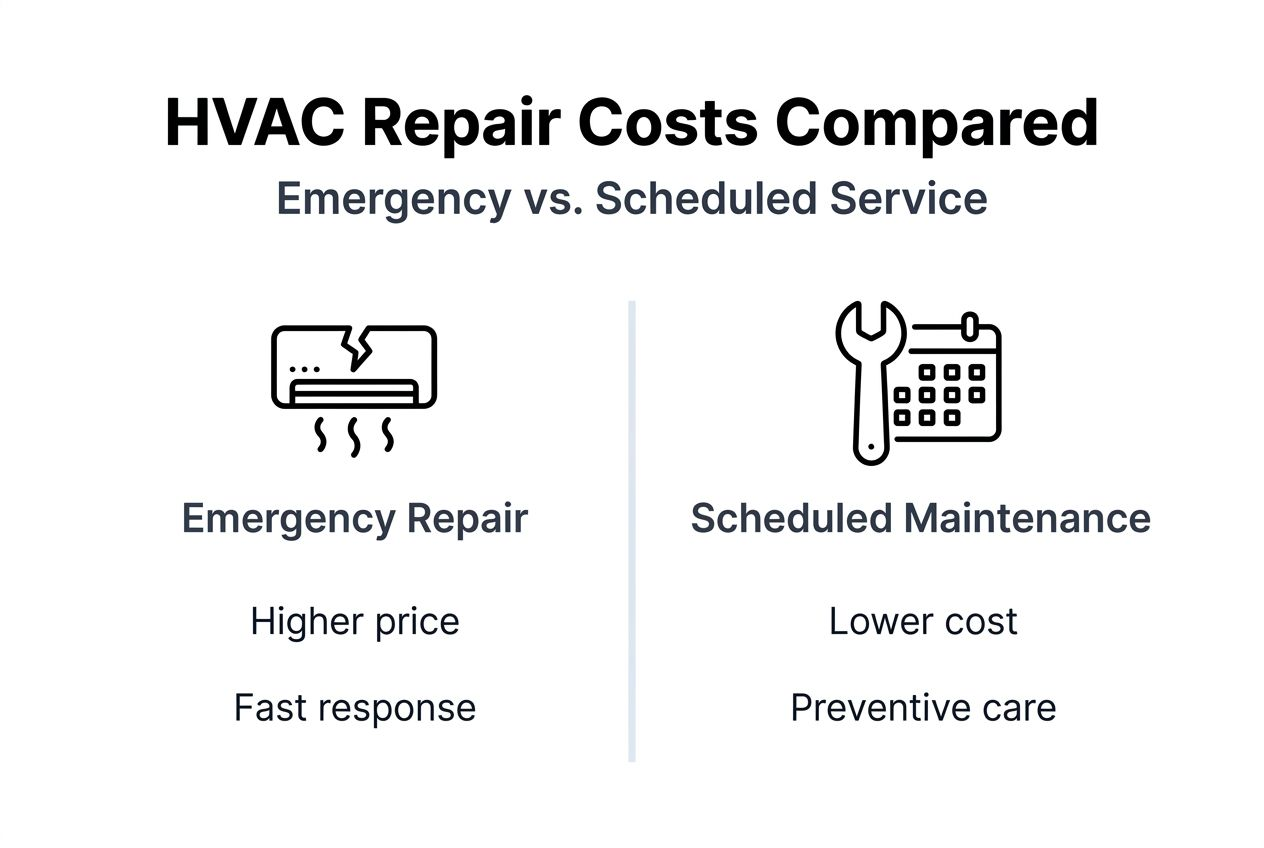
Emergency repairs cost 20-30% more due to after-hours availability, faster response times, and priority scheduling. A compressor replacement costing $1,200 during business hours might run $1,500 as an emergency call. However, prompt service prevents secondary damage that multiplies expenses.
Delaying emergency repair when your system fails saves nothing. Water damage from frozen pipes during heating failure costs thousands. Food spoilage from extended cooling loss adds hundreds. Hotel stays for families escaping unsafe temperatures exceed emergency service premiums. Deferred repairs allow small problems to destroy expensive components.
Scheduled maintenance costs less but cannot replace emergency service when crisis strikes. Preventive tune-ups identify wear before failure, but they don’t fix systems that have already quit. The comparison clarifies decision making:
| Factor | Emergency Repair | Scheduled Maintenance |
|---|---|---|
| Response time | Within hours | Days to weeks |
| Cost premium | 20-30% higher | Standard rates |
| Risk addressed | Immediate safety and comfort threats | Future failure prevention |
| Technician focus | Restore operation quickly | Optimize performance and longevity |
| Best for | System failures, dangerous conditions | Routine upkeep, efficiency tuning |
Smart homeowners invest in both. Regular HVAC maintenance reduces emergency frequency by catching problems early. When emergencies occur despite maintenance, rapid professional response minimizes total costs by preventing damage escalation and restoring normalcy quickly.
Pro Tip: Budget for both annual maintenance and potential emergency service. Setting aside funds reduces stress when urgent repairs become necessary.
Common misconceptions about emergency HVAC service
Misunderstandings about HVAC emergencies lead homeowners to delay critical repairs or call unnecessarily. Clearing confusion helps you make better decisions.
Myth: Repairs can wait until the next business day without consequences. Reality: Delaying emergency HVAC repairs increases risk of damage and health hazards by up to 50%. Every hour without climate control during extreme weather endangers vulnerable family members and stresses remaining system components.
Myth: Emergency service always costs too much. Reality: While premiums exist, emergency repairs prevent costlier secondary damage. A $300 premium on a $1,000 repair beats $5,000 in water damage, ruined belongings, and hotel bills. Insurance often covers emergency repairs when they prevent greater losses.
Myth: All HVAC problems require immediate attention. Reality: Noisy operation, minor efficiency drops, or cosmetic issues can wait for regular service appointments. True emergencies involve safety threats, complete system failure, or conditions causing property damage.
Criteria distinguishing real emergencies:
- Temperature extremes threatening health or safety
- Complete system shutdown during severe weather
- Burning smells, smoke, or visible sparks
- Water or refrigerant leaks causing property damage
- Carbon monoxide detector activation near HVAC equipment
Non-urgent issues suitable for scheduled service:
- Strange noises without performance impact
- Slightly higher utility bills
- Minor airflow variations between rooms
- Cosmetic damage to equipment cabinets
“Homeowners often underestimate how quickly indoor conditions deteriorate during HVAC failure. What seems manageable for an hour becomes dangerous within three to six hours, especially for children and elderly family members. Trust your instincts—if conditions feel unsafe, they probably are.”
Understanding these distinctions saves money by avoiding unnecessary emergency calls while ensuring you seek help when it truly matters. When in doubt, describe your situation to an HVAC professional who can assess urgency over the phone.
Practical decision framework for homeowners: when to call emergency HVAC service
Use this five-step framework to evaluate your HVAC problem and determine whether emergency service is necessary.
Assess symptom severity. Is your system completely non-functional, or is it operating with reduced performance? Total failure during extreme weather warrants immediate help. Reduced efficiency can often wait.
Evaluate health risks. Are indoor temperatures threatening vulnerable family members? Is air quality noticeably declining? Do you smell gas, burning materials, or other hazardous odors? Health threats demand urgent response.
Check property damage potential. Is water pooling where it shouldn’t? Could frozen pipes burst? Might electrical problems cause fire? Property protection justifies emergency calls.
Consider cost tradeoffs. Will waiting days for regular service cost more through secondary damage, temporary housing, or spoiled food than paying the emergency premium now? Factor total expenses, not just service call prices.
Contact trusted providers immediately. Once you determine emergency service is needed, speed matters. Reach out to established local HVAC companies with proven emergency response capabilities and positive customer reviews.
Signs demanding immediate emergency service:
- Complete heating failure when outdoor temperatures drop below 32°F
- Total cooling loss during heat advisories above 95°F
- Carbon monoxide detector activation
- Burning smells or visible smoke from HVAC equipment
- Flooding or major water leaks from HVAC components
- Electrical sparking or repeated breaker trips
Pro Tip: Keep emergency HVAC contact information, including after-hours numbers, saved in your phone and posted near your thermostat for instant access during crisis situations.
When you need help, schedule emergency HVAC service through providers offering 24/7 availability and guaranteed response times. Reliable companies dispatch technicians within hours, arrive with common parts stocked, and provide upfront pricing before starting work.
Ensuring home comfort and safety through timely emergency HVAC service
Emergency HVAC service protects what matters most: your family’s health, safety, and comfort. Rapid professional response when systems fail prevents dangerous temperature extremes, maintains air quality, and stops minor problems from becoming major damage.
The benefits are clear. Restored climate control eliminates health risks for vulnerable family members. Professional diagnosis fixes root causes rather than masking symptoms. Quick repairs prevent secondary damage to your home and possessions. Though emergency service costs more than scheduled appointments, the investment protects against far greater losses.
Prioritize emergency repairs when conditions threaten safety or cause property damage. Choose established providers with proven expertise, transparent pricing, and genuine commitment to customer wellbeing. Your home deserves protection, and your family deserves comfort.
Get fast, trusted emergency HVAC repair in Kansas City
When your HVAC system fails, every minute counts. KC Air Control delivers expert emergency repair backed by over 70 years of experience serving Kansas City homeowners. Our 35% faster emergency HVAC repair workflow gets your system running quickly without cutting corners on quality.
Our technicians excel at emergency HVAC troubleshooting, diagnosing problems accurately on the first visit and carrying parts for common failures. We provide upfront pricing, 24/7 availability, and guaranteed same-day service for true emergencies. Schedule your emergency service online now or call our emergency hotline anytime, day or night.
Pro Tip: Save our emergency contact information in your phone today. When crisis strikes, you’ll reach help immediately without searching online under stress.
FAQ
Why should I call emergency HVAC service instead of waiting for regular repair?
Emergency service prevents serious risks to your family’s health, home safety, and property. Waiting allows indoor temperatures to reach dangerous levels, air quality to deteriorate, and minor problems to cause expensive secondary damage. Immediate repair restores protection before conditions become hazardous or costs multiply.
What are the signs that my HVAC problem is an emergency?
Complete system shutdown during extreme weather, indoor temperatures threatening health, strange burning odors, visible smoke or sparks, major water leaks, and carbon monoxide detector activation all signal true emergencies. Use the five-step decision framework to assess severity, health risk, property damage potential, and cost tradeoffs when uncertain.
How much more expensive is emergency HVAC repair compared to scheduled service?
Emergency repairs typically cost 20 to 30% more due to after-hours availability, faster response times, and priority scheduling. However, prompt service often prevents far greater expenses from secondary damage, temporary housing, food spoilage, and accelerated system wear. The premium protects against larger losses.
Can I do emergency HVAC repairs myself to save money?
DIY emergency HVAC repairs risk electric shock, refrigerant exposure, further equipment damage, and voided warranties. Professional technicians have specialized diagnostic tools, replacement parts, safety training, and regulatory knowledge to fix problems correctly the first time. Attempting complex repairs yourself during emergencies often worsens problems and increases total costs.