

TL;DR:
- Kansas City homes face challenges with climate swings affecting temperature, humidity, and air quality.
- Effective indoor comfort requires balancing temperature, humidity, airflow, and ventilation using targeted HVAC strategies.
- Regular maintenance and professional assessments are essential for long-term comfort and system efficiency.
Kansas City homeowners know the drill: one week you’re running the AC at full blast, and the next you’re reaching for the furnace. The city’s dramatic seasonal swings bring high humidity in summer and bone-dry air in winter, making consistent indoor comfort genuinely difficult to achieve. But comfort isn’t just about temperature. Air quality, humidity, and airflow all play a role in how healthy and comfortable your home actually feels. This guide walks you through practical, evidence-based HVAC strategies to address all of it, from evaluating your current setup to making targeted upgrades that deliver real results.
Table of Contents
- Assessing your home’s comfort needs
- HVAC solutions for year-round temperature control
- Improving indoor air quality for comfort and health
- Maintenance: Keeping comfort systems running at their best
- Going beyond the basics: What most homeowners miss about comfort
- Ready to transform your comfort? Next steps with KC Air Control
- Frequently asked questions
Key Takeaways
| Point | Details |
|---|---|
| Balance temperature and humidity | Maintaining correct temperatures and humidity keeps your home comfortable and healthy year-round. |
| Upgrade to smart HVAC solutions | Smart thermostats and zoning provide precision and savings for Kansas City’s temperature swings. |
| Prioritize indoor air quality | Use MERV 13+ filters, balanced ventilation, and humidity control for healthier air. |
| Regular maintenance is vital | Consistent filter changes, tune-ups, and airflow checks prevent breakdowns and improve comfort. |
| Small issues compound quickly | Ignoring uneven rooms or air quality problems leads to bigger expenses and lower comfort over time. |
Assessing your home’s comfort needs
Before you adjust a single setting or buy a single piece of equipment, take stock of where your home currently stands. Good indoor comfort isn’t guesswork. It follows measurable standards that give you a reliable starting point.
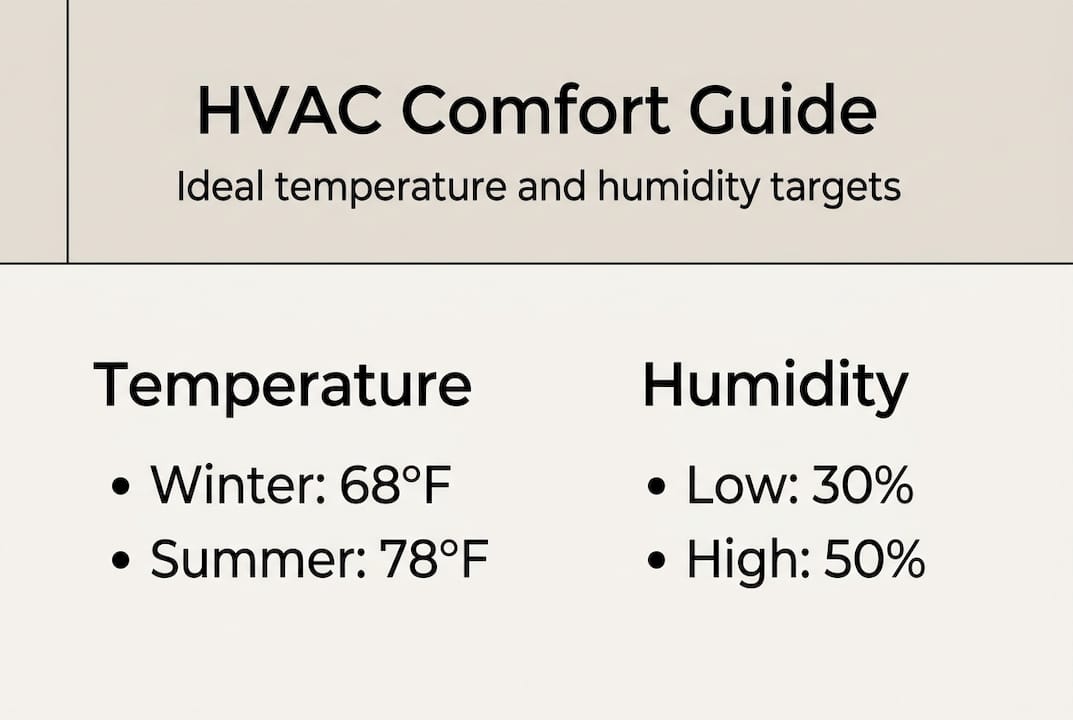
The American Society of Heating, Refrigerating and Air-Conditioning Engineers (ASHRAE) sets widely used benchmarks for residential comfort. ASHRAE guidelines recommend a daytime indoor temperature range of 68°F to 78°F (20°C to 25.5°C), depending on the season. For Kansas City homes, that means 68°F is a solid winter target, while 78°F works well during summer cooling. Staying within this range keeps you comfortable and keeps energy use in check.
Humidity matters just as much as temperature. The ASHRAE ventilation guidelines support maintaining relative humidity (RH) between 30% and 50% year-round. When RH drops below 30%, you’ll notice dry skin, static electricity, and irritated sinuses. When it climbs above 50%, mold and dust mites thrive. A simple digital hygrometer (a tool that measures indoor humidity) costs under $20 and tells you exactly where you stand.
Common comfort problem symptoms to watch for:
- Hot or cold spots in specific rooms or floors
- Dry skin and chapped lips during winter months
- Increased allergy or asthma symptoms indoors
- Condensation on windows (sign of excess humidity)
- Musty odors (often a mold or moisture issue)
- Drafts near windows or exterior walls
| Comfort indicator | Ideal range | Problem zone |
|---|---|---|
| Indoor temperature (winter) | 68°F | Below 65°F or above 72°F |
| Indoor temperature (summer) | 76°F to 78°F | Above 80°F |
| Relative humidity | 30% to 50% | Below 30% or above 60% |
| Air changes per hour | 0.35 or higher | Below 0.35 |
For a deeper look at how your current HVAC setup affects comfort, reviewing HVAC comfort optimization strategies can help you identify gaps before investing in new equipment.
Pro Tip: Walk through your home during the hottest and coldest days of the year and note where discomfort is worst. Those are your priority zones, and addressing them first gives you the biggest comfort return.
HVAC solutions for year-round temperature control
After identifying comfort gaps, it’s time to implement HVAC strategies that target precise temperature control. The right tools make a significant difference, especially for a city with Kansas City’s wide temperature range.
The single most cost-effective upgrade for most homeowners is a smart thermostat. Smart thermostats reduce energy use by 10% to 23% compared to manual thermostats, and they do it through precise scheduling and learning your habits. You set your preferred temperatures for different times of day, and the system handles the rest. Many models also provide energy reports so you can see exactly where your dollars are going.
Zoning systems take control a step further. Instead of one thermostat governing your whole home, zoning allows you to set different temperatures for different areas or floors. This is especially useful in two-story homes, where heat naturally rises and upper floors stay warmer. Variable-speed HVAC systems and zoning together handle Kansas City’s temperature swings far better than older single-stage equipment, which only runs at full blast or not at all.
Step-by-step setup for smarter temperature control:
- Install a compatible smart thermostat and connect it to your home’s Wi-Fi.
- Program weekday and weekend schedules based on when rooms are occupied.
- Set a 7°F to 10°F setback during sleeping hours or when no one is home.
- If your home has uneven temperatures, consult an HVAC technician about adding zone dampers.
- Review your energy reports monthly and adjust schedules as needed.
- Have your system inspected before each heating and cooling season.
| System type | Temperature consistency | Energy use | Best for KC homes |
|---|---|---|---|
| Single-stage system | Low | High | Older, smaller homes |
| Two-stage system | Moderate | Moderate | Mid-size homes |
| Variable-speed system | High | Low | Homes with zoning needs |
| Smart thermostat only | Moderate | Lower | Any existing system |
If your current system is over 10 to 15 years old, upgrading HVAC systems to a variable-speed model can pay for itself in energy savings and consistent comfort. For seasonal readiness, reviewing AC maintenance tips before summer arrives keeps your system ready for the heat.
Pro Tip: Avoid the temptation to crank your thermostat to an extreme setting when you get home. Systems cool or heat at the same rate regardless of the setpoint, and you’ll just end up overshooting your comfort target.
Improving indoor air quality for comfort and health
Once your temperature is under control, focus on air quality and humidity management. This is the side of comfort most homeowners overlook, and it’s where health and daily wellbeing are most directly affected.

Ideal relative humidity for comfort and health sits between 30% and 50% year-round. In practice, that means running a whole-home humidifier during Kansas City winters, when indoor RH can drop dangerously low, and using a dehumidifier or air conditioner to pull moisture out during humid summer months.
For fresh air without wasting energy, consider an Energy Recovery Ventilator (ERV) or Heat Recovery Ventilator (HRV). These systems bring in outside air while transferring the temperature from the outgoing air, so you’re not throwing away conditioned air every time you ventilate. They’re one of the smartest investments for Kansas City homes that are tightly sealed for energy efficiency.
Key IAQ strategies to implement at home:
- Upgrade to MERV 13 or higher filters to capture fine particles including pollen, pet dander, and smoke
- Run kitchen exhaust fans rated at 100 CFM or higher while cooking to remove combustion byproducts
- Use bathroom exhaust fans for at least 20 minutes after showers to prevent moisture buildup
- Seal gaps around windows and doors to reduce outdoor pollutant infiltration
- Schedule annual duct cleaning if your home has visible dust buildup or recent renovation work
“The EPA outlines three core strategies for better indoor air: source control, ventilation, and filtration. Applied together, these methods address the root causes of poor IAQ rather than just masking symptoms.”
For Kansas City homeowners, exploring Kansas City air quality options specific to your home’s size and setup can help you choose the right combination of filtration and ventilation. Pairing upgrades with a HVAC tune-up guide ensures your system can actually deliver the clean, conditioned air these tools are designed to provide. For more on what’s available locally, IAQ solutions can offer helpful comparisons.
Pro Tip: If anyone in your home has asthma or allergies, prioritize MERV 13 filters and an ERV system before spending money on other comfort upgrades. Clean air has a bigger impact on daily health than most people realize.
Maintenance: Keeping comfort systems running at their best
Strategies only work if your system is well maintained. An upgraded thermostat does nothing for a system clogged with debris. Consistent maintenance is what separates a home that stays comfortable year-round from one that breaks down at the worst possible time.
Regular air filter changes every one to three months improve airflow, protect your equipment, and directly affect indoor air quality. A clogged filter forces your system to work harder, increasing energy use and accelerating wear. If you have pets or anyone in the home with allergies, change filters closer to the one-month mark.
Recurring HVAC maintenance checklist:
- Replace air filters every one to three months (use MERV 13 or higher).
- Schedule a professional tune-up before cooling season (spring) and heating season (fall).
- Clear debris from around your outdoor condenser unit every month.
- Check and clean condensate drain lines to prevent water damage.
- Test your thermostat’s accuracy by comparing it to a separate thermometer.
- Inspect visible ductwork for gaps, disconnections, or obvious damage.
Warning signs that maintenance is overdue:
- Unusual noises during startup or operation (rattling, banging, squealing)
- Rising energy bills without a change in usage habits
- Hot or cold spots that weren’t there before
- System short-cycling (turning on and off too frequently)
- Increased dust accumulation on surfaces
Duct leakage exceeding 10% is common in older homes and leads directly to uneven temperatures and wasted energy. A professional duct inspection can identify problem areas, and sealing those leaks often delivers noticeable comfort improvements without replacing any equipment. Zoning for two to three areas helps as well, especially in multi-story homes.
For guidance on keeping your system in peak condition, reviewing HVAC comfort maintenance practices gives you a clear framework. Understanding the importance of regular HVAC maintenance also helps you avoid costly emergency repairs down the road.
Going beyond the basics: What most homeowners miss about comfort
Most homeowners think comfort comes down to setting the right temperature. In our experience, that’s only part of the picture. True comfort is the result of four factors working together: temperature, humidity, airflow, and air quality. When even one of these is off, the whole system underperforms.
We see this regularly with homeowners who invest in high-efficiency equipment but skip zoning, or who seal their homes tightly for energy savings but forget to add proper ventilation. A tightly sealed home without an ERV or HRV will develop air quality issues within months. That’s not an opinion. Balancing ventilation with filtration per ASHRAE and EPA guidance is what keeps that balance stable without spiking your energy bill.
The most common shortcut we see is choosing the cheapest single-stage system and skipping humidity control. It saves money upfront. But over a Kansas City winter, without proper humidification, that home will feel colder than the thermostat reads, and occupants will compensate by turning up the heat, spending more money on comfort they could have achieved for less. Reviewing comfort and maintenance best practices before making equipment decisions helps you avoid that cycle entirely.
Start with source control and ventilation first, then address temperature, then fine-tune humidity. That order saves you money and delivers better results.
Ready to transform your comfort? Next steps with KC Air Control
You now have a clear picture of what it takes to create lasting indoor comfort in a Kansas City home. But sometimes the most effective next step is getting a trained professional to assess your specific situation.

At KC Air Control, we’ve been helping Kansas City homeowners with heating, cooling, and improve indoor air quality solutions for over 70 years. Whether you need a full system upgrade, a seasonal tune-up, or help with hard-to-solve hot and cold spots, our team is ready to help. Explore our maintenance tips for comfort or, if your system is already struggling, check out our emergency HVAC options for fast, reliable support. Schedule your consultation today and let us help you get your home exactly where you want it.
Frequently asked questions
What is the ideal temperature to set my thermostat in Kansas City?
ASHRAE recommends 68°F in winter and 78°F in summer as the optimal range for residential comfort and energy efficiency. These targets work well for Kansas City’s seasonal extremes.
How often should I change my air filters for good air quality?
Change your filters every one to three months, and use MERV 13 or higher filters to capture fine particles and maintain healthy indoor air. Homes with pets or allergy sufferers should replace filters monthly.
How do I balance humidity in my home during humid summers and dry winters?
Run a whole-home humidifier in winter and a dehumidifier or ERV in summer to keep indoor RH between 35% and 45%, which is the sweet spot for comfort and health.
Do smart thermostats actually save money?
Yes. Smart thermostats reduce energy use by 10% to 23% compared to manual thermostats through precise scheduling and occupancy-based controls.
What’s the best way to fix uneven temperatures between rooms or floors?
Start by checking for duct leakage above 10%, then consider adding zoning for two to three areas and scheduling a professional airflow audit to pinpoint the cause.
Recommended
- Optimize your HVAC maintenance workflow for KC homes – KC Air Control – Heating & Cooling
- How HVAC systems optimize home comfort and energy efficiency – KC Air Control – Heating & Cooling
- Energy efficient HVAC guide: Save 20-50% in KC – KC Air Control – Heating & Cooling
- How to choose the right HVAC system for your KC home – KC Air Control – Heating & Cooling