
TL;DR:
- Regular filter replacement improves efficiency and extends furnace lifespan during winter.
- Proper thermostat settings and programming can cut heating costs by over 10 percent.
- Annual professional inspections detect hidden issues, ensuring safety and reliable operation.
Skipping furnace maintenance before a Kansas City winter is one of the most expensive mistakes a homeowner can make. When your furnace struggles, you feel it in your comfort and your wallet. Dirty filters alone reduce efficiency by up to 15%, and that loss compounds fast when temperatures drop below freezing. The good news is that a few consistent habits can keep your system running strong all season. This guide walks you through the most effective maintenance steps, from filter care and thermostat settings to professional inspections, so you can stay warm without overpaying on energy bills.
Winter Furnace Maintenance Topics for Kansas City Homeowners
- Check and replace furnace filters regularly
- Test and adjust your thermostat for optimal efficiency
- Inspect furnace components and clear the area
- Schedule professional maintenance for long-term reliability
- The overlooked Kansas City maintenance habit that pays off
- Get Kansas City’s trusted furnace maintenance help
- Frequently asked questions
Key Takeaways
| Point | Details |
|---|---|
| Change filters often | Dirty filters lower efficiency and boost energy bills; replace monthly for best results. |
| Optimize the thermostat | Setting your thermostat between 68-70°F saves money and keeps your home comfortable. |
| Inspect furnace parts | Regular checks for odd sounds, smells, or wear help catch issues early and prevent breakdowns. |
| Schedule professional service | Annual expert maintenance prevents costly repairs and extends your furnace’s life. |
| Monthly maintenance saves | Frequent, small actions are more effective than seasonal fixes in Kansas City’s climate. |
Check and replace furnace filters regularly
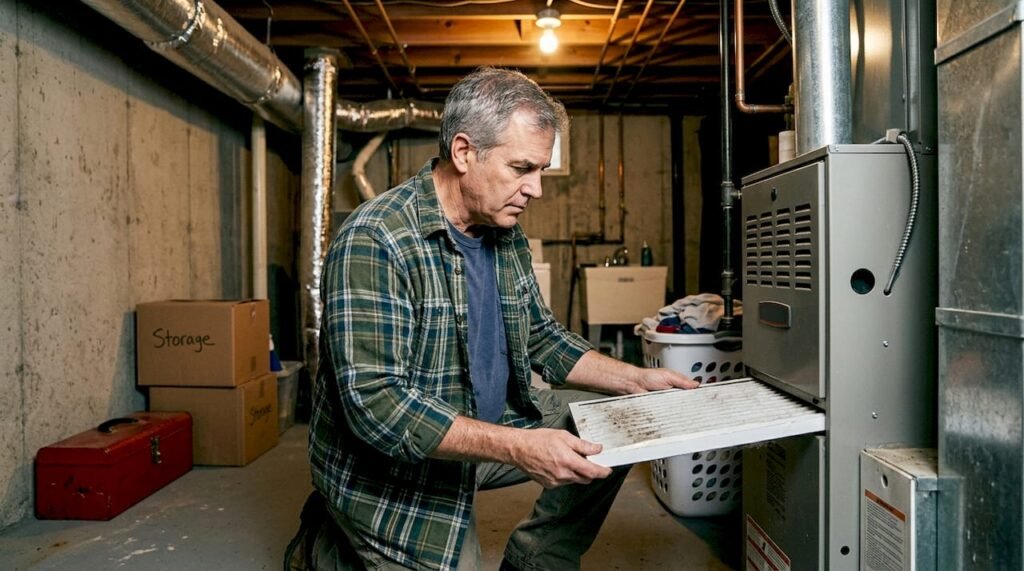
Filter maintenance is the single most impactful thing you can do for your furnace, yet it is the task most homeowners forget until something goes wrong. A clogged filter forces your furnace to work harder, pulling more energy to push air through a restricted path. That extra strain does not just raise your bills. It shortens the life of your system and can trigger breakdowns on the coldest nights of the year.
According to heating experts, dirty filters reduce efficiency by up to 15%, which means your furnace burns more fuel for less heat. Staying on top of filter changes is one of the fastest ways to protect your AFUE (Annual Fuel Utilization Efficiency) rating, which measures how effectively your furnace converts fuel into heat.
How to check and replace your filter:
- Locate the filter slot, usually near the air handler or return air duct.
- Slide the filter out and hold it up to a light source. If you cannot see light through it, replace it.
- Note the filter size printed on the frame before buying a replacement.
- Slide the new filter in with the airflow arrow pointing toward the furnace.
- Write the replacement date on the edge of the filter with a marker.
Filter types and how often to replace them:
- Fiberglass filters: Replace every 30 days. They are inexpensive but offer minimal filtration.
- Pleated filters: Replace every 60 to 90 days. A solid middle-ground option for most homes.
- High-efficiency filters (MERV 11 to 13): Replace every 90 days. Best for homes with pets, allergies, or heavy dust.
Pro Tip: Pair your filter changes with a quick review of your furnace maintenance checklist to catch other small issues before they grow. You can also bookmark the Kansas City HVAC checklist for a broader seasonal routine that keeps your whole system in shape.
During winter, plan to check your filter at least once a month. Kansas City homes run their furnaces hard from November through March, and that extended use builds up dust and debris faster than in milder climates.
Test and adjust your thermostat for optimal efficiency
With filters sorted, maximizing efficiency moves next to thermostat management. Your thermostat is the control center for your home’s comfort, and small adjustments there can lead to meaningful savings over a full heating season.
Proper thermostat setbacks save 10% or more on heating bills. For Kansas City winters, setting your thermostat to 68 to 70 degrees Fahrenheit during the day strikes the right balance between comfort and efficiency. Lowering it by 7 to 10 degrees while you sleep or are away adds up to real savings without sacrificing comfort when you are home.
Steps to test and optimize your thermostat:
- Set the thermostat to heat mode and raise the temperature above the current room reading.
- Listen for the furnace to kick on within a minute or two. A delay longer than that may signal a calibration issue.
- Use a separate indoor thermometer to verify the temperature the thermostat reads matches actual room conditions.
- If readings differ by more than 2 degrees, the thermostat may need recalibration or replacement.
- Program a schedule: 68 to 70 degrees when home and awake, 60 to 62 degrees overnight or when away.
- If you have a smart thermostat, enable learning mode so it adapts to your household patterns automatically.
Savings spotlight: Homeowners who set back their thermostat consistently during winter can cut heating costs by more than 10% over the season. That is real money back in your pocket without any major upgrades.
Upgrading to a programmable or smart thermostat is one of the most cost-effective improvements you can make. These devices remove the guesswork and make it easy to maintain efficient settings without thinking about it every day. Understanding why maintaining your furnace matters helps put these small changes in a larger context. For a full breakdown of what to tune up each season, the HVAC tune-up tips page covers it well.
Inspect furnace components and clear the area
Once you have optimized the thermostat, attention turns to the physical state and surroundings of your furnace. A furnace that is buried under storage boxes or surrounded by clutter cannot breathe properly, and that restriction affects performance and safety.
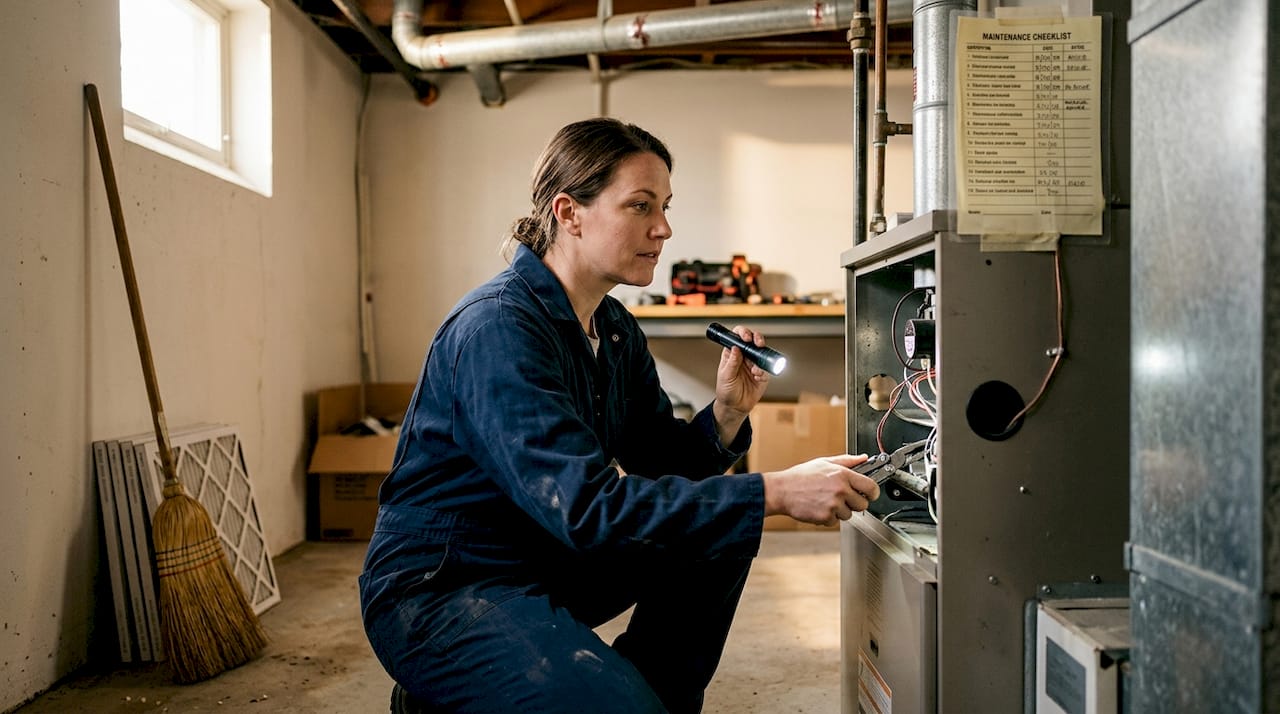
Start with a visual walk-around before winter sets in. You do not need to be a technician to spot problems. Your eyes and nose are your best tools here.
Visual inspection checklist:
- Burner flame: Should be steady and blue. A yellow or orange flame can indicate a combustion issue.
- Flue pipe: Check for rust, gaps, or disconnected sections. A damaged flue can allow carbon monoxide to enter your home.
- Blower motor: Listen for grinding or squealing sounds when the furnace runs. These noises often mean worn bearings.
- Heat exchanger: Look for visible cracks or soot marks near the unit. A cracked heat exchanger is a serious safety concern.
- Vents and registers: Make sure none are blocked by furniture, rugs, or debris.
Clearing at least two feet of space around your furnace improves airflow and reduces fire risk. Do not store paint, cleaning supplies, or flammable materials anywhere near the unit.
“Annual furnace inspections catch problems that homeowners cannot see, from small cracks in the heat exchanger to worn igniter components. Waiting until something breaks is always more expensive than catching it early.”
Odd smells are another key warning sign. A faint burning smell at the start of the season is normal as dust burns off. A persistent sulfur or metallic odor is not. If you notice those, turn the system off and call a professional. For a structured approach, the furnace troubleshooting checklist walks you through common issues step by step. If your system is aging and repairs are adding up, it may be worth reviewing the furnace replacement benefits to weigh your options.
Keeping proper maintenance in place protects your AFUE and keeps your system running at its rated efficiency throughout winter.
Schedule professional maintenance for long-term reliability
Having conducted your own checks, professional inspection adds a critical layer of reliability. DIY maintenance covers the basics, but a trained technician sees things you simply cannot without specialized tools and experience.
Kansas City homeowners should schedule a professional furnace tune-up once a year, ideally in early fall before the heating season begins. If you missed that window, booking a visit in early winter is still far better than waiting until a breakdown forces the issue.
What a professional checks during a service visit:
- Gas pressure and burner operation
- Heat exchanger integrity
- Electrical connections and voltage readings
- Ignition system and safety controls
- Flue and ventilation clearance
- Refrigerant levels if the system is a heat pump
- Lubrication of moving parts
| Task | DIY maintenance | Professional maintenance |
|---|---|---|
| Filter replacement | Yes | Yes |
| Thermostat calibration | Basic check | Precise calibration |
| Heat exchanger inspection | Visual only | Full diagnostic |
| Gas pressure testing | No | Yes |
| Electrical safety check | No | Yes |
| Blower motor servicing | No | Yes |
| Carbon monoxide testing | Basic detector | Combustion analysis |
The table above shows clearly where professional service fills the gaps. DIY care is valuable and necessary, but it has real limits. Professionals catch the invisible problems, the ones that cause mid-winter breakdowns or safety hazards.
Proper annual maintenance also preserves your furnace warranty, which often requires documented service visits. Skipping professional care can void coverage right when you need it most. For a complete seasonal plan, the seasonal maintenance steps guide is a practical resource. If you want to understand the broader impact on your home’s comfort, the article on boosting home comfort through HVAC maintenance is worth reading.
The overlooked Kansas City maintenance habit that pays off
Here is something we have seen repeatedly over decades of serving Kansas City homeowners: the people who spend the least on emergency repairs are not the ones who do one big seasonal overhaul. They are the ones who do small things consistently, every single month.
A monthly filter check takes two minutes. A quick thermostat review takes five. These habits prevent the slow efficiency losses that compound quietly over a winter season. Kansas City’s temperature swings are unpredictable. A warm November can lull you into skipping maintenance, and then a hard freeze in January reveals every neglected issue at once.
Most homeowners think of furnace care as a once-a-year event. We think that mindset is exactly why so many systems fail prematurely. Consistent small actions protect your investment far better than sporadic big fixes. Set a monthly phone reminder for filter checks. Do a quick visual inspection every time the season shifts. These habits, combined with annual professional service, are what keep furnaces running reliably for 15 to 20 years.
Pro Tip: Pair your monthly filter reminder with a quick review of how to prevent HVAC breakdowns so small issues never become expensive emergencies.
Get Kansas City’s trusted furnace maintenance help
If staying on top of all these maintenance tasks feels like a lot to manage on your own, we are here to help. KC Air Control has been serving Kansas City homeowners for over 70 years, and our team knows exactly what local furnaces face every winter.

Whether you need a full furnace tune-up before the season peaks, a same-day furnace repair service when something goes wrong, or just want to know you are working with the best furnace repair services in the area, we have you covered. Our technicians catch the problems you cannot see and keep your system running safely and efficiently all winter long. Schedule your visit today and heat your home with confidence.
Frequently asked questions
How often should I change my furnace filter in winter?
Replace or clean your furnace filter every 1 to 3 months during winter. Dirty filters reduce efficiency by up to 15%, so staying consistent protects both your air quality and your energy bills.
What thermostat setting saves the most money in Kansas City winters?
Setting your thermostat to 68 to 70 degrees Fahrenheit during the day and lowering it overnight helps save over 10% on heating bills while keeping your home comfortable during active hours.
Is professional furnace maintenance worth it?
Absolutely. Annual professional maintenance prevents unexpected breakdowns, extends furnace life, and ensures your system operates safely and at peak efficiency throughout the winter season.
What common warning signs should I look for in furnace components?
Watch for unusual noises like grinding or squealing, odd smells such as sulfur or burning metal, a yellow burner flame, or frequent short cycling. These are all signs your furnace needs professional attention soon.
Recommended
- Furnace maintenance checklist: 10 essential steps for KC homes in 2026 – KC Air Control – Heating & Cooling
- Seasonal HVAC Maintenance Steps for Home Energy Savings – Air Control
- Optimize your HVAC maintenance workflow for KC homes – KC Air Control – Heating & Cooling
- HVAC maintenance checklist for Kansas City homeowners 2026 – KC Air Control – Heating & Cooling