

TL;DR:
- A whole-house HVAC humidifier is integrated into your heating and cooling system to maintain balanced indoor moisture. It improves comfort, air quality, and protects home materials by adding moisture through ductwork automatically. Choosing the right type depends on your heating system, home size, and budget, with regular maintenance ensuring optimal performance.
Most homeowners picture a small tabletop unit when they hear “humidifier.” But a humidifier for HVAC systems is something entirely different. It’s a whole-house solution built directly into your heating and cooling system, and it works silently in the background to keep every room in your home comfortable. This guide covers what an HVAC humidifier is, how it works, the types available, the real benefits of humidifiers in HVAC, and what you need to know before installation. If you’ve been dealing with dry air, static shocks, or cracked wood floors every winter, this is worth your time.
Table of Contents
- Key Takeaways
- What is a humidifier for HVAC and why does it matter?
- Types of HVAC humidifiers explained
- Benefits of humidifiers in HVAC systems
- Installation and maintenance: what to expect
- How to choose the right HVAC humidifier
- My honest take after years of HVAC work
- Let Kcaircontrol help with your home comfort
- FAQ
Key Takeaways
| Point | Details |
|---|---|
| HVAC humidifier purpose | It adds moisture to your whole home via ductwork, unlike portable units that cover one room. |
| Optimal humidity range | Keep indoor humidity between 30% and 50% year-round for comfort and home protection. |
| Three main types | Bypass, fan-powered, and steam humidifiers each work differently and suit different heating systems. |
| Energy savings | Proper humidity lets you lower the thermostat and still feel warm, reducing heating costs. |
| Professional installation matters | Connecting to water lines and ductwork requires expert fitting to avoid leaks and inefficiency. |
What is a humidifier for HVAC and why does it matter?
An HVAC humidifier is a device integrated directly into your home’s heating and cooling system. It connects to your ductwork and your home’s water supply, then adds moisture to the air as it circulates through the system. The result is balanced humidity throughout every room, not just the one where a portable unit happens to be sitting.
The HVAC humidifier purpose is straightforward. Your furnace heats air, but that process strips moisture out of it. By the time heated air reaches your living room in January, it can feel uncomfortably dry. That dry air affects your health, your home, and even your energy bill. Ideal indoor humidity should stay between 30% and 50%, with a winter target of 30% to 45% to prevent condensation on windows while still keeping the air comfortable.
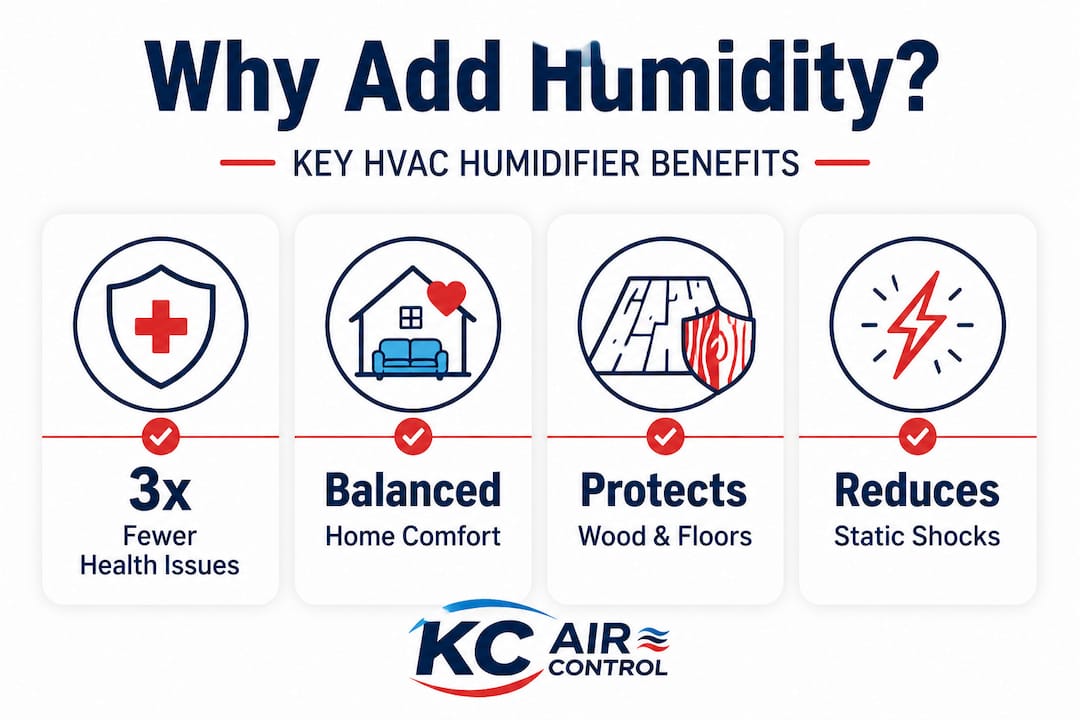
The key difference between a whole-house HVAC humidifier and a portable unit comes down to coverage and convenience. Whole-house humidifiers connect directly to your water supply, so there’s no daily tank refilling and no mineral dust floating through the air like with ultrasonic portables. The system runs automatically based on settings you control, typically through a humidistat mounted on your wall or furnace.
Here’s a quick look at what an HVAC humidifier addresses:
- Dry, cracked skin and lips during winter months
- Static electricity buildup in carpets and furniture
- Warping or cracking of hardwood floors and wood furniture
- Dry or irritated nasal passages and throats
- Gaps forming in wood trim or cabinetry
- Signs of indoor humidity issues like window condensation, musty odors, or persistent respiratory irritation
Types of HVAC humidifiers explained
Understanding the types of HVAC humidifiers helps you pick the right one for your home. There are three primary types: bypass, fan-powered, and steam. Each one works differently and suits a different kind of heating setup.
Bypass humidifiers
A bypass humidifier channels warm air from your furnace through a water-soaked evaporator pad. As air passes through the pad, it picks up moisture and carries it into your living space. These units rely entirely on your furnace’s blower for airflow, which keeps them simple and affordable.
The trade-off is that bypass humidifiers are less effective with heat pumps because heat pumps produce cooler air. That cooler air cannot carry as much moisture through the evaporator pad. Bypass units are best suited for homes with a gas furnace and moderate square footage.
Fan-powered humidifiers
Fan-powered humidifiers work on the same evaporator pad principle, but they include a built-in fan to push air through the pad independently. That internal fan means they don’t rely entirely on the furnace blower, giving them higher moisture output and better compatibility with heat pump systems.
These units are a solid option for larger homes or situations where a bypass unit would fall short. They cost a bit more upfront but deliver noticeably better performance in homes over 2,000 square feet.
Steam humidifiers
Steam humidifiers independently boil water to create steam, which gets injected directly into your air supply. They don’t need the furnace to be running at all, making them the most flexible and highest-performing option available. They work with any type of heating system, including heat pumps.
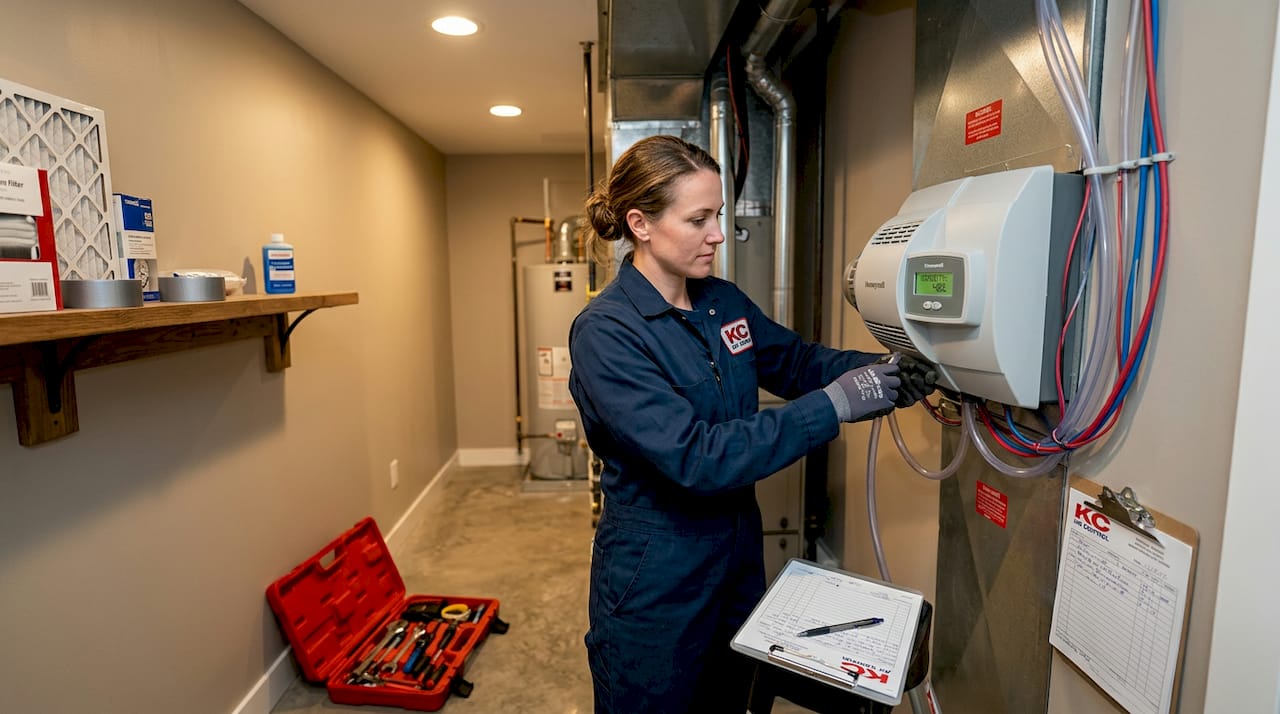
Steam units give you precise control over humidity levels and handle large homes with ease. The cost is higher than the other two types, both upfront and for maintenance, but the performance justifies it for the right home.
| Type | Best for | Output | Cost |
|---|---|---|---|
| Bypass | Gas furnace, smaller homes | Moderate | Low |
| Fan-powered | Larger homes, heat pumps | High | Moderate |
| Steam | Any system, large homes | Highest | Higher |
Pro Tip: If your home uses a heat pump as its primary heat source, skip the bypass humidifier entirely. The cooler air output from heat pumps limits how well bypass units work. Go with a fan-powered or steam model instead.
Benefits of humidifiers in HVAC systems
The benefits of humidifiers in HVAC go well beyond personal comfort. Once you understand what proper humidity does for your home, the investment makes a lot of sense.
Comfort you can feel immediately. Dry air makes a room feel colder than it actually is. When humidity is balanced, you feel warmer at the same temperature. Installing a whole-house humidifier can allow you to lower your thermostat setting during winter without any loss of comfort, which directly reduces your heating bill.
Better air quality and health. Dry indoor air irritates your nasal passages, throat, and skin. People with asthma or allergies often notice that properly humidified air is far easier to breathe. Dry air also keeps airborne viruses suspended longer, so maintaining healthy humidity levels adds a layer of protection during cold and flu season.
Protection for your home. Wood reacts to humidity. Hardwood floors, wood trim, furniture, and even the structural framing of your home can shrink and crack when air is too dry. Maintaining consistent indoor air quality through proper humidification preserves these materials and prevents costly repairs.
Additional benefits homeowners notice after installation:
- No more painful static shocks when touching doorknobs or light switches
- Better sleep quality from breathing comfortable, properly humidified air
- Less frequent need to apply lotion or lip balm during winter
- Houseplants and pets benefit from balanced humidity too
- Reduced dust buildup in some cases, since properly humidified air carries particles differently
For a broader look at how HVAC upgrades support energy efficient home comfort, the connection between humidity control and lower utility bills is well documented.
Installation and maintenance: what to expect
The question of do I need a humidifier for HVAC often becomes how do I get one installed. Understanding the process sets realistic expectations.
- Site assessment. A technician evaluates your furnace type, ductwork layout, and available space for the humidifier unit. This step also identifies the best location for the humidistat.
- Water line connection. The humidifier taps into a nearby cold water supply line. Professional HVAC installation handles this connection carefully to prevent leaks and comply with plumbing requirements.
- Ductwork integration. The unit mounts to the supply or return plenum and gets connected to the bypass duct if applicable. Proper sealing at every connection point prevents air leaks.
- Humidistat setup. A humidistat is wired to the furnace and the humidifier. Smart humidistats use outdoor temperature sensors to adjust indoor humidity setpoints automatically, which prevents window condensation on cold days while keeping your home comfortable.
- Annual maintenance. At the start of each heating season, evaporator pads or steam canisters need replacement to prevent mold growth and maintain efficiency. Skipping this step is the most common reason humidifiers underperform.
Pro Tip: Set a reminder each fall to schedule humidifier maintenance at the same time as your annual furnace tune-up. Combining both visits saves money and keeps your system ready before the first cold snap hits.
How to choose the right HVAC humidifier
Choosing the right humidifier comes down to a few clear factors. Work through these before making a purchase:
- Heating system type. Gas furnace owners have the most flexibility. Heat pump users should prioritize fan-powered or steam models for better performance.
- Home size. Measure your square footage. Bypass units typically cover homes up to about 2,500 square feet. Larger homes benefit from fan-powered or steam units.
- Budget. Bypass humidifiers have the lowest upfront cost. Steam units cost more to install and maintain but deliver the best performance. Factor in annual maintenance costs, not just the purchase price.
- Installation space. Bypass models require bypass duct connections and more physical space. Fan-powered units are more compact and flexible for tight mechanical rooms.
- Control preferences. Smart humidistats automate humidity control and integrate with home ecosystems, making day-to-day management effortless. Manual humidistats work fine but require more hands-on adjustment.
- Portable vs. whole-house. If you only need humidity in one room, a portable unit may be sufficient. But if you want consistent comfort throughout your home and a hands-off experience, a whole-house HVAC humidifier is the better long-term investment.
If you want to match your humidifier choice to your full heating setup, reviewing how to choose the right HVAC system provides useful context for Kansas City homes specifically.
My honest take after years of HVAC work
I’ve watched homeowners spend hundreds of dollars on portable humidifiers scattered around their homes, only to deal with constant refilling, mineral deposits, and rooms that still feel dry. The irony is that a whole-house HVAC humidifier often costs less over three to five years when you factor in the time savings and the reduction in heating bills.
What I’ve also learned is that maintenance gets skipped more than any other step. Homeowners install a unit, feel the difference immediately, and then forget about it until it stops working. A failed evaporator pad is almost always the culprit when a humidifier stops performing well. That one annual maintenance visit makes the entire system worthwhile.
The smart humidistat is the upgrade I wish more people would consider from day one. I’ve seen clients run their humidifiers at settings that caused window condensation all winter because they never adjusted the controls. A smart humidistat eliminates that entirely by reading outdoor temperatures and adjusting automatically. It’s the kind of set-it-and-forget-it convenience that makes the technology actually work the way it should.
My advice: talk to an HVAC professional before you buy. The right humidifier for your specific heating system and home size makes a real difference in both performance and cost.
— AB
Let Kcaircontrol help with your home comfort
If you’re ready to move past dry winter air, Kcaircontrol is here to help. We’ve been serving Kansas City homeowners for over 70 years, and whole-house humidifier installation is one of the upgrades we recommend most often for winter comfort. Our technicians assess your existing system, recommend the right humidifier type, and handle the full installation from water line to humidistat setup.

We also offer furnace tune-up services that pair perfectly with humidifier installation, so your heating system and humidity control work together at peak efficiency. If your current system is showing problems, our team handles HVAC repairs quickly and reliably. Contact Kcaircontrol today to schedule a consultation and find out which humidifier solution fits your home.
FAQ
What does an HVAC humidifier do?
An HVAC humidifier adds moisture to the air circulating through your home’s heating and cooling system, maintaining indoor humidity at a comfortable and healthy level throughout the entire house.
How does an HVAC humidifier work?
It connects to your furnace’s ductwork and water supply, then releases moisture into the heated air as it moves through the system. Depending on the type, it uses an evaporator pad or boils water to generate steam.
Do I need a humidifier for my HVAC system?
If your home feels dry in winter, you experience static electricity, or your wood floors and furniture are cracking, a whole-house humidifier is worth considering. Homes in Kansas City often benefit significantly due to cold, dry winters.
What is the best type of HVAC humidifier for a heat pump?
Fan-powered and steam humidifiers work best with heat pumps. Bypass humidifiers rely on warm furnace air, making them less effective with the cooler air output that heat pumps produce.
How often does an HVAC humidifier need maintenance?
Most units need annual maintenance at the start of the heating season. This typically involves replacing the evaporator pad or steam canister to prevent mold and keep the unit running efficiently.
Recommended
- What Is HVAC and Why Home Comfort Depends on It – Air Control
- HVAC Maintenance: Boosting Home Comfort and Savings – Air Control
- HVAC load calculation: A homeowner’s guide to efficiency – KC Air Control – Heating & Cooling
- HVAC zoning explained: guide to efficient home comfort – KC Air Control – Heating & Cooling