
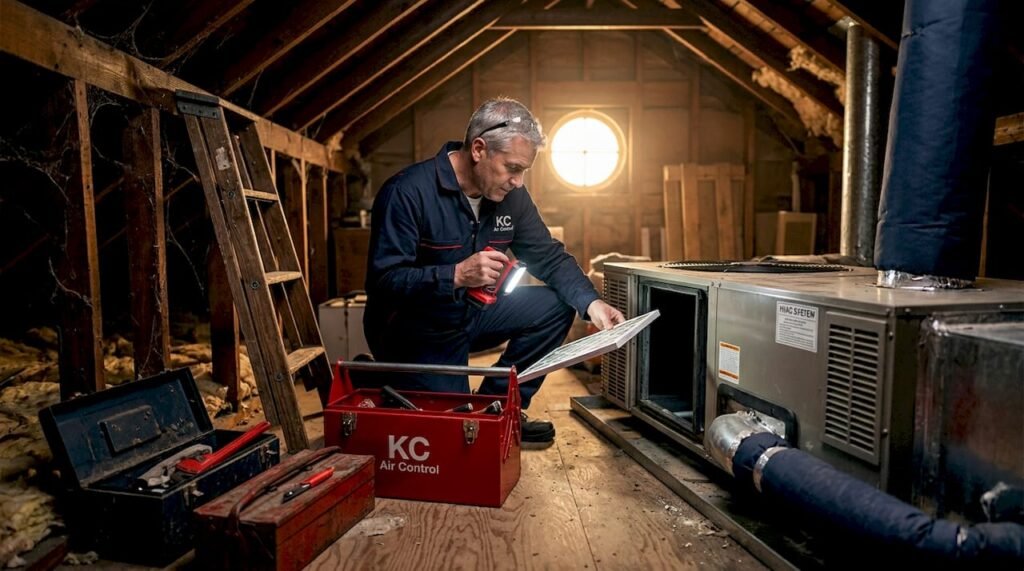
TL;DR:
- Regular HVAC maintenance extends equipment lifespan, improves energy efficiency, and ensures clean indoor air quality.
- Neglecting routine upkeep leads to higher energy costs, increased repairs, and potential health risks for occupants.
Most homeowners only think about their HVAC system when something goes wrong. A furnace stops heating in January. An air conditioner quits on the hottest day in July. What most people don’t realize is that the role of regular maintenance goes far beyond preventing breakdowns. It directly affects how much you pay in energy bills every month, how long your equipment lasts, and whether the air your family breathes is actually clean. This guide gives you a clear, practical look at what proper HVAC maintenance involves, why it matters, and how to make it work for your home or property portfolio.
Table of Contents
- Key takeaways
- The role of regular maintenance explained
- How maintenance affects energy efficiency
- Practical schedules and best practices
- Cost benefits of maintenance vs. neglect
- Indoor air quality and health benefits
- My perspective on HVAC maintenance as an investment
- Let Kcaircontrol handle your HVAC maintenance
- FAQ
Key takeaways
| Point | Details |
|---|---|
| Neglect costs more than maintenance | Skipping routine upkeep leads to energy waste and expensive emergency repairs. |
| Energy savings are measurable | Poor maintenance can increase energy use by 5 to 30 percent, adding real dollars to monthly bills. |
| Schedules prevent most failures | Monthly, seasonal, and annual tasks eliminate the majority of common HVAC breakdowns. |
| Air quality depends on upkeep | Regular filter changes and system cleaning directly reduce indoor allergens and pollutants. |
| Documentation protects property value | Property managers who record maintenance history support compliance and protect asset value. |
The role of regular maintenance explained
Regular maintenance is a scheduled, proactive approach to keeping your HVAC system running at its best. Preventive maintenance means performing routine inspections, cleaning, and part replacements on a set schedule rather than waiting for equipment to fail. For HVAC systems, that includes tasks like checking refrigerant levels, lubricating moving parts, inspecting electrical connections, replacing air filters, and cleaning evaporator and condenser coils.
The key distinction between preventive and reactive maintenance is timing. Reactive maintenance happens after something breaks, and it almost always costs more in parts, labor, and lost comfort. Preventive maintenance catches small problems like a fraying belt or a clogged drain line before they turn into system failures.
For homeowners, this often looks like changing filters every one to three months and scheduling a professional tune-up twice a year. For property managers overseeing multiple units, the importance of maintenance grows significantly. You need documented records, predictable schedules, and consistent execution across every property you manage.
Common routine tasks include:
- Air filter replacement every 30 to 90 days depending on filter type and household conditions
- Condenser coil cleaning each spring before cooling season begins
- Condensate drain line flushing to prevent clogs that cause water damage
- Thermostat calibration to confirm temperature accuracy
- Blower motor and belt inspection to catch wear before it causes failures
- Refrigerant level check to confirm the system cools efficiently
Pro Tip: Set a recurring calendar reminder for filter changes. Most people forget because the filter is out of sight. A simple phone alert on the first of every other month takes the guesswork out of it.
How maintenance affects energy efficiency
Your HVAC system accounts for roughly half of your home’s total energy use. When that system is poorly maintained, every component works harder than it should. Dirty condenser coils and leaky ducts alone cause 15 to 30 percent energy waste. Clogged filters restrict airflow, forcing the fan motor to consume more electricity just to push air through the system.
The numbers add up quickly. If your monthly energy bill is $200 and poor maintenance is costing you 20 percent efficiency, that’s $40 per month or $480 per year gone because of a dirty filter and neglected coils. For property managers operating multiple units, multiply that across an entire portfolio and the financial impact becomes significant.
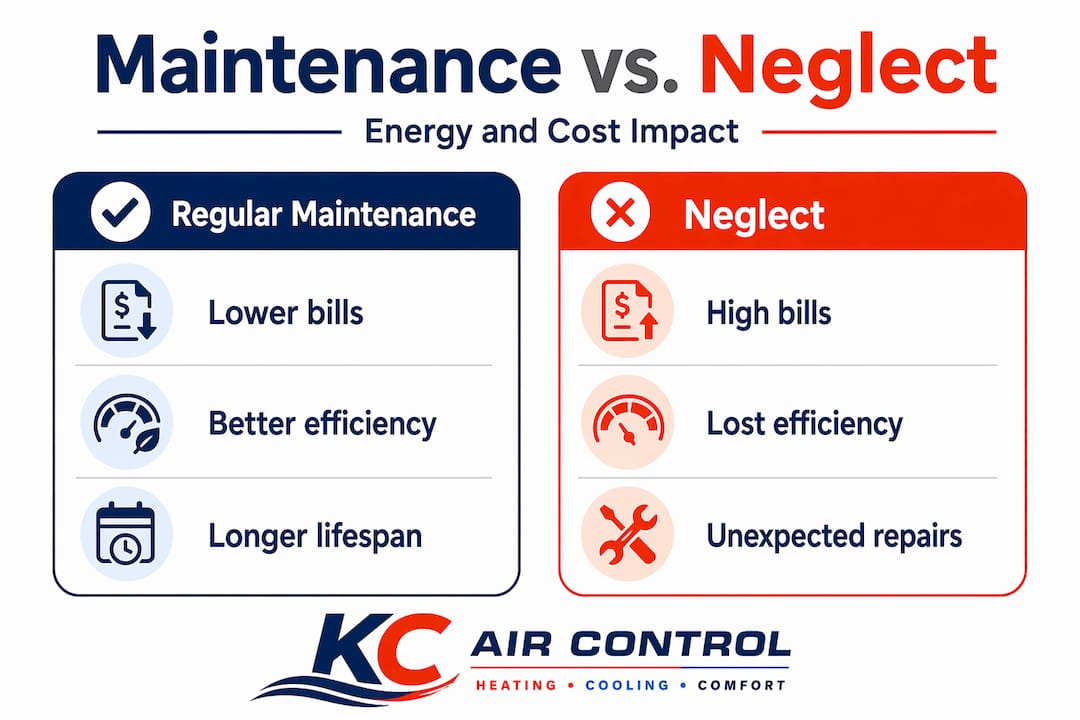
Here is a direct comparison of how maintenance status affects energy performance:
| Maintenance condition | Estimated energy impact | Typical cost effect |
|---|---|---|
| Clean filters and coils | Baseline efficiency | Lowest monthly bills |
| Filters replaced late (every 6+ months) | 5 to 15% efficiency loss | $20 to $60/month extra |
| Dirty coils, no annual tune-up | 15 to 30% efficiency loss | $60 to $120/month extra |
| Refrigerant leak, no inspection | Up to 30% efficiency loss | Higher bills plus repair costs |
Beyond energy bills, there is also the connection to Energy Star ratings for homes and commercial buildings. A well-maintained system holds its performance ratings over time. A neglected system drifts further from those benchmarks with every passing season. For property managers seeking to attract quality tenants or maintain property values, keeping systems efficient is not optional.
Practical schedules and best practices
Building a maintenance schedule does not require engineering knowledge. It requires consistency and a clear list of what needs attention and when. Here is a practical framework most homeowners and property managers can follow:
- Monthly: Check and replace air filters if visibly dirty or on a set cycle. Inspect the area around indoor and outdoor units for obstructions.
- Before cooling season (spring): Clean the outdoor condenser unit, remove debris from around the unit, flush the condensate drain line, and test the system before temperatures rise.
- Before heating season (fall): Inspect the furnace burners, replace the filter, test the thermostat, and confirm the flue pipe is clear and sealed.
- Annually: Schedule a professional HVAC inspection and tune-up that covers electrical connections, refrigerant charge, coil cleaning, blower performance, and system controls.
Clogged drain lines are one of the most frequent causes of summer service calls, yet they are almost entirely preventable with a simple annual flush. Experts recommend clearing the condensate line every spring before you run the air conditioner continuously. A small bottle of diluted bleach solution poured into the drain port takes minutes and prevents water damage and mold growth.
For property managers, documented maintenance schedules with inspection records serve a practical purpose beyond just keeping systems running. They create an equipment history that supports compliance audits, helps diagnose recurring problems faster, and protects you when tenants raise concerns about system performance.

Pro Tip: Use a simple spreadsheet or property management app to log every filter change, inspection, and repair for each unit. This takes five minutes per visit and pays off when you need to identify a pattern in equipment failures or verify service history.
You can also reference this HVAC maintenance checklist built specifically for Kansas City homeowners to stay on track through every season.
Cost benefits of maintenance vs. neglect
The financial argument for regular HVAC maintenance is direct. Preventive maintenance reduces repair costs and improves system reliability compared to waiting for breakdowns. Emergency repairs almost always cost more than scheduled service, and they happen at the worst possible times.
Consider a practical example. A standard professional HVAC tune-up in the Kansas City area typically runs $80 to $150. A refrigerant recharge after a leak that went undetected runs $300 to $600. A compressor replacement caused by long-term neglect can reach $1,500 or more. The math is clear: spending $150 annually to inspect a system is far less than one avoidable repair.
The routine maintenance advantages compound over time through equipment lifespan. A properly maintained central air conditioner lasts 15 to 20 years. A neglected system may fail at 10 to 12 years, meaning you are looking at a full replacement years ahead of schedule. A new HVAC system installation in a typical Kansas City home costs $5,000 to $12,000. Consistent maintenance is simply the more affordable path.
Key financial benefits of staying current on upkeep:
- Fewer emergency service calls, which carry after-hours and weekend premiums
- Longer equipment lifespan that delays costly system replacement
- Lower monthly energy bills through sustained system efficiency
- Preserved warranty coverage, as many manufacturers require documented maintenance
- Higher property values and smoother tenant relationships for property managers
The impact of maintenance schedules on long-term costs is one of the strongest reasons to treat upkeep as a priority rather than an afterthought.
Indoor air quality and health benefits
Your HVAC system does more than heat and cool your home. It filters and circulates the air your family breathes every day. When filters are dirty, coils are clogged, and drain pans hold standing water, the system can actually distribute pollutants rather than remove them.
EPA indoor air quality guidance recommends using MERV 13 filters or the highest-rated filter your system can accommodate. MERV stands for Minimum Efficiency Reporting Value, and higher ratings mean the filter captures smaller particles like dust, pollen, pet dander, and certain bacteria. Upgrading to a higher MERV rating is only effective if the filter gets changed on schedule. A clogged MERV 13 filter performs worse than a clean MERV 8.
Proper maintenance mitigates several specific health risks in residential and managed properties:
- Mold growth: Standing water in drain pans and on evaporator coils creates ideal mold conditions. Regular cleaning eliminates this environment.
- Allergen buildup: Dirty filters allow pollen, dust mites, and pet dander to recirculate through living spaces.
- Moisture imbalance: A well-maintained system manages humidity properly. Neglected systems can over-humidify or under-humidify, affecting both comfort and respiratory health.
- Volatile organic compounds (VOCs): Adequate ventilation, maintained through proper system function, helps dilute indoor pollutants from cleaning products and building materials.
MERV-rated air filtration maintained through regular upkeep significantly contributes to healthier indoor environments. For families with allergy sufferers, asthma, or young children, this is one of the most meaningful benefits of staying current on system maintenance. For property managers, clean indoor air directly supports tenant satisfaction and reduces complaints.
My perspective on HVAC maintenance as an investment
I’ve watched homeowners spend thousands of dollars on repairs that a $100 tune-up would have prevented. The pattern repeats more often than it should. People treat their HVAC system the way they treat their car’s oil until the check engine light comes on. By then, the damage is done.
What I’ve learned from years of working with homeowners and property managers is that the discomfort of a breakdown is never just financial. It’s the phone calls at midnight, the tenant who can’t sleep in August heat, the disruption to daily life. None of that is worth the money saved by skipping a seasonal inspection.
The benefits of regular upkeep are not complicated. Clean filters, inspected coils, and a functioning drain line keep a system running for the better part of two decades. Neglect that same system and you’re replacing it years early at a cost that dwarfs every skipped maintenance visit combined.
My advice is to stop treating HVAC maintenance as something you get around to and start treating it as a fixed line item in your home or property budget. Book the spring and fall tune-ups in January. Set the filter reminders. Keep a log. The peace of mind that comes from knowing your system is ready for summer or winter is genuinely worth it. And for property managers, that documentation is not just helpful. It’s protection.
— AB
Let Kcaircontrol handle your HVAC maintenance
At Kcaircontrol, we’ve been keeping Kansas City homes and properties comfortable for over 70 years. Our professional HVAC maintenance service covers everything from filter assessment and coil cleaning to refrigerant checks and full system inspections. We handle the details so you don’t have to. Whether you own one home or manage a portfolio of properties, we make it easy to stay on schedule and protect your investment.
Ready to get started? You can book your maintenance visit online in minutes. If you want to explore what a professional tune-up includes and how it directly improves your home comfort and energy savings, visit our HVAC maintenance page for a full breakdown. We also have seasonal maintenance offers available for homeowners looking to save on their first service visit.
FAQ
What is regular HVAC maintenance?
Regular HVAC maintenance is a scheduled program of inspections, cleaning, and minor part replacements designed to keep your system running efficiently. It includes tasks like filter changes, coil cleaning, drain line flushing, and annual professional tune-ups.
How often should I schedule HVAC maintenance?
Most systems benefit from a professional inspection twice a year, once before the cooling season in spring and once before the heating season in fall. Air filters should be replaced every one to three months depending on household conditions.
How does maintenance affect my energy bills?
Poor HVAC maintenance increases energy use by 5 to 30 percent through issues like dirty coils, clogged filters, and refrigerant leaks. Staying current on upkeep keeps the system operating at its rated efficiency and lowers monthly costs.
Why do property managers need documented maintenance records?
Documented HVAC maintenance history supports compliance audits, helps diagnose recurring equipment issues faster, and provides evidence of proper upkeep during tenant disputes or property sales.
Can HVAC maintenance improve indoor air quality?
Yes. Regular filter changes and system cleaning reduce allergens, mold risk, and airborne pollutants. The EPA recommends using MERV 13 rated filters as part of a broader indoor air quality strategy for residential spaces.