

TL;DR:
- Selecting the correct heating system depends on accurate load calculations that consider insulation, windows, and climate, not just square footage.
- Combining efficient equipment with insulation, air sealing, and smart thermostats maximizes long-term savings and comfort.
Heating is one of the biggest decisions you’ll make as a homeowner, and getting it wrong costs you money every single month. Whether you’re replacing an aging furnace or building from scratch, knowing how to choose a heating system that matches your home’s actual needs, your climate, and your budget is the difference between reliable comfort and a system that works too hard or not hard enough. This guide walks you through every factor that matters, from proper sizing and system types to insulation strategy and long-term maintenance.
Table of Contents
- Key takeaways
- How to choose a heating system: start with sizing
- Common heating system types compared
- The whole-house approach to heating efficiency
- Steps for selecting and installing your system
- Evaluating and maintaining your system long-term
- My honest take on what most homeowners get wrong
- How Kcaircontrol helps you get it right
- FAQ
Key takeaways
| Point | Details |
|---|---|
| Sizing is everything | Manual J load calculation is required by code and prevents costly oversizing or undersizing. |
| System type must match your home | Climate, fuel availability, and home design all determine which heating system performs best. |
| Efficiency is a whole-house job | Combining efficient equipment with insulation and smart thermostats unlocks the most savings. |
| Early design prevents expensive rework | Involving a heating designer before renovations, especially with heat pumps, avoids costly mistakes. |
| Maintenance sustains performance | Annual inspections and routine upkeep protect your investment and keep efficiency high. |
How to choose a heating system: start with sizing
Most homeowners assume square footage tells the whole story when selecting a heating system. It does not. A 2,000-square-foot home with poor insulation and single-pane windows needs a completely different system than a well-sealed 2,000-square-foot home with modern construction. That’s why Manual J load calculation is the correct sizing method recognized by manufacturers and building codes alike.
What Manual J actually measures
Manual J accounts for your home’s entire building envelope. That includes insulation levels in walls and attics, window quality and orientation, local climate data, air infiltration rates, and even how many people live in the home. Each of these factors shifts the heating load significantly.
Here’s what the Manual J process covers:
- Insulation values across ceilings, walls, floors, and foundations
- Window and door performance, including solar heat gain and air leakage
- Local design temperatures pulled from IRC climate tables (using warmer temps leads to undersizing and poor performance)
- Internal heat gains from appliances, lighting, and occupants
- Ventilation and infiltration rates based on construction tightness
| Sizing error | What happens | Result |
|---|---|---|
| Oversized system | Short cycling (frequent on/off) | Humidity problems, uneven heat, wear |
| Undersized system | Constant running | High bills, poor comfort on cold days |
| Correct sizing | Steady, efficient operation | Consistent temperature, lower costs |
The IRC 2024 now mandates Manual J for all new equipment installations, including replacements. If a contractor quotes you a system size based only on your old unit or a quick square footage estimate, that’s a red flag worth addressing before you sign anything.
Pro Tip: Ask any contractor to show you the completed Manual J report before agreeing to equipment selection. A trustworthy contractor will have one ready.
Common heating system types compared
Once you understand your home’s load, the next step is choosing which type of system delivers that heat most reliably. There’s no single best option for every home. Each system has real advantages and real limitations depending on your climate, fuel costs, and home layout.
Forced air furnaces
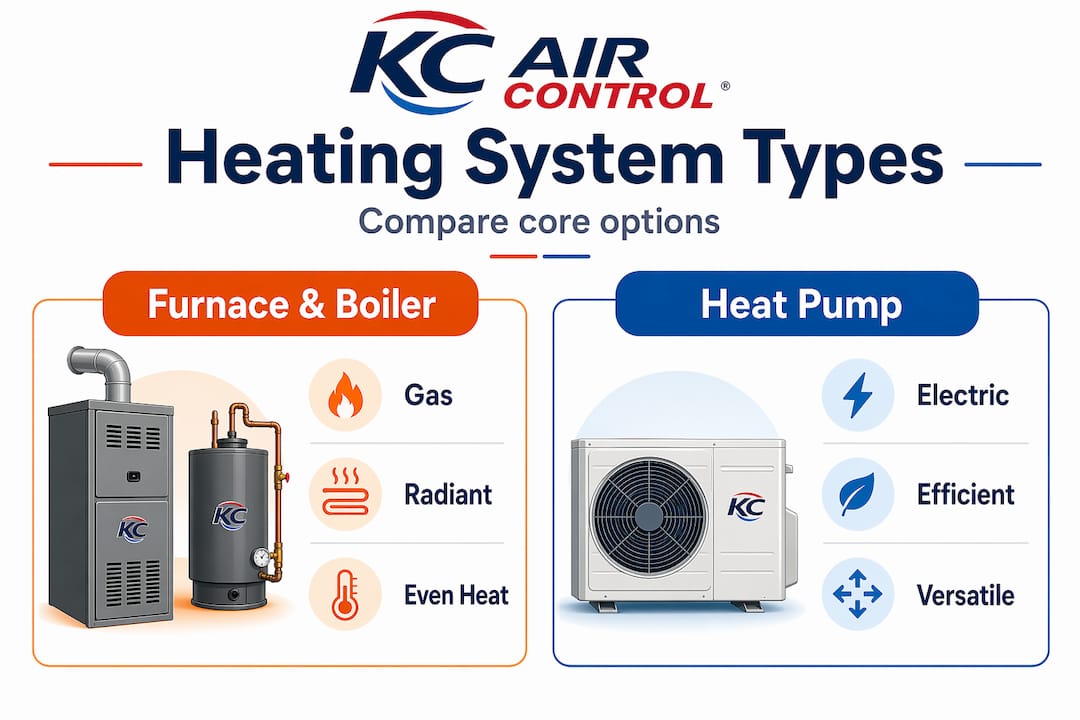
Forced air furnaces are the most common system in American homes. They burn natural gas, propane, or oil to heat air, then push it through ductwork. They heat spaces quickly, work in virtually any climate, and pair well with central air conditioning. The downside is that duct leaks reduce efficiency significantly, and combustion systems require proper venting and carbon monoxide monitoring.
Boilers and radiant systems
Boilers heat water and distribute it through radiators or radiant floor tubing. They produce very comfortable, even heat without blowing air, which is a real benefit for allergy sufferers. Choosing a boiler makes sense in older homes with existing radiator systems or in high-end new construction where radiant floors are designed in from the start. Retrofitting radiant heat into an existing home is expensive and disruptive if not planned early.
Heat pumps
Air-source heat pumps move heat rather than generate it, making them 2 to 4 times more efficient than electric resistance or oil furnaces. Geothermal heat pumps go further, using stable ground temperatures for even better performance, but their upfront cost is considerably higher. Heat pump savings depend heavily on your climate, local electricity rates, and installation quality. In Kansas City’s mixed climate, a properly sized heat pump performs well across most of the heating season.
Here’s a quick comparison of the main options:
| System type | Fuel source | Best climate | Efficiency | Upfront cost |
|---|---|---|---|---|
| Gas furnace | Natural gas | Any | High | Moderate |
| Boiler | Gas, oil | Cold, older homes | High | Moderate to high |
| Air-source heat pump | Electricity | Mild to moderate | Very high | Moderate |
| Geothermal heat pump | Electricity | Any | Highest | High |
| Electric resistance | Electricity | Mild only | Low | Low |
When comparing your best heating options, always factor in local fuel prices alongside efficiency ratings. A high-efficiency heat pump in a region with expensive electricity may cost more to operate than a well-maintained gas furnace. Look for ENERGY STAR certified equipment that provides verified efficiency data, not just manufacturer marketing claims.
Pro Tip: When evaluating heat pump efficiency claims, rely on listed HSPF2 ratings from certified lab tests rather than marketing brochures. Performance data from lab testing gives a far more accurate picture of real-world savings.
The whole-house approach to heating efficiency
Here’s a fact many homeowners miss: heating accounts for about 29% of a household’s utility bill, and upgrading to a high-efficiency furnace alone only captures a portion of possible savings. When you combine efficient equipment with insulation upgrades, air sealing, and smart thermostat control, total savings can reach around 30%. That’s the whole-house approach, and it changes how you think about selecting a heating system.
Before or alongside your heating system upgrade, consider:
- Attic and wall insulation: Poorly insulated homes let heat escape constantly, forcing any system to work harder
- Air sealing: Gaps around outlets, pipes, and attic hatches can be as significant as leaving a window cracked all winter
- Ductwork inspection: Leaky ducts in a forced air system can waste 20 to 30 percent of heated air before it reaches living spaces
- Programmable or smart thermostats: Seasonal thermostat adjustments and setback schedules reduce runtime without sacrificing comfort
“The fastest way to reduce heating costs is not buying the most expensive furnace. It’s treating your home as a system and addressing insulation, air sealing, and thermostat management together with equipment upgrades.” — U.S. Department of Energy
This matters for your heating system comparison because a smaller, correctly sized system in a well-sealed home will outperform an oversized system in a drafty one. Every time. The equipment choice is real, but the building envelope shapes what’s even possible.
Steps for selecting and installing your system
Knowing the factors in heating choice is one thing. Executing the decision well requires asking the right questions and avoiding predictable mistakes. Here’s how to approach the process.
- Get at least three contractor bids, and require that each one includes a completed Manual J calculation specific to your home.
- Verify design temperatures are accurate. Contractors sometimes use warmer design temperatures to produce smaller, cheaper equipment quotes. The IRC 2024 requires precise climate-based design conditions, so any deviation is worth questioning.
- Plan ductwork or piping upgrades together with the system. Installing a new furnace in old, leaky ductwork negates a significant portion of the efficiency gain.
- Bring in your heating designer before renovations begin, especially if you’re considering a heat pump or radiant system. Late-stage design changes with heat pumps and radiant heating have driven costly rework that could have been avoided with earlier involvement.
- Ask specifically about zoning compatibility. If different parts of your home have very different heating needs, a single-zone system may never satisfy everyone.
When figuring out how to pick a furnace specifically, pay close attention to AFUE ratings. An 80% AFUE furnace means 20 cents of every dollar of fuel is lost. A 95% or higher AFUE furnace is worth the price difference in most climates, especially if you plan to stay in the home for more than five years.
Pro Tip: If you’re doing a renovation and considering underfloor radiant heating paired with a heat pump, confirm your floor coverings are compatible early. Thick carpet or certain tile installations may require higher water flow temperatures that reduce heat pump efficiency significantly.
Evaluating and maintaining your system long-term
Choosing the right system is step one. Keeping it running at its best is where the real return on investment happens. Homeowners who ignore maintenance often see efficiency drop 10 to 25 percent within a few years of installation.
Watch for these signs that something is off:
- Uneven heating across rooms, which can signal duct problems, improper zoning, or an oversized system short-cycling
- Unusually high utility bills without a change in weather or usage patterns
- Frequent on/off cycling in short intervals, which accelerates wear and indicates oversizing
- Unusual noises from the unit or ducts during operation
Routine maintenance steps that protect any heating system include:
- Changing air filters every 1 to 3 months depending on filter type and household conditions
- Scheduling annual professional inspections before the heating season begins
- Cleaning registers and return vents to maintain proper airflow
- Checking refrigerant levels and coil condition on heat pumps each year
The DOE recommends routine maintenance tasks for all heating system types to sustain efficiency and comfort over time. A well-maintained system not only lasts longer but also holds its efficiency ratings closer to the manufacturer’s spec throughout its life.
My honest take on what most homeowners get wrong
I’ve seen homeowners spend significant money on new heating equipment and still feel disappointed with the results six months later. Almost every time, the issue wasn’t the brand or even the system type. It was the sizing.
Contractors skip or rush through Manual J more often than most homeowners realize. The calculation takes time, requires accurate home data, and takes local climate conditions seriously. When a contractor skips it, they’re usually defaulting to whatever the previous system was, which may have been wrong to begin with. Insisting on a verified Manual J report before any purchase is the single most protective step you can take.
The second thing I’d emphasize is early involvement with your designer when you’re integrating a heat pump into a renovation. I’ve watched homeowners get excited about radiant floor heating paired with a heat pump, only to find out mid-project that their floor covering choice requires higher flow temperatures that undercut the heat pump’s efficiency advantage. That conversation needed to happen before tile was selected, not after.
My honest advice: treat your heating system choice as a whole-home project, not a single equipment purchase. Consult a trusted local HVAC professional who will do the load calculation, walk through your insulation situation, and give you honest guidance on choosing the right HVAC system for your specific home. The difference in comfort and cost over ten years is substantial.
— AB
How Kcaircontrol helps you get it right
At Kcaircontrol, we’ve spent over 70 years helping Kansas City homeowners make confident heating decisions. When you call us, you’re not getting a generic quote based on your address. You’re getting a team that performs proper load calculations, evaluates your home’s insulation and duct condition, and recommends equipment matched to your actual needs.

Whether you need a full system replacement, a furnace tune-up, or you’re dealing with an unexpected breakdown, we’re here to help. Our furnace repair services keep Kansas City homes warm when it matters most, and our HVAC load calculation guide walks you through what to expect from a professional sizing evaluation. If you’re facing an urgent heating failure, our team also offers emergency HVAC repair options to restore your comfort fast. Contact us today to schedule an assessment with a trusted local expert.
FAQ
What is Manual J and why does it matter for heating?
Manual J is the industry-standard load calculation method that accounts for insulation, windows, climate, and infiltration to determine the correct heating system size. The IRC 2024 requires it for all new and replacement equipment installations.
How do I know if my heating system is the wrong size?
Short cycling (frequent brief on/off cycles), uneven room temperatures, and unusually high utility bills are the most common signs of an improperly sized system.
Are heat pumps a good option in Kansas City?
Yes. Air-source heat pumps perform well in Kansas City’s mixed climate and are 2 to 4 times more efficient than electric resistance heating, though savings depend on electricity rates and proper installation.
What is the most efficient heating system for a home?
Geothermal heat pumps deliver the highest efficiency of any heating system type, but air-source heat pumps offer strong performance at a lower upfront cost for most residential applications.
How often should I have my heating system inspected?
Annual professional inspections before the heating season are recommended for all heating system types to sustain efficiency, catch problems early, and extend equipment lifespan.
Recommended
- How to choose the right HVAC system for your KC home – KC Air Control – Heating & Cooling
- How to Install HVAC System for Home Comfort – Air Control
- Why upgrade heating systems? Unlock savings and comfort – KC Air Control – Heating & Cooling
- Energy efficient HVAC installation guide for KC homeowners – KC Air Control – Heating & Cooling