
TL;DR:
- Many HVAC system failures originate from simple issues like clogged filters or refrigerant leaks, which can cause costly breakdowns if ignored. Regular maintenance, such as filter checks and professional inspections, helps prevent extensive damage and extends system lifespan. Addressing early warning signs, including unusual noises or increased energy bills, is essential to keep your home comfortable and avoid expensive repairs.
Your HVAC system works around the clock to keep your home comfortable, but the common causes of HVAC failure are often hiding in plain sight. A clogged filter, a tiny refrigerant leak, or a misplaced thermostat can quietly push your system toward a complete breakdown. And when that happens on the hottest day of summer or the coldest night of winter, the repair bill rarely feels small. Understanding what drives these failures gives you a real advantage. You can spot warning signs early, take simple preventive steps, and avoid the kind of costly repairs that catch most homeowners off guard.
Table of Contents
- Key Takeaways
- 1. Common causes of HVAC failure start with dirty air filters
- 2. Refrigerant leaks and their impact on efficiency
- 3. Short cycling and the wear it puts on your system
- 4. Electrical failures that stop your system cold
- 5. Airflow restrictions beyond the filter
- 6. Frozen coils, thermostat malfunctions, and compressor failure
- What 15 years of watching HVAC systems fail taught me
- How Kcaircontrol can help before your system breaks down
- FAQ
Key Takeaways
| Point | Details |
|---|---|
| Dirty filters top the list | Clogged filters cause 40% of all HVAC service calls and raise energy costs by 5 to 15%. |
| Refrigerant leaks are serious | A system running 15 to 20% low on refrigerant can double your electricity bill while cooling less. |
| Short cycling kills compressors | Frequent on/off cycling can cut compressor lifespan from 15 years down to just 7 or 8 years. |
| Airflow issues go beyond filters | Duct leakage alone can waste up to 30% of your conditioned air before it ever reaches a room. |
| Early warning signs matter | Rising energy bills and unusual noises are your system telling you something is wrong before it shuts down. |
1. Common causes of HVAC failure start with dirty air filters
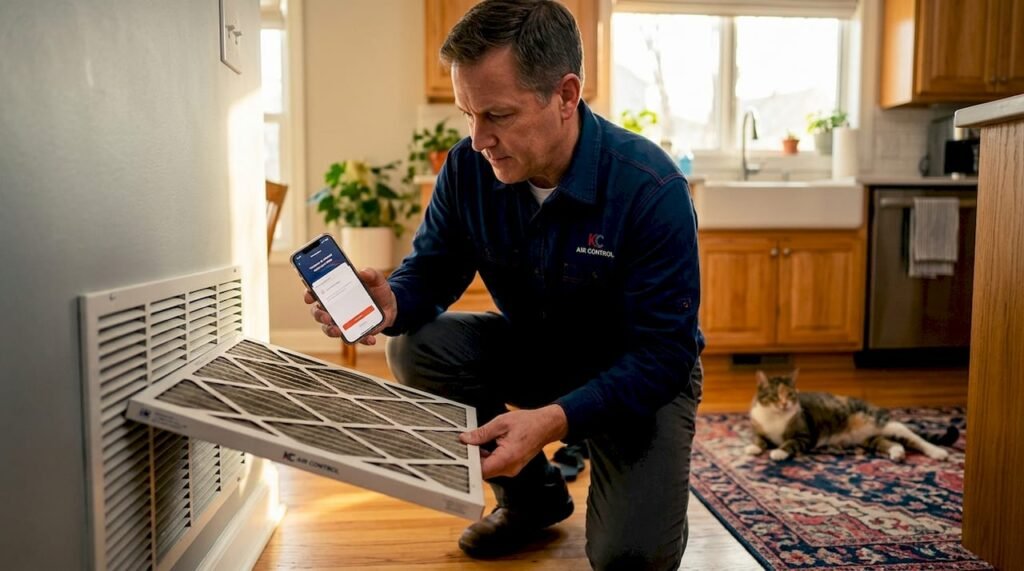
If you only remember one thing from this article, make it this: dirty filters cause 40% of all HVAC service calls. That is not a small number. A clogged filter restricts airflow so severely that your system has to work twice as hard to move air through your home. The result is overheating, frozen evaporator coils, and a compressor running under constant stress.
The energy cost impact alone is worth paying attention to. A dirty filter can increase energy costs by 5 to 15% every month it goes unchanged. Over a year, that adds up to real money spent on a problem you could fix in five minutes.
Watch for these signs that your filter needs attention right now:
- Weak airflow from vents throughout the house
- The system running longer than usual to reach your set temperature
- Dusty or musty smell when the system kicks on
- Visible gray buildup on the filter surface
Pro Tip: Set a recurring phone reminder to check your filter every 30 days. During heavy use seasons in Kansas City, like July and January, check it every three weeks. A filter that looks gray or clogged should be replaced, not just shaken off.
2. Refrigerant leaks and their impact on efficiency
Refrigerant leaks are one of the sneakier HVAC malfunction causes because the symptoms build gradually. Residential systems have average annual leak rates of 5 to 11%, which means a system that seems fine today could be significantly undercharged by next summer.
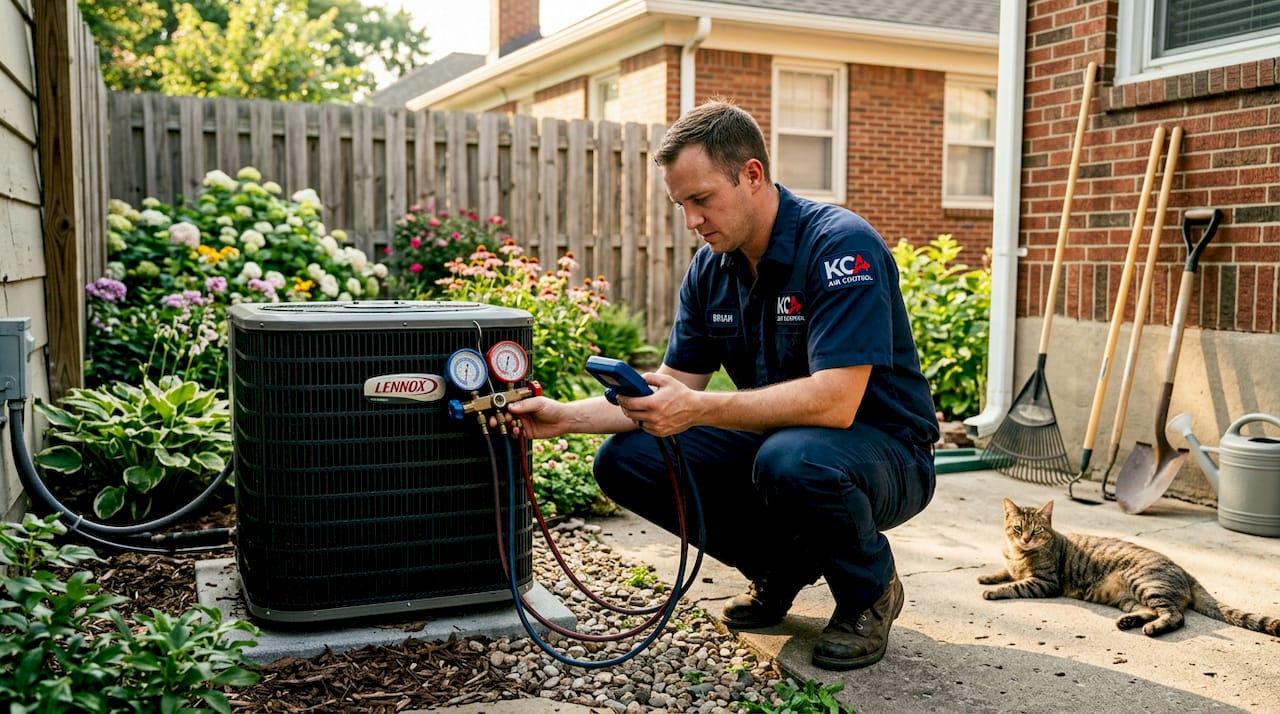
When your system is running 15 to 20% low on refrigerant, cooling capacity drops to 60 to 70% of normal while electricity consumption can double. That is the worst kind of problem: you are paying more and getting less comfort in return.
Here is what a refrigerant leak looks like from where you are standing:
- Warm or lukewarm air blowing from vents even when the system runs
- Hissing or bubbling sounds near the indoor or outdoor unit
- Ice buildup on refrigerant lines or the evaporator coil
- Higher-than-normal electric bills with no obvious explanation
One critical point: simply topping off refrigerant without finding and fixing the leak is a short-term move that leads to long-term damage. Running a system with low refrigerant causes the compressor to overheat and eventually burn out. Compressor replacement can cost $1,500 to $2,800 or more. A refrigerant repair, done correctly by a certified technician, is far less expensive.
Note that EPA regulations require formal leak repairs for systems holding over 15 pounds of refrigerant, making professional intervention not just smart but often required by law.
3. Short cycling and the wear it puts on your system
Short cycling is when your HVAC system turns on, runs for a minute or two, shuts off, then starts right back up again. A normal cooling cycle runs 15 to 20 minutes. If yours is cutting off every 5 minutes, something is wrong.
The reasons behind short cycling span several HVAC system failure issues:
- A dirty filter restricting airflow and causing the system to overheat and shut down on safety
- An oversized unit that cools the space too fast and shuts off before completing a proper cycle
- A thermostat placed in direct sunlight or near a heat source, reading temperatures incorrectly
The wear this puts on your compressor is severe. Short cycling reduces compressor lifespan from a typical 15 years down to 7 or 8 years. Every unnecessary startup puts enormous strain on motor windings and electrical contacts.
Pro Tip: If your system is short cycling, check your thermostat location first. Moving a thermostat away from a sunny wall or a heat-producing lamp can sometimes resolve the issue without a service call.
Oversized units are a design problem. If you moved into a home where the HVAC seems to run constantly in short bursts, the previous owner may have installed a unit that was too large for the square footage. This requires a professional load calculation to confirm and correct.
4. Electrical failures that stop your system cold
Electrical problems are a leading reason for HVAC breakdown, and they often show up without warning. Capacitors fail most often in summer due to heat stress, and when they go, your fan motors and compressor simply cannot start. You may hear a humming sound, or you may hear nothing at all when the system should be running.
Other electrical issues homeowners commonly encounter include:
- Contactor wear causing intermittent power delivery to the compressor
- Loose or corroded wiring creating resistance and heat buildup
- Breaker trips that keep repeating every time you reset them
- Blown fuses protecting the disconnect box at the outdoor unit
The breaker trip issue deserves special attention. A breaker that trips once might be a fluke. A breaker that trips every time you reset it is telling you there is an active electrical fault. Do not keep resetting it. Turn the system off and call a technician. Continuing to force the system to run through an electrical fault can cause significantly more expensive damage.
Homeowners can safely check that the disconnect is seated properly at the outdoor unit and that no visible wiring looks burnt or frayed. Beyond that, electrical diagnosis and repair should be handled by a licensed professional.
5. Airflow restrictions beyond the filter
Most homeowners know about dirty filters, but fewer realize how many other factors restrict airflow and cause HVAC system failure issues. Duct leakage can waste 20 to 30% of your conditioned air before it ever reaches the rooms in your home. That means you are paying to condition air that disappears into your walls, attic, or crawl space.
Here is a comparison of common airflow problems and their typical impact:
| Airflow Problem | Typical Impact |
|---|---|
| Leaky duct connections | 20 to 30% conditioned air loss |
| Closed or blocked supply vents | Uneven temperatures and pressure imbalance |
| Debris around outdoor condenser | Reduced heat rejection and compressor strain |
| Furniture blocking return vents | System starved for return air, causing overheating |
Blocked or closed vents are another frequent mistake. Some homeowners close vents in unused rooms to save energy. This actually increases static pressure in the duct system, forcing the blower to work harder and potentially damaging the system over time.
The outdoor condenser unit needs at least two feet of clear space on all sides. Leaves, mulch, overgrown shrubs, and even dryer vents blowing near the unit reduce its ability to reject heat. A quick visual check and seasonal cleaning around the outdoor unit takes ten minutes and can prevent a service call.
Review a full seasonal maintenance checklist to keep airflow issues from building up between professional visits.
6. Frozen coils, thermostat malfunctions, and compressor failure
These three issues each carry a high cost to repair, yet each one sends clear warning signals before it becomes a full breakdown.
Frozen evaporator coils
A frozen coil sounds like a refrigerant problem, but restricted airflow is the primary cause of coil freeze-ups in most homes. When airflow drops too low, the coil gets too cold and ice forms. You will notice reduced airflow, water dripping near the indoor unit, and sometimes a warm house despite the system running. Turn the system off and let it thaw before calling for service. Running it frozen causes water damage and can harm the compressor.
Thermostat malfunctions
Thermostat misplacement or calibration errors cause premature cycling and can prevent your system from reaching your set temperature at all. A thermostat near a window, a lamp, or an exterior wall reads an inaccurate temperature and sends the wrong signals to your system. Smart thermostats mitigate some of this, but placement still matters.
Signs of a thermostat problem include:
- Temperature in the room does not match the thermostat reading
- System turns on and off constantly without reaching the set point
- No response when you adjust the temperature setting
- Blank or flickering display screen
Compressor failure
The compressor is the most expensive component in your system. When it fails, you face a decision between a costly repair and a full system replacement. Signs of compressor trouble include loud clicking or grinding at startup, the outdoor unit not running while the indoor unit runs normally, and a system that never truly cools the home regardless of the thermostat setting.
Preventing compressor failure comes down to preventing HVAC failures upstream: clean filters, proper refrigerant levels, no short cycling, and consistent professional HVAC maintenance every season.
What 15 years of watching HVAC systems fail taught me
I’ve seen homeowners spend $3,000 on a compressor replacement that could have been avoided with a $15 filter change six months earlier. That is not an exaggeration. It is a pattern.
The biggest misconception I encounter is that an HVAC system running quietly means it is running well. Rising energy bills and unusual noises are early warning signs of progressive failures that will become catastrophic if ignored. Most homeowners do not connect the dots until the system stops entirely.
I’ve also seen DIY repairs cause more harm than the original problem. Topping off refrigerant without fixing the leak. Bypassing a tripped breaker with a higher-rated fuse. Hosing down an electrical panel. These are real things people do, and they turn a $300 service call into a $2,000 repair or worse.
My honest advice: get a professional inspection once a year, even if your system seems fine. The early detection of small issues is what separates homeowners who spend $150 on maintenance from those who spend $4,000 on emergency repairs. Busy schedules are not an excuse when you can book online and have a technician at your door the same week.
— AB
How Kcaircontrol can help before your system breaks down
When you start noticing the warning signs covered in this article, the right move is getting a professional set of eyes on your system before a small problem turns into a system failure. Kcaircontrol has served Kansas City homeowners for over 70 years, with experienced technicians who can quickly diagnose HVAC malfunction causes and get your system back to full performance.
Whether you need urgent help right now or want to schedule a tune-up before the next season hits, Kcaircontrol makes it straightforward. Check out the emergency repair options available to Kansas City homeowners, or explore the HVAC tune-up services designed to catch issues before they become expensive. You can also follow a year-round maintenance guide to stay ahead of the most common failure points. Schedule online today and keep your home comfortable all year.
FAQ
What is the most common cause of HVAC failure?
Dirty or clogged air filters are the leading cause, responsible for 40% of all HVAC service calls. They restrict airflow and force the system into a cycle of overheating and premature shutdown.
How do I know if my HVAC system has a refrigerant leak?
Signs include warm air from vents, hissing sounds near the unit, ice on refrigerant lines, and a sudden spike in your electric bill. A certified technician must locate and repair the leak.
Can short cycling damage my HVAC system?
Yes. Frequent on/off cycling can cut compressor lifespan in half, reducing it from a typical 15 years to just 7 or 8 years due to accelerated wear on electrical and mechanical components.
What causes frozen evaporator coils?
Restricted airflow from dirty filters or blocked vents is the most common cause, not low refrigerant. Always check and replace your filter first if you suspect a frozen coil.
When should I call a professional instead of troubleshooting myself?
Call a professional any time you suspect a refrigerant leak, see repeated breaker trips, notice burning smells, or find ice on your system. Filter changes and thermostat checks are safe for homeowners to handle on their own.
Recommended
- Prevent HVAC Breakdowns: Homeowner’s Guide to Year-Round Comfort – KC Air Control – Heating & Cooling
- Emergency HVAC Troubleshooting: Restore Home Comfort Fast – Air Control
- HVAC Maintenance: Boosting Home Comfort and Savings – Air Control
- Why Schedule HVAC Maintenance: Protect Your Comfort – Air Control