
TL;DR:
- Air balancing adjusts your HVAC airflow to ensure each room receives the correct conditioned air, improving comfort and efficiency.
- Professional technicians follow a detailed process involving measurements, duct inspections, and damper adjustments to achieve optimal distribution within a ±10% tolerance.
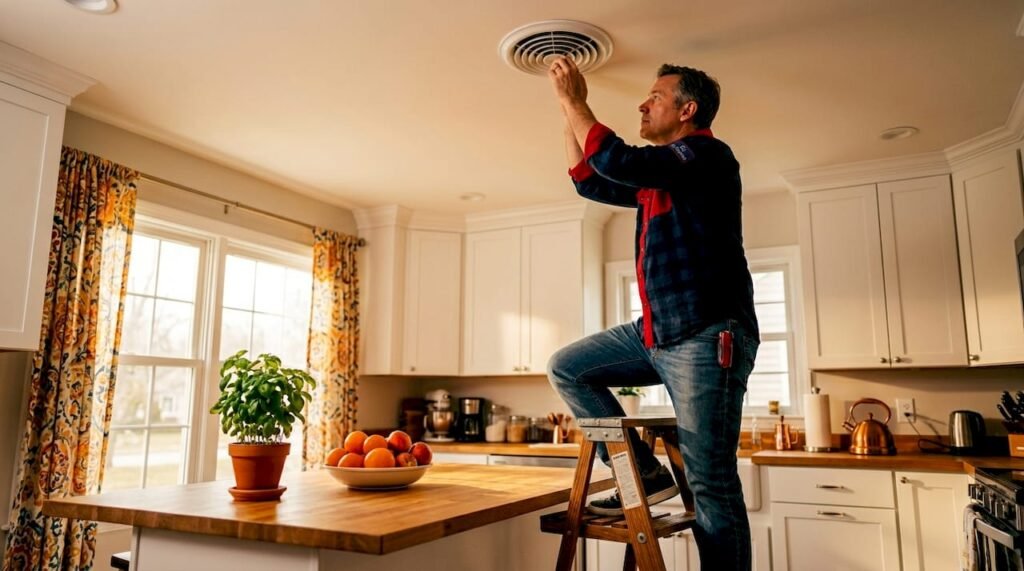
One room in your house feels like a sauna while another stays stubbornly cold. You check the thermostat, confirm the HVAC is running, and still can’t figure out why. What is air balancing? It’s the process of adjusting your HVAC system so each room receives the right amount of conditioned air. When airflow is properly distributed, your home stays comfortable from room to room, your energy bills drop, and your equipment lasts longer. This guide breaks down how air balancing works, what you can try yourself, and when to call a professional.
Table of Contents
- Key takeaways
- What is air balancing in HVAC systems
- How professional air balancing works
- DIY air balancing techniques for homeowners
- Troubleshooting and maintaining balanced airflow
- My take on air balancing after years of HVAC conversations
- Let KC Air Control get your home in balance
- FAQ
Key takeaways
| Point | Details |
|---|---|
| Air balancing defined | Adjusting HVAC airflow to match design specifications within a ±10% tolerance for each room. |
| DIY starting point | Clean filters, clear vents, and cautiously adjust dampers before attempting any complex fixes. |
| Dampers beat registers | True airflow control comes from adjusting duct dampers near the air handler, not floor registers. |
| Duct leaks matter | Leaky ducts can waste 20 to 30% of conditioned air, making balancing efforts far less effective. |
| Know when to call a pro | Persistent hot or cold spots, high energy bills, and noisy vents often need a professional assessment. |
What is air balancing in HVAC systems
Air balancing is the process of adjusting HVAC airflow to match the design specifications for each zone or room in your home, typically within a ±10% tolerance of the target CFM (cubic feet per minute). CFM is simply the measurement of how much air moves through a duct or register per minute. If a room is designed to receive 150 CFM and it’s only getting 100 CFM, something is off. Air balancing fixes that.
It helps to understand what air balancing is not. Air balancing focuses specifically on the air side of your system, meaning the movement of conditioned air through ducts and vents. System balancing is a broader term that can also include hydronic balancing, which involves water circulating through coils in systems like radiant heat or chilled water units. Most residential homeowners deal strictly with air balancing.
Here is why balanced airflow matters for your home:
- Consistent comfort: No more hot spots in the living room or freezing bedrooms. Each space gets what it needs.
- Lower energy costs: Your system doesn’t overwork itself trying to compensate for rooms that never reach the set temperature.
- Longer equipment lifespan: Maintaining proper static pressure throughout the duct system reduces wear on your blower motor and other components.
- Better indoor air quality: Airflow that reaches every room properly helps filter and circulate air more effectively.
A common misconception is that simply opening all the vents in your home automatically balances airflow. In reality, duct design, damper positions, and fan calibration all determine how much air each room actually receives.
Key terms worth knowing: dampers are adjustable plates inside your ductwork that control airflow; registers are the visible grilles over your vents; static pressure refers to the resistance the blower fan pushes air against inside the ducts.
How professional air balancing works
Professional HVAC technicians follow a structured, multi-step process when balancing a residential system. The seven steps include reviewing design documents, measuring airflow with flow hoods, checking static pressure, inspecting ductwork, adjusting dampers, calibrating fan speed, and completing a final verification pass. This is not a quick visit. A thorough balancing job on a typical home can take several hours.
Here is what that process looks like in practice:
- Design document review. The technician checks the original HVAC design specifications to know the target CFM for each room or zone.
- Airflow measurement. Using a flow hood placed over each register, the technician measures the actual CFM delivered to each room.
- Static pressure check. A manometer measures the pressure inside the ducts. High static pressure is a warning sign of restriction or poor design.
- Duct inspection. The tech looks for leaks, disconnected sections, or blockages that affect airflow distribution.
- Damper adjustments. This is where the real balancing happens, inside the ductwork near the air handler, not at the floor register.
- Fan speed calibration. If total system airflow is off, the blower speed may be adjusted.
- Final verification. All measurements are retaken to confirm the system is within the ±10% tolerance.
The most important technique professionals use is called proportional balancing. The proportional balancing method works by leaving the damper on the farthest outlet from the air handler fully open, then throttling all other branch dampers relative to that one. This protects the fan from excessive static pressure.
One thing to understand: each damper adjustment affects airflow in adjacent duct branches. Closing one damper slightly pushes more air somewhere else. This is why air balancing is an iterative process. Technicians take multiple rounds of measurements and fine-tune adjustments until the whole system lands within tolerance.
Pro Tip: If a technician quotes you a 20-minute air balancing job, be skeptical. A real balancing assessment on a two-story home with multiple zones takes two to four hours minimum.
DIY air balancing techniques for homeowners
You do not need to hire someone for every airflow issue. Many homeowners see real improvement from a few targeted adjustments. Before you touch a single damper, run through these checks first.
- Replace your air filter. A clogged filter is the most common cause of restricted airflow in the entire system. Check it before anything else.
- Clear obstructions from vents. Furniture, rugs, and curtains placed over registers choke off airflow to those rooms.
- Make sure all dampers are open. Locate the round or rectangular handles on your duct branches in the basement or attic. Handles parallel to the duct mean open; handles perpendicular mean closed.
- Try the paper test. Hold a sheet of paper near an open register. Strong, steady airflow will hold the paper against the vent. Weak or inconsistent movement tells you that room is getting less air than it should.
Once you have confirmed the basics, you can try proportional adjustments. Cautious damper adjustment means making small changes, no more than a quarter turn at a time, and then waiting 24 hours to feel the difference before adjusting again. Start by slightly closing dampers to rooms that are over-conditioned, which redirects airflow toward under-served rooms.
Pro Tip: Never fully close a register or duct damper. Closing vents completely increases static pressure in your duct system, which strains the blower motor and can lead to premature failure.
The honest limit of DIY air balancing is this: you can improve comfort noticeably, but without a flow hood and manometer, you cannot know if you have actually hit the correct CFM targets. If you try the steps above and still have one consistently uncomfortable room, that is the point where a professional assessment pays for itself.
Troubleshooting and maintaining balanced airflow
Even a perfectly balanced system drifts over time. Filters get dirty, ducts develop leaks, and seasonal changes shift how your system performs. Knowing what to watch for helps you catch problems early.
Signs your system may be out of balance:
- Noticeable temperature differences between rooms, especially more than 3 to 4 degrees Fahrenheit
- Energy bills that climb without a clear explanation
- Hissing or whistling sounds near registers, which indicate high static pressure
- Rooms that take much longer to reach the set temperature than the rest of the house
Duct leakage is a major and often overlooked factor. Duct leaks cause 20 to 30% air loss in a typical home, meaning a significant portion of the conditioned air you are paying for never reaches its intended destination. Sealing ducts with mastic sealant or foil tape dramatically improves how well any balancing effort holds.
| Problem | Likely cause | First step |
|---|---|---|
| One room always too warm | Damper too open or duct oversized | Partially close that branch damper |
| One room always too cold | Damper too closed, duct leak, or dirty filter | Open damper fully, check filter |
| High energy bills | Duct leaks or poor balance | Inspect ducts, schedule professional check |
| Noisy vents | High static pressure from closed vents | Reopen partially closed registers |
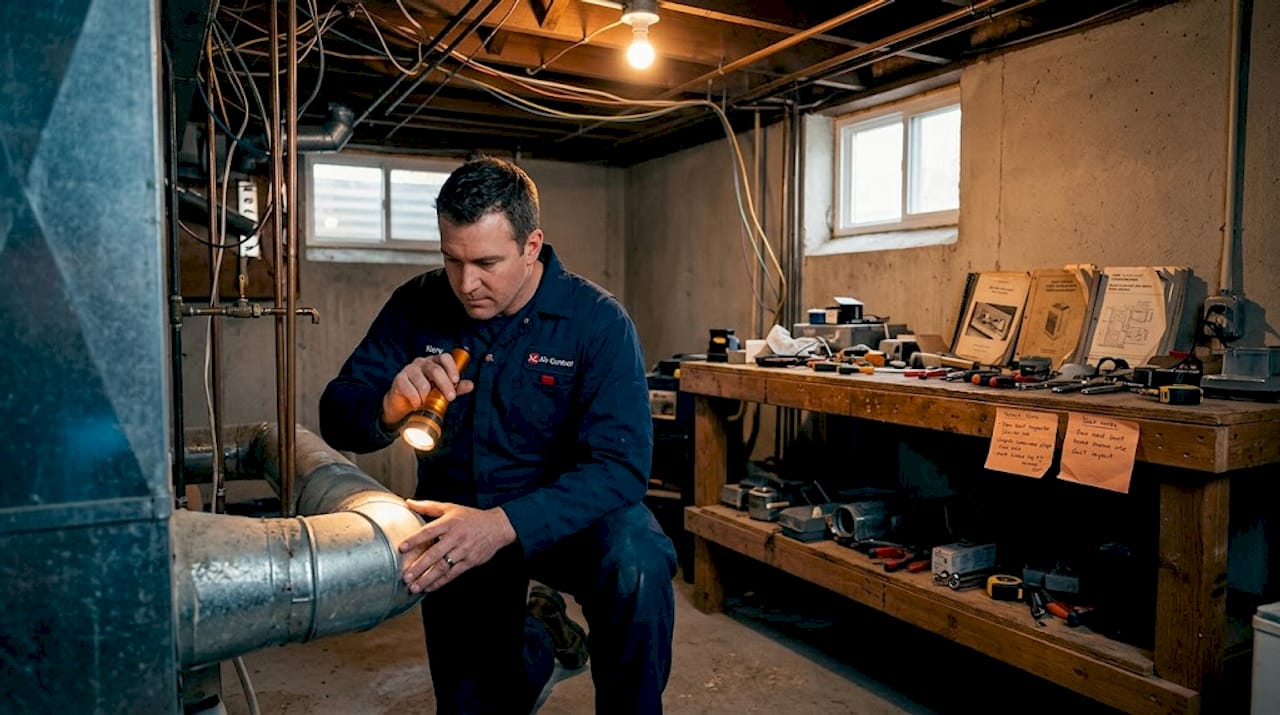
Proper HVAC maintenance plays a direct role in sustaining balanced airflow. Changing filters on schedule, scheduling annual tune-ups, and having your ducts cleaned periodically all support consistent air distribution. Dirty ducts add resistance that throws off the balance you worked to achieve. On the indoor air quality side, balanced airflow helps your filtration system work as designed, cycling air through filters at the right rate and reducing dust accumulation in rooms that would otherwise receive poor circulation.
Ducted vs. ductless systems and air balancing needs
Not every home uses a traditional ducted central HVAC system, and the airflow balancing approach differs meaningfully depending on which system you have.
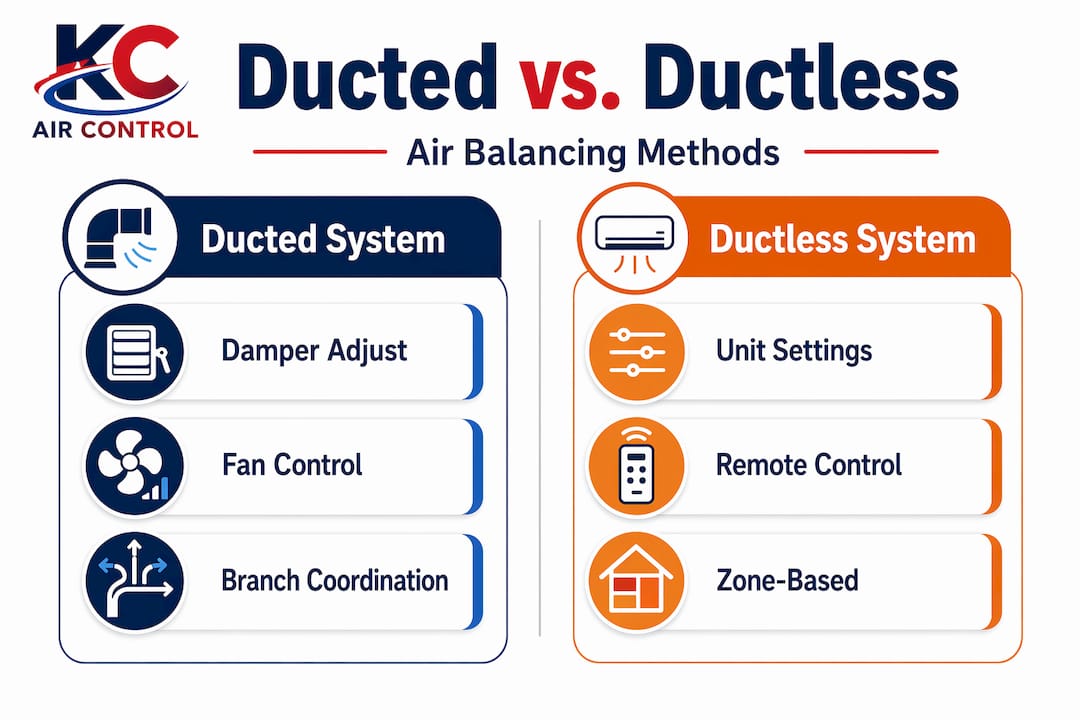
| Feature | Ducted central HVAC | Ductless mini-split |
|---|---|---|
| Balancing method | Damper and fan adjustments across multiple zones | Zone control through individual head units |
| Complexity | Higher — multiple rooms, branches, static pressure | Lower — each room controlled independently |
| Leak risk | Significant — ducts can lose 20 to 30% of air | Minimal — no duct system to leak |
| DIY balancing potential | Moderate — some steps accessible to homeowners | High — zone settings are straightforward |
Ducted systems require coordinating airflow across every branch simultaneously, which is what makes balancing iterative and complex. Ductless mini-splits bypass this challenge entirely because each head unit serves one zone independently. If one room is too warm, you simply adjust that unit. However, ductless systems have their own considerations around airflow direction, fan speed settings, and placement, all of which affect comfort in that specific room.
My take on air balancing after years of HVAC conversations
I have talked with enough frustrated homeowners to know that the most common mistake is reaching for the floor register instead of the duct damper. People twist those little louvers until they’re nearly shut and wonder why the problem persists or why their energy bills went up. The register is the last inch of a 50-foot airflow system. Adjusting it is like trying to control a garden hose by bending the sprinkler head. The real control is upstream, at the duct dampers.
I have also seen homeowners attempt DIY balancing with genuine results. The paper test, regular filter changes, and careful damper adjustments really do make a difference in many homes. The key is patience. Wait a full day after each small adjustment before deciding it did not work. Airflow changes take time to show up as room temperature changes.
What I always recommend is this: try the DIY steps honestly and track your results. If two or three rounds of careful adjustments do not solve the problem, stop guessing and get a professional measurement. The peace of mind from knowing the actual CFM numbers in your home is worth more than months of uncomfortable trial and error. Common HVAC airflow problems often have straightforward professional solutions that save you time and money in the long run.
— AB
Let KC Air Control get your home in balance
If you have worked through the DIY steps and still have rooms that refuse to cooperate, it is time for professional airflow measurement and diagnosis. At Kcaircontrol, we have been solving home comfort challenges in the Kansas City area for over 70 years. Our technicians use calibrated flow hoods and pressure testing equipment to find exactly where your system is falling short, whether that is a leaking duct, a miscalibrated fan, or an improperly adjusted damper.

We also offer professional duct cleaning to clear the restrictions that throw off even a well-balanced system. If your airflow issues have become urgent, our team is ready to help through our emergency HVAC repair options, getting your home back to comfort fast. Scheduling is easy online, and we offer flexible financing for larger repairs or system upgrades. Reach out today and let us take the guesswork out of your home’s airflow.
FAQ
What is air balancing in simple terms?
Air balancing is the process of adjusting your HVAC system so every room receives the correct amount of conditioned air, typically within ±10% of its designed CFM target.
Can I balance my HVAC airflow myself?
Yes, to a degree. Homeowners can improve airflow by replacing dirty filters, clearing blocked vents, and making small adjustments to duct dampers, but professional tools are needed for precise verification.
Why should I never fully close a vent?
Closing a vent completely raises static pressure inside the duct system, which strains the blower motor and can cause premature failure of your HVAC equipment.
How do duct leaks affect air balancing?
Duct leaks can cause 20 to 30% air loss, which means a large portion of conditioned air never reaches its target room, making any balancing adjustments far less effective.
How often should air balancing be checked?
Most homes benefit from having airflow checked during an annual HVAC tune-up, or any time you notice persistent temperature differences between rooms or rising energy costs.
Recommended
- HVAC load calculation: A homeowner’s guide to efficiency – KC Air Control – Heating & Cooling
- HVAC Maintenance: Boosting Home Comfort and Savings – Air Control
- HVAC zoning explained: guide to efficient home comfort – KC Air Control – Heating & Cooling
- Prevent HVAC Breakdowns: Homeowner’s Guide to Year-Round Comfort – KC Air Control – Heating & Cooling