

TL;DR:
- Upgrading your HVAC system in 2026 can significantly reduce energy costs, increase home comfort, and improve indoor air quality. Planning ahead allows you to maximize rebates, avoid seasonal peak demand, and ensure a reliable, efficient system before failure occurs. Proactive upgrades provide better control, quieter operation, and healthier indoor environments for Kansas City homeowners.
If your heating and cooling system turns on when you need it, you might assume everything is fine. Most Kansas City homeowners do. But that assumption quietly drains money every month, leaves rooms uncomfortable, and fills your home with air that could be much cleaner. Up to half of home energy use goes to heating and cooling, which means an outdated system is likely your biggest household expense. This guide walks you through exactly what a 2026 HVAC upgrade can do for your wallet, your comfort, and your family’s health.
Table of Contents
- Why upgrade your HVAC in 2026?
- The financial benefits: Energy savings and 2026 rebates
- Upgrade for comfort: Better heating, cooling, and control
- Indoor air quality: Breathing easier with modern HVAC
- A smarter approach: Don’t wait for breakdowns, plan your 2026 upgrade
- Ready to upgrade? Your next steps with KC Air Control
- Frequently asked questions
Key Takeaways
| Point | Details |
|---|---|
| Major savings opportunity | Upgrading your HVAC in 2026 can lower Kansas City energy bills by up to 20 percent or more. |
| Claim rebates and incentives | Time-limited rebates in 2026 can cover a significant part of your upgrade cost if you act early. |
| Boost your home’s comfort | Modern HVAC systems fix uneven temps, add smart control, and reduce noise for year-round comfort. |
| Improve indoor air quality | Newest technology and better filters help protect your family’s health with every air cycle. |
| Don’t wait for failure | Proactive upgrades before breakdowns maximize both comfort and long-term value for Kansas City homeowners. |
Why upgrade your HVAC in 2026?
Many homeowners operate on a simple rule: if it still runs, it’s still good. That logic made sense for appliances with short lifespans, but HVAC equipment is different. A system that “works” at age 12 can quietly cost you hundreds of dollars more per year compared to a modern, high-efficiency replacement. The inefficiency isn’t always obvious because the equipment still responds when you hit the thermostat. It just runs longer, works harder, and draws more energy to reach the same result.
Upgrading your HVAC becomes a serious financial conversation when you look at what older systems actually cost to operate. According to Evergy, half of home energy use is tied directly to heating and cooling, and the utility recommends homeowners consider replacement when equipment is over 10 years old or no longer keeps the home comfortable. In Kansas City, where summers push well past 95°F and winters can drop below zero, that inefficiency plays out across every single season.
Here are the key reasons Kansas City homeowners are choosing to upgrade in 2026:
- Rising utility bills that climb even when usage patterns haven’t changed
- Uneven temperatures in certain rooms, upstairs spaces, or additions
- Humidity problems in summer, leading to sticky air and possible moisture issues
- Frequent repair calls that are beginning to add up in cost
- Concern about air quality, especially in homes with allergy or asthma sufferers
- Expiring rebates and financial incentives that are available now but may not be later
“If your system is over 10 years old or is not keeping your home comfortable, you shouldn’t wait for a breakdown to consider an upgrade.” — Evergy, Heating and Cooling Ways to Save
Pro Tip: Pull out your last 12 months of utility bills and compare them year over year. If costs are creeping up without a major change in your household or usage habits, your system is likely losing efficiency. That’s money leaving your home every single month.
An energy efficient HVAC system does more than just reduce your bill. It delivers consistent temperatures, better humidity control, quieter operation, and cleaner air. The gap between what an older system delivers and what a modern one can do is significant, and it grows wider every year you wait.
The financial benefits: Energy savings and 2026 rebates
Understanding the motivators is one thing. Seeing the actual numbers is another. Kansas City homeowners who upgrade to high-efficiency HVAC equipment in 2026 can expect meaningful savings each month, plus direct rebates that reduce the upfront cost of the investment.
Here’s a realistic cost comparison for a typical Kansas City home:
| System type | Annual estimated energy cost | Efficiency rating (SEER2/AFUE) | Expected lifespan |
|---|---|---|---|
| Older AC/furnace (12+ yrs) | $1,800 to $2,400 | SEER2 10 or lower / 80% AFUE | Nearing end of life |
| New high-efficiency system | $1,200 to $1,600 | SEER2 16+ / 96% AFUE | 15 to 20 years |
| Estimated annual savings | $400 to $800+ |
These figures are representative estimates based on average Kansas City energy usage patterns and typical utility pricing, but they illustrate how quickly a high-efficiency upgrade pays for itself, especially when you factor in available rebates.
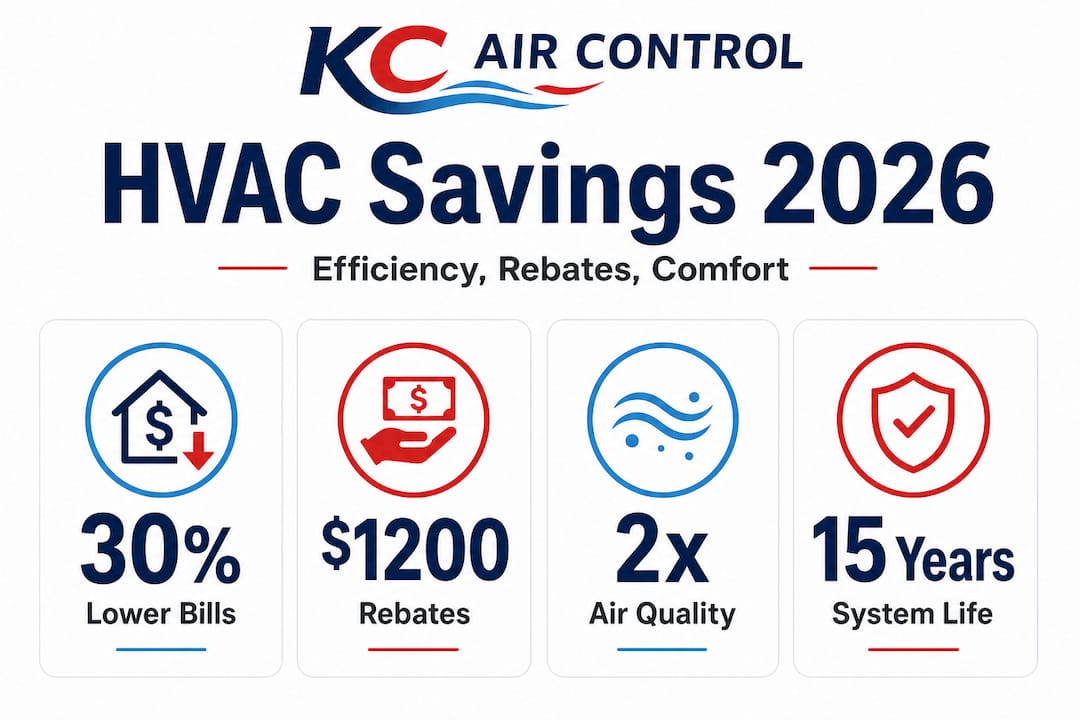
Evergy provides rebates for qualifying upgrades, including high-efficiency HVAC equipment and smart thermostat installations. These incentives directly offset what you pay upfront. The process for claiming them is straightforward, but timing matters because program funding can be limited.
Here’s how to claim your rebates step by step:
- Verify eligibility by checking that your new equipment meets Evergy’s efficiency rating requirements before purchase.
- Work with a licensed HVAC contractor (like our team at KC Air Control) who is familiar with rebate documentation requirements.
- Save your receipts and equipment model numbers immediately after installation.
- Submit your rebate application through Evergy’s online portal as soon as installation is complete.
- Track your application status online. Most rebates process within a few weeks of submission.
One detail many homeowners overlook: rebate programs have caps and funding windows. Waiting until fall, when demand spikes after summer breakdowns, often means slower processing or reduced availability. Spring installation typically gives you the best access to full incentive amounts.
Smart thermostats are also part of the financial picture. Evergy’s thermostat program shows that participating homeowners can cut energy use by up to 20% through better scheduling and automated control. That’s a meaningful return on a relatively modest investment.
For more detailed guidance, our energy saving tips and Kansas City energy savings guide break down additional ways to reduce your utility costs in 2026.
Upgrade for comfort: Better heating, cooling, and control
Financial benefits are a strong motivator, but Kansas City homeowners also want their homes to simply feel better. If you’ve ever walked from a cool living room into a sweltering upstairs bedroom, or woken up to a house that couldn’t stay warm on a January night, you know exactly what comfort problems look like. Modern HVAC systems are specifically designed to fix those issues.
The most common comfort complaints we hear from homeowners include:
- Hot and cold spots in different rooms or floors
- Humidity that feels too high in summer or too dry in winter
- Noisy operation that interrupts sleep or conversations
- Slow response time when the temperature outside changes quickly
- Cycling on and off too frequently, which creates temperature swings
Modern systems address each of these problems directly. Here’s what today’s HVAC technology offers:
- Variable speed fan motors that adjust airflow continuously rather than blasting at full power and shutting off
- Two-stage or modulating compressors that match output to actual demand, delivering even temperatures throughout the day
- Zoning systems that let you control different areas of your home independently
- Smart thermostats with learning capabilities, remote access, and scheduling features
- Improved humidity management through variable speed operation and dedicated humidity controls
Homes built in the 1980s and 1990s were often fitted with oversized systems that short-cycled constantly. Short-cycling means the unit reaches the set temperature quickly, shuts off, and then restarts before the house reaches a stable, even temperature. Modern variable speed systems run longer at lower capacity, which creates a much more consistent and comfortable indoor environment.
Retrofitting for comfort doesn’t always require a full system replacement right away. In some cases, upgrading your thermostat and improving your duct system can resolve comfort problems quickly and at a lower cost. However, if your equipment is aging, those partial fixes provide limited long-term value.
Pro Tip: Before investing in a new thermostat alone, have a professional assess your ductwork. Leaky or undersized ducts can undermine even the best equipment. Sealing and insulating ducts is often the most cost-effective comfort improvement available, especially in older Kansas City homes.
If your system is not keeping your home comfortable, that alone is sufficient justification for an upgrade. Our comfort optimization strategies page covers how we approach whole-home comfort assessments for Kansas City residents.
Indoor air quality: Breathing easier with modern HVAC
Comfort and cost get most of the attention in HVAC conversations, but the air your family breathes every day matters just as much. Indoor air can actually be more polluted than outdoor air, and your HVAC system plays a central role in either improving or worsening that situation.
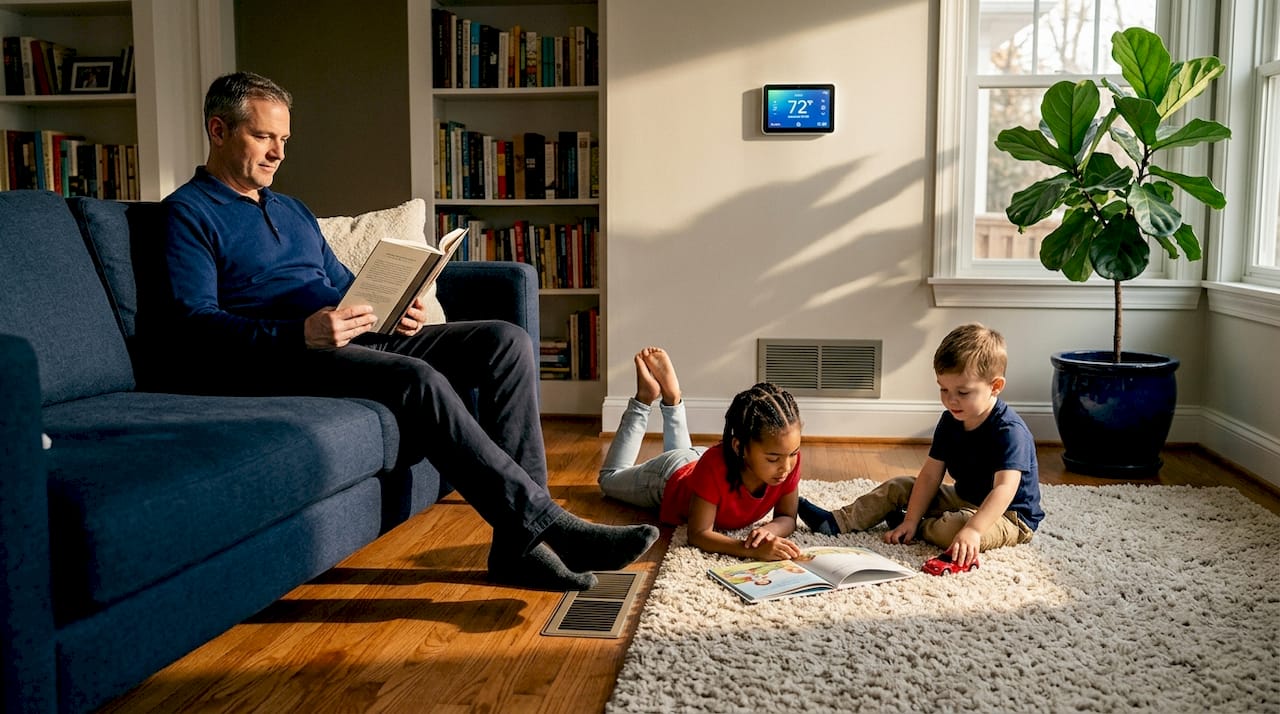
The EPA recommends three core strategies for improving indoor air quality: source control (removing or reducing pollutants at the source), improved ventilation, and air cleaning or filtration. Modern HVAC systems support all three, while older systems often fall short on ventilation and filtration by design.
Here’s a direct comparison between typical older system filtration and modern high-efficiency options:
| Feature | Older system (fiberglass filter) | Modern high-efficiency system |
|---|---|---|
| Filter type | Fiberglass or low-MERV panel filter | MERV 13 or higher pleated or media filter |
| Particles captured | Large dust only | Dust, pollen, mold spores, some bacteria |
| Air changes per hour | 2 to 4 changes (limited) | 5 to 8 or more with proper system sizing |
| Ventilation integration | Typically none | Fresh air intake options available |
| UV or enhanced filtration | Not available | Optional UV lights and electronic air cleaners |
“Most home forced-air systems do not bring in fresh outdoor air mechanically. Without intentional ventilation upgrades, indoor pollutants can accumulate significantly over time.” — EPA, Improving Indoor Air Quality
This is an important point for Kansas City homeowners who keep windows closed through hot summers and cold winters. A well-sealed, energy-efficient home is great for utility bills. But without proper ventilation and filtration, that same tight envelope traps dust, allergens, volatile organic compounds (VOCs from cleaning products and furnishings), and moisture.
One technical detail worth knowing: filter selection and airflow balance are closely connected. Installing a very high MERV rated filter in an older, lower-powered system can actually restrict airflow and cause the equipment to work harder, potentially damaging components. When we upgrade a system or recommend filter improvements, we match the filter specifications to the equipment’s actual airflow capacity. This matters more than most homeowners realize.
Exploring KC indoor air quality options like UV germicidal lights, whole-home humidifiers, and high-efficiency filtration systems can dramatically reduce allergens, mold risk, and airborne contaminants. The HVAC and IAQ value page provides more detail on how these improvements translate to real-world health and comfort benefits.
A smarter approach: Don’t wait for breakdowns, plan your 2026 upgrade
Here’s the honest truth that most HVAC conversations skip over. The homeowners who get the best results from an upgrade are never the ones who waited until their system failed in August. They’re the ones who planned it in February or March, locked in rebate availability, and scheduled installation on their own terms.
Conventional wisdom says to replace only when something breaks. That thinking costs Kansas City homeowners real money. When a system fails during a heat wave or a deep freeze, you’re under pressure to make a fast decision, contractors are at peak demand, equipment availability can be limited, and you have almost no time to compare options or verify rebate eligibility before committing.
Kansas City’s climate doesn’t give you a gentle buffer. Summers are genuinely punishing, and winters can be dangerously cold. An aging system that limps through one season may not survive the next, and the failure often comes at the worst possible moment. Planning your upgrade during the off-season changes the entire dynamic. You choose the equipment. You verify rebates. You schedule at your convenience. And you start the following season with a system that’s running at full efficiency.
The 2026 incentive landscape is favorable right now. Rebate programs are active, efficiency standards are current, and financing options are accessible. These conditions don’t stay static. Incentive availability through Evergy’s programs can shift, and waiting another year means another year of paying more to run an underperforming system.
We recommend every Kansas City homeowner review their system’s age and performance each spring as part of regular maintenance. Our regular maintenance advice covers exactly what to look for and when to make the call to upgrade versus repair.
The smartest move isn’t reactive. It’s proactive planning while the conditions are in your favor.
Ready to upgrade? Your next steps with KC Air Control
If any part of this guide resonated with you, whether it’s the utility savings, the comfort improvements, the air quality benefits, or simply the fact that your system is getting up there in age, now is the time to take action.
At KC Air Control, we’ve been serving Kansas City homeowners for over 70 years. We know this area’s climate, we know the equipment that performs best here, and we know how to help you get the most out of every available rebate and incentive in 2026. Our team can assess your current system, walk you through your upgrade options, and handle everything from installation to rebate documentation.
You can explore our full range of HVAC solutions for Kansas City homes, book your HVAC upgrade appointment online at your convenience, or claim your 2026 offer to take advantage of current promotions before they expire. We’re here to make this process easy, affordable, and worth every dollar you invest.
Frequently asked questions
How do I know if my HVAC system is too old to upgrade instead of repair?
Systems over 10 years old or those struggling to keep your home comfortable are strong candidates for replacement rather than repair, as Evergy recommends considering upgrades at that age threshold. When repair costs approach 50% of replacement cost, upgrading almost always makes more financial sense.
What rebates or incentives can Kansas City homeowners get in 2026 for HVAC upgrades?
Evergy offers rebates for high-efficiency HVAC upgrades and smart thermostat installations for qualifying Kansas City area homeowners in 2026. The exact amounts depend on the equipment type and efficiency rating, so confirming eligibility before purchase is important.
Can new HVAC systems really improve indoor air quality?
Yes, modern systems with high MERV rated filters and optional UV lighting can significantly reduce allergens, mold spores, and airborne contaminants in your home. The EPA identifies filtration and ventilation as two of the three primary strategies for improving indoor air quality.
Do I have to upgrade the entire HVAC system or can partial upgrades help?
Partial upgrades like smart thermostats or advanced filtration can deliver real efficiency and comfort improvements, especially as a starting point. However, a full system upgrade through programs like Evergy’s FastTrack HVAC Pays maximizes your rebate eligibility and delivers the largest long-term savings.
Recommended
- Why upgrade your HVAC? Boost comfort & cut energy bills – KC Air Control – Heating & Cooling
- Why upgrade heating systems? Unlock savings and comfort – KC Air Control – Heating & Cooling
- HVAC tune-up: boost efficiency and lower costs in 2026 – KC Air Control – Heating & Cooling
- Smart HVAC budgeting: save money and boost comfort in Kansas City – KC Air Control – Heating & Cooling