
TL;DR:
- A comprehensive winter heating checklist addresses safety, air quality, system maintenance, and efficiency.
- Regularly test alarms, replace filters, seal leaks, and schedule professional tune-ups to prevent costly emergencies.
- DIY tasks support system upkeep, but professional inspections are crucial for safety and catching hidden issues.
Kansas City winters don’t ease in gradually. One week you’re running your AC, and the next a cold snap has your furnace working overtime. That sudden shift is exactly when overlooked maintenance problems become expensive emergencies. A cracked heat exchanger, a clogged filter, or dead carbon monoxide (CO) alarm batteries can turn a cold night into a serious safety situation. The good news is that a structured home heating checklist puts you in control before the temperatures drop. Work through these steps now, and you’ll protect your family, reduce your energy bills, and avoid the stress of a mid-winter breakdown.
Table of Contents
- Key criteria for a reliable home heating checklist
- Step-by-step home heating checklist for winter
- Checklist comparison: DIY vs. professional seasonal tune-ups
- Troubleshooting issues and staying safe all winter
- Our take: The most overlooked items on your home heating checklist
- Schedule a professional heating checkup with Kansas City’s experts
- Frequently asked questions
Winter Heating Checklist Overview: Steps, Tips & FAQs
| Point | Details |
|---|---|
| Test alarms | Verify smoke and carbon monoxide detectors work before winter for your family’s safety. |
| Change filters | Replace furnace filters regularly to keep air clean and your system running efficiently. |
| Seal and insulate | Seal leaks and add insulation to reduce heat loss and lower energy bills. |
| Schedule tune-ups | Annual professional service prevents breakdowns and keeps your heating system reliable. |
| Know troubleshooting steps | Learn common fixes for winter heating problems to restore comfort quickly. |
Key criteria for a reliable home heating checklist
Not every checklist is created equal. A good home heating checklist for Kansas City homeowners covers four core areas: safety, indoor air quality, system maintenance, and energy efficiency. Miss any one of these, and you leave gaps that can cost you comfort or money.
Safety is the foundation. That means verifying that your smoke and CO alarms are working and that your batteries are fresh. It also means checking that gas lines and exhaust vents are clear and undamaged. These items are non-negotiable.
Indoor air quality deserves more attention than most homeowners give it. EPA guidance on indoor air quality stresses the importance of maintaining and replacing HVAC filters regularly, especially during wildfire smoke events when you should also run your system fan continuously to maximize filtration. Poor air quality inside your home can affect your family’s health all winter long.
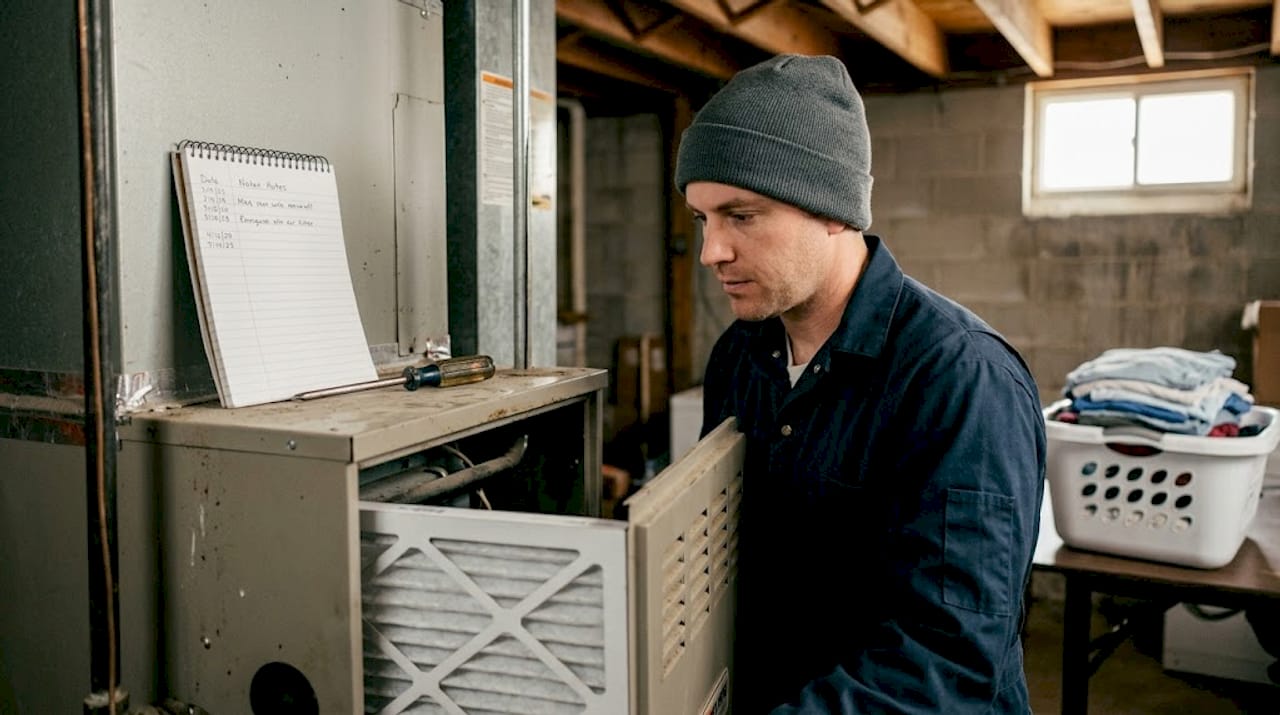
System maintenance is where most of the hands-on work happens. This includes cleaning components, inspecting the furnace, checking belts and motors, and scheduling a professional tune-up. A well-maintained system runs more efficiently and lasts longer. Review our Kansas City HVAC checklist for a full list of items by season.
Energy efficiency rounds out the checklist. Sealing drafts around doors and windows, adding insulation where needed, and using a programmable or smart thermostat can meaningfully lower your heating bills without sacrificing comfort. Our winter furnace tips cover several quick efficiency wins you can do in an afternoon.
A reliable checklist is not just about keeping your system running. It’s about keeping your family safe, your air clean, and your energy costs manageable all season long.
Here’s a quick summary of what every effective checklist should cover:
- Safety alarms and gas line checks
- Filter inspection and replacement
- Professional system tune-up scheduling
- Draft sealing and insulation review
- Thermostat settings and programming
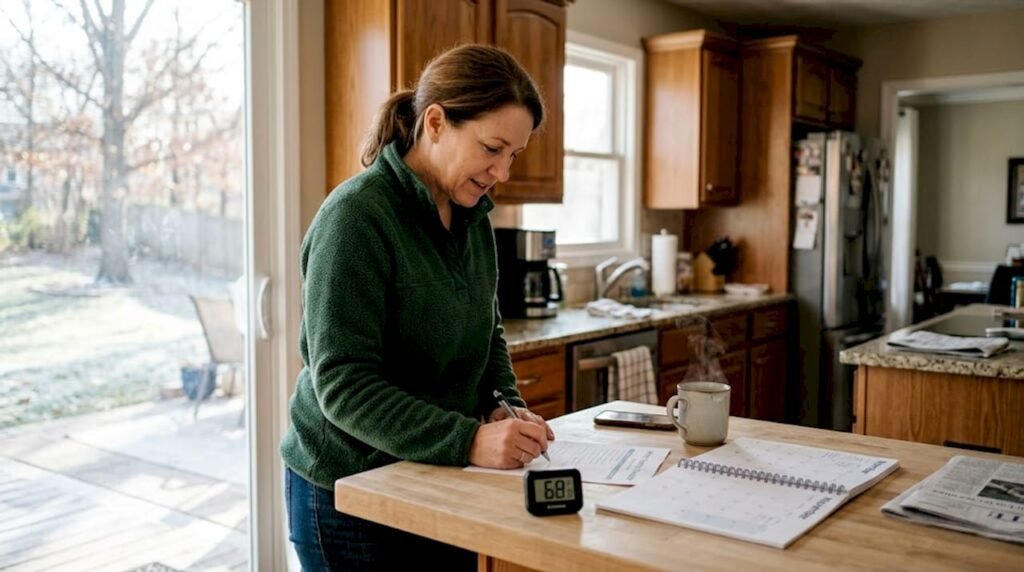
Pro Tip: Write your filter change date and next scheduled tune-up on your calendar the moment you complete each task. Consistency is what separates a good heating season from a frustrating one.
Step-by-step home heating checklist for winter
With our criteria established, here’s your step-by-step winter heating checklist. Work through these in order before the coldest months arrive.
- Test smoke and CO alarms. Press the test button on every alarm in your home. Replace batteries annually, even if the alarm seems fine. CO is colorless and odorless, so a working alarm is your only warning.
- Inspect and replace your HVAC filter. Hold your current filter up to the light. If you can’t see through it, replace it now. Use a MERV 13 filter if your system supports it. Higher-rated filters trap more airborne particles, which matters for air quality and system health.
- Set your thermostat fan to ‘On’ during poor air quality days. On days with heavy smoke or high pollution, switching your fan from ‘Auto’ to ‘On’ keeps air moving through the filter continuously, improving the air your family breathes.
- Seal leaks around doors and windows. Run your hand along door frames and window edges on a cold day. Feel a draft? Apply weatherstripping or caulk. This single step can noticeably reduce heat loss.
- Clear the area around your heating unit. Remove any stored items within two feet of your furnace or heating equipment. Check that exhaust vents outside are free of leaves, debris, or pest nests.
- Check your insulation. Attics and crawl spaces are common sources of heat loss. If your insulation is thin or damaged, adding more can pay for itself in a single heating season.
- Schedule a professional tune-up before peak cold arrives. Seasonal HVAC optimization includes filter and coil maintenance, sealing for heat loss, and professional tune-ups as core efficiency steps. Book early since HVAC schedules fill up fast in fall.
For a deeper version of this list, our 10-step furnace checklist walks through every component in detail. You can also learn more about how to boost HVAC efficiency with targeted seasonal actions.
Pro Tip: Do your checklist walkthrough on the same date every year, ideally in late September or early October, before Kansas City’s first hard freeze.
Checklist comparison: DIY vs. professional seasonal tune-ups
Not sure whether to tackle maintenance yourself or call a pro? See how each approach stacks up.
| Task | DIY | Professional |
|---|---|---|
| Filter replacement | Yes | Yes (included in tune-up) |
| Thermostat check | Yes | Yes |
| Visible duct inspection | Yes | Yes (plus camera inspection) |
| Deep coil cleaning | No | Yes |
| Heat exchanger inspection | No | Yes |
| Gas line and combustion test | No | Yes |
| System diagnostics | Limited | Full |
| Estimated time | 1-2 hours | 1-2 hours with a pro |
| Typical cost | $20-$60 for supplies | $80-$200 for tune-up |
DIY maintenance is genuinely valuable. You can handle filter replacements, thermostat checks, basic duct inspections, and clearing debris from around your unit. These tasks keep your system in better shape between professional visits.
But there are real limits to what a homeowner can safely inspect. Professional HVAC optimization goes well beyond what DIY covers: deep coil cleaning, combustion analysis, gas pressure testing, and heat exchanger inspection require specialized tools and training. A cracked heat exchanger, for example, can leak CO into your home with no visible warning sign.
Here’s where pros add the most value:
- Detecting refrigerant leaks and pressure issues
- Cleaning internal components that aren’t accessible without disassembly
- Running full electrical and safety diagnostics
- Identifying early signs of part failure before a breakdown
Skipping a $150 tune-up to save money sometimes leads to a $1,500 repair. Preventive care almost always costs less than emergency repair.
Learn more about why seasonal HVAC checkups matter for Kansas City homes and explore practical energy-efficient heating tips to lower your bills without compromising comfort.
Pro Tip: DIY tasks work well as a monthly habit between your annual professional tune-up. Think of them as keeping the system clean, not as a full replacement for expert care.
Troubleshooting issues and staying safe all winter
Once your prep is complete, it’s smart to know how to respond to common winter heating challenges.
| Symptom | Check First | When to Call a Pro |
|---|---|---|
| No heat | Thermostat, circuit breaker, filter | If still no heat after basic checks |
| Strange banging noise | Loose panel, dirty filter | If noise is persistent or metallic |
| Cold spots in rooms | Vents blocked, thermostat fan settings | If ductwork may be damaged |
| Rising energy bills | Filter, thermostat programming | If bills spike without clear cause |
| CO alarm going off | Evacuate immediately | Always: call 911 and HVAC pro |
For most common issues, start with the simple stuff. Check your thermostat settings first. Make sure the temperature is set correctly and the fan mode is where you want it. Then check your circuit breaker panel for a tripped breaker. Finally, inspect your furnace filter. A completely clogged filter can shut a system down.
The EPA’s indoor air quality guidance reinforces that maintaining smoke and CO alarms and keeping filters fresh are front-line safety measures. Never dismiss a CO alarm as a false alarm. Get everyone out of the house, leave the door open, and call 911 from outside.
For persistent problems, strange smells, or anything involving gas, don’t troubleshoot on your own. Call a licensed HVAC professional. Use our guides on troubleshooting HVAC issues and winterizing for HVAC safety to stay ahead of problems before they escalate.
- Rattling sounds often mean loose panels or debris in the blower
- Whistling usually signals a filter that is too restrictive or a duct leak
- Short cycling (system turns on and off rapidly) can indicate a dirty flame sensor or airflow issue
Pro Tip: Keep a simple maintenance log. Write down every filter change, tune-up, and repair with the date. This record speeds up service calls and helps protect your warranty coverage.
Our take: The most overlooked items on your home heating checklist
Beyond the basics, let’s address where many well-intentioned checklists fall short.
Most homeowners remember to change their filter. Fewer remember to physically inspect the exhaust vent outside their home. A bird nest or debris blockage in a furnace exhaust pipe is a real CO risk, and it happens more often than you’d expect. Spend two minutes walking around your home’s exterior and checking that vent before winter arrives.
Another common miss is CO alarm battery replacement. Smoke alarm batteries tend to get attention because the low-battery chirp is hard to ignore. CO alarms often die quietly. Replace those batteries every year on a set date, and you’ll never wonder if you’re protected.
Insulation gaps around doors and windows also get overlooked in newer homes. Homeowners assume newer construction is airtight, but settling, temperature changes, and wear can open up gaps within just a few years. A visual check costs nothing.
Finally, keep maintenance records. Review our landlord HVAC checklist tips for a great model of organized maintenance tracking that any homeowner can adapt. A well-kept log makes every service call faster and more effective.
Schedule a professional heating checkup with Kansas City’s experts
Ready to check everything off your list? Here’s how KC Air Control can help you stay warm all winter.
With over 70 years of experience serving Kansas City homeowners, we know what local heating systems face every season. A professional furnace tune-up with our team covers everything your DIY checklist can’t: deep cleaning, combustion testing, safety diagnostics, and a full system inspection.

If your furnace is already showing signs of trouble, our furnace repair services are available to get you back up and running fast. Don’t wait for a breakdown on the coldest night of the year. Schedule your heating checkup today and go into winter with confidence.
Frequently asked questions
How often should I replace my furnace filter in winter?
Replace your furnace filter every 1-3 months during winter, or more often if your home has pets or allergy concerns. The EPA recommends keeping filters fresh as a core indoor air quality measure.
What is the most important item on a winter heating checklist?
Testing your smoke and carbon monoxide alarms is the number one safety priority, since CO is invisible and odorless and can be life-threatening without warning.
Are professional HVAC tune-ups really necessary every year?
Yes, annual tune-ups catch small problems before they become costly breakdowns and keep your system running safely and efficiently all season.
What’s a quick fix if my heating isn’t working?
Start by checking the thermostat, circuit breaker, and furnace filter. If those checks don’t resolve the issue, the EPA’s guidance on HVAC filter maintenance supports calling a professional for persistent problems.
Should I leave my thermostat fan on ‘Auto’ or ‘On’ during winter?
Use ‘On’ during days with heavy smoke or poor outdoor air quality for continuous filtration, and switch back to ‘Auto’ for normal winter days to save energy.
Recommended
- Essential Winter Furnace Maintenance Tips for KC Homes – KC Air Control – Heating & Cooling
- Winterize your HVAC: save money, breathe easier this winter – KC Air Control – Heating & Cooling
- Furnace maintenance checklist: 10 essential steps for KC homes in 2026 – KC Air Control – Heating & Cooling
- How to schedule HVAC inspections for Kansas City homes – KC Air Control – Heating & Cooling