
TL;DR:
- Regular seasonal HVAC maintenance prevents efficiency loss and reduces costly emergency repairs.
- Bi-annual tune-ups extend system lifespan and improve energy savings in Kansas City’s extreme climate.
- Proper maintenance ensures warranty validity and minimizes long-term ownership costs.
Most Kansas City homeowners don’t think twice about their HVAC system until something goes wrong. By then, the damage is done and the repair bill is waiting. The truth is, dirty coils alone can cause 20 to 30% efficiency loss, meaning your system works harder and costs more every single month you skip a tune-up. Regular seasonal maintenance is not just a nice-to-have. It’s the most reliable way to protect your comfort, your equipment, and your wallet through Kansas City’s demanding winters and scorching summers.
Guide Overview: Seasonal HVAC Maintenance Topics
- The real cost of skipping seasonal maintenance
- How seasonal maintenance boosts performance and lifespan
- How much and how often: Annual vs. bi-annual maintenance explained
- What’s included in a seasonal HVAC tune-up?
- Our perspective: What most HVAC guides don’t tell Kansas City homeowners
- Take the next step: Easy scheduling and expert HVAC care in Kansas City
- Frequently asked questions
Key Takeaways
| Point | Details |
|---|---|
| Neglect costs more | Skipping HVAC maintenance dramatically increases both energy bills and repair expenses over time. |
| Bi-annual service works best | Twice-yearly checkups optimize comfort and protect equipment, especially in Kansas City’s harsh climate. |
| Real savings and peace of mind | Routine tune-ups reduce breakdowns, extend system life, and keep your warranty valid for years. |
| Expect a detailed service | A quality technician will inspect, clean, and adjust every key part of your system for stronger, safer operation. |
The real cost of skipping seasonal maintenance
It’s easy to assume your HVAC system is fine as long as the air is blowing. But what you can’t see is what costs you the most. Dirt builds up on coils, electrical connections loosen, and small refrigerant leaks go unnoticed. Over time, these issues add up fast.
When coils get dirty, your system has to run longer cycles to reach the same temperature. Energy use rises 20 to 30% and total costs can double over the life of the unit if maintenance is skipped consistently. That means a system that should cost you $1,500 a year to run could quietly creep toward $3,000 or more.
Emergency breakdowns are even more painful. Reactive repairs cost 2 to 5 times more than scheduled preventive maintenance. You’re not just paying for the part. You’re paying for urgency, after-hours labor, and the stress of a broken system in July or January. Learn more about the cost of emergency repairs and why they’re almost always avoidable.
Here’s a quick look at how deferred maintenance stacks up against routine care:
| Scenario | Average Annual Cost | System Lifespan |
|---|---|---|
| No maintenance | $2,800+ | 10 to 12 years |
| Annual tune-up | $1,800 to $2,000 | 15 to 17 years |
| Bi-annual tune-up | $1,500 to $1,700 | 18 to 20+ years |
The most common hidden costs of skipping maintenance include:
- Higher monthly energy bills from reduced efficiency
- Shortened equipment lifespan requiring early replacement
- Voided manufacturer warranties due to lack of service records
- Emergency repair fees during peak demand seasons
- Reduced indoor air quality from dirty filters and coils
“Homeowners who skip seasonal maintenance often don’t feel the financial impact right away. By the time they notice, they’ve already lost years of system life and thousands in avoidable costs.”
The good news is that boosting home comfort and cutting costs is entirely within reach when you stay on schedule.
How seasonal maintenance boosts performance and lifespan
Once you understand the penalties of neglect, it’s time to see how planned maintenance flips the script. Routine care keeps your system running at peak efficiency, which directly reduces your energy bills and extends how long the equipment lasts.
Preventive maintenance can cut total HVAC costs by 50% and deliver over 500% ROI over the life of a system. That’s not a small number. For a system that costs $8,000 to replace, getting five to seven extra years out of it through consistent care is a significant financial win.
Kansas City’s climate puts extra stress on HVAC equipment. Winters drop well below freezing, and summers regularly push past 95 degrees. That means your system switches between heavy heating and heavy cooling demands with very little recovery time. Understanding why schedule HVAC maintenance matters is especially important here because local conditions accelerate wear faster than in milder climates.

Here’s a comparison of maintained versus unmaintained system performance:
| Performance Factor | Maintained System | Unmaintained System |
|---|---|---|
| Energy efficiency | Near rated capacity | 20 to 30% below rated |
| Breakdown frequency | Low | High |
| System lifespan | 18 to 20+ years | 10 to 12 years |
| Repair costs (annual) | Low to moderate | High |
The top seasonal service tasks and their benefits include:
- Coil cleaning: Restores heat transfer efficiency and reduces energy use
- Filter replacement: Improves airflow and indoor air quality
- Electrical connection checks: Prevents dangerous faults and system failures
- Lubrication of moving parts: Reduces friction and motor wear
- Thermostat calibration: Ensures accurate temperature control
- Refrigerant level check: Maintains cooling capacity and prevents compressor damage
For Kansas City homeowners, seasonal HVAC checkups are not optional extras. They’re the foundation of reliable year-round comfort.
Pro Tip: Ask your technician to measure refrigerant superheat and subcooling during every visit. These readings confirm your system is operating at true rated efficiency, not just blowing air.
How much and how often: Annual vs. bi-annual maintenance explained
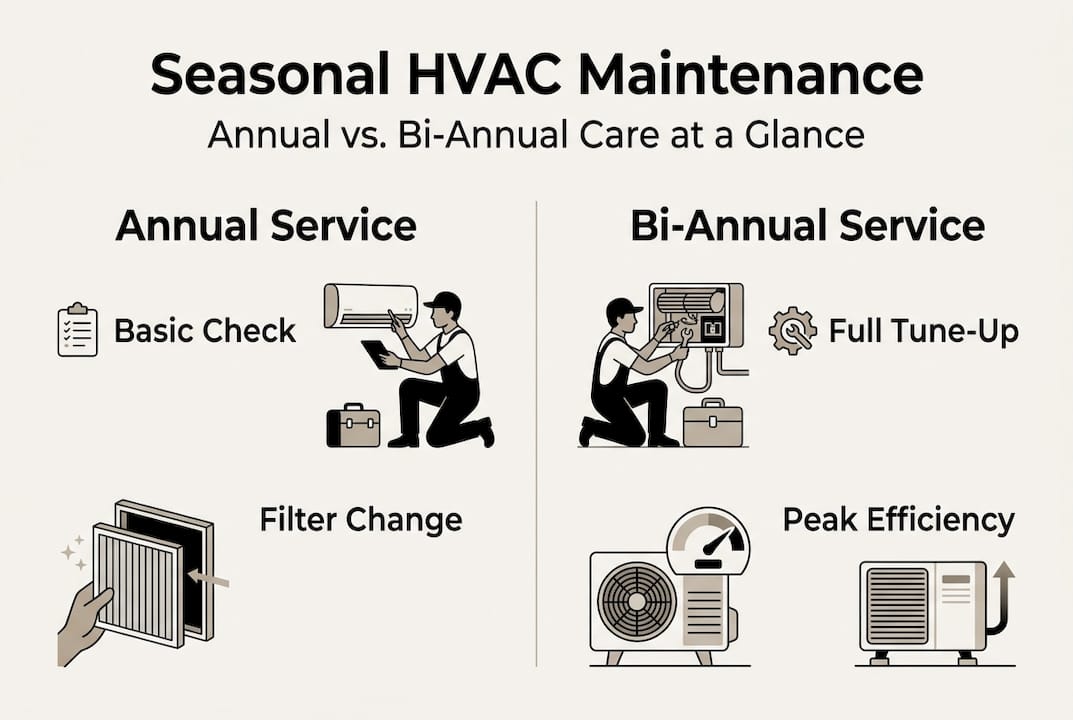
Knowing the benefits, homeowners need to decide how often to schedule and whether once a year is really enough. The short answer is that annual service is the minimum, but bi-annual is the smarter choice for most Kansas City homes.
Bi-annual service outperforms annual checkups for both efficiency and overall system health. Scheduling once before summer and once before winter means your system is tuned specifically for the demands ahead, not playing catch-up after months of hard use.
There’s also a warranty factor most homeowners overlook. Many HVAC warranties require annual service as a minimum condition for coverage. If you skip a year and a major component fails, the manufacturer may deny your claim. That could mean paying out of pocket for a compressor or heat exchanger that should have been covered.
Here’s what a bi-annual schedule looks like in practice:
- Spring checkup (April to May): Prepares your AC for summer cooling demands
- Fall checkup (September to October): Prepares your furnace for winter heating demands
- Filter checks: Every 1 to 3 months depending on household conditions
- Thermostat review: At least once a year to confirm settings and programming
Following seasonal maintenance steps consistently is the single best habit you can build as a homeowner. The upfront cost of two visits per year is almost always less than one emergency repair call.
Pro Tip: Set two calendar reminders right now, one in April and one in September. Booking early means you get your preferred time slot before peak season demand fills up the schedule.
The numbers back this up clearly. Homeowners who invest in bi-annual maintenance see measurable HVAC tune-up savings on both monthly energy bills and long-term repair costs. It’s one of the highest-return habits in home ownership.
What’s included in a seasonal HVAC tune-up?
Having decided on maintenance intervals, homeowners should know exactly what to expect from a professional visit. A quality tune-up is not a quick walk-through. It’s a structured inspection and service process that covers every critical component.
DOE estimates 5 to 20% energy savings per year from regular HVAC maintenance, primarily through cleaning, lubrication, and system testing. Those savings come directly from the tasks your technician performs during each visit.
Here’s what a thorough seasonal tune-up should include:
- Full system inspection: Checking all components for wear, damage, or safety concerns
- Coil cleaning (evaporator and condenser): Removes buildup that reduces efficiency
- Electrical connection tightening: Loose connections cause failures and fire hazards
- Moving parts lubrication: Reduces friction on motors and bearings
- Thermostat testing and calibration: Confirms accurate temperature readings
- Refrigerant level measurement: Ensures proper cooling capacity
- Drain line clearing: Prevents water damage from condensate backup
- Safety control testing: Confirms all shutoffs and limits work correctly
Beyond the checklist, a good technician will also:
- Explain any findings clearly without pressure tactics
- Flag items that need attention now versus items to watch over time
- Recommend filter types suited to your home’s air quality needs
- Note any signs of duct leaks or airflow restrictions
“A professional tune-up is not just about cleaning. It’s about catching the small issues before they become the expensive ones.”
Staying proactive is the best way to prevent HVAC breakdowns before they disrupt your comfort or your budget. Knowing what your technician should do also helps you evaluate whether you’re getting genuine value from your service provider.
Our perspective: What most HVAC guides don’t tell Kansas City homeowners
Most generic HVAC maintenance guides tell you to schedule once a year and change your filter. That advice is fine for mild climates. It’s not enough for Kansas City.
Our city’s weather swings are significant. We go from freezing temperatures in January to heat indexes above 100 degrees in July. That range puts real stress on heating and cooling equipment in ways that a single annual visit simply can’t address fully. By the time your fall tune-up catches a problem that developed in August, you’ve already been running an inefficient system for months.
We’ve seen it consistently over our 70-plus years serving Kansas City homeowners. The customers who call us for emergencies are almost always the ones who skipped their spring or fall checkup. The customers who stay on a bi-annual schedule rarely face urgent situations.
Smart homeowners also insist on real data, not just a visual check. Ask your technician for actual refrigerant readings, electrical measurements, and efficiency numbers. A technician who can’t provide those isn’t doing a full job. Kansas City HVAC checkups done right are an investment with a clear return, not just a service call.
Maintenance is not an expense. It’s the most reliable way to protect a $6,000 to $12,000 piece of equipment.
Take the next step: Easy scheduling and expert HVAC care in Kansas City
You now know what seasonal maintenance delivers and why skipping it costs more than it saves. The next step is simple: get your system on a regular schedule with a team that knows Kansas City homes.

At KC Air Control, we make it easy. Whether you need a book your furnace tune-up before winter or an AC tune-up service before the heat arrives, our technicians are ready to deliver thorough, honest service. We also offer home energy-saving maintenance plans designed to keep your system running efficiently all year. Scheduling is straightforward, our pricing is transparent, and our goal is always your long-term comfort and savings. Reach out today and let us help you stay ahead of the season.
Frequently asked questions
What happens if I skip seasonal HVAC maintenance for several years?
Skipping years of maintenance can lead to 20 to 30% higher energy bills, a much shorter system lifespan, and more frequent, expensive breakdowns. The longer you wait, the more deferred problems compound into serious repair costs.
Is bi-annual maintenance really better than once a year?
Yes, twice-a-year checkups improve efficiency and system health, especially before Kansas City’s summer and winter extremes. Two targeted visits catch problems that a single annual appointment often misses.
Does HVAC maintenance help keep my warranty valid?
Warranty coverage often requires annual maintenance as a minimum, so skipped service can void your protection for major repairs. Always keep service records to protect your investment.
How much can I save on energy bills with regular HVAC maintenance?
Proper maintenance can cut 5 to 20% from annual energy costs and reduce total ownership expenses by up to half over the system’s life. Those savings add up to thousands of dollars over time.
What should I expect during a seasonal HVAC tune-up visit?
You should receive a full system inspection, coil cleaning, electrical checks, lubrication, and safety testing to confirm everything is running at peak performance. A good technician will also explain any findings and answer your questions clearly.
Recommended
- Seasonal HVAC Maintenance Steps for Home Energy Savings – Air Control
- HVAC Maintenance: Boosting Home Comfort and Savings – Air Control
- HVAC tune-up: boost efficiency and lower costs in 2026 – KC Air Control – Heating & Cooling
- Why seasonal HVAC checkups matter for Kansas City homes – KC Air Control – Heating & Cooling