
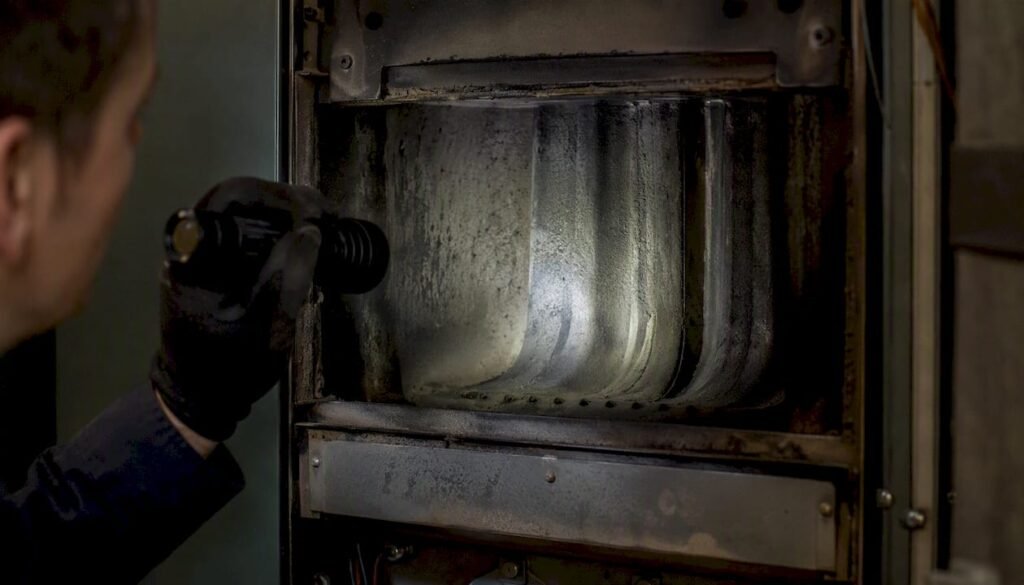
The most common cracked heat exchanger symptoms are a yellow or flickering flame instead of steady blue, soot around the burner, a strong metallic or formaldehyde-like smell, rattling at startup, and short-cycling. If your carbon monoxide detector alarms while the furnace runs, or you develop flu-like symptoms that ease when you leave the house, treat it as a life-safety emergency, not a maintenance item.
Watch for:
- Flame color shifting from blue to yellow, orange, or flickering
- Soot buildup near the burner or flue
- Unusual metallic or chemical odor when the furnace kicks on
- Rattling, banging, or popping at startup
- Furnace short-cycling (turning off and on repeatedly)
- CO detector alarm sounding
If your CO detector goes off while the furnace is running, get everyone and every pet out of the house and call emergency services or your gas utility from outside. Call the HVAC technician after you’re safe, not before.
Key Takeaways
A cracked heat exchanger produces observable warning signs, and a triggered CO alarm always requires immediate evacuation before you call for repair.
| Point | Details |
|---|---|
| Watch the flame | A shift from steady blue to yellow, orange, or flickering signals a possible crack. |
| CO alarm means evacuate first | Get everyone outside and call emergency services before contacting a technician. |
| Demand combustion data | A written diagnosis with flue gas readings, not just a camera photo, confirms a real crack. |
| Replacement is standard practice | Cracked exchangers are rarely repaired; replacement costs typically run $1,250 to $3,000. |
| Prevention beats repair | Regular filter changes and annual tune-ups from Kcaircontrol catch airflow problems before they cause cracks. |
Table of Contents
- What Do Cracked Heat Exchanger Symptoms Actually Mean?
- Why Is a Cracked Heat Exchanger Dangerous?
- What Should You Do If You Suspect a Crack?
- How Do Technicians Confirm a Cracked Heat Exchanger?
- Should You Repair or Replace a Cracked Heat Exchanger?
- How Can You Prevent a Cracked Heat Exchanger?
- Frequently Asked Questions
- Sources
What Do Cracked Heat Exchanger Symptoms Actually Mean?
Each symptom traces back to the same mechanical problem: a crack in the metal chamber that separates combustion gases from the air circulating through your home. Once that seal breaks, gases and airflow start mixing in ways they were never designed to.
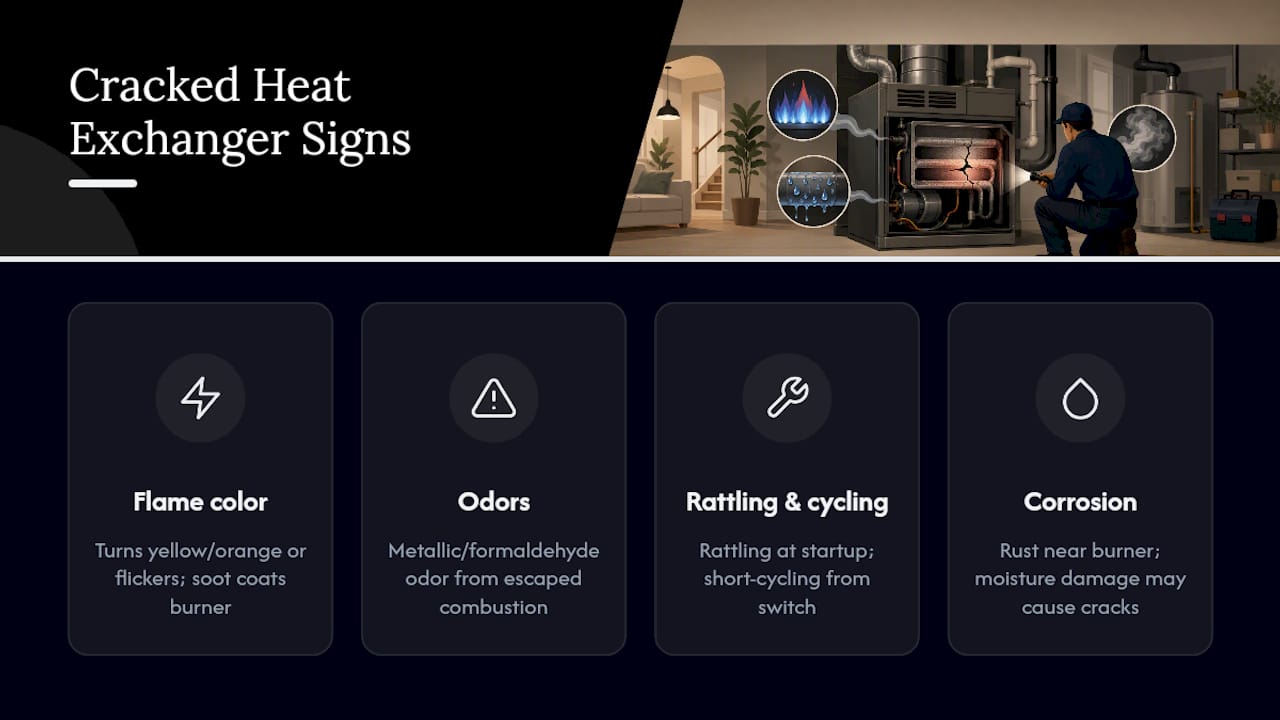
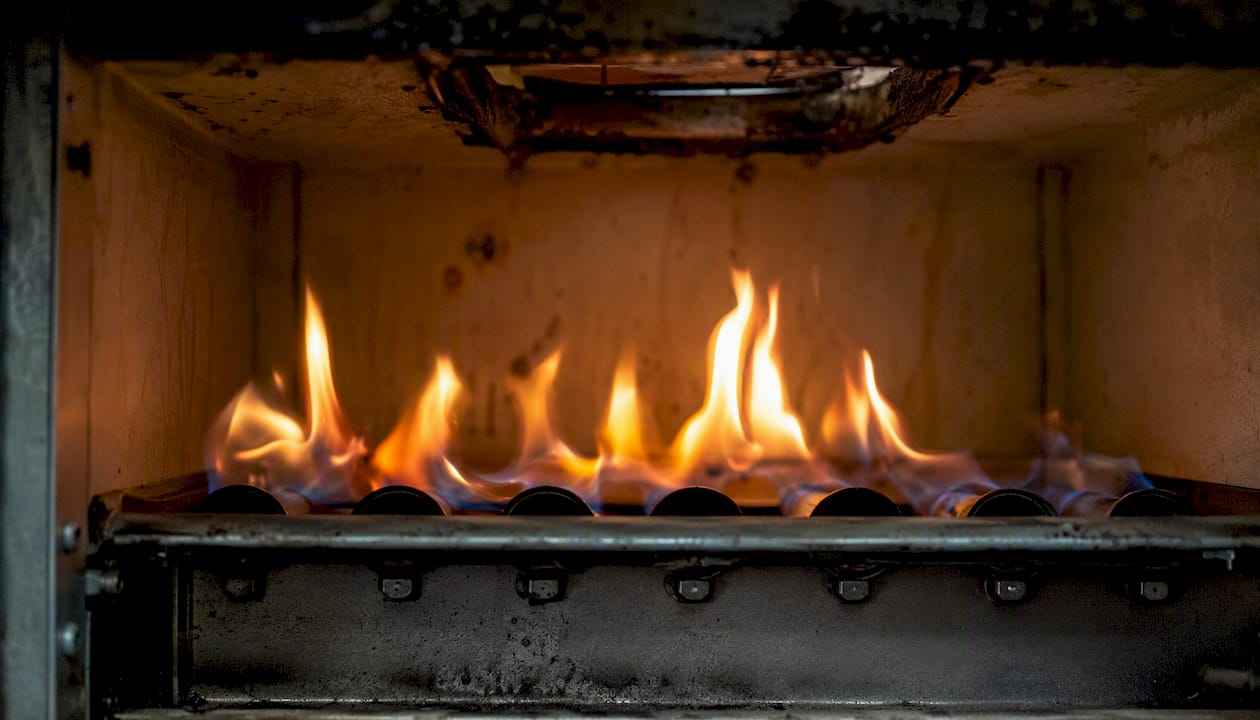
Flame color change is often the first visible clue. A healthy gas burner produces a steady blue flame. When a crack lets room air leak into the combustion chamber, it disrupts the air-to-fuel ratio and the flame turns yellow, orange, or starts flickering erratically, according to Trane’s troubleshooting guide.
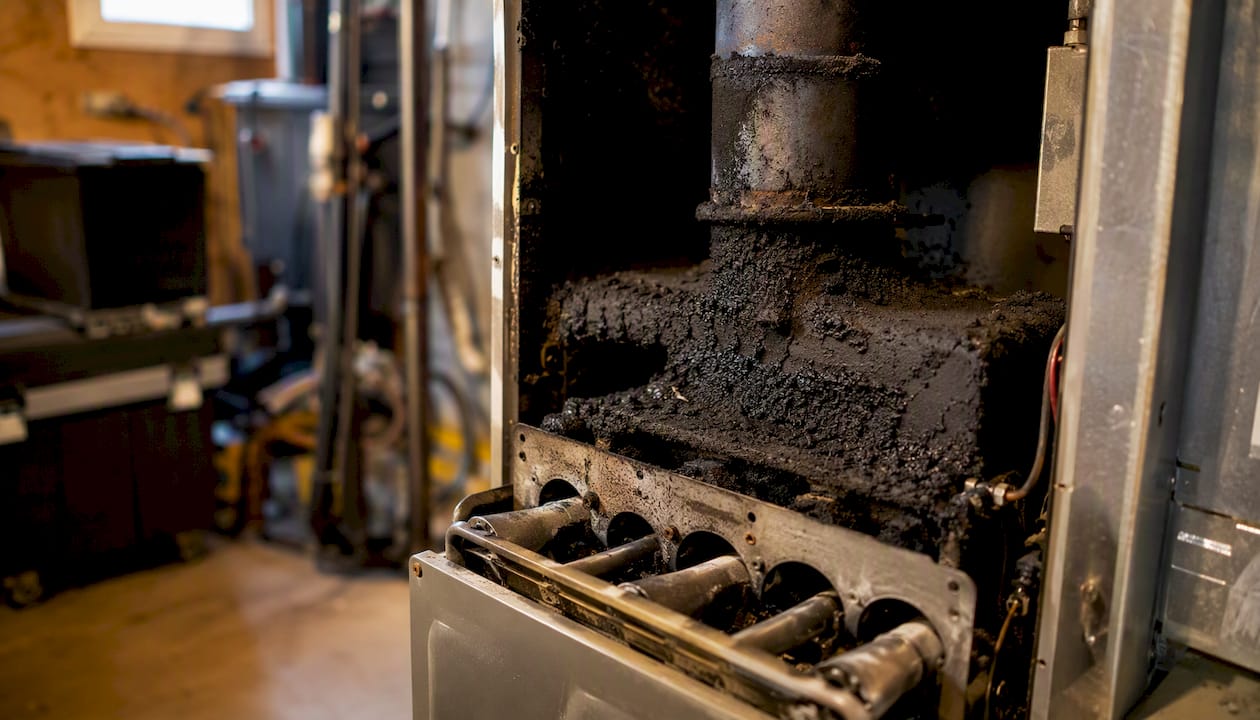
Soot buildup happens for a related reason: incomplete combustion leaves behind carbon residue that coats the burner assembly and flue.
Metallic or formaldehyde-like odors show up when combustion byproducts escape through the crack into your ductwork instead of venting outside.
Rattling or banging noises at startup usually mean metal has expanded, warped, or separated where the crack formed, and pieces are vibrating against the housing.
Short-cycling occurs because a warped, cracked exchanger triggers the furnace’s safety limit switch, which shuts the unit down before it overheats further.
Rust or visible corrosion around the burner compartment is a warning sign of the moisture damage that often causes cracks in the first place, according to HomeGuide’s cost breakdown.
Pro Tip: You can safely check the flame color through the furnace’s viewing port or a properly closed service panel window without removing any covers. Never open the burner compartment, touch internal components, or attempt to inspect the heat exchanger yourself. That work requires a combustion analyzer and training, and poking around inside a live gas appliance is how people get hurt.
Why Is a Cracked Heat Exchanger Dangerous?
A crack creates a path for combustion gases, including carbon monoxide, to mix with the warm air your furnace blows through the house. Incomplete combustion from a damaged exchanger produces even more CO than a properly sealed unit, which compounds the risk.
CO exposure symptoms include headache, nausea, dizziness, fatigue, and confusion, and high concentrations can be fatal, according to the CDC’s overview of carbon monoxide health effects. Carbon monoxide itself is colorless and odorless, which is exactly why the metallic smell or soot around your furnace matters as an early clue, even though CO itself won’t tip you off.
Flu-like symptoms that improve when you leave the house and return when you’re back home are a strong signal of indoor CO exposure, according to Affordable Air & Heating. Don’t wait for a second episode to take it seriously.
What Should You Do If You Suspect a Crack?
Act in this order, without skipping steps:
- Turn off the furnace at the thermostat or shut off the gas valve if you can do so safely
- Get everyone, including pets, out of the house immediately if a CO alarm is sounding
- Call 911 or your gas utility’s emergency line from outside, not from inside the house
- Follow dispatcher instructions on ventilating before re-entering
- Once you’re cleared to return, call a licensed HVAC technician for inspection
If there’s no active CO alarm but you’ve noticed flame discoloration, soot, or a strange odor, skip the 911 call and schedule a technician right away instead.
Pro Tip: When you call for emergency furnace repair, tell the dispatcher exactly what you observed, whether the CO alarm triggered, and your furnace’s approximate age. That information helps the technician arrive prepared with the right testing equipment instead of diagnosing from scratch.
How Do Technicians Confirm a Cracked Heat Exchanger?
A reliable diagnosis combines more than one method. Technicians typically run through:
- Visual inspection for visible cracks, rust, or corrosion inside the combustion chamber
- Combustion analysis measuring CO levels in the flue gas
- Flame behavior observation while the blower cycles on and off
- Venting and pressure checks to confirm gases are exiting properly
- A review of the furnace’s age and maintenance history
Combustion analyzer readings matter because a crack isn’t always visible to the eye, especially if it’s hairline or located where a camera can’t reach. The Trane guide notes that flue CO measurements paired with visual confirmation give a far more credible result than either test alone.
Pro Tip: Ask for a written diagnosis with the combustion analyzer printout or a photo of the flue gas readings. A technician who claims to see a crack through a camera alone, without showing you meter data, is a signal to get a second opinion, according to Watkins Heating’s guidance on avoiding scams.
Should You Repair or Replace a Cracked Heat Exchanger?
For safety reasons, cracked or rusted heat exchangers are generally not repaired. Replacing the part means dismantling most of the furnace anyway, and a technician who patches or seals a crack instead of replacing it is leaving a combustion safety risk in place, according to Angi’s replacement guide.
Whether replacement means a new heat exchanger or a whole new furnace often comes down to a few factors:
- Unit age: Furnaces 10 to 15 years old are usually better candidates for full replacement than a heat exchanger swap.
- Repair cost threshold: If the repair estimate approaches half the cost of a new furnace, replacement is typically the smarter investment.
- Warranty status: A heat exchanger still under manufacturer warranty may only require a labor charge.
- Efficiency: Older, lower-efficiency units rarely justify the cost of a standalone exchanger replacement.
| Cost Level | Typical Range | Notes |
|---|---|---|
| Low | $1,250 | Newer unit, part under warranty, standard labor |
| Average | $1,750 | Most homeowners land here, according to HomeAdvisor |
| High | $3,000+ | Larger or high-efficiency systems, emergency service, no warranty coverage |
If your furnace is aging out anyway, our furnace replacement guide walks through when swapping the whole system makes more financial sense than chasing a single-part repair.
How Can You Prevent a Cracked Heat Exchanger?
Most cracks trace back to overheating or corrosion, both of which are preventable with routine care:
- Change your air filter every one to three months to keep airflow steady.
- Keep return vents and registers unblocked so the system doesn’t overwork.
- Schedule an annual professional tune-up to catch airflow or ignition issues early.
- Address rattling, banging, or short-cycling the moment you notice it.
- Keep the combustion area clean and dry to limit rust and corrosion.
Deferred maintenance, restricted airflow, and moisture exposure are the three biggest culprits behind premature cracking.
A Safety-First Approach You Can Trust
Kcaircontrol has spent decades diagnosing furnace problems across the Kansas City area, and the pattern holds true every heating season: the homeowners who catch symptoms early and ask for combustion analyzer data, not just a visual guess, get the safest and most cost-effective outcome. If a technician wants to replace your heat exchanger, ask to see the removed part or the flue gas readings. A second opinion costs you little and protects you from unnecessary repairs.
How Kcaircontrol Handles Cracked Heat Exchanger Calls
Kcaircontrol gives Kansas City homeowners something a lot of one-off repair calls don’t: a combustion analyzer reading and a written diagnosis before any replacement decision gets made, plus flexible financing if a full furnace swap turns out to be the safer route.
If you’ve spotted any of the symptoms covered here, from flame discoloration to a CO alarm that’s already gone quiet, don’t guess at the cause. Our team handles furnace repair calls throughout the Kansas City area with combustion testing standard on every visit, and we’ll show you the actual readings before recommending anything. If your system checks out fine, ask about scheduling a furnace tune-up to catch airflow issues before they turn into a bigger problem next winter. Call today to book an inspection or request a written combustion-analysis report for your home.
Frequently Asked Questions
What are the first signs of a cracked heat exchanger?
The earliest signs are usually a flame that turns yellow or flickers instead of staying blue, soot around the burner, and a metallic or chemical smell when the furnace runs.
Can a cracked heat exchanger be repaired instead of replaced?
Rarely. For safety reasons, most cracked or rusted exchangers get replaced rather than repaired, especially once a unit passes the 10 to 15 year mark.
How much does heat exchanger replacement typically cost?
Most homeowners spend between $1,250 and $3,000, with an average around $1,750, depending on furnace size, efficiency level, and labor.
Is it safe to run my furnace with a suspected crack?
No. Turn it off and schedule an inspection immediately. Continuing to run a furnace with a suspected crack risks carbon monoxide exposure.
What should I ask an HVAC technician to prove a crack exists?
Ask for the combustion analyzer printout or photo showing flue gas CO levels, and request to see the removed part if replacement is recommended.
This article is general information, not a substitute for advice from a qualified doctor. Consult a qualified healthcare professional about your own circumstances before acting on anything here.
Sources
- Cracked Heat Exchanger: What Does It Mean? | Trane
- Carbon Monoxide | About carbon monoxide | CDC
- Heat Exchanger Replacement Cost | HomeAdvisor
- How Much Does It Cost to Replace a Heat Exchanger? | Angi
- Cracked Heat Exchangers – Symptoms, Causes, and Scams | Watkins Heating