

TL;DR:
- Eco-friendly HVAC involves energy-efficient equipment, low-GWP refrigerants, and smart controls.
- Transition to low-GWP refrigerants by 2026 is a key regulatory change for sustainability.
- Proper system sizing, installation, and building envelope improvements are essential for maximum efficiency.
Most homeowners assume that “eco-friendly HVAC” simply means buying a unit with a high efficiency rating. That assumption is understandable, but it leaves out a major piece of the picture. The industry is going through one of its biggest shifts in decades, and Kansas City homeowners are right in the middle of it. Evergy rebates for high-efficiency upgrades and smart thermostats saving up to 20% on energy bills are already available now. Plus, the phaseout of R-410A refrigerant by 2026 is forcing homeowners and contractors alike to rethink what “green” really means for home comfort systems. This guide will walk you through what eco-friendly HVAC actually involves, what technologies matter, and how to take smart action in Kansas City.
Table of Contents
- What does eco-friendly HVAC mean?
- Key eco-friendly HVAC technologies for 2026
- Benefits and challenges of eco-friendly HVAC in Kansas City
- Simple steps to upgrade to eco-friendly HVAC
- The real journey to eco-friendly comfort in Kansas City
- Connect with Kansas City’s eco-friendly HVAC experts
- Frequently asked questions
Key Takeaways
| Point | Details |
|---|---|
| Eco-friendly means more | Modern eco-friendly HVAC combines efficiency, better refrigerants, and smart controls for comfort and sustainability. |
| Major changes by 2026 | New regulations in 2026 require low-GWP refrigerants, so plan upgrades with these in mind. |
| Long-term rewards | While upgrades can cost more upfront, rebates and savings on energy bills make eco-friendly options a smart investment. |
| Local rebates available | Kansas City homeowners can save upfront with utility rebates for qualifying eco-friendly HVAC systems. |
| Success = system approach | True sustainability comes from integrating efficient equipment, expert installation, and regular maintenance. |
What does eco-friendly HVAC mean?
Eco-friendly HVAC goes well beyond buying a unit with a high SEER (Seasonal Energy Efficiency Ratio) rating. It covers a set of interconnected decisions: the equipment you choose, the refrigerant it uses, how the system is installed, how it’s maintained, and even how your home’s structure supports or undermines your system’s performance.
A truly eco-friendly HVAC setup does three things well. First, it uses less energy to condition your home, which lowers both your monthly bills and the demand on the regional power grid. Second, it operates with refrigerants that have a low Global Warming Potential (GWP), meaning they cause significantly less damage if they ever leak into the atmosphere. Third, it integrates smart controls, such as programmable or learning thermostats, that prevent wasted energy during hours when no one is home.
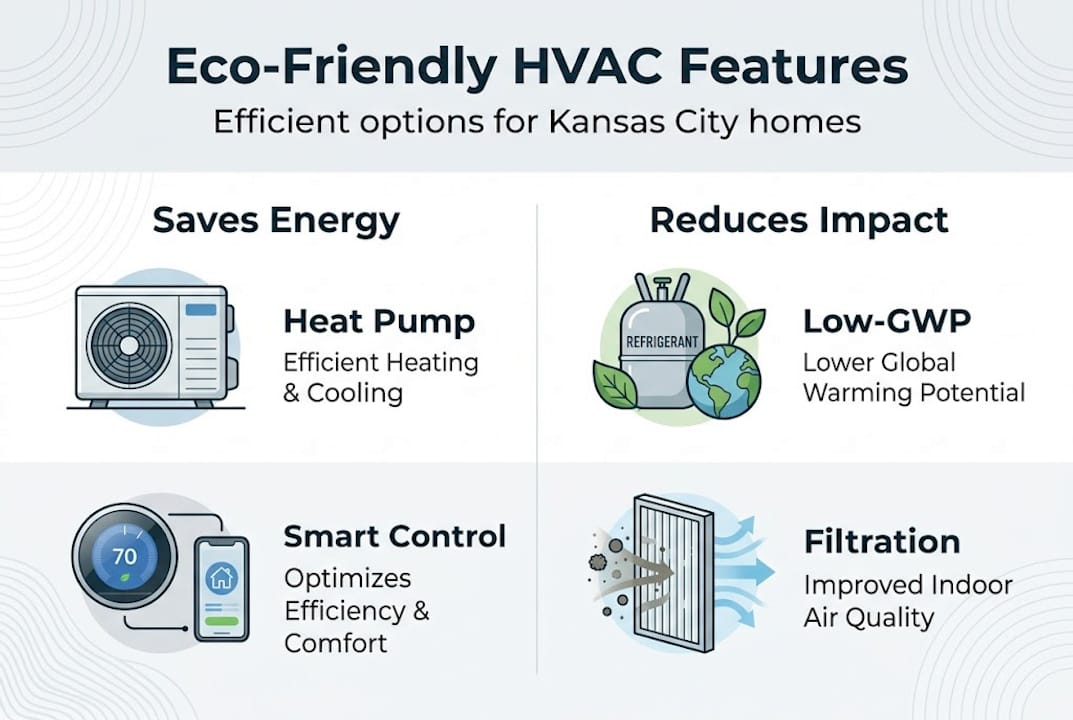
One of the biggest shifts happening right now is the low-GWP refrigerant transition that becomes mandatory after 2026. R-410A, the refrigerant found in most air conditioners installed over the past two decades, has a GWP of 2,088. That number matters because refrigerant leaks are more common than homeowners realize. New systems will be required to use alternatives with dramatically lower GWP values, making this a genuine environmental upgrade, not just a regulatory checkbox.
Here is a quick comparison of where traditional, energy-efficient, and eco-friendly systems differ:
| Feature | Traditional HVAC | Energy-efficient HVAC | Eco-friendly HVAC |
|---|---|---|---|
| SEER rating | Below 14 | 16 to 20 | 20 and above |
| Refrigerant type | R-22 or R-410A | R-410A (being phased out) | Low-GWP alternatives |
| Smart controls | Rarely included | Optional add-on | Standard feature |
| Sizing approach | Rough estimate | Manual J calculation | Precise load calculation |
| Maintenance emphasis | Basic filter changes | Seasonal tune-ups | Full system checks |
| Building envelope | Not considered | Sometimes considered | Always part of the plan |
What makes an HVAC system genuinely eco-friendly? Here is the short list:
- High SEER2 and HSPF2 ratings (updated efficiency metrics used in 2026)
- Low-GWP refrigerants that meet post-2026 federal requirements
- Variable-speed compressors that adjust output based on actual demand
- Smart or learning thermostats that cut energy waste automatically
- Properly sealed and insulated ductwork to prevent conditioned air loss
- Correct system sizing based on a professional load calculation
“Eco-friendly HVAC is not a product. It is a practice. Pairing the right equipment with proper installation, ongoing maintenance, and building envelope improvements is the only way to achieve maximum sustainability in a Kansas City home.”
If you want a detailed breakdown of equipment choices and ratings, our energy-efficient HVAC guide covers the full picture for local homeowners.
Key eco-friendly HVAC technologies for 2026
With a clear definition in hand, it’s time to look at what actually makes a system eco-friendly in practical terms. Several technologies have matured significantly and are now accessible to Kansas City homeowners at a range of budget levels.
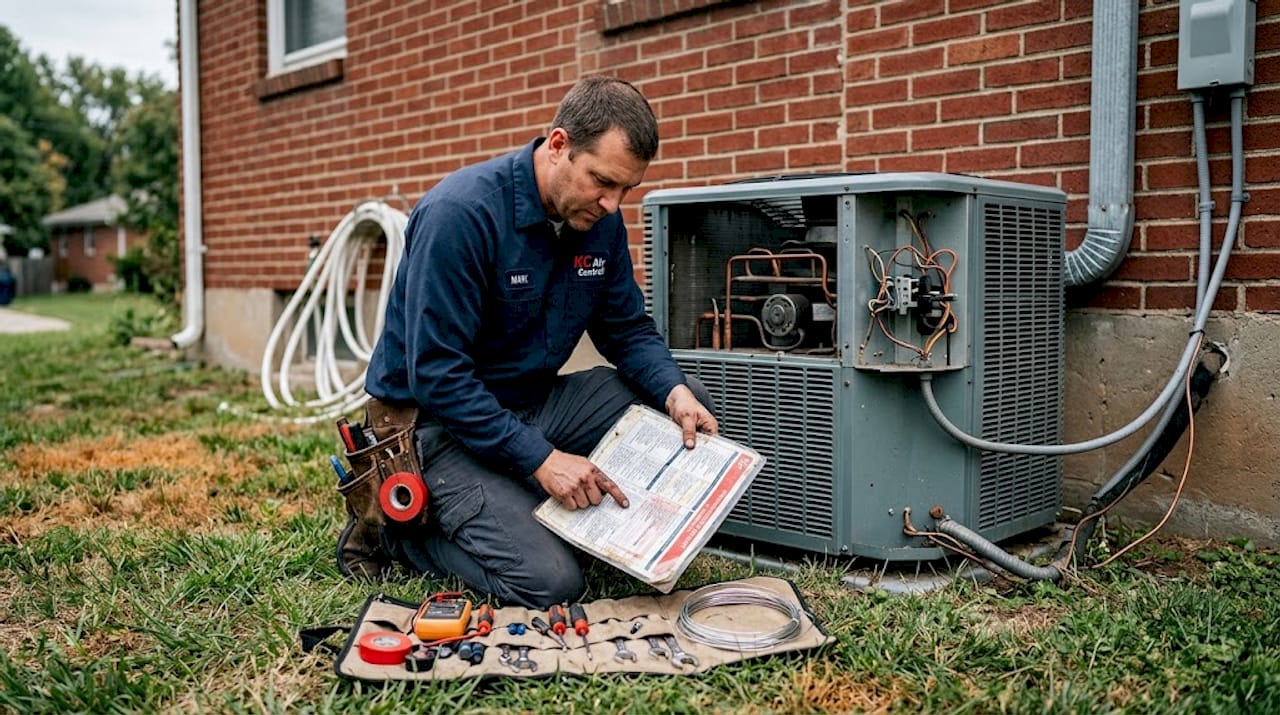
Variable-speed compressors are one of the most impactful upgrades available. A single-stage compressor runs at full capacity or not at all, which is inefficient for most days of the year when you only need partial cooling or heating. A variable-speed compressor adjusts its output continuously, matching the exact demand of your home at any moment. This means better humidity control, quieter operation, and meaningfully lower energy consumption across the entire season.
Smart thermostats pair naturally with variable-speed systems. When connected to a learning thermostat, your HVAC system can optimize run times based on your schedule, local weather data, and even your utility’s peak pricing hours. Smart thermostats can save Kansas City homeowners up to 20% on heating and cooling bills, and Evergy offers rebates to help offset the cost of qualifying devices.
Advanced filtration and ventilation matter more than most homeowners expect. ASHRAE (American Society of Heating, Refrigerating and Air-Conditioning Engineers) guidelines establish minimum ventilation rates to protect indoor air quality. A system that runs efficiently but circulates stale or contaminated air is not truly a healthy or sustainable setup. MERV-13 filtration, energy recovery ventilators (ERVs), and UV air purifiers all contribute to a complete picture.
Low-GWP refrigerants are the most regulated change coming in 2026. R-32, R-454B, and R-466A are among the leading alternatives already appearing in new equipment. These refrigerants have GWP values between 1 and 700, compared to R-410A’s 2,088. Choosing a new system now means selecting equipment built for these alternatives from the ground up.
Here is a ranked list of the most impactful eco-friendly upgrades available in 2026:
- Replace an aging system with a variable-speed heat pump using a low-GWP refrigerant
- Install a smart or learning thermostat with utility rebate support
- Upgrade ductwork sealing and insulation to reduce conditioned air loss
- Add MERV-13 or better filtration, plus an ERV for fresh air management
- Improve attic and wall insulation to reduce the load your HVAC carries
Pro Tip: Equipment is only part of the equation. A brand-new, high-efficiency system installed in a poorly insulated home or incorrectly sized for your square footage will never perform at its rated efficiency. Always combine equipment upgrades with a professional load calculation and building envelope assessment. For more actionable guidance, check out our HVAC energy-saving tips for Kansas City homes.
Benefits and challenges of eco-friendly HVAC in Kansas City
Should you make the leap? The honest answer is: it depends on your home, your budget, and your timeline. Let’s look at both sides clearly.
The real benefits for Kansas City homeowners:
- Lower monthly energy costs, especially during Kansas City’s hot, humid summers and cold winters
- Reduced carbon footprint, since more efficient systems draw less power from the regional grid
- Better indoor air quality through improved filtration and ventilation
- Fewer emergency breakdowns, because modern systems with variable-speed technology experience less mechanical stress
- Protection against future regulatory changes, since systems built for low-GWP refrigerants are already compliant
- Access to rebates from Evergy and federal tax credits that reduce upfront costs substantially
The real challenges:
- Higher purchase price compared to entry-level conventional systems
- Retrofit complexity in older Kansas City homes with aging ductwork, limited electrical capacity, or non-standard layouts
- Performance that partly depends on grid cleanliness, meaning electrification is most beneficial when the regional power grid uses more renewable sources over time
- Finding qualified contractors who understand both the new refrigerant standards and proper load calculation methods
Retrofit complexity and high upfront costs are the two most common objections we hear from Kansas City homeowners. Both are valid concerns, but both can be managed with the right planning.
Ducted vs. ductless: which makes sense in Kansas City?
Homes with existing ductwork in good condition are typically best served by a ducted heat pump or high-efficiency furnace and AC combination. Homes with no existing ductwork, additions, sunrooms, or older structures where retrofitting ducts would be invasive often benefit more from ductless mini-split systems. Ductless systems eliminate duct losses entirely, which can account for 20 to 30 percent of a system’s total energy loss.
Pro Tip: Before committing to any system, research the HVAC retrofitting options specific to your home’s layout and age. A professional assessment will reveal whether your existing ductwork is an asset or a liability.
Addressing the cost concern directly:
A high-efficiency heat pump system may cost $3,000 to $6,000 more upfront than a basic replacement. However, when you factor in Evergy rebates, federal Inflation Reduction Act tax credits of up to $2,000 for qualifying heat pumps, and long-term energy savings, the payback period in Kansas City typically falls between four and eight years. After that, the savings are yours every single month.
Simple steps to upgrade to eco-friendly HVAC
If you’re ready to take action, here’s exactly how to move forward in a way that gets you real results instead of just a new piece of equipment.
Step-by-step upgrade roadmap:
- Schedule a professional load calculation. This is the single most important step. A Manual J load calculation determines exactly how much heating and cooling capacity your home needs based on its size, insulation, window placement, and local climate. Oversized systems short-cycle, waste energy, and cause humidity problems.
- Choose the right system for your home layout. Use the load calculation results to select a properly sized, high-efficiency system with a low-GWP refrigerant. Your contractor should present options that qualify for available rebates.
- Invest in quality installation. Even the best equipment underperforms if it’s improperly installed. This includes refrigerant charge verification, duct sealing, correct airflow balancing, and thermostat configuration. A detailed installation guide outlines what a proper installation should include.
- Set up a maintenance schedule. Plan for at least two professional tune-ups per year: one in spring before cooling season and one in fall before heating season. Regular maintenance keeps efficiency high and catches small problems before they become expensive repairs.
- Claim all available rebates and incentives. Contact Evergy directly or ask your contractor to identify every available rebate. Apply for federal tax credits when you file your return. Don’t leave money on the table.
“ASHRAE guidelines require ongoing ventilation and indoor air quality checks as a standard part of responsible HVAC management. Skipping these checks is one of the most common ways homeowners undermine the performance of a new, efficient system.” (ASHRAE Standards)
Common mistakes to avoid:
- Choosing a system based on purchase price alone without considering lifetime operating costs
- Skipping the load calculation and letting a contractor size by rule of thumb
- Neglecting ductwork inspection and sealing before installing a new system
- Forgetting to register equipment warranties or apply for rebates after installation
- Assuming a new system will perform well without an envelope assessment
For practical, everyday guidance once your system is installed, our energy-efficient tips page covers how to keep your upgraded system running at peak performance throughout Kansas City’s full range of seasons.
The real journey to eco-friendly comfort in Kansas City
Here is something most articles won’t tell you: the homeowners in Kansas City who see the biggest improvements in comfort and energy savings are rarely the ones who simply bought the most expensive unit. They’re the ones who treated the upgrade as a whole-home project.
We’ve seen homes with brand-new, high-efficiency equipment that still had sky-high energy bills because the attic had almost no insulation or the ducts were leaking 25 percent of their conditioned air into unconditioned spaces. Conversely, we’ve seen older homes where modest equipment upgrades combined with duct sealing and smart thermostat installation cut energy costs by nearly a third.
The real lesson is that eco-friendly HVAC is a system decision, not an equipment decision. Every element works together: the unit, the ducts, the building envelope, the controls, and the maintenance routine. If any one element is weak, it pulls down the performance of everything else.
That’s why we always recommend starting with a professional assessment rather than a sales conversation. An honest evaluation of why upgrade your HVAC should include your home’s current performance, not just a comparison of new equipment models. The best upgrade is the one that solves your specific home’s real problems.
Connect with Kansas City’s eco-friendly HVAC experts
Ready to explore your own home’s upgrade options? Here’s how you can get started with a trusted Kansas City team.

At KC Air Control, we’ve spent over 70 years helping Kansas City homeowners stay comfortable, save energy, and make smart decisions about their home systems. Whether you need furnace repair to get through the winter, want to improve your indoor air quality with advanced filtration, or are facing an unexpected breakdown and need emergency HVAC repair options, our team is ready to help. We understand Kansas City’s climate, local utility rebate programs, and the new refrigerant regulations coming in 2026. Contact us today to schedule your assessment and take the first step toward a more efficient, eco-friendly home.
Frequently asked questions
What makes an HVAC system eco-friendly?
Eco-friendly HVAC systems use less energy, lower-emission refrigerants, and smart controls to reduce environmental impact while improving home comfort.
How much can I save with an eco-friendly HVAC upgrade?
Kansas City homeowners can save up to 20% or more on energy bills, especially when pairing smart thermostats with qualifying utility rebates.
Are there rebates for eco-friendly HVAC in Kansas City?
Yes, Evergy rebates are available for upgrading to high-efficiency and environmentally friendly HVAC equipment in the Kansas City service area.
Will upgrading my HVAC disrupt my current home setup?
Retrofitting can be complex in older homes, but proper planning and installation significantly reduce disruption and ensure you get the efficiency gains you’re paying for.
What refrigerant will my HVAC need after 2026?
Starting in 2026, all new HVAC units must use low-GWP refrigerants in compliance with federal regulations replacing R-410A.
Recommended
- Energy efficient HVAC guide: Save 20-50% in KC – KC Air Control – Heating & Cooling
- Energy efficient HVAC installation guide for KC homeowners – KC Air Control – Heating & Cooling
- Energy efficient HVAC: lower bills and better comfort – KC Air Control – Heating & Cooling
- Practical HVAC energy saving tips for Kansas City homes – KC Air Control – Heating & Cooling