

TL;DR:
- Upgrading filters to MERV 13 or higher improves indoor air quality but may strain older HVAC systems.
- Biannual professional tune-ups are essential in Kansas City for system efficiency and longevity.
- Recognize signs like unusual noises and uneven temperatures early to prevent costly repairs or system replacement.
Sorting through HVAC advice online can feel overwhelming, especially when every source says something different. Kansas City homeowners deal with a unique mix of humid summers, cold winters, and homes ranging from century-old bungalows to new construction, and that means generic national advice often misses the mark. We hear the same questions from homeowners every week, so we put together this guide to give you clear, expert-backed answers. Whether you’re trying to improve your air quality, figure out when to call a technician, or decide if it’s time for a new system, the answers below will help you make confident decisions.
Quick Links to Common HVAC Questions for Kansas City Homeowners
- What improves indoor air quality in my HVAC system?
- How often should I service or tune up my HVAC system?
- What are the signs I need HVAC repair or an upgrade?
- How do I choose the right HVAC system for my home’s needs?
- Our take: What the typical HVAC checklist misses for Kansas City homes
- Get expert help with your HVAC questions and solutions
- Frequently asked questions
Key Takeaways
| Point | Details |
|---|---|
| MERV 13 filters matter | For best indoor air quality, use MERV 13 or higher and check your system’s compatibility. |
| Bi-annual tune-ups | Service your HVAC every spring and fall to boost efficiency and cut energy bills. |
| Know upgrade signs | Frequent breakdowns, uneven temps, or rising bills signal it’s time to consider a new system. |
| Choose for local needs | Select HVAC systems that fit Kansas City’s climate, energy goals, and humidity challenges. |
| Local experts help | Tap Kansas City specialists for solutions that save money and improve comfort long-term. |
What improves indoor air quality in my HVAC system?
Indoor air quality (IAQ) is one of the most talked-about topics in home comfort, and for good reason. You spend most of your time indoors, and the air circulating through your HVAC system directly affects your health and comfort. Knowing what actually improves IAQ, and what doesn’t, saves you money and protects your family.
Filtration: The foundation of clean air
Your filter is your first line of defense. For most Kansas City homes, upgrading to a MERV 13 or higher filter makes a real difference. MERV 13 filters trap over 85% of fine particles (PM2.5), including allergens, mold spores, and some bacteria. That matters a lot in a region where spring pollen counts run high and summer humidity feeds mold growth.
However, there’s an important catch. High MERV filters risk restricting airflow in older systems by 10-15%, which can strain the blower motor and reduce efficiency. If your HVAC system is more than 15 years old, check compatibility before upgrading your filter rating.
Other IAQ upgrades worth considering:
- UV purifiers: These mount inside the air handler and kill bacteria and mold that settle on coils.
- Whole-home humidifiers: Kansas City winters are dry. Keeping indoor humidity between 35-50% reduces respiratory irritation.
- Energy Recovery Ventilators (ERVs): These bring in fresh outdoor air without losing conditioned air, a smart option for tightly sealed newer homes.
- Duct cleaning: Dusty, debris-filled ducts circulate contaminants every time your system runs.
Explore your options on our indoor air quality solutions page to see what fits your home.
“Balanced humidity and proper filtration are not optional extras. They are core parts of a healthy home environment, especially in climates with wide seasonal swings.”
Comparison: IAQ upgrade options at a glance
| Upgrade | Best for | Approximate cost range | IAQ benefit |
|---|---|---|---|
| MERV 13 filter | Most homes | $15-$40/filter | High particle removal |
| UV purifier | Mold-prone homes | $300-$600 installed | Kills mold and bacteria |
| Whole-home humidifier | Dry winter air | $400-$800 installed | Comfort and health |
| ERV system | New, tight construction | $1,200-$2,500 installed | Fresh air and humidity balance |
Pro Tip: Change your filter every 60-90 days in Kansas City, not every 3-6 months as the box suggests. Our climate is harder on filters than most national averages assume. Review our Kansas City HVAC maintenance checklist for a full seasonal schedule.
How often should I service or tune up my HVAC system?
A lot of homeowners assume their HVAC system only needs attention when something goes wrong. That’s one of the most expensive habits in home ownership. Kansas City’s weather swings hard in both directions, which makes routine maintenance even more critical here than in milder climates.
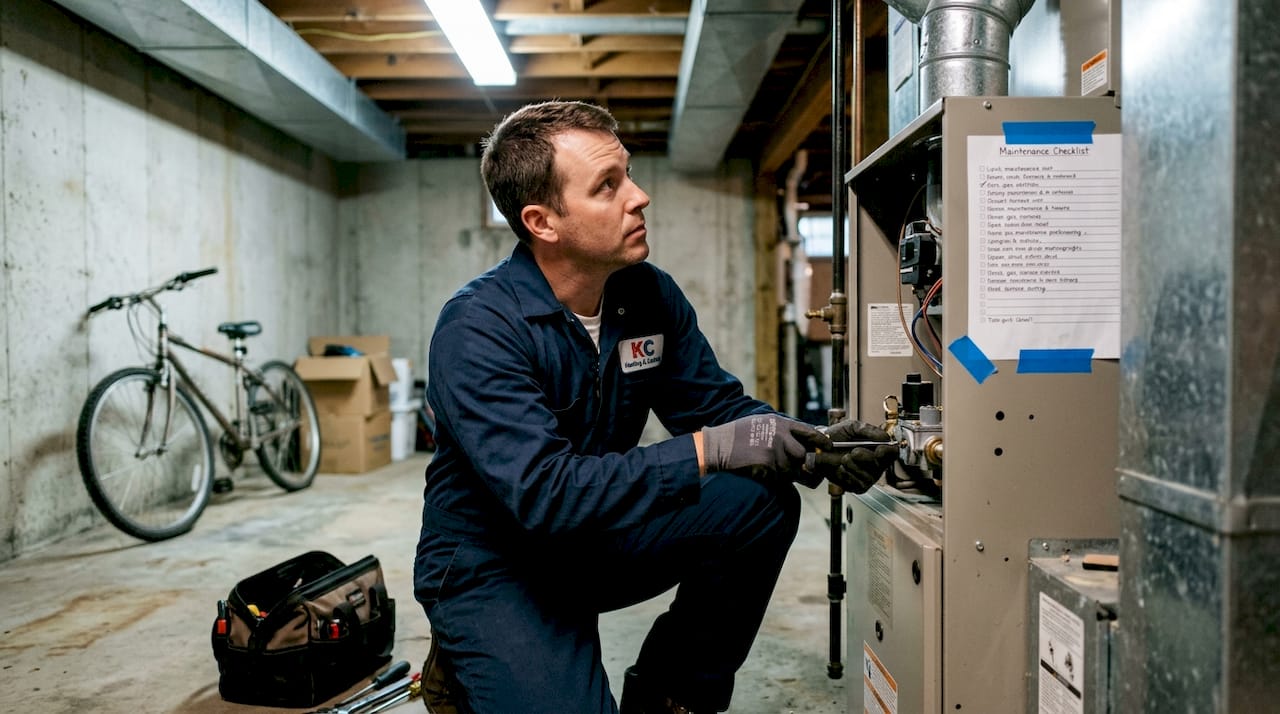
The standard recommendation: Twice a year
Schedule your air conditioning AC tune-up service in the spring before the heat kicks in, and your furnace tune-up in the fall before temperatures drop. That rhythm keeps both systems running efficiently when you need them most.
What a professional tune-up includes:
- Cleaning evaporator and condenser coils
- Checking and adjusting refrigerant levels
- Inspecting electrical connections and controls
- Measuring airflow through supply and return vents
- Replacing or inspecting filters
- Lubricating moving parts
- Testing thermostat calibration
Stat to know: Routine HVAC maintenance improves energy efficiency by 5-40%, depending on the system’s condition before service.
That range is wide because a poorly maintained system has more room to improve. If you’ve skipped maintenance for a few years, the savings after your first tune-up can be significant.
DIY vs. professional service
There are tasks you can handle yourself: replacing filters, clearing debris from the outdoor unit, and keeping vents unblocked. But refrigerant handling, electrical checks, and coil cleaning require licensed technicians. Attempting these without proper tools and training can damage your system or void your warranty.
Pro Tip: Set calendar reminders in March and September for your tune-up calls. Scheduling early means you beat the rush when every other homeowner suddenly realizes their system isn’t working. You can get started by scheduling local HVAC inspections online.
What are the signs I need HVAC repair or an upgrade?
Your HVAC system usually gives plenty of warning before it fails completely. The problem is most homeowners don’t recognize the early signals until they’re facing an emergency repair on the hottest or coldest day of the year.
Warning signs that need attention now:
- Unusual noises: banging, rattling, squealing, or grinding sounds
- Weak or uneven airflow from vents
- Uneven temperatures from room to room
- Sudden spike in your monthly energy bill
- System cycling on and off more than usual
- Musty or burning smells when the system runs
- Ice forming on refrigerant lines or coils
If you’re noticing any of these, check our page on signs you need HVAC repair for next steps.
Repair vs. upgrade: A practical comparison
| Symptom | Likely action | Urgency |
|---|---|---|
| Strange noise, system still runs | Repair (component issue) | Schedule soon |
| No cooling or heating at all | Repair or emergency call | Immediate |
| System over 10 years old, repeated repairs | Consider upgrade | Plan ahead |
| Energy bills rising steadily | Upgrade (efficiency loss) | Within season |
| Uneven temps in multiple rooms | Repair or duct work | Schedule soon |
“Poor maintenance can stress older systems, and frequent repairs on aging equipment are a clear signal that replacement will cost less over the long term than continued fixes.”
A useful rule of thumb: if the repair cost is more than 50% of the value of a new system and your unit is over 10 years old, replacement typically makes more financial sense. You can also use our guide on identifying HVAC issues to narrow down what’s happening before you call.
How do I choose the right HVAC system for my home’s needs?
Choosing a new HVAC system is one of the biggest home investments you’ll make. Getting it wrong means years of discomfort, high bills, or premature equipment failure. Getting it right means reliable comfort for 15-20 years.
Step-by-step: How to evaluate your options
- Size your system correctly: An oversized unit short-cycles (turns on and off too fast), wasting energy and wearing parts faster. An undersized unit runs constantly and never fully conditions your home. Always ask for a Manual J load calculation.
- Check efficiency ratings: For central air, look at the SEER2 rating (Seasonal Energy Efficiency Ratio). Higher SEER2 means lower operating costs. For furnaces, look at AFUE (Annual Fuel Utilization Efficiency). A 96% AFUE furnace wastes only 4 cents of every dollar spent on fuel.
- Factor in humidity control: Newer ERV-equipped systems prevent mold and optimize energy use in Kansas City’s climate, where humidity swings are extreme.
- Assess your home’s envelope: Older homes with poor insulation may need duct repairs or sealing before a new system can perform efficiently.
- Compare total cost of ownership: Don’t just compare purchase prices. Factor in energy savings, expected lifespan, and warranty coverage.
System cost comparison
| System type | Estimated installed cost | SEER2/AFUE range | Best for |
|---|---|---|---|
| Entry-level AC and furnace | $4,000-$6,500 | 14-16 SEER2 / 80% AFUE | Budget-focused replacement |
| High-efficiency system | $7,000-$11,000 | 18-20 SEER2 / 96% AFUE | Long-term savings |
| System with ERV added | $9,000-$14,000 | 18+ SEER2 / 96% AFUE | IAQ and energy focus |
Pro Tip: Ask your contractor about available rebates before you sign anything. Many high-efficiency systems qualify for utility rebates and federal tax credits in 2026 that can reduce your out-of-pocket cost by hundreds of dollars.
For personalized guidance, visit our pages on choosing your HVAC system and energy efficient HVAC installation. You can also request HVAC estimates for Kansas City homes to get a realistic picture of costs.
Our take: What the typical HVAC checklist misses for Kansas City homes
Most of the HVAC advice you find online was written for an average American home in a generic climate. Kansas City isn’t that. Our summers are genuinely humid, our winters shift fast, and a large portion of local homes were built before modern HVAC standards existed. That combination creates challenges that a standard checklist doesn’t cover.
We see homeowners follow all the right generic advice and still end up with mold problems because nobody told them their older home needed a dehumidification strategy, not just a better filter. We see new high-efficiency systems underperform because the ducts in a 1960s house weren’t designed for modern airflow requirements.
The real question isn’t just “what system should I buy?” It’s “what does my specific home, with its specific air problems and its specific age, actually need?” That answer requires a local expert who understands what Kansas City homes deal with season to season. Reviewing the full Kansas City HVAC maintenance details is a strong starting point, but nothing replaces a site-specific assessment.
Get expert help with your HVAC questions and solutions
You now have clear, reliable answers to the questions Kansas City homeowners ask us most. Whether you need an urgent fix, a seasonal tune-up, or a full system upgrade, the next step is connecting with a local expert who knows your climate and your home’s real needs.

At KC Air Control, we back over 70 years of experience with honest assessments and no-pressure recommendations. If your system needs immediate attention, explore your emergency HVAC repair options. Ready to breathe easier? Check out our indoor air quality upgrades or get your heating dialed in with our furnace repair service. Schedule online today and let’s get your home comfortable year-round.
Frequently asked questions
Can I use a MERV 13 filter in any HVAC system?
Most newer systems support MERV 13 filters, but older units risk restricted airflow by 10-15%. Check your owner’s manual or ask a technician before making the switch.
How does routine HVAC maintenance save energy?
Routine maintenance improves efficiency by 5-40% according to the EPA, depending on how much the system has degraded between service visits.
When should I replace my HVAC system instead of repairing it?
If your system is over 10 years old and repair costs are climbing with each season, replacement typically delivers better long-term value than repeated fixes.
What’s the best way to control humidity in my Kansas City home?
Adding an ERV to your system balances indoor humidity year-round and helps prevent the mold growth that Kansas City’s humid summers can trigger.
Recommended
- Common HVAC problems and solutions for Kansas City homes – KC Air Control – Heating & Cooling
- How to choose the right HVAC system for your KC home – KC Air Control – Heating & Cooling
- How to identify HVAC issues: Kansas City homeowner’s guide – KC Air Control – Heating & Cooling
- How to schedule HVAC inspections for Kansas City homes – KC Air Control – Heating & Cooling