
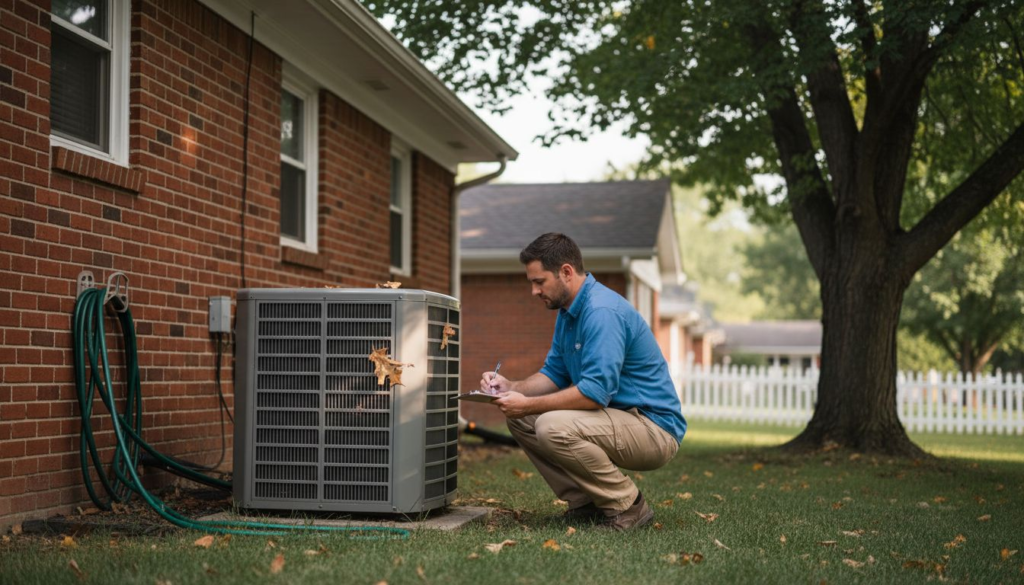
Kansas City summers bring heat and humidity that put extra strain on older AC systems, often leaving homeowners uncertain about the best ways to protect their comfort. Sorting out which maintenance steps truly matter—and separating fact from fiction—can make your air conditioner last longer and cost less to run. This guide unpacks the basics of AC upkeep and common myths so you can keep your system efficient without overspending.
AC Maintenance Guide: Overview of Essential Topics
- AC Maintenance Basics And Common Myths
- Types Of AC Maintenance For Homeowners
- Core Tasks In Professional AC Tune-Up
- Risks, Costs, And Homeowner Responsibilities
- Avoiding Common AC Maintenance Mistakes
Key Takeaways
| Point | Details |
|---|---|
| Regular Maintenance is Essential | Schedule seasonal tune-ups and replace filters every 1-3 months to ensure peak AC performance and longevity. |
| Myth Busting Saves Money | Many common myths about AC usage lead to inefficiencies; understanding the facts can prevent unnecessary costs. |
| Homeowner Responsibilities Matter | Stay proactive by scheduling maintenance, monitoring system performance, and addressing issues promptly to avoid costly repairs. |
| Professional Help is Key | Engage qualified technicians for tune-ups and repairs to maintain system safety and efficiency, rather than opting for cheap, unqualified services. |
AC maintenance basics and common myths
Your air conditioner works hard to keep your Kansas City home comfortable, especially during humid summers. Understanding what actually keeps it running efficiently—and what myths waste your time and money—makes a real difference in performance and longevity.
What Basic AC Maintenance Really Involves
True AC maintenance goes beyond what you can do yourself at home. While clearing debris around outdoor units and changing filters monthly help, they don’t replace professional seasonal servicing.
Here’s what needs to happen:
- Filter replacement: Change or clean filters every 1-3 months during cooling season
- Outdoor unit cleaning: Remove leaves, twigs, and dirt blocking airflow
- Professional inspection: Have a technician check refrigerant levels, clean coils, and inspect ductwork
- Thermostat testing: Verify your system responds correctly to temperature changes
- Electrical connections: Ensure all components have secure, corrosion-free contacts
Professionals catch issues homeowners miss. They spot refrigerant leaks, worn capacitors, and airflow problems that slowly drain your system’s efficiency.
Your AC’s cooling power depends on proper airflow, temperature control, and ventilation working together—not just one part running fine.
Common AC Myths That Cost You Money
Myth #1: “Bigger AC units cool faster”
Not true. An oversized unit cycles on and off quickly, wasting energy and leaving humidity in your home. Your system should match your house’s actual cooling needs, which a professional calculates through a load evaluation.
Myth #2: “I don’t need maintenance if my AC seems fine”
This one hurts wallets. Systems run while slowly losing efficiency. You won’t notice the decline until it breaks down completely—usually during the hottest week of August. Regular seasonal HVAC maintenance prevents emergency repairs.
Myth #3: “Setting the thermostat lower cools the house faster”
Your AC runs at the same speed regardless of the temperature setting. Cranking it to 62 degrees doesn’t speed up cooling—it just makes your system run longer, consuming more energy without any speed benefit.
Myth #4: “Closing vents in unused rooms saves energy”
Actually, closed vents create pressure imbalances that stress your system and reduce efficiency. Your AC is designed with all vents open. Closing them forces air elsewhere and wastes cooling power.
Myth #5: “I can skip maintenance if I have a newer system”
New systems still need annual tune-ups. Proper maintenance extends the typical 15-20 year lifespan and keeps warranty coverage active. Neglect voids many manufacturer warranties.
Why Kansas City Homeowners Should Care
Our summer heat and humidity demand a well-maintained AC system. When your unit isn’t properly serviced, it struggles harder in July and August heat, using more energy and wearing out faster. A single missed tune-up could cost you $1,000-3,000 in early replacement.

Pro tip: Schedule your AC maintenance in spring before cooling season starts, giving technicians time to address problems before the heat arrives and their schedule fills up.
Types of AC maintenance for homeowners
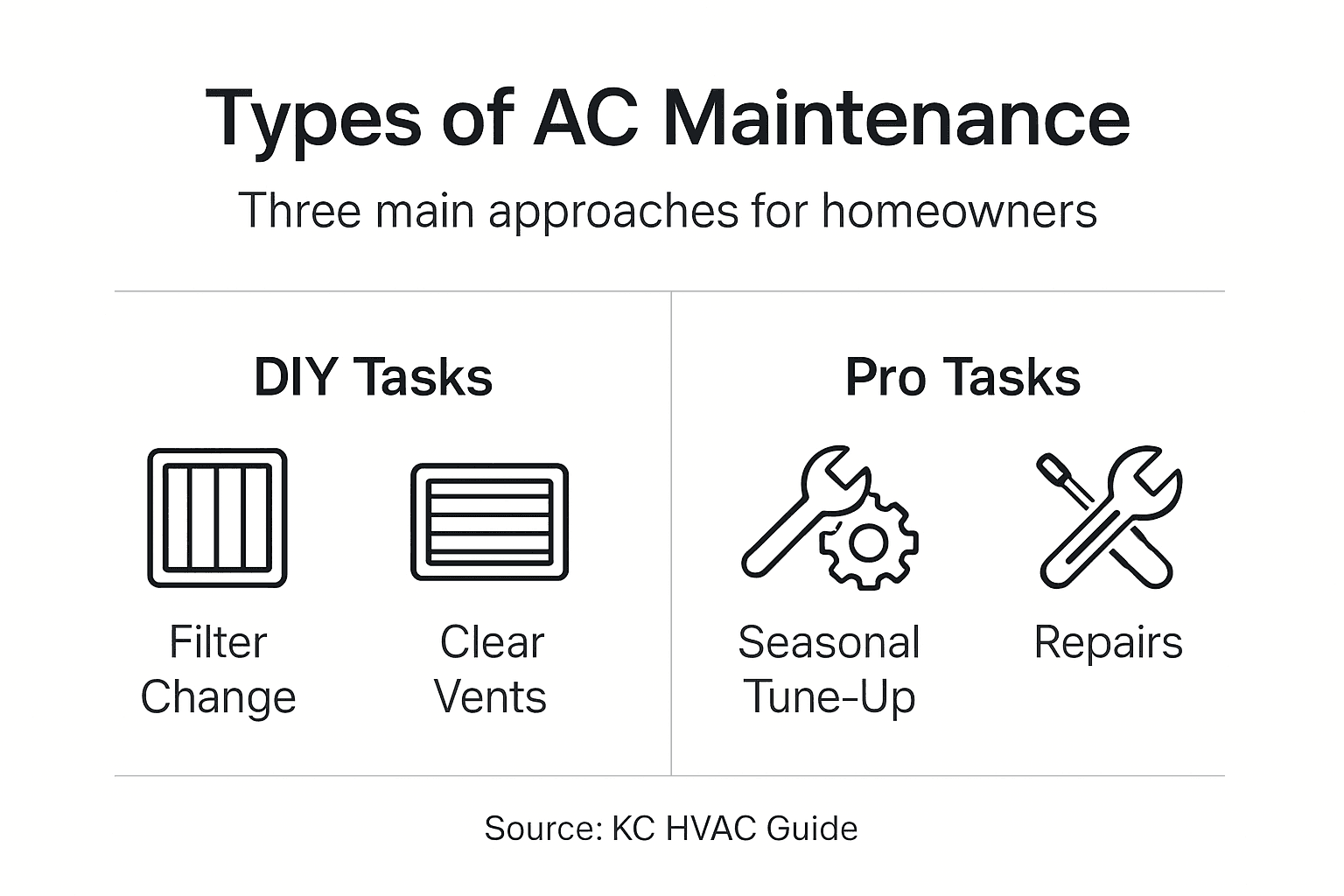
AC maintenance comes in three distinct categories, and understanding each one helps you know what you can handle yourself and when you need a professional. Think of it like car maintenance—some tasks are DIY, others require a technician.
Preventive Maintenance You Can Do
This is the routine upkeep that keeps your system running smoothly between professional visits. You’re not fixing problems; you’re preventing them from starting.
- Filter replacement: Change or clean filters every 1-3 months during cooling season
- Outdoor unit clearing: Remove leaves, debris, and twigs blocking the condenser
- Drain line maintenance: Keep condensation lines flowing freely to prevent water backup
- Thermostat checks: Test that temperature readings feel accurate
- Visual inspections: Look for obvious signs of damage or leaks
These tasks take 15-30 minutes monthly and cost almost nothing. They’re the foundation of keeping your system efficient.
Changing your filter regularly is one of the easiest ways to maintain cooling performance and indoor air quality.
Professional Seasonal Tune-Ups
This is where the real maintenance happens. A technician performs routine seasonal tune-ups that your system needs to stay healthy.
Spring tune-ups typically include:
- Refrigerant level inspection and adjustment
- Electrical connection tightening and corrosion removal
- Compressor and motor lubrication
- Coil cleaning for better heat transfer
- Airflow testing and duct inspection
- Thermostat calibration
Fall tune-ups prepare your heating system, but spring visits focus on AC readiness. A good technician catches worn capacitors, frayed wires, and refrigerant leaks before they become expensive failures.
Corrective Maintenance: Professional Repairs
When something breaks or stops working properly, corrective maintenance fixes the problem. This isn’t preventive—it’s reactive repair work.
Common corrective repairs include:
- Refrigerant leak repairs
- Compressor replacement
- Capacitor or contactor replacement
- Electrical connection repairs
- Coil or fan replacement
These repairs range from $300 to $3,000+ depending on the part. Regular preventive maintenance dramatically reduces the odds you’ll need corrective work. Many homeowners think they’re saving money by skipping tune-ups, then face a $2,000 compressor replacement in August.
Which Type Should You Prioritize
Start with preventive maintenance you can do monthly—it’s free and takes minutes. Schedule professional tune-ups in spring and fall. Avoid corrective repairs by catching problems early through regular servicing.
Here’s a quick comparison of AC maintenance types and their impact on system performance:
| Maintenance Type | Who Performs It | Frequency | Impact on AC Lifespan |
|---|---|---|---|
| Preventive (DIY) | Homeowner | Monthly | Prevents common efficiency loss |
| Professional Tune-Up | Technician | Twice yearly | Extends system lifespan |
| Corrective Repairs | Technician | As needed | Restores function, but costly |
Pro tip: Call for your spring tune-up in April or early May before the cooling season peaks, ensuring any issues are fixed before demand makes scheduling difficult.
Core tasks in professional AC tune-up
When a technician arrives for your spring tune-up, they’re not just checking things casually. They follow a detailed protocol that covers every component of your system, catching problems before they become expensive failures.
System Inspection and Cleaning
The first step is a complete visual inspection of your entire AC system. A technician examines the outdoor unit, indoor components, ductwork, and electrical connections for visible damage or wear.
Inspection includes:
- Condenser coils: Check for bent fins, corrosion, or debris buildup
- Evaporator coils: Look for frost, blockages, or mold growth
- Fan blades: Inspect for cracks, warping, or debris damage
- Ductwork: Check for holes, leaks, or disconnected sections
- Refrigerant lines: Look for oil stains indicating leaks
After inspection, they clean coils thoroughly to restore heat transfer efficiency. Dirty coils force your system to work harder, wasting energy and wearing components faster.
Clean coils are one of the fastest ways to restore cooling efficiency without replacing parts.
Electrical and Safety Checks
Electrical connections are where many AC failures start. Thorough equipment inspections include checking every connection point for corrosion, loose terminals, and faulty contacts.
Electrical work includes:
- Tightening loose wire connections
- Removing corrosion from terminals
- Testing capacitors for proper function
- Checking contactor operation
- Verifying voltage and amperage readings
- Inspecting circuit breakers
Worn capacitors cause compressor failure. Loose connections reduce efficiency and create fire hazards. A technician catches these issues during a tune-up, preventing dangerous situations and expensive repairs.
Refrigerant and Airflow Optimization
Your refrigerant level must be exact. Too low and cooling drops; too high and the compressor struggles. Technicians check pressure readings and adjust refrigerant as needed.
Airflow checks involve:
- Measuring temperature differences across the coils
- Checking fan motor operation
- Testing thermostat accuracy
- Verifying ductwork delivers air properly
- Cleaning or replacing filters
Proper airflow is essential for efficiency. Blocked vents, dirty filters, or closed dampers force your system to overwork, wasting energy and shortening component lifespan.
Documentation and Recommendations
A thorough tune-up ends with a detailed report showing what was done, measurements taken, and any issues found. Good technicians explain recommendations clearly so you understand what needs attention now versus what can wait.
Pro tip: Ask your technician to show you the before-and-after pressure readings and explain what they adjusted—this helps you understand your system’s condition.
Risks, costs, and homeowner responsibilities
Skipping AC maintenance feels like saving money until your system fails on the hottest day of the year. Understanding the real costs and risks helps you make smart decisions about upkeep.
The Cost of Neglecting Maintenance
Regular maintenance costs $150-300 per year. Emergency repairs cost thousands. Many Kansas City homeowners choose to skip tune-ups, then face $2,000-5,000 repairs when their compressor fails or refrigerant leaks spread.
Here’s what neglect leads to:
- Compressor failure: $1,500-3,500 replacement cost
- Refrigerant leaks: $300-1,500 to locate and repair
- Capacitor or contactor failure: $300-800 per part
- Fan motor failure: $400-1,200 replacement
- Coil damage: $1,000-2,500 depending on location
One missed tune-up sounds minor. Skip five years of maintenance and your aging AC will fail. A replacement system costs $5,000-8,000 installed.
This table summarizes AC component failures, average repair costs, and related risks:
| Component Failure | Typical Repair Cost | Risk If Ignored |
|---|---|---|
| Compressor Failure | $1,500–$3,500 | System breakdown, heat risk |
| Refrigerant Leak | $300–$1,500 | Lower cooling, compressor damage |
| Capacitor Failure | $300–$800 | Motor damage, fire hazard |
| Fan Motor Failure | $400–$1,200 | Reduced airflow, discomfort |
| Coil Damage | $1,000–$2,500 | Energy waste, early failure |
One professional tune-up costs less than a single emergency repair call.
Safety and Comfort Risks
Broken AC creates more than comfort problems. Your home’s indoor air quality suffers. Humidity builds up, creating conditions for mold growth and dust mite proliferation.
Electrical issues pose safety hazards:
- Loose connections overheat and create fire risks
- Faulty capacitors can explode
- Refrigerant leaks expose your family to chemical hazards
- System failures in extreme heat endanger vulnerable household members
Regular preventative home maintenance protects both your investment and your family’s wellbeing. A well-maintained system runs safely and quietly, keeping your home comfortable year-round.
Your Responsibility as a Homeowner
You’re responsible for scheduling maintenance and responding to needed repairs. This doesn’t mean you fix things yourself—it means calling professionals when needed and planning financially for upkeep.
Your responsibilities include:
- Scheduling spring and fall tune-ups annually
- Changing or cleaning filters monthly
- Clearing debris around the outdoor unit
- Monitoring for unusual sounds, odors, or performance drops
- Addressing repairs promptly when issues appear
- Keeping warranty documentation and service records
Many homeowners wait until something breaks before calling for help. By then, the damage is worse and costs more. Regular monitoring catches problems early when they’re cheaper to fix.
Financial Planning for AC Maintenance
Set aside $200-400 annually for routine maintenance and minor repairs. This covers two tune-ups and small fixes. Budget separately for potential component replacement, which runs $500-3,000 depending on what fails.
When your AC approaches 15-20 years old, save aggressively for eventual replacement. A new system typically lasts 15-20 years, so planning ahead prevents emergency financing at premium rates.
Pro tip: Create a dedicated home maintenance fund and deposit money monthly—this reduces financial stress when repairs happen and ensures you can afford preventative tune-ups.
Avoiding common AC maintenance mistakes
Small maintenance mistakes compound over time, turning minor issues into system failures. Knowing what not to do saves money, extends equipment life, and keeps your home comfortable.
Neglecting Filter Changes
This is the most common mistake homeowners make. A dirty filter restricts airflow, forcing your system to work harder and consume more energy.
Filter neglect causes:
- Reduced cooling capacity
- Higher energy bills
- Compressor strain and early failure
- Poor indoor air quality
- Ice buildup on coils
Change or clean filters every 1-3 months during cooling season. Set a phone reminder on the first of each month. A $15-25 filter costs far less than a $3,500 compressor replacement.
A clogged filter is the fastest way to waste energy and shorten your AC’s lifespan.
Ignoring Refrigerant Issues
Refrigerant leaks are serious. Your system won’t cool properly, and continuing to run it dry damages the compressor permanently.
If your AC shows these signs, call immediately:
- Weak cooling despite thermostat set correctly
- Hissing or bubbling sounds
- Ice on refrigerant lines or coils
- Outdoor unit not running
Common air conditioner problems include refrigerant leaks that homeowners ignore. Don’t top off refrigerant yourself—a qualified technician must locate and repair the leak. Otherwise, you’re throwing money at a problem that keeps getting worse.
Blocking Airflow
Closed doors, blocked vents, and covered returns starve your system of air. This creates pressure imbalances that strain components and reduce cooling efficiency.
Airflow mistakes include:
- Closing vents in unused rooms
- Blocking return air grilles with furniture or curtains
- Closing interior doors during cooling season
- Placing the outdoor unit in shade without proper spacing
- Stacking items against the outdoor condenser
Your AC is designed with airflow in mind. Work with it, not against it. Open all vents and return grilles. Keep the outdoor unit clear of debris and properly spaced from walls and fences.
Hiring Unqualified Technicians
Cheap repairs often become expensive failures. A low-bidding technician might install components incorrectly, miss problems, or use improper refrigerant types.
When hiring for repairs or new installation:
- Verify they’re licensed and insured
- Check customer reviews and references
- Confirm they use proper diagnostic tools
- Get written estimates before work starts
- Ask about warranty coverage on parts and labor
Quality technicians cost more upfront but save thousands in failed repairs and early system replacement.
Delaying Repairs
A small refrigerant leak becomes a major compressor failure if ignored. A worn capacitor causes motor damage. Loose electrical connections create fire hazards.
Address problems immediately. Minor repairs cost $300-800. Major repairs cost $2,000-5,000. System replacement costs $5,000-8,000.
Pro tip: Keep detailed service records and photos of any issues you notice—this helps technicians diagnose problems faster and prevents miscommunication about what’s wrong.
Protect Your Home Comfort with Expert AC Maintenance from KC Air Control
Keeping your air conditioner in top shape is critical to avoiding costly repairs and premature system failure. This article highlights how neglecting regular maintenance leads to energy waste, reduced cooling, and unexpected breakdowns during Kansas City’s hottest days. If you want to prevent these common issues such as refrigerant leaks, clogged filters, and inefficient airflow it is essential to take action now. Professional seasonal tune-ups and preventive care are not just recommendations but smart investments in your home’s comfort and safety.
Don’t wait for an emergency repair to disrupt your summer. Discover the full benefits of regular AC service by exploring our Importance Of Maintenance – Air Control resources and trust the experts at KC Air Control for reliable, high-quality HVAC solutions. Schedule your spring tune-up today and secure peace of mind knowing your system is running efficiently and safely. Visit our website to book your appointment and learn how our experienced technicians can extend your HVAC system’s life while saving you money.
Frequently Asked Questions
What is AC maintenance?
AC maintenance involves routine tasks and professional servicing needed to keep air conditioning systems running efficiently, and it includes activities like filter replacement, outdoor unit cleaning, and seasonal tune-ups.
Why is AC maintenance important?
Regular AC maintenance is important because it prevents breakdowns, extends the lifespan of the system, and improves energy efficiency, which can save homeowners money on energy bills and repairs.
How often should I schedule professional AC tune-ups?
Professional AC tune-ups should be scheduled at least twice a year, ideally in the spring and fall, to ensure the system is prepared for the demands of cooling and heating seasons.
Can I perform any AC maintenance myself?
Yes, homeowners can perform basic preventive maintenance tasks such as changing or cleaning filters, clearing debris from the outdoor unit, and checking the thermostat, but professional servicing is needed for thorough inspections and repairs.
Pingback: How to Fix Your AC: Step-by-Step Guide for Kansas City Homeowners - KC Air Control - Heating & Cooling
Pingback: Why scheduling AC inspections saves you money and stress - KC Air Control - Heating & Cooling