
TL;DR:
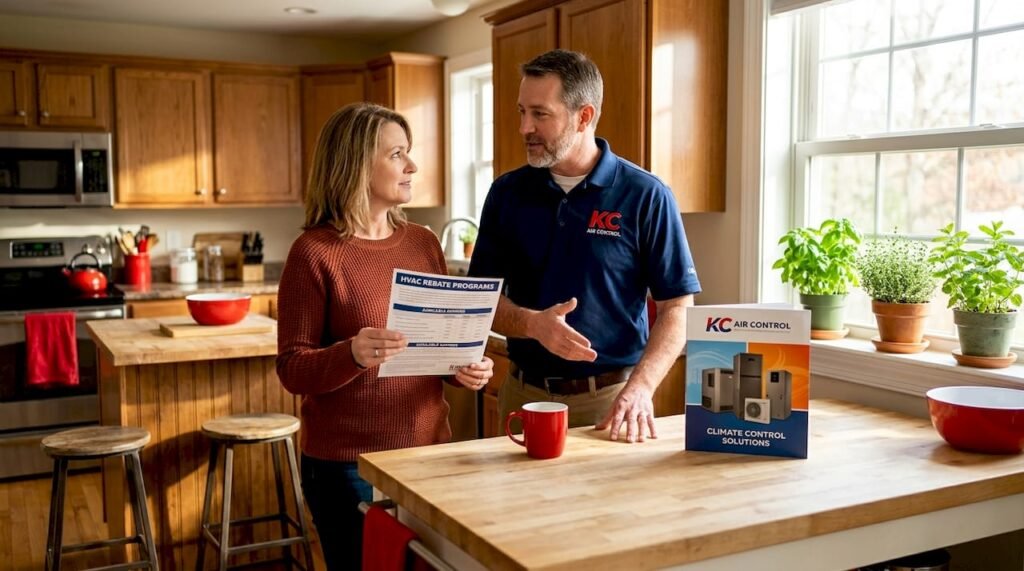
- Replacing or upgrading your HVAC system can cost between $5,000 and $12,000, with rebates significantly reducing expenses. Understanding the difference between rebates and tax credits, along with proper planning for contractor participation and application timing, ensures homeowners maximize savings. Working with knowledgeable contractors and thoroughly researching regional programs helps homeowners successfully claim available incentives and avoid costly mistakes.
Replacing or upgrading your HVAC system is one of the largest home improvement expenses you’ll face, with new systems regularly running between $5,000 and $12,000 installed. The role of rebates in HVAC upgrades is significant, yet most homeowners either overlook available programs or misunderstand how they actually work. There’s a real difference between a rebate and a tax credit, and confusing the two can lead to some unpleasant surprises when the bills come in. This article breaks down exactly how rebate programs work, what they’re worth, and how to make sure you actually collect the money you’re entitled to.
Key Takeaways
| Point | Details |
|---|---|
| Rebates differ from tax credits | Rebates return money at purchase or after installation; tax credits reduce what you owe at tax time. |
| Real dollar amounts matter | Programs like NYSERDA can provide up to $8,000 for income-qualified heat pump installs. |
| Contractor choice is critical | Using a non-participating contractor can disqualify your rebate even after a complete installation. |
| Rebates affect tax credit calculations | The IRS requires you to subtract certain rebates from eligible costs before claiming the energy tax credit. |
| Plan before you sign anything | Coordinating rebates, tax credits, and financing before contracting protects your total savings. |
The role of rebates in HVAC upgrades explained
The industry term you’ll see in official program documents is “point-of-purchase rebate” or “direct rebate,” and it’s worth understanding precisely what that means before you start calling contractors. Rebates return money to homeowners either at the point of sale as a discount or as a check or account credit after installation. They come from utility companies, state energy offices, or manufacturers. They are not claimed on your tax return.
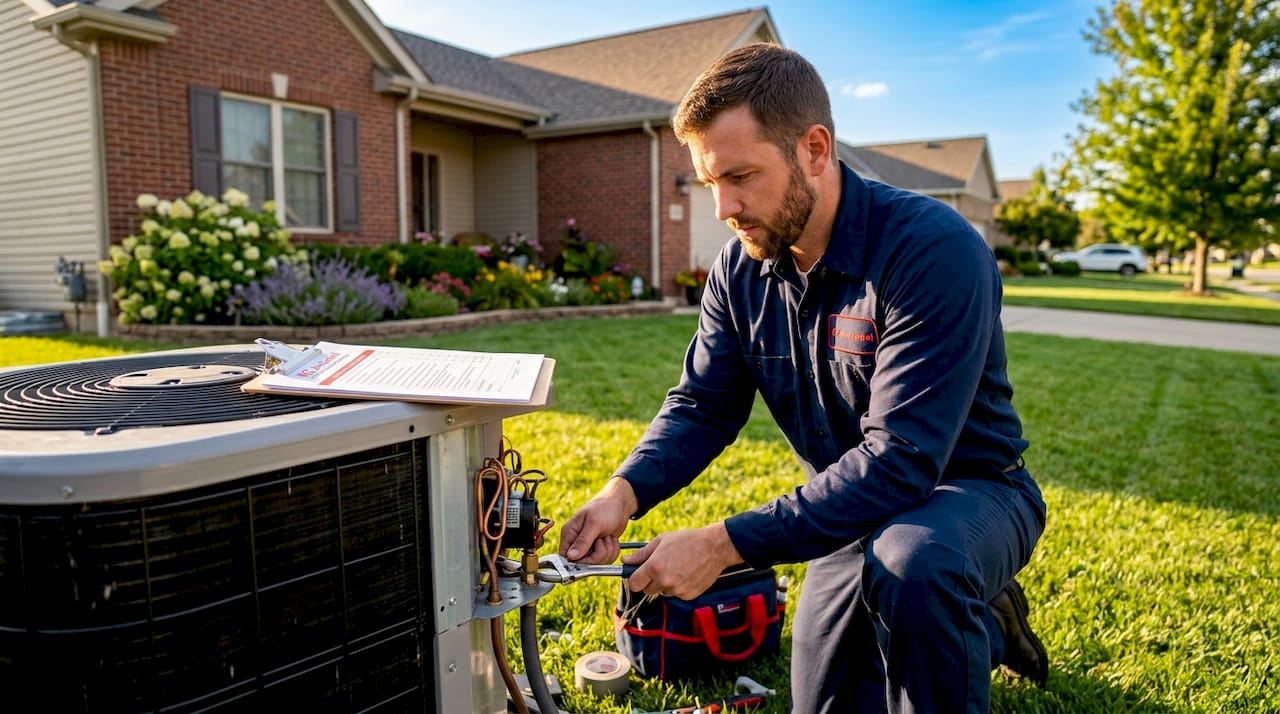
Tax credits work differently. The federal Energy Efficient Home Improvement Credit lets you claim a percentage of qualifying equipment costs when you file your federal taxes. It reduces your actual tax bill, not just your taxable income. Rebates and tax credits come from different sources, follow different rules, and often have different eligibility requirements.
Here’s where many homeowners get tripped up:
- Rebate programs are state and local. What’s available in Kansas City may not exist in Denver or Atlanta. Program details vary significantly by utility and state.
- Qualified equipment thresholds vary. Most programs specify minimum SEER2 or EER2 ratings. Installing equipment that falls just below the threshold disqualifies the rebate entirely.
- Qualified contractors are often required. Many utility rebate programs only pay out when the installation is performed by a contractor enrolled in their program.
- Application windows are firm. Missing a 90-day submission deadline can mean forfeiting hundreds or even thousands of dollars.
Pro Tip: Before you agree to any quote, ask the contractor directly whether they are enrolled in your utility’s rebate program. This single question can save you from losing a rebate after the job is already done.
How much rebates actually reduce your costs
The numbers here are worth paying attention to. When you see marketing materials that say “save thousands on your new system,” rebates are often the main driver of that claim. Understanding what’s realistic for your situation helps you plan accurately.
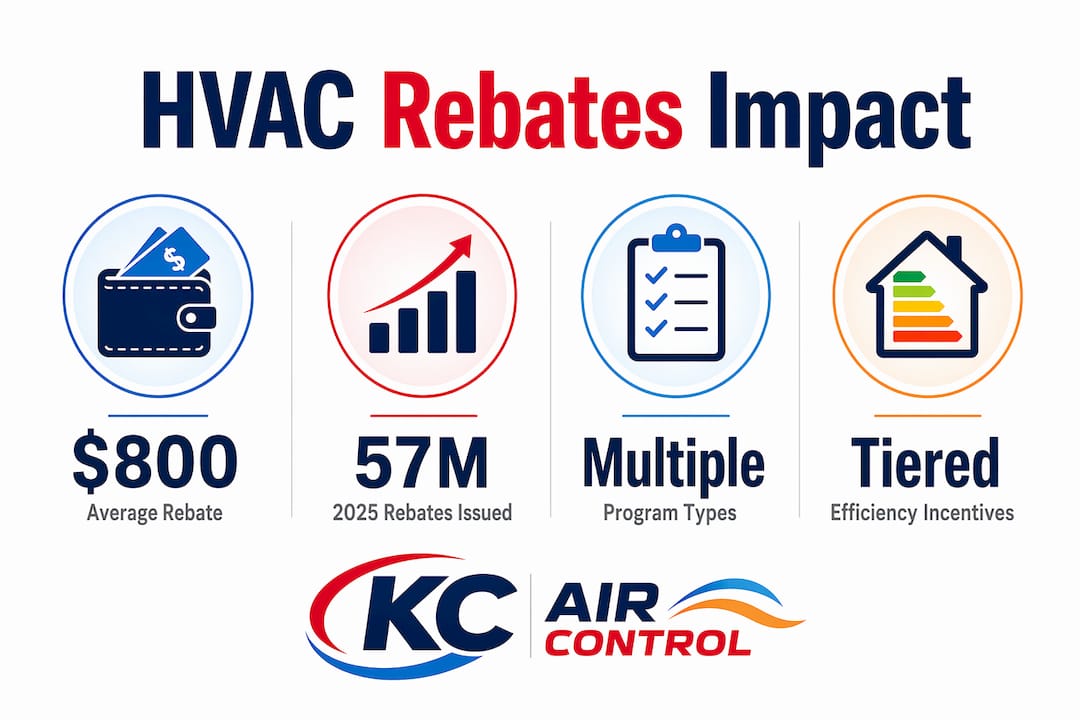
Austin Energy, one of the more well-documented utility programs, offers an average $800 rebate for energy-efficient AC or heat pump replacement when you use a participating contractor. That figure scales up or down based on SEER2 and EER2 ratings, so higher-efficiency equipment produces higher rebates.
At the state level, the numbers get larger. New York’s NYSERDA HEAR program, funded through the Inflation Reduction Act, provides heat pump rebates up to $8,000 for income-qualified households, plus additional rebates for electrical panel upgrades needed to support the new system. That’s a substantial portion of total installation cost for a family that qualifies.
Colorado offers a useful real-world case. Xcel Energy issued $57 million in rebates in 2025 alone, and when homeowners combined those utility rebates with federal tax credits, some paid less than $1,000 out of pocket for full heat pump installations. That level of cost savings on HVAC is what makes rebate programs worth the effort to understand.
| Program | Rebate Amount | Eligibility Notes |
|---|---|---|
| Austin Energy (TX) | Up to ~$800 average | Must use participating contractor; apply within 90 days |
| NYSERDA HEAR (NY) | Up to $8,000 | Income-qualified households; heat pumps only |
| Xcel Energy (CO) | Varies; part of $57M issued in 2025 | Stacks with federal tax credits for eligible systems |
| Federal IRA Tax Credit | Up to 30% of cost, max $2,000 | Filed at tax time; reduced by qualifying rebates received |
Pro Tip: Check whether your utility offers tiered rebates based on equipment efficiency. Spending a few hundred dollars more on a higher-efficiency unit can unlock a rebate that more than covers the difference.
Nuances that determine whether you collect or lose your rebate
This is where the real complexity lives, and where the benefits of HVAC upgrades can either be fully realized or quietly evaporate. There are four areas you need to understand before signing any contract.
-
The IRS rebate-and-tax-credit interaction. The IRS requires you to subtract qualifying rebates from your cost basis when calculating the Energy Efficient Home Improvement Credit. If you received a $1,500 utility rebate on a $6,000 system, your eligible cost for the credit calculation drops to $4,500. Many homeowners expect to stack a rebate on top of a full tax credit and are caught off guard when the math doesn’t work that way.
-
Contractor participation rules are non-negotiable. Programs like Austin Energy’s require contractor participation as a condition of rebate approval. If you hire a contractor who isn’t enrolled, the rebate is denied. Full stop. No exceptions for good intentions.
-
Full component replacement requirements. Austin Energy’s program, for example, requires complete system replacement, meaning the condenser, air handler or furnace, and evaporator coil all need to be replaced together. Partial upgrades don’t qualify. Previous rebate claims within 10 years on the same address can also create eligibility problems.
-
Application timing is strict. Austin Energy’s deadline is 90 days post-installation. Missing that window means losing the rebate regardless of how efficient your new system is or how qualified your contractor was.
The IRS has published specific guidance on how rebates affect tax credit calculations under IRS Announcement 2024-19 and Notice 2013-70. If you plan to claim both a rebate and a tax credit, working with a tax professional before your installation date is time well spent. Rebate stacking requires careful coordination, and doing it wrong costs real money.
Practical steps to maximize your HVAC rebate in 2026
Getting rebates approved is largely about preparation. Most denials come from timing failures or contractor issues that could have been avoided with a few phone calls before the job started. Here’s a clear path forward:
- Start at the DOE portal. The Home Energy Rebates Portal is the best starting point to identify what programs are active in your state. Program availability changes, so check the current year before assuming what a neighbor received is still offered.
- Contact your utility company directly. Call your gas or electric provider and ask specifically about rebate programs for heating and cooling equipment. Get the eligibility requirements and contractor list in writing.
- Choose your contractor before finalizing equipment. Confirm the contractor is on your utility’s approved list before discussing which system to buy. This protects your rebate eligibility from the start. A contractor experienced in HVAC upgrade incentives knows how to document the installation correctly.
- Request a Manual J load calculation. Many rebate programs require sizing verification to confirm the system is correctly sized for your home. This documentation also protects you from oversized equipment that wastes energy.
- Submit your rebate application the day of installation. Don’t wait. Set a calendar reminder for the day the job is done. Gather invoices, equipment model numbers, and contractor license information immediately.
- Understand how rebates interact with your financing. If you’re financing HVAC systems, a rebate check that arrives 6 to 8 weeks post-installation can be applied directly to your loan balance, reducing total interest paid.
Comparing rebate programs and tax credits by region
Federal programs provide a foundation, but the most significant rebate money often comes from state and local sources. Here’s a practical overview of the major options active in 2026.
The Inflation Reduction Act created two federal rebate pathways. The High-Efficiency Electric Home Rebate Act (HEEHRA) provides direct rebates at the point of sale for qualifying equipment, capped at income thresholds. The Energy Efficient Home Improvement Credit gives a 30% tax credit on qualifying HVAC equipment costs, up to $2,000 annually for heat pumps. Remember the IRS cost-basis reduction rule before you calculate your expected credit.
New York’s NYSERDA HEAR program remains one of the most generous state-level programs for income-qualified households. Colorado’s Xcel Energy program is notable for its volume and combination potential with federal credits. Kansas City homeowners in Missouri and Kansas should check both Evergy and Kansas City Power and Light rebate offerings, which are updated annually.
Pro Tip: Programs update their eligibility requirements and rebate amounts at the start of each year. A program that offered $500 last year may now offer $800, or may have paused enrollment entirely. Always verify directly with the program administrator.
The energy efficiency rebates landscape shifts regularly, so treat any information that’s more than 12 months old as a starting point for research rather than a confirmed offer.
My honest take on rebate complexity
I’ve seen a lot of homeowners go into an HVAC upgrade with great intentions around savings, only to walk away with less money than they expected. The honest reason is almost always the same: they treated rebates as an afterthought rather than a planning input.
What I’ve learned watching this process play out is that the complexity of rebate programs isn’t accidental. The programs are designed with specific outcomes in mind, and they reward homeowners who do the work upfront. The paperwork feels like a barrier, but it’s really a filter for committed participants.
The mistake I see most often is homeowners selecting a contractor based on price alone, then discovering that contractor isn’t enrolled in the utility program. At that point, the rebate is gone and the installation is already complete. That’s an expensive and entirely preventable outcome.
My practical advice: treat the rebate as a budget line item from day one. Know what you’re entitled to, confirm your contractor qualifies, and submit paperwork immediately after installation. The programs are genuinely worth pursuing. They exist because utilities and governments want efficient equipment installed, and they’re willing to pay you to do it. Don’t leave that money unclaimed because the process seemed complicated.
— AB
Ready to upgrade? KC Air Control makes it straightforward
Navigating rebate programs while managing an HVAC upgrade is easier when you work with a contractor who already knows the requirements. KC Air Control has served Kansas City homeowners for over 70 years, and our team understands participating contractor requirements, proper equipment sizing through Manual J calculations, and timely rebate documentation. We help you identify applicable energy efficiency rebates before your installation begins, so nothing falls through the cracks after the job is done. Whether you need a full system replacement or targeted upgrades, we handle the details so you can focus on your savings. If your current system fails unexpectedly, our emergency HVAC repair team is available to respond quickly and help you evaluate your upgrade and rebate options at the same time. Contact KC Air Control today to schedule your consultation.
FAQ
What is the difference between an HVAC rebate and a tax credit?
A rebate returns money to you directly from a utility or government program, either at purchase or shortly after installation. A tax credit reduces your federal tax liability when you file your annual return.
Can I claim both a rebate and a federal tax credit for the same HVAC upgrade?
Yes, but the IRS requires subtracting the rebate amount from your eligible cost before calculating the tax credit, which reduces the credit value.
How do I find out what HVAC rebates are available in my area?
Start with the DOE’s Home Energy Rebates Portal and then contact your local utility company directly for current program details and contractor lists.
Does the contractor I hire affect my rebate eligibility?
Yes. Most utility rebate programs require you to use a participating or approved contractor. Hiring one outside the program typically results in automatic rebate denial regardless of equipment quality.
How soon after installation do I need to submit a rebate application?
Deadlines vary by program, but many require submission within 90 days of installation. Submit your application and documentation as soon as the installation is complete to avoid losing eligibility.