
TL;DR:
- Proper thermostat management, regular HVAC maintenance, and sealing drafts are essential for efficient winter heating. These simple actions reduce energy bills and improve safety without sacrificing comfort. Prioritizing draft sealing and system upkeep builds a safer, more cost-effective home heating strategy.
Winter home heating tips are practical strategies homeowners use to keep their homes warm efficiently, lower energy bills, and keep heating systems operating safely throughout the cold season. The U.S. Department of Energy confirms that simple thermostat adjustments alone can cut annual heating costs by up to 10%. Combine that with regular HVAC maintenance, draft sealing, and smart usage habits, and most Kansas City homeowners can see meaningful savings without sacrificing comfort. This guide covers every major area: thermostat settings, furnace maintenance, insulation, safety, and supplemental heating methods, all backed by 2026 guidance from the DOE and verified expert sources.
How can you optimize your thermostat settings for winter heating?
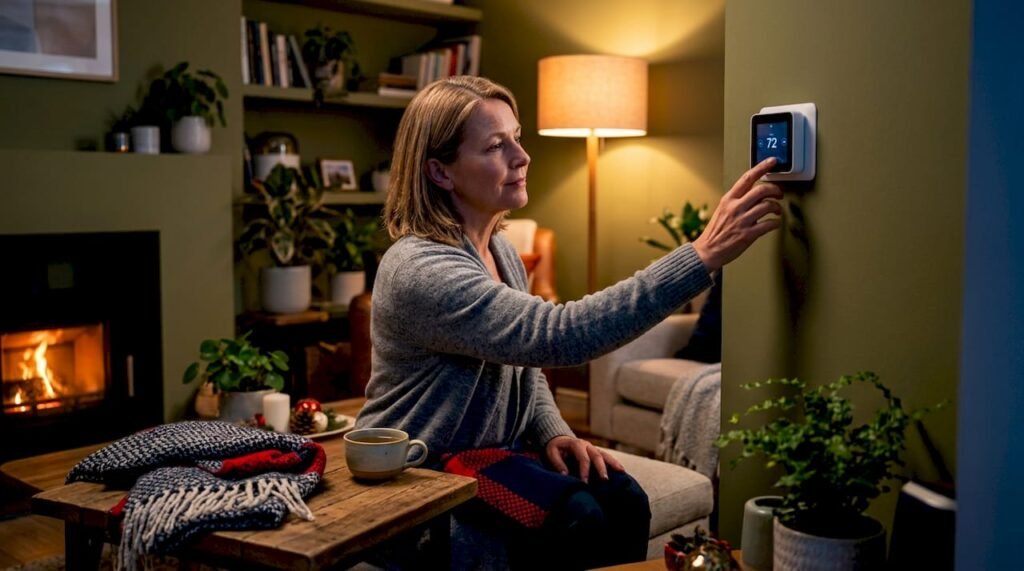
Thermostat management is the single most cost-effective action you can take before winter arrives. The DOE recommends setting your thermostat as low as comfortably possible when you are home and awake, then turning it back during sleep or when the house is empty to save up to 10% annually on heating bills. That number is significant. It means a household spending $1,500 per year on heating could save $150 without touching insulation or equipment.
Smart thermostats like the Google Nest, Ecobee, and Honeywell Home T6 Pro make this automatic. You program a schedule once, and the system handles the rest. Programmable models without Wi-Fi connectivity work just as well if you follow a consistent daily routine.
Key thermostat practices to follow this winter:
- Set the thermostat to 68°F when home and awake for a balance of comfort and efficiency
- Drop to 60°F to 65°F during sleep or when the house is unoccupied for at least eight hours
- Avoid large temperature swings. Raising the heat from 55°F to 72°F rapidly does not heat the home faster and wastes energy
- Keep temperatures above 64°F in homes with elderly residents, infants, or pets, as lower temperatures carry health risks
- A BBC report citing energy advisor George Pearson found that lowering heat by one degree can save up to £73 annually, reinforcing that small adjustments compound over a full season
Pro Tip: If you have a heat pump, avoid large setbacks. Heat pumps recover slowly from big temperature drops and may trigger expensive electric resistance backup heat, which cancels out your savings.
For a deeper look at maximizing your system’s output, the home heating savings guide from Kcaircontrol covers additional strategies specific to Kansas City homes.
What maintenance keeps your heating system running efficiently?
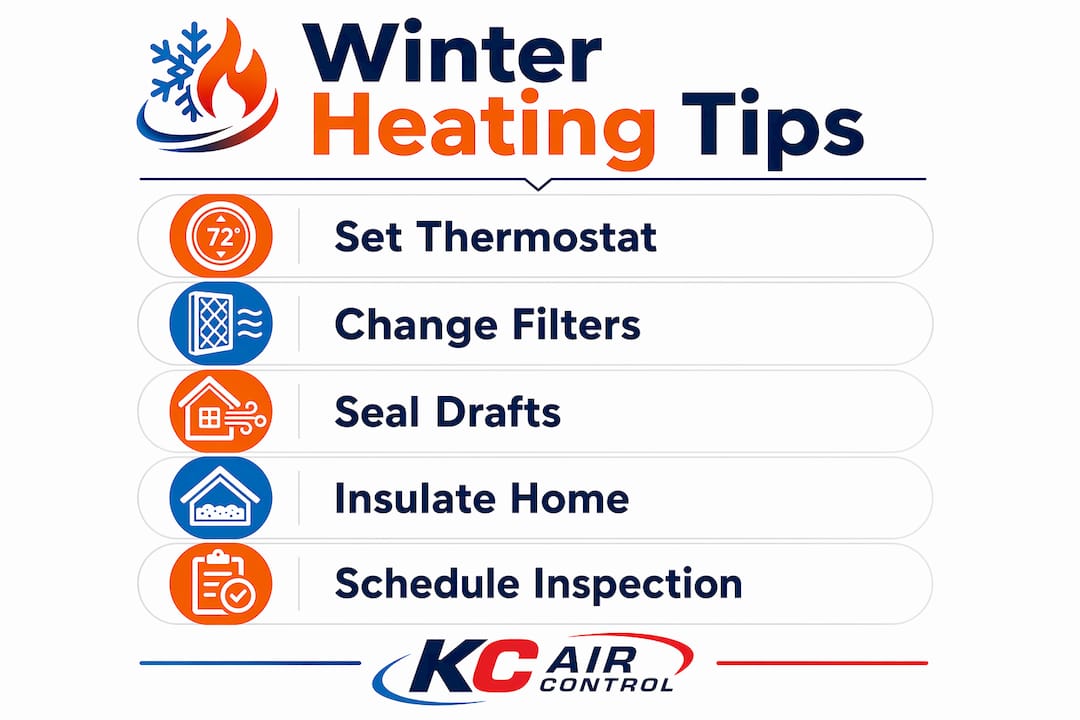
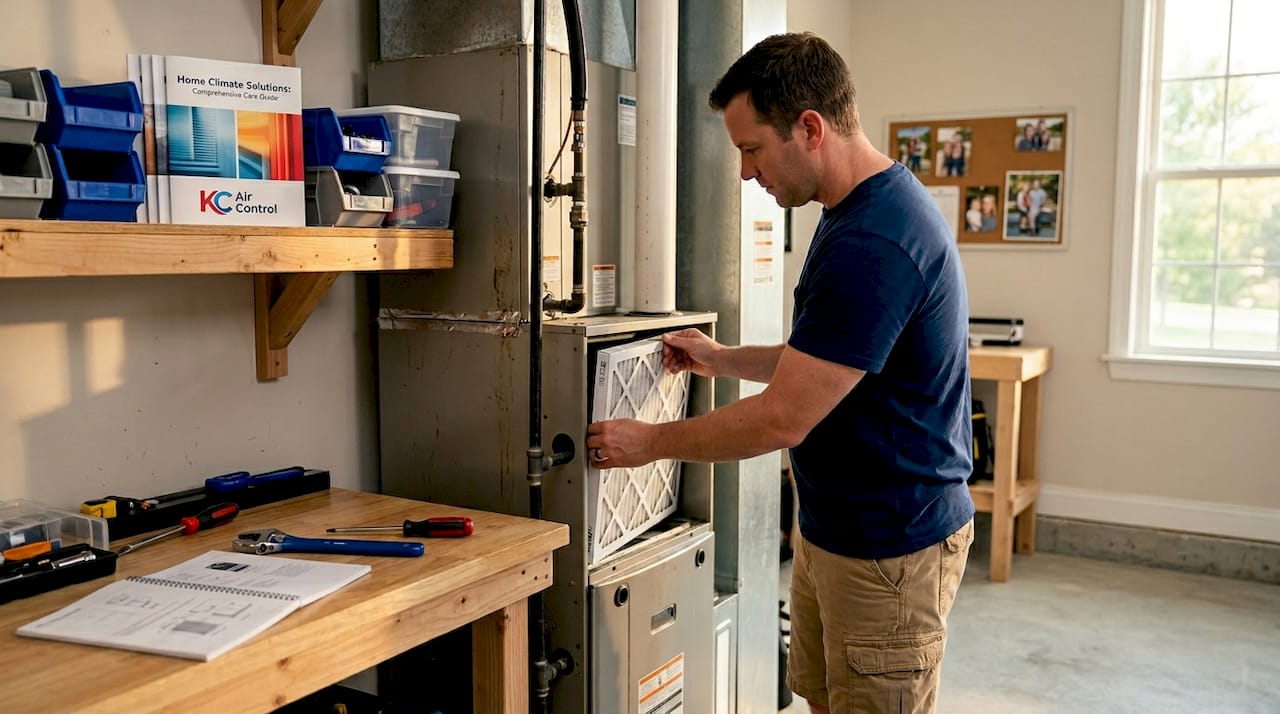
Neglecting routine maintenance is the fastest way to turn an efficient furnace into an expensive one. The DOE’s 2026 guidance states that homeowners should replace furnace and heat pump filters monthly or as needed and schedule professional service annually. A clogged filter forces your system to work harder, raises energy consumption, and shortens equipment life.
Follow this maintenance sequence before and during winter:
- Check and replace the air filter before the heating season starts. Use a MERV 8 to MERV 11 rated filter for most residential furnaces. Higher ratings restrict airflow if your system is not designed for them.
- Schedule a professional furnace tune-up in September or October, before peak demand. A licensed HVAC technician will inspect the heat exchanger, burners, blower motor, and electrical connections.
- Clean flue vents and the interior of wood or pellet heaters before first use each season. The DOE specifically recommends cleaning flue vents to maintain efficient combustion and prevent dangerous creosote buildup.
- Test your thermostat by running a full heating cycle and confirming the system reaches the set temperature within a reasonable time.
- Inspect ductwork for visible gaps or disconnected sections, especially in attics and crawl spaces where heat loss is highest.
Pro Tip: Set a phone reminder on the first day of each month to check your filter. A filter check takes 60 seconds and can prevent a $400 service call.
The seasonal HVAC maintenance guide from Kcaircontrol walks through each step in detail, including what to expect during a professional tune-up. For furnace-specific guidance tailored to Kansas City winters, the winter furnace maintenance resource is worth bookmarking.
How do sealing drafts and improving home insulation reduce heat loss?
Sealing drafts is the number one low-cost efficiency step a homeowner can take, according to energy advisor George Pearson. Air leaks around windows, doors, electrical outlets, and skirting boards allow warm air to escape and cold air to enter, forcing your heating system to run longer and work harder. The fix costs very little and delivers immediate results.
Common draft sources and solutions:
- Windows: Apply plastic film insulation kits (available at hardware stores for under $20 per window) to single-pane windows. Add insulating cellular shades or heavy thermal drapes for a second layer of protection.
- Doors: Install door sweeps on exterior doors and replace worn weatherstripping. A gap under a front door as small as 1/8 inch is equivalent to a 2.4-square-inch hole in your wall.
- Outlets and switch plates: Add foam gaskets behind outlet covers on exterior walls. Cold air infiltrates through these gaps more than most homeowners realize.
- Attic hatch: Insulate the back of the attic access panel with rigid foam board. Attic hatches are among the most overlooked heat loss points in residential homes.
- Preventing ice dams by sealing attic air leaks also protects your roof. The connection between heat loss and ice dam formation is direct: warm air escaping through the attic melts snow on the roof, which refreezes at the eaves.
Thermal zoning is another practical tool. Closing doors to unused rooms and heating only the spaces you occupy reduces wasted energy without any equipment investment. Close the guest bedroom, the formal dining room, and the basement door. Heat the spaces where your family actually spends time.
| Method | Cost | Difficulty | Impact |
|---|---|---|---|
| Weatherstripping doors | Low | Easy | High |
| Plastic window film | Low | Easy | Medium |
| Thermal drapes | Medium | Easy | Medium |
| Foam outlet gaskets | Very low | Easy | Low to medium |
| Professional air sealing | Medium to high | Professional | Very high |
Reflective panels placed behind radiators or baseboard heaters direct heat back into the room instead of letting it absorb into the wall. This simple addition can improve radiator output noticeably in older homes.
What safety measures should you implement when heating your home?
Home heating is the second leading cause of house fires in the United States, and carbon monoxide poisoning from faulty heating equipment kills hundreds of Americans each year. Safety is not optional. It is the foundation every other heating strategy rests on.
Critical safety steps for winter:
- Install CO alarms outside every sleeping area. FireEngineering guidance confirms that CO alarms must be placed outside each sleeping area and on every level of the home. Test them monthly and replace batteries annually.
- Vent all fuel-burning appliances to the exterior. The IRC 2018 requires that gas furnaces have proper venting to the outside. Improper or blocked venting is the primary cause of CO buildup in residential homes.
- Never use unvented gas heaters in bedrooms or small enclosed spaces. These units release combustion byproducts directly into the room and are prohibited in sleeping areas by most building codes.
- Turn off portable space heaters when you leave the room or go to sleep. Space heaters cause more than 1,700 house fires annually in the U.S., and the majority involve unattended units.
- Use your fireplace correctly. The DOE recommends opening the firebox damper fully and cracking a nearby window about one inch before lighting a fire, then lowering the thermostat to 50°F to 55°F to prevent the heating system from fighting the draft created by the fireplace.
“Fireplace efficiency depends not only on using it, but on controlling airflow with damper and thermostat adjustments to avoid fighting drafts.” — DOE Energy Saver guidance, 2026
Pro Tip: Schedule an annual inspection with a licensed HVAC technician to check venting integrity, heat exchanger condition, and gas connections. This single appointment addresses the most serious safety risks in one visit.
Which habits and methods maximize warmth while controlling energy use?
Beyond the furnace and thermostat, several low-cost habits make a real difference in how warm your home feels and how much energy you consume.
- Use natural sunlight. Open south-facing curtains and blinds during daylight hours to let solar heat enter. Close them at sunset to retain that warmth. This passive solar technique costs nothing and reduces heating load measurably on sunny winter days.
- Set ceiling fans to clockwise rotation on low speed. Warm air rises and collects near the ceiling. Running a ceiling fan clockwise at low speed pushes that warm air back down along the walls without creating a cooling draft.
- Set your water heater to 120°F. The DOE recommends 120°F as the target temperature for water heaters. It saves energy, prevents scalding, and slows mineral buildup inside the tank.
- Use electric blankets and throws for personal warmth. Heating yourself directly instead of heating an entire room is far more energy-efficient. An electric blanket uses roughly 100 watts. A furnace uses 3,500 to 5,000 watts.
- Run your clothes dryer in the evening. The residual heat from a dryer cycle adds warmth to the laundry area and adjacent rooms. This is a minor but real benefit on cold nights.
- Address humidity. Dry winter air feels colder than humid air at the same temperature. A whole-home humidifier connected to your HVAC system, or portable units in main living areas, lets you feel comfortable at a lower thermostat setting.
Pro Tip: Area rugs on hardwood or tile floors add a layer of insulation between your feet and the cold subfloor. They also reduce the amount of heat lost through the floor, particularly in homes built on crawl spaces.
For more energy-efficient HVAC tips specific to Kansas City homes, Kcaircontrol has published a detailed resource covering both heating and cooling seasons.
Key takeaways
Efficient winter heating requires combining thermostat discipline, regular HVAC maintenance, and draft sealing before investing in new equipment or supplemental heating methods.
| Point | Details |
|---|---|
| Thermostat setbacks save money | Turning back the thermostat during sleep or absence saves up to 10% annually on heating costs. |
| Filter changes are non-negotiable | Replace furnace filters monthly or as needed to maintain efficiency and prevent costly breakdowns. |
| Draft sealing delivers fast returns | Sealing gaps around doors, windows, and outlets is the lowest-cost, highest-impact efficiency step available. |
| CO alarms protect your family | Install carbon monoxide detectors outside every sleeping area and test them monthly without exception. |
| Zoned heating reduces waste | Close doors to unused rooms and heat only occupied spaces to cut energy use without new equipment. |
What I’ve learned from watching homeowners prepare for winter
Most homeowners I talk to focus on the furnace first. They want to know if it needs replacing, what the newest model costs, and whether a heat pump is worth it. That instinct is understandable, but it is usually the wrong starting point.
The homes that stay warmest at the lowest cost are almost never the ones with the newest equipment. They are the ones where the owner sealed the drafts three years ago, changes the filter every month without being reminded, and set a programmable schedule on a $30 thermostat. The fundamentals outperform the upgrades in most cases.
What I find genuinely underappreciated is the safety side of this conversation. Homeowners spend real time researching energy bills and almost no time checking whether their CO alarms are functional or whether their furnace flue is clear. Those two items take 10 minutes to address and carry far more consequence than any thermostat setting.
My honest advice: work through the checklist in order. Seal the drafts first. Change the filter. Get the annual inspection done. Then, if you still want to invest in a smart thermostat or a new system, you will be making that decision from a solid foundation rather than layering new equipment onto an inefficient home.
Do not sacrifice comfort to the point of misery chasing savings. Staying at 68°F when you are home is not wasteful. It is reasonable. The savings come from the setbacks, the maintenance, and the sealing, not from being cold in your own house.
— AB
Get your heating system ready for winter with Kcaircontrol

If your furnace is overdue for service, running inefficiently, or showing warning signs like uneven heating or unusual sounds, Kcaircontrol is ready to help. With over 70 years of experience serving Kansas City homeowners, the team provides fast, reliable furnace repair services and seasonal maintenance to keep your system performing at its best all winter long. For urgent situations, Kcaircontrol also offers emergency HVAC repair options so you are never left without heat when temperatures drop. Schedule your inspection today and head into winter with confidence.
FAQ
How much can I save by adjusting my thermostat in winter?
The DOE confirms that turning back your thermostat during sleep or when away from home saves up to 10% annually on heating bills. Using a programmable or smart thermostat makes this automatic and consistent.
How often should I replace my furnace filter?
Replace your furnace or heat pump filter monthly or as needed, depending on usage and filter type. A clogged filter reduces system efficiency and increases operating costs over the heating season.
Where should carbon monoxide alarms be placed in a home?
CO alarms must be installed outside each sleeping area and on every level of the home. Test them monthly and replace batteries at least once per year to maintain reliable protection.
What is the safest way to use a fireplace in winter?
Open the firebox damper fully and crack a nearby window about one inch before lighting a fire. Lower your thermostat to between 50°F and 55°F while the fireplace is in use to prevent heat loss from competing drafts.
What temperature should I set my water heater to in winter?
The DOE recommends setting your water heater to 120°F. This temperature saves energy, prevents scalding, and reduces mineral buildup inside the tank without sacrificing hot water availability.