
TL;DR:
- Early warning signs of AC failure include strange noises, warm air from vents, and water leaks that indicate mechanical or electrical issues needing prompt attention. Recognizing symptoms like frozen coils, high energy bills, or uneven cooling can prevent costly repairs and system failure. Regular maintenance and quick response to warning signs help ensure efficient, reliable air conditioning.
The signs you need AC repair are distinct, observable symptoms: strange noises, warm air from vents, water leaks, and sudden energy bill spikes. These are not minor quirks to ignore. Each one points to a specific mechanical or electrical failure inside your HVAC system. Catching them early is the difference between a $200 repair call and a $3,000 compressor replacement. This guide walks you through 10 clear warning signs, explains what each one means, and tells you exactly when to call a professional.
1. signs you need AC repair: strange noises from your unit
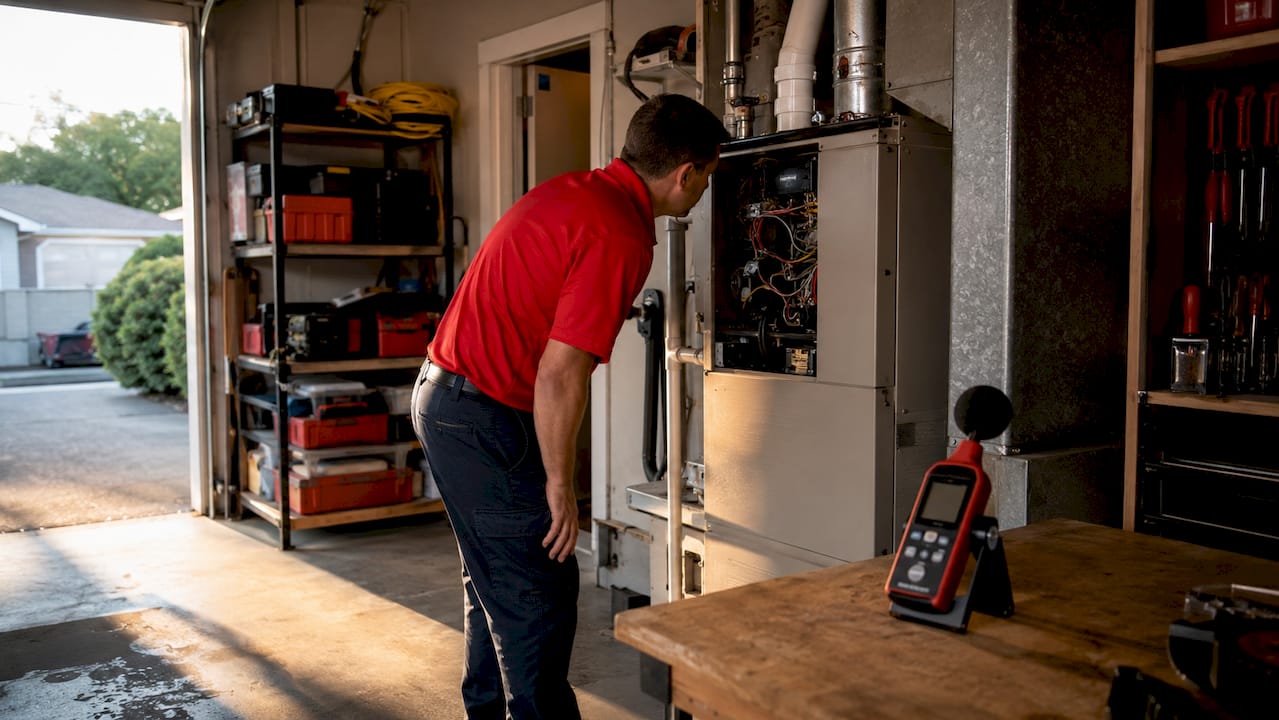
Your AC should run with a steady, low hum. Any noise that breaks from that pattern is an AC unit malfunction sign worth taking seriously.
Different sounds point to different problems:
- Grinding means worn motor bearings. The motor is working against friction it was never designed to handle.
- Squealing usually signals a slipped or worn belt in older systems, or a failing blower motor bearing in newer ones.
- Banging or clanking points to a loose or broken part inside the compressor or blower assembly.
- Hissing often indicates a refrigerant leak or a high-pressure issue in the refrigerant line.
- Clicking at startup or shutdown is normal. Clicking that repeats constantly is not. It usually means a failing relay or thermostat.
Bad capacitors account for 21.5% of all AC repair calls. Capacitors are small electrical components that start and run the motors in your system. When one fails, the outdoor fan may hum but refuse to spin. Homeowners often misread this as a motor failure, which leads to unnecessary part replacements.
Pro Tip: If you smell something burning or electrical near your unit, shut the system off immediately and call a technician. Burning odors signal overheating wiring or melting insulation, both of which are fire hazards, not minor issues.
2. warm air or weak airflow from your vents
Your AC blowing warm or barely moving air is one of the most common AC problems homeowners report. The cause depends on whether the air is warm, cool but weak, or inconsistent from room to room.
Warm air from the vents typically means one of three things: the thermostat is set incorrectly, the refrigerant level is low, or the compressor is struggling. Low refrigerant is not a DIY fix. Refrigerant handling requires EPA certification, so this repair always needs a licensed technician.
Weak airflow points to a different set of problems:
- Clogged air filters restrict airflow before it ever reaches your living space. A filter clogged with dust forces your blower motor to work harder.
- Blocked or leaking ducts reduce the volume of air reaching your rooms. You may notice one room stays warm while others cool normally.
- A failing blower motor reduces airflow across the board. The fan simply cannot move enough air through the system.
Thermostat malfunctions, clogged filters, and blocked ducts are the leading causes of weak or uneven airflow. Replacing a filter costs a few dollars. Ignoring the problem long enough to freeze your evaporator coils costs far more.
3. frozen evaporator coils
Frozen evaporator coils are a symptom that surprises most homeowners because they associate ice with cold, not with a broken AC. The coils freeze when airflow across them drops too low, which prevents them from absorbing heat properly.
Frozen coils often start from dirty filters or minor airflow blockages. Left untreated, the ice buildup spreads and forces the compressor to work under extreme stress. Compressor failure is one of the most expensive repairs in residential HVAC, often running $1,000 or more.
You can spot frozen coils by checking for ice on the copper refrigerant lines near your indoor unit, or by noticing water pooling around the unit as the ice melts. If you see either, turn the system off and let it thaw before calling a technician. Running a frozen system accelerates the damage.
4. sudden spikes in your energy bills
A sharp rise in your energy bill without a change in usage is one of the clearest AC repair warning signs. A 15% or greater spike in energy costs is a primary indicator that your AC is losing efficiency due to worn parts or component failure. That number matters because it gives you a concrete threshold to watch for on your monthly statement.
The most common mechanical causes behind rising bills are compressor strain and failing capacitors. When these components degrade, the system runs longer cycles to reach the same temperature. Longer run times mean higher electricity consumption.
The fix is almost always cheaper than the ongoing cost of ignoring it. A worn capacitor replacement typically costs $150–$400. Running a struggling system for another season can add hundreds of dollars to your annual energy costs while pushing the compressor closer to failure. Comparing your bills month over month, or year over year for the same month, gives you a reliable baseline to spot problems early.
5. frequent cycling on and off
Short cycling is when your AC turns on, runs for only a few minutes, then shuts off before completing a full cooling cycle. It then restarts shortly after. This pattern is one of the most damaging symptoms of faulty air conditioning.
Short cycling is highly damaging to the compressor and usually signals systemic problems like low refrigerant, an oversized unit, or thermostat failure. Each startup puts significant electrical and mechanical stress on the compressor. A compressor that short cycles repeatedly will fail years ahead of its expected lifespan.
Common causes include:
- Low refrigerant pressure triggering the system’s safety shutoff
- A thermostat placed near a heat source, causing it to misread the room temperature
- An oversized AC unit that cools the space too quickly without completing a proper dehumidification cycle
- Electrical issues causing the system to trip its own safety controls
If your AC is cycling on and off every few minutes, do not wait to call for service. This is not a symptom that resolves on its own. You can learn more about why short cycling happens and its systemic implications for your home’s HVAC.
Pro Tip: If your AC trips the circuit breaker, reset it once. Resetting a tripped breaker repeatedly can damage the compressor or wiring. A second trip means you need a professional diagnostic, not another reset.
6. water leaks around your indoor unit
Some condensation around your AC is normal. A puddle of water, or water staining on walls and ceilings near your unit, is not. Water leaks are a clear indication of a broken air conditioner that needs attention.
The two most common sources are a clogged condensate drain line and melting ice from frozen evaporator coils. A clogged drain line backs up water into the drain pan, which overflows onto the floor. Frozen coils melt and produce more water than the drain system can handle.
Left unaddressed, water leaks cause structural damage, promote mold growth, and can damage electrical components inside the unit. The repair itself is often straightforward, but the secondary damage from ignoring it is not. If you see standing water near your indoor unit, shut the system off and call a technician the same day.
7. unusual odors coming from your vents
Odors from your vents are a direct signal that something inside the system needs attention. Different smells point to different problems, and some are more urgent than others.
A musty smell usually means mold or mildew has grown inside the evaporator coil housing or ductwork. This is a common indoor air quality concern that affects your family’s health, not just your comfort. A burning smell is a more serious matter. Burning odors are rarely minor and should be treated as electrical emergencies. Overheating wiring or melting insulation requires immediate professional attention.
A rotten egg smell can indicate a gas leak if you have a gas furnace connected to the same system. Evacuate the home and call your gas utility before calling an HVAC technician.
8. high humidity indoors
Your AC does two jobs: it cools the air and removes moisture from it. When the system is working properly, indoor humidity stays in a comfortable range. When it is not, you will feel it before you see it.
Sticky, heavy air inside your home during summer is a sign that your AC is not dehumidifying effectively. This often points to an undersized system, a refrigerant issue, or a failing evaporator coil. Over half of condenser-related failures trace back to outdoor unit components, including the compressor and electrical controls that regulate the refrigeration cycle.
Persistent high humidity also accelerates mold growth and makes your home feel warmer than the thermostat reads. If your home feels muggy despite the AC running, that is a symptom worth diagnosing promptly.
9. weak or no cooling in specific rooms
Uneven cooling across your home is one of the more subtle AC unit malfunction signs, but it is a reliable one. If one room stays warm while the rest of the house cools normally, the problem is usually in the ductwork or a blocked vent. If the entire house struggles to reach the set temperature, the issue is more likely with the system itself.
Check your HVAC failure causes if you notice uneven cooling paired with any other symptom on this list. Duct leaks, closed dampers, and blocked registers are the most common culprits for room-specific problems. A system that cannot cool the whole house points to refrigerant loss, compressor strain, or an aging unit that has lost capacity.
10. tune-up vs. repair: knowing the difference
Not every AC problem requires a repair call. Knowing when to schedule a routine tune-up versus when to call for urgent service saves you time and money.
| Situation | Recommended Action |
|---|---|
| No symptoms, annual service due | Schedule a preventive AC tune-up |
| Slightly reduced efficiency, no performance drop | Tune-up with filter and coil cleaning |
| Warm air, strange noises, or water leaks present | Diagnostic repair call required |
| Short cycling or tripped breakers | Urgent repair, do not delay |
| System over 10 years old with multiple symptoms | Consider repair vs. replacement evaluation |
HVAC professionals distinguish tune-ups as preventive, while noticeable performance declines always require diagnostic attention. A tune-up cleans, lubricates, and checks your system when it is running normally. It does not fix a failing capacitor, a refrigerant leak, or a damaged compressor. Treating a repair need as a maintenance issue delays the fix and increases the damage.
Key takeaways
Catching the signs you need AC repair early prevents compressor failure, reduces energy waste, and protects your home from water and mold damage.
| Point | Details |
|---|---|
| Strange noises signal specific failures | Grinding, squealing, and hissing each point to distinct mechanical or electrical problems. |
| Energy bill spikes are measurable | A 15% or greater increase without usage change is a primary indicator of AC inefficiency. |
| Short cycling destroys compressors | Frequent on/off cycling stresses the compressor and signals low refrigerant or thermostat failure. |
| Frozen coils escalate fast | Airflow blockages cause coil icing that can progress to full compressor failure if ignored. |
| Tune-ups do not replace repairs | Routine maintenance cannot fix active failures like refrigerant leaks or bad capacitors. |
What i have learned after watching homeowners ignore these signs
After years of working with Kansas City homeowners on HVAC issues, the pattern I see most often is not ignorance. It is optimism. A homeowner hears a new noise from the outdoor unit and decides to wait and see if it goes away. It rarely does.
The sign I see overlooked most consistently is short cycling. Homeowners notice the AC is running in short bursts but assume it means the system is efficient. The opposite is true. Short cycling is a symptom that causes compressor damage with every single cycle. By the time the compressor fails, the repair bill is three to five times what it would have been at the first sign.
My honest advice: document what you observe. Write down when you first heard the noise, how often the system cycles, and whether your last two energy bills were higher than usual. That information helps a technician diagnose the problem faster and more accurately. You are not expected to know what is wrong. You are expected to notice that something changed. That is the job. Leave the rest to a professional.
— AB
Ready to stop guessing and get your AC fixed?
If any of the signs in this article sound familiar, your AC is telling you something. Kcaircontrol has served Kansas City homeowners for over 70 years, and we know exactly what these symptoms mean and how to fix them right the first time.

Our team handles everything from capacitor replacements and refrigerant recharges to full system diagnostics. We offer professional AC repair services for all makes and models across the Kansas City area. Whether you are dealing with warm air, strange noises, or a system that will not stop cycling, we will get your home comfortable again. Schedule your diagnostic visit today and stop letting a small problem turn into a large one.
FAQ
What are the most urgent signs your AC needs repair?
Short cycling, burning odors, and water leaks are the most urgent symptoms. These indicate active electrical hazards, compressor stress, or structural water damage that worsen quickly without professional attention.
Can i fix AC problems myself?
Homeowners can replace air filters and clear blocked vents. Refrigerant handling, electrical repairs, and compressor diagnostics require a licensed HVAC technician and should never be attempted as DIY fixes.
How do i know if my AC needs repair or replacement?
A system under 10 years old with a single failure typically warrants repair. A system over 15 years old with multiple symptoms, including short cycling, refrigerant loss, and compressor strain, is often a stronger candidate for replacement.
Why is my AC running but not cooling the house?
The most common causes are low refrigerant, a failing compressor, or frozen evaporator coils. All three require professional diagnosis and cannot be resolved by adjusting the thermostat.
How often should AC systems be serviced to avoid repairs?
Annual preventive maintenance, ideally in spring before peak cooling season, catches minor issues before they become failures. Routine AC maintenance extends system lifespan and keeps efficiency high.