
TL;DR:
- Dehumidifiers improve indoor comfort by removing moisture that makes air feel sticky and hot. Maintaining 40–50% relative humidity controls allergens and extends home material durability. Properly chosen systems reduce energy use and HVAC strain while promoting healthier, more comfortable living environments.
Dehumidifiers are defined as appliances that remove excess moisture from indoor air to improve comfort, air quality, and home health. The role of dehumidifiers in comfort goes far beyond simply drying out a damp basement. By pulling moisture from the air, these units change how your home feels at every temperature, reduce allergen growth, and take real pressure off your HVAC system. Whether you own a portable unit from a big-box store or a whole-home system integrated with your furnace and AC, understanding how humidity control works will help you get more from every dollar you spend on climate control.
How do dehumidifiers improve perceived comfort vs. temperature?
Dehumidification changes perceived comfort more than lowering temperature does, because moisture is what traps heat against your skin and creates that sticky, clammy feeling. Your body cools itself by sweating. When the air is already saturated with water vapor, sweat cannot evaporate efficiently, so you feel hotter than the thermometer actually reads. This is what HVAC professionals call the “apparent temperature” effect, and it is the reason a 78°F room at 65% relative humidity (RH) feels far worse than a 78°F room at 45% RH.
Removing moisture from the air allows your body’s natural cooling system to work properly again. The air feels lighter, cooler, and easier to breathe without any change to the thermostat setting. That matters for your energy bill. When your home feels comfortable at a higher thermostat setting, your air conditioner runs less often and for shorter cycles.
“Dehumidification makes air feel cooler and more breathable by removing moisture that traps heat, often avoiding the need to lower thermostat settings.”
Pro Tip: Try raising your thermostat by 2°F and running your dehumidifier simultaneously. Most homeowners report the same comfort level with noticeably shorter AC run times.
What is the optimal indoor humidity range for comfort and health?
The industry-standard target for residential indoor humidity is 40–50% RH. This range keeps your home comfortable, protects your belongings, and limits the conditions that allow allergens to thrive.
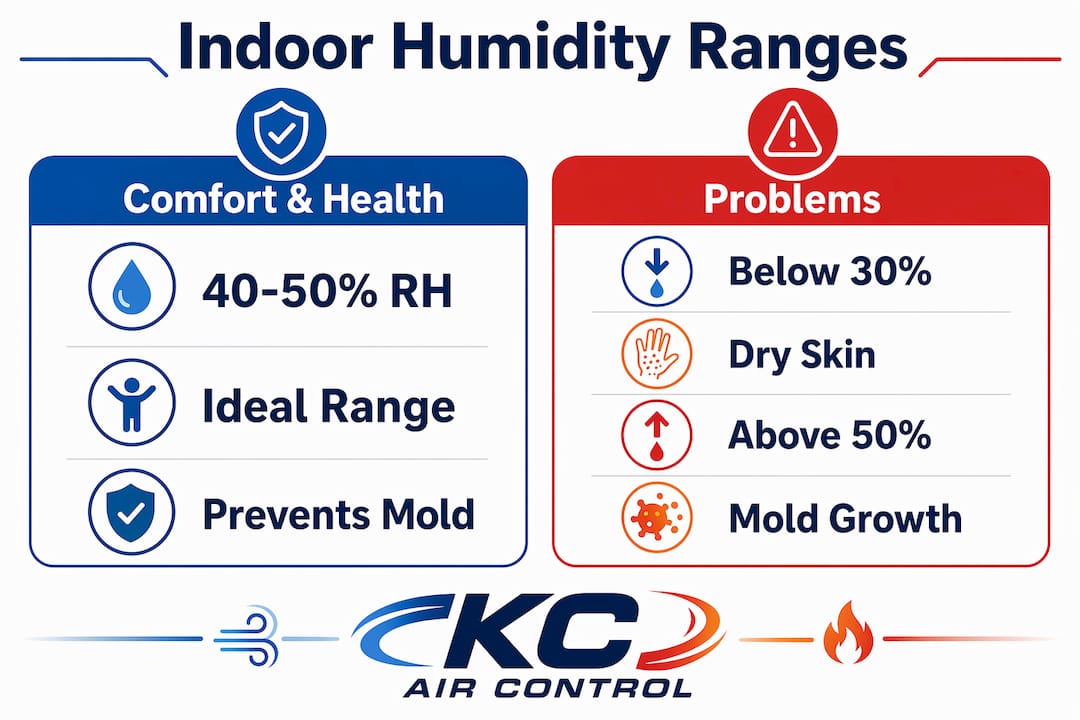
When RH climbs above 50%, dust mites and mold begin to multiply rapidly. Both are well-documented triggers for asthma, allergies, and respiratory irritation. Mold can also cause structural damage to drywall, wood framing, and insulation over time. On the other end of the scale, RH below 30% causes static electricity buildup, dry skin, irritated sinuses, and wood floors or furniture that crack and warp.
The table below shows what happens at each humidity level so you can quickly identify where your home stands.
| Humidity level | RH range | Common problems |
|---|---|---|
| Too low | Below 30% | Static electricity, dry skin, cracking wood, sinus irritation |
| Optimal | 40–50% | Comfortable air, allergen control, stable home materials |
| Too high | Above 50% | Mold growth, dust mite proliferation, structural damage, clammy air |
Maintaining 40–50% RH also controls static electricity and prevents the damp feeling that makes a room feel uncomfortable even when the temperature is right. A simple digital hygrometer, available at most hardware stores for under $20, gives you a real-time reading so you always know where your home stands.
What types of dehumidifiers are available for homeowners?
Three main categories of dehumidifiers exist for residential use: portable units, whole-home systems, and hybrid dehumidifiers with ventilation integration. Each serves a different need, and choosing the wrong type is one of the most common mistakes homeowners make.
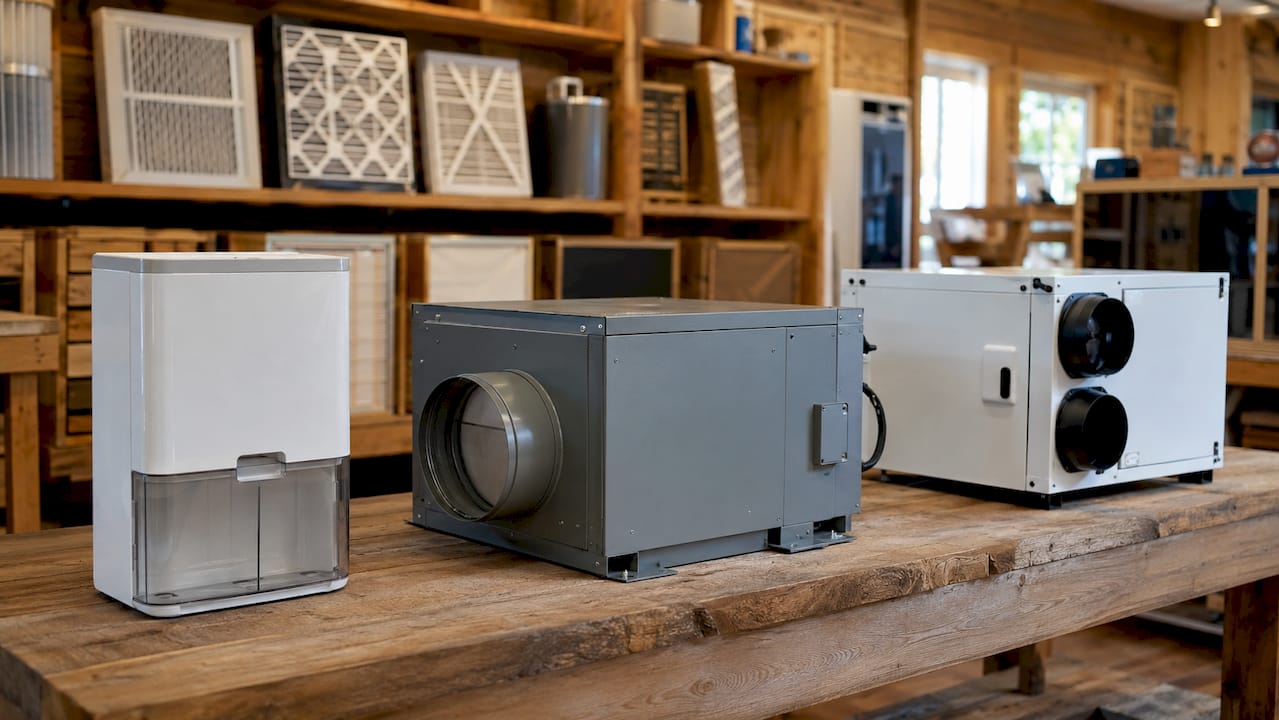
Portable dehumidifiers are the most accessible option. They plug into a standard outlet, cover one to two rooms, and require you to empty a water reservoir manually or connect a drain hose. Portable units provide immediate relief but require regular manual maintenance. They work well for renters or for targeting a single problem area like a basement or laundry room.
Whole-home dehumidifiers connect directly to your HVAC ductwork and treat every room automatically. Whole-home systems integrated with HVAC require less manual upkeep and provide maintenance-free moisture control across your entire living space. Brands like Carrier and Aprilaire manufacture units designed specifically for this purpose.
Hybrid dehumidifiers combine refrigerant-based moisture removal with desiccant or ventilation technology. These units achieve moisture removal efficiencies of 3.84L/kWh, which is 30–40% better than conventional types. That efficiency gap translates directly into lower operating costs over a full season.
| Type | Coverage | Installation | Maintenance | Best for |
|---|---|---|---|---|
| Portable | 1–2 rooms | None required | Manual reservoir emptying | Renters, single-room problems |
| Whole-home | Entire house | HVAC integration | Annual professional service | Persistent whole-house humidity |
| Hybrid | Entire house | HVAC integration | Annual professional service | Maximum efficiency, energy savings |
One factor many homeowners overlook is low-temperature performance. Units must operate below 60°F to be effective in basements or crawl spaces. Look for a unit rated to work down to 41°F to prevent coil freeze-up and year-round effectiveness in cooler areas of your home.
Pro Tip: When comparing portable units, check the moisture removal efficiency rating in liters per kilowatt-hour (L/kWh), not just the daily pint capacity. A higher L/kWh rating means lower operating costs over time.
How do dehumidifiers contribute to energy savings and HVAC efficiency?
Dehumidifiers reduce the workload on your air conditioner by removing the moisture that forces your AC to run longer cycles. Your AC removes both heat and humidity, but it is not designed to do either job perfectly. When a dedicated dehumidifier handles moisture removal, your AC can focus on temperature alone and reach its setpoint faster.
The energy savings from this approach are measurable. Coordinated hybrid dehumidification reduces energy consumption by about 14% compared to standard AC operation alone while keeping RH under 60%. For a Kansas City home running central AC through a full summer, that percentage adds up to real money on your utility bill.
Here is how the energy savings work step by step:
- Dehumidifier removes excess moisture before it reaches your AC coil.
- Your AC reaches the thermostat setpoint faster because it is only fighting heat, not humidity.
- Shorter AC run cycles reduce compressor wear and extend equipment lifespan.
- You raise the thermostat setpoint by 2–3°F without losing comfort, cutting energy use further.
- Reduced AC cycling lowers the risk of refrigerant leaks and compressor failure over time.
Many modern air conditioners also include a “Dry mode” that prioritizes humidity removal over cooling. This mode runs the fan at a lower speed to allow the coil more contact time with humid air. Pairing Dry mode with a standalone dehumidifier gives you the most control over your home’s HVAC efficiency without sacrificing comfort on hot days.
How to use and maintain dehumidifiers for lasting air quality
Placement matters more than most homeowners realize. For portable units, position the dehumidifier near the moisture source, whether that is a basement wall, a laundry area, or a bathroom. Keep at least 12 inches of clearance on all sides so air can circulate freely through the intake and exhaust vents.
Here are the key practices that keep your unit running well and your indoor air quality high:
- Monitor with an external hygrometer. Accurate humidity monitoring requires a separate hygrometer rather than relying on the built-in sensor of a portable unit, which can read several percentage points off.
- Clean the filter every two weeks. A clogged filter reduces airflow and forces the motor to work harder, shortening the unit’s life.
- Inspect and clean the coils annually. Dust and debris on the evaporator coil reduce moisture removal efficiency.
- Empty or drain the reservoir daily during peak humidity season to prevent standing water and bacterial growth inside the unit.
- Use your dehumidifier when drying laundry indoors. Running a load of laundry inside can add significant moisture to your air. A dehumidifier running during and after the drying cycle keeps RH in check.
Whole-home units are worth considering when you experience persistent dampness in multiple rooms, after any water damage event, or when a portable unit runs constantly without bringing RH below 50%. Proactive dehumidifier use is a chemical-free method to improve air quality and structural longevity by preventing mold and dust mite growth before they become a problem.
Pro Tip: Avoid over-drying your home. Running a dehumidifier until RH drops below 30% causes its own set of problems, including cracked wood floors and increased static. Set your unit’s humidistat to 45% and let it cycle on and off automatically.
Key takeaways
Dehumidifiers improve home comfort by controlling indoor moisture, which directly affects how air feels, how allergens behave, and how hard your HVAC system works.
| Point | Details |
|---|---|
| Perceived comfort over temperature | Removing moisture changes how air feels more than lowering the thermostat does. |
| Target 40–50% RH | This range controls allergens, protects home materials, and keeps air comfortable. |
| Hybrid units lead in efficiency | Hybrid dehumidifiers remove moisture at 3.84L/kWh, 30–40% better than standard units. |
| Energy savings are real | Integrated dehumidification reduces total HVAC energy use by about 14% compared to AC alone. |
| Monitor with a hygrometer | External hygrometers give more reliable RH readings than built-in portable unit sensors. |
Why humidity control is the comfort upgrade most homeowners skip
I have spent years talking with homeowners who have replaced their entire HVAC system chasing comfort, only to find that the real problem was never the equipment. It was the moisture in the air. A family in a well-insulated Kansas City home can have a brand-new, properly sized air conditioner and still feel sticky and uncomfortable in July because nobody addressed the humidity load.
The conventional wisdom says “just turn the AC down.” That advice costs you money and wears out your equipment faster. What actually works is pairing a quality dehumidifier with your existing system and letting each piece of equipment do what it does best.
I also see homeowners go too far in the other direction, running a portable unit 24 hours a day until the air feels bone dry. That creates a different set of problems. The goal is balance, specifically 40–50% RH, and the only way to know you are hitting it is to measure it with a reliable hygrometer.
If you are dealing with persistent dampness, consider a whole-home unit before you spend money on HVAC upgrades. In many cases, adding humidity control to an existing system delivers more comfort per dollar than replacing the system entirely. That is the insight most homeowners do not get until after they have already spent the money the other way.
— AB
Take control of your home’s comfort with Kcaircontrol
If humidity is making your Kansas City home uncomfortable, Kcaircontrol has the expertise to help you fix it the right way. With over 70 years of experience serving residential customers, we assess your home’s specific moisture load and recommend the right solution, whether that is a portable unit, a whole-home dehumidifier, or a full AC repair and system upgrade.

Our team also handles furnace tune-ups and duct cleaning to make sure your entire HVAC system supports your comfort goals year-round. We offer flexible scheduling and financing options so you can get the right solution without waiting. Contact Kcaircontrol today to schedule your home comfort assessment and start breathing easier.
FAQ
What does a dehumidifier actually do for home comfort?
A dehumidifier removes excess moisture from indoor air, which reduces the sticky, clammy feeling caused by high humidity. This changes how air feels at any given temperature, often making a room feel cooler without lowering the thermostat.
What humidity level should I maintain in my home?
The recommended indoor humidity range is 40–50% RH. Levels above 50% encourage mold and dust mite growth, while levels below 30% cause dry skin, static electricity, and damage to wood materials.
Do dehumidifiers actually save energy?
Yes. Coordinated dehumidification reduces total HVAC energy consumption by about 14% compared to running an air conditioner alone. Shorter AC run cycles and a higher thermostat setpoint both contribute to the savings.
Should I buy a portable or whole-home dehumidifier?
Portable units work well for single rooms or renters needing immediate relief. Whole-home systems integrated with your HVAC provide automatic, comprehensive moisture control across every room with less manual upkeep.
How do I know if my dehumidifier is working correctly?
Use an external hygrometer to measure your home’s actual RH. Built-in sensors on portable units can read several percentage points off, so an independent hygrometer gives you a more accurate picture of whether your unit is hitting the 40–50% target.
Recommended
- Role of humidifiers in HVAC: a Kansas City homeowner’s guide – KC Air Control – Heating & Cooling
- What Is a Humidifier for HVAC? A Homeowner’s Guide – KC Air Control – Heating & Cooling
- How HVAC systems optimize home comfort and energy efficiency – KC Air Control – Heating & Cooling
- What Is HVAC and Why Home Comfort Depends on It – Air Control