
TL;DR:
- Controlling pollution sources is the most effective way to improve indoor air quality by reducing pollutants at their origin. Proper ventilation and humidity management help dilute and remove pollutants, creating a healthier environment. Regular filter maintenance and monitoring ensure sustained air quality improvements over time.
Indoor air quality (IAQ) is defined by the US EPA and American Lung Association as the condition of air inside and around buildings, directly affecting the health and comfort of everyone who breathes it. Knowing how to improve home air quality starts with three proven strategies: source control, ventilation, and filtration. Most homeowners focus only on air purifiers, but that approach misses the bigger picture. This guide walks you through each strategy with specific, practical steps so you can breathe easier starting today.
How to improve home air quality by controlling pollution sources
Source control is the most effective way to improve indoor air quality. Removing or reducing pollution at its origin beats trying to filter it out after the fact. Indoor air can be more polluted than outdoor air, with common pollutants including carbon monoxide, smoke, radon, mold, particulate matter, and volatile organic compounds (VOCs). That means the products and appliances inside your home are often the biggest threat to the air you breathe.
Common indoor pollution sources include:
- VOCs from paints, cleaning sprays, air fresheners, and adhesives
- Combustion gases from gas stoves, fireplaces, and unvented space heaters
- Radon seeping up through foundation cracks, especially in basements
- Mold and mildew growing in damp areas like bathrooms and crawl spaces
- Particulate matter from candles, tobacco smoke, and cooking without ventilation
- Carbon monoxide from malfunctioning furnaces, water heaters, or attached garages
The fix starts with your purchasing habits. Choosing low-VOC products and electric appliances instead of gas-burning ones reduces your home’s pollution baseline before any air ever needs cleaning. Swap conventional cleaning sprays for fragrance-free, low-VOC alternatives. Store paints, solvents, and chemicals in a garage or shed rather than inside living spaces.
Gas stoves deserve special attention. They release nitrogen dioxide and other combustion byproducts directly into your kitchen. Running the range hood exhaust fan every time you cook makes a real difference. If you are considering a replacement, induction cooktops eliminate combustion entirely.
Pro Tip: Before buying any new furniture, flooring, or paint, check the product label for “low-VOC” or “zero-VOC” certification. New materials off-gas the most in the first weeks after installation, so ventilate heavily during that period.
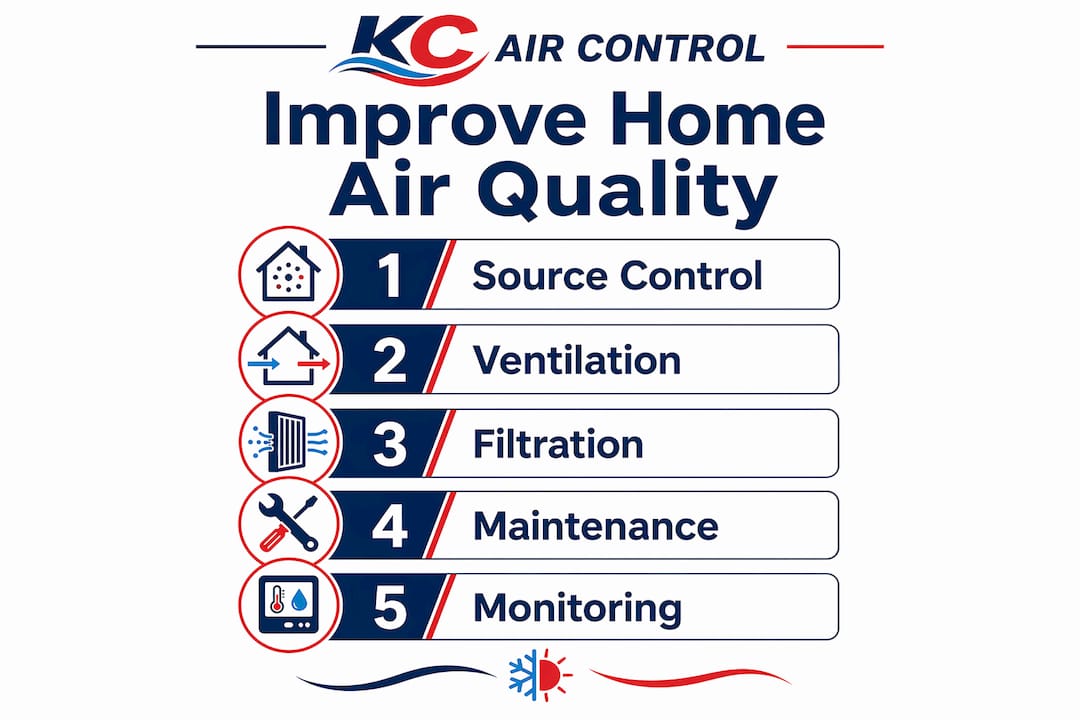
How does ventilation help reduce indoor pollutants?
Ventilation dilutes indoor pollutants by replacing stale, contaminated air with fresh outdoor air. Without adequate air exchange, pollutants build up to concentrations that cause headaches, fatigue, and respiratory irritation. The good news is that you have several practical options, regardless of your home’s age or layout.
Practical ventilation strategies include:
- Open windows and doors when outdoor air quality is good and weather permits
- Use exhaust fans in kitchens and bathrooms to remove moisture, odors, and combustion gases at the source
- Install a whole-house mechanical ventilation system for consistent, controlled air exchange year-round
- Use a heat recovery ventilator (HRV) or energy recovery ventilator (ERV) to bring in fresh air without losing heating or cooling efficiency
Mechanical ventilation systems following ASHRAE Standard 62 set the benchmark for minimum outdoor air supply based on room size and occupancy. That standard exists because most homes, especially tightly sealed modern ones, do not naturally exchange enough air on their own. If your home feels stuffy or you notice condensation on windows regularly, inadequate ventilation is likely the cause.
Humidity control is a critical part of ventilation management. Maintaining indoor relative humidity between 30–50% prevents mold growth and reduces respiratory irritation. A dehumidifier in a damp basement or a whole-home humidifier during dry winters keeps that range stable. You can learn more about how ventilation systems work to decide which approach fits your home best.
Pro Tip: On days when outdoor air quality is poor, such as during wildfire smoke events or high-pollen days, keep windows closed and rely on your HVAC system’s filtration instead. Check your local air quality index (AQI) on AirNow.gov before opening up.
What are the best air cleaning and filtration methods for home use?
Air cleaning and filtration work best as a complement to source control and ventilation, not a replacement. The right filter or purifier traps particles that slip past your other defenses. Choosing the wrong one, or neglecting maintenance, can make things worse.
Here is how to select and use air cleaning effectively:
- Choose a portable HEPA air purifier sized for the room where you spend the most time. HEPA filters trap particles as small as 0.3 microns, capturing dust, pollen, pet dander, and smoke effectively.
- Upgrade your HVAC filter to a higher MERV rating. Filters rated MERV 11–13 capture fine particles without restricting airflow in most residential systems.
- Add activated carbon filtration if VOCs and odors are a concern. Carbon filters adsorb gases that HEPA filters cannot capture.
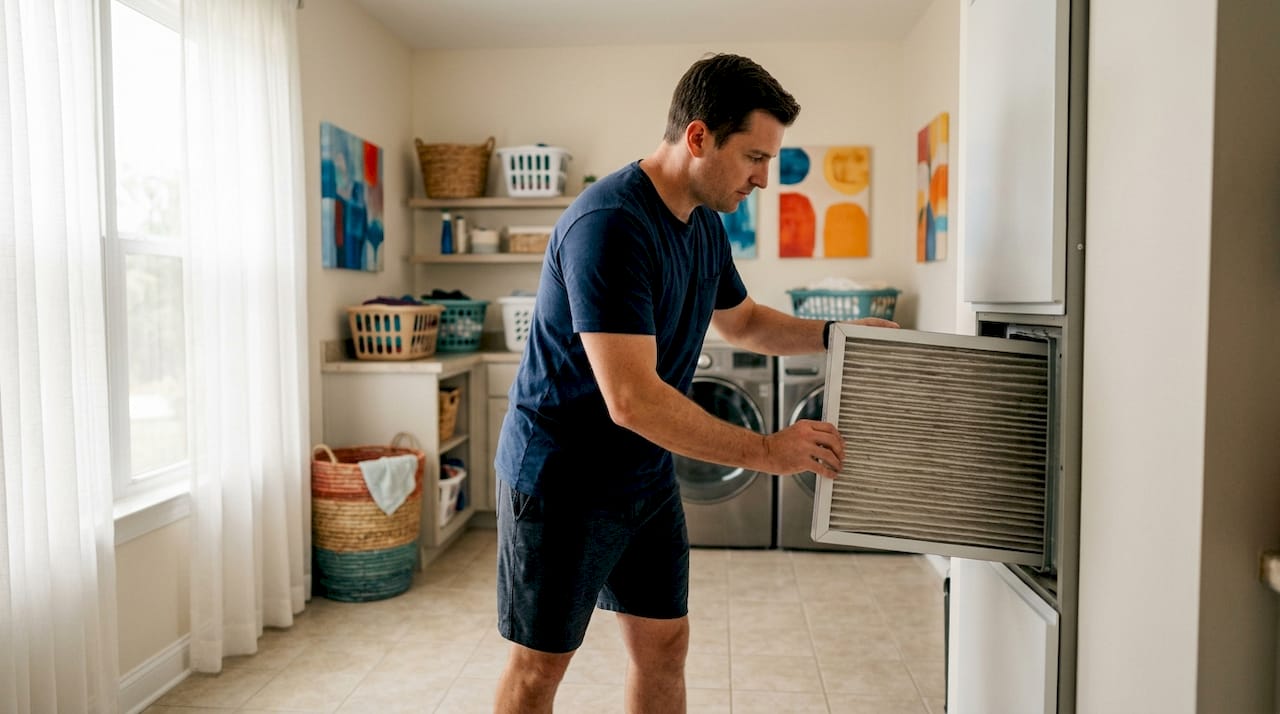
- Replace filters on schedule. Most HVAC filters need replacement every 1–3 months. Portable purifier filters vary by model.
- Schedule professional duct cleaning periodically. Dirty ducts recirculate accumulated dust, debris, and allergens throughout your home every time the system runs.
| Filter type | Best for | Limitation |
|---|---|---|
| HEPA (portable purifier) | Particles, allergens, smoke | Does not remove gases or VOCs |
| MERV 11–13 HVAC filter | Whole-home particle filtration | Needs regular replacement |
| Activated carbon | VOCs, odors, gases | Does not capture particles |
| UV light add-on | Bacteria and mold on coils | No effect on particles or gases |
Dirty filters can worsen air quality rather than improve it. A clogged high-MERV filter restricts airflow, strains your HVAC system, and may perform worse than a clean lower-rated filter. Set a calendar reminder so filter changes never slip through the cracks. You can also explore how UV lights improve HVAC air quality as an additional layer of protection against biological contaminants.
Pro Tip: Place a portable HEPA purifier in the bedroom first. You spend 7–9 hours there every night, so clean air in that room delivers the most health benefit per dollar spent.
How to monitor and maintain your home’s air quality over time
Improving your indoor air quality is not a one-time project. Sustained results require routine monitoring and consistent maintenance habits.
Start by measuring your baseline:
- Test for radon using an EPA-approved radon test kit. Radon is colorless and odorless, and it is the second leading cause of lung cancer in the United States. Test kits are inexpensive and widely available.
- Install carbon monoxide and smoke alarms on every level of your home. Replace batteries annually and replace the units themselves every 5–7 years.
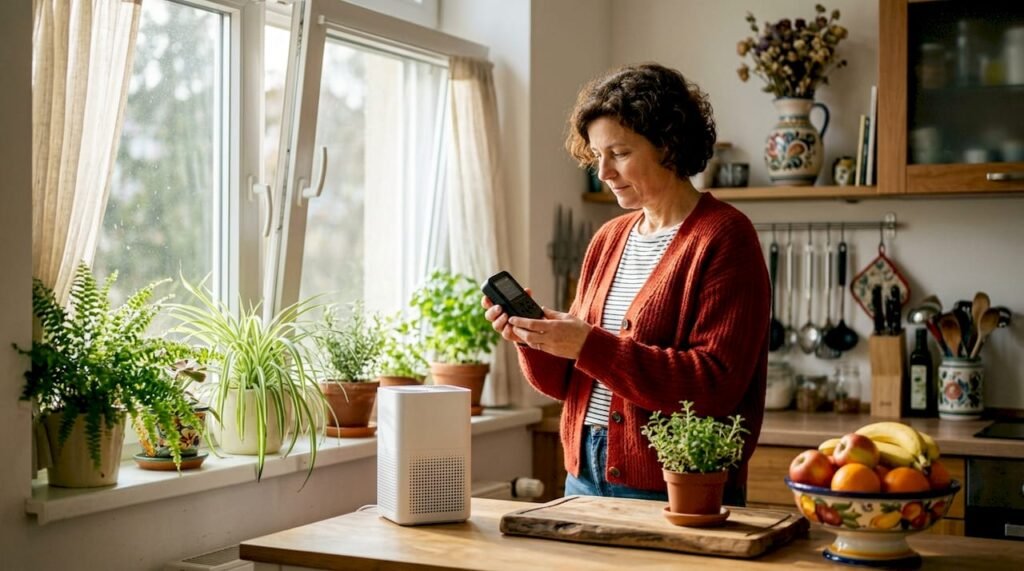
- Use an indoor air quality monitor to track particulate matter, VOCs, humidity, and CO2 levels in real time. Air quality monitors and radon test kits help you verify that your improvements are actually working.
Ongoing maintenance habits matter just as much as the tools you use:
- Vacuum with a HEPA-filter vacuum at least once a week. Routine HEPA vacuuming and washing bedding and rugs significantly reduces allergens and particulates.
- Wash bedding in hot water weekly to eliminate dust mites.
- Clean bathroom exhaust fans and kitchen range hoods every few months so they move air efficiently.
- Schedule annual HVAC inspections to catch issues like cracked heat exchangers, refrigerant leaks, or dirty coils before they affect air quality.
When problems persist despite your efforts, that is the signal to call a professional. Persistent musty odors, unexplained allergy symptoms, or visible mold growth all warrant an expert assessment. A qualified HVAC technician can inspect your ductwork, test airflow, and recommend targeted solutions. For a broader look at why air quality matters for your family’s health, the connection between HVAC performance and IAQ is well established.
Key Takeaways
Source control, ventilation, and filtration work together as a system. Relying on any single strategy alone leaves your home’s air quality incomplete.
| Point | Details |
|---|---|
| Source control comes first | Remove or substitute polluting products before adding filtration. |
| Humidity targets matter | Keep indoor humidity between 30–50% to prevent mold and irritation. |
| Filter maintenance is non-negotiable | Dirty filters worsen air quality; replace HVAC filters every 1–3 months. |
| Monitor with real tools | Use radon test kits and air quality monitors to confirm improvements. |
| Professional help has a place | Persistent odors or mold growth require an HVAC inspection, not just a new filter. |
What I have learned from years of watching homeowners get this wrong
The most common mistake I see is homeowners buying an expensive air purifier and calling it done. They spend $300 on a HEPA unit, put it in the living room, and then continue using heavily scented cleaning sprays, burning candles every evening, and never changing their furnace filter. The purifier works overtime trying to clean up pollution that never needed to enter the air in the first place.
Removing pollutants from living spaces offers more immediate and substantial improvements than air purifiers alone. That is not a knock on purifiers. It is a reminder that the order of operations matters. Fix the source first, then ventilate, then filter what remains.
The second mistake is ignoring humidity. A home that runs too dry in winter or too damp in summer creates conditions where dust mites, mold, and bacteria thrive. A $40 hygrometer tells you exactly where you stand. That single piece of information has helped more families I have spoken with than any single appliance purchase.
Purchasing habits are the long game. Prioritizing low-VOC products and electric appliances over gas-burning ones compounds over years. Every low-VOC paint can, every fragrance-free cleaner, and every induction burner reduces the baseline pollution load your home generates. That is the kind of change that protects your family quietly, every single day, without requiring you to remember to turn anything on.
— AB
Professional air quality services from Kcaircontrol
Kcaircontrol has served Kansas City homeowners for over 70 years, and indoor air quality is one of the most requested areas of expertise. If you have worked through the source control and ventilation steps and still notice persistent dust, odors, or allergy symptoms, your ductwork or HVAC system may be the source.
Professional duct cleaning removes accumulated debris that recirculates through your home every time your system runs. A furnace tune-up catches heat exchanger cracks and combustion issues that silently degrade air quality. Kcaircontrol also installs whole-home humidifiers, UV light systems, and high-efficiency filtration upgrades. If your system shows signs it needs HVAC repair, addressing it promptly protects both your air quality and your equipment. Contact Kcaircontrol to schedule an assessment and get a clear picture of where your home stands.
FAQ
What is the fastest way to improve indoor air quality?
Source control delivers the fastest results. Remove or relocate products that off-gas VOCs, stop using scented sprays indoors, and run exhaust fans while cooking or showering.
How often should I replace my HVAC air filter?
Most residential HVAC filters need replacement every 1–3 months. Homes with pets, allergies, or heavy dust may need monthly changes to maintain effectiveness.
What humidity level is best for indoor air quality?
The American Lung Association recommends keeping indoor relative humidity between 30–50%. Levels above 50% encourage mold growth, while levels below 30% cause respiratory dryness and irritation.
Do I need to test my home for radon?
The EPA recommends testing every home for radon, especially in basements and lower levels. Radon is odorless and colorless, and long-term exposure is the second leading cause of lung cancer in the United States.
Can a dirty HVAC filter make air quality worse?
A clogged filter restricts airflow and can recirculate trapped contaminants back into your home. Replacing filters on schedule is one of the simplest and most effective indoor air quality improvement tips available.