
TL;DR:
- A home energy upgrade reduces energy waste, lowers utility bills, and is most effective when done through a professional audit and proper sequencing. Starting with air sealing and insulation before replacing mechanical systems helps ensure efficiency and long-term savings. Federal tax credits and rebates can offset upgrade costs, especially when projects are spread over multiple years.
A home energy efficiency upgrade is a targeted improvement to your home’s systems, insulation, or equipment that reduces energy waste and lowers utility bills. Done right, a structured energy efficiency upgrade guide can cut your annual energy costs by 5–30% depending on your home’s starting point and which upgrades you complete. The 2026 Energy Efficient Home Improvement Credit offers up to $3,200 annually to offset costs for qualifying improvements. A professional home energy audit is the single best first step. It tells you exactly where your money is going and which fixes will deliver the fastest return.
How do you start assessing your home’s energy efficiency needs?
The best starting point is your utility bills. Pull the last 12 months of statements and look for patterns. High bills in summer point to cooling problems. High bills in winter point to heating or insulation issues. Knowing which season costs you the most tells you where to focus first.
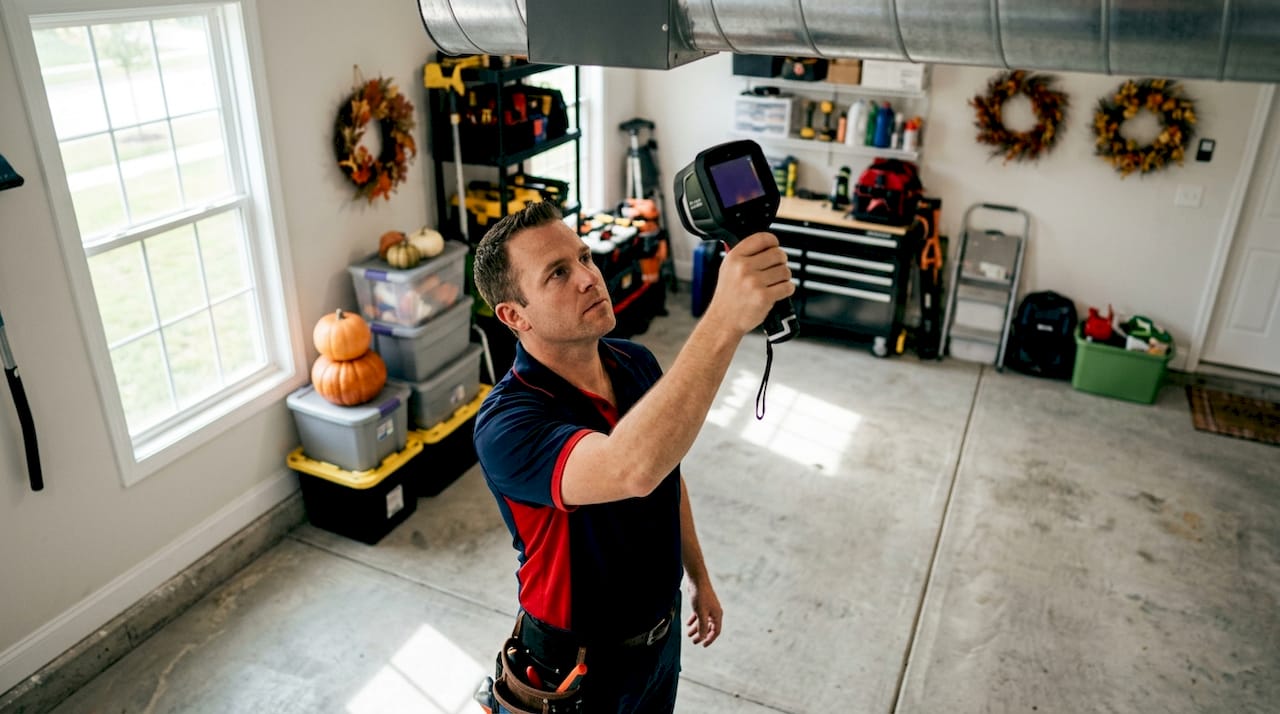
After reviewing your bills, schedule a professional home energy audit. A certified auditor uses specialized equipment to find problems you cannot see with the naked eye. The most valuable tool in that process is the blower door test. A blower door test depressurizes your home and reveals hidden air leaks that visual inspection consistently misses. Those leaks are often the biggest driver of wasted energy in older homes.
Here is what a thorough audit typically covers:
- Blower door test: Measures air leakage rate and pinpoints where drafts enter
- Thermal imaging: Identifies missing or thin insulation inside walls and ceilings
- Duct leakage test: Checks whether your HVAC ducts are losing conditioned air before it reaches living spaces
- Appliance and water heater inspection: Flags aging equipment running below rated efficiency
- Utility bill analysis: Compares your usage against similar homes in your area
Many utility companies offer free or subsidized audits. Check your provider’s website before paying out of pocket. Some states also fund low-cost audit programs through weatherization assistance initiatives.
Pro Tip: Ask your auditor to rank findings by estimated annual savings, not just by cost. That ranking becomes your upgrade priority list.
What are the highest-impact energy efficiency upgrades for your home?
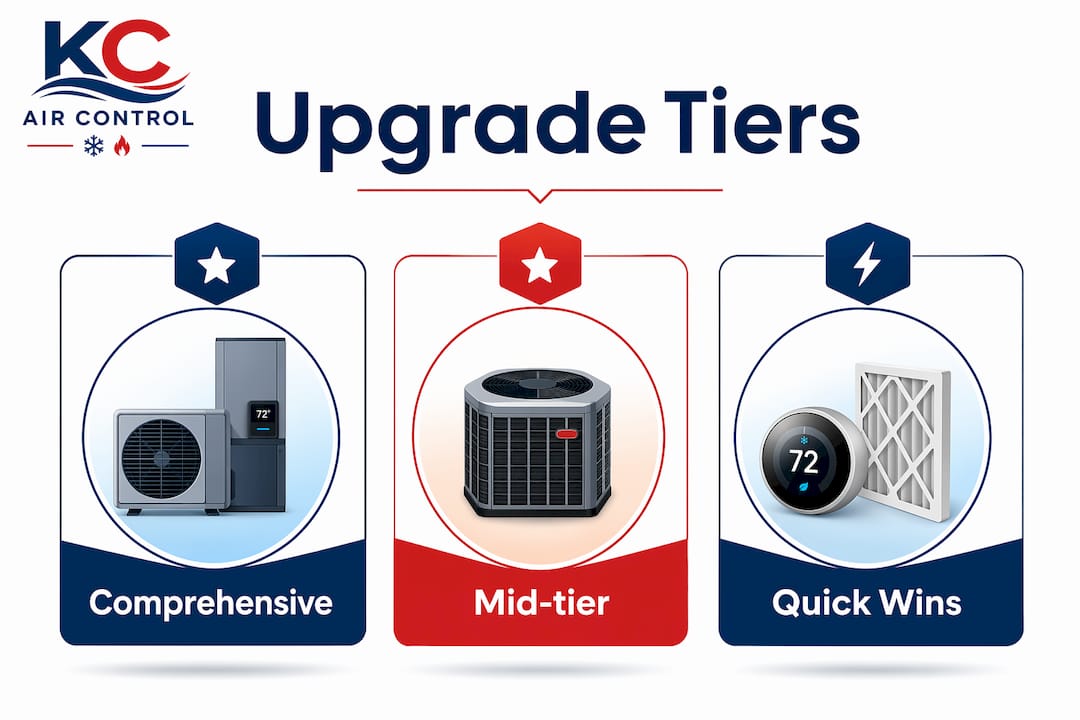
Home energy upgrades fall into three budget tiers. Knowing which tier fits your situation helps you plan spending and set realistic expectations for payback.
Quick wins under $2,000
Low-cost upgrades deliver faster payback than most homeowners expect. LED lighting, programmable or smart thermostats, and basic air sealing around doors, windows, and electrical outlets can save $500–$800 per year. That is real money returned in one to three years on a modest investment. Smart thermostats alone reduce heating and cooling waste by learning your schedule and adjusting automatically.
Mid-tier investments around $10,000
Attic insulation, duct sealing, and heat pump water heaters sit in this range. Air sealing combined with insulation reduces heating and cooling costs by around 15% on average. That figure is especially significant for homes built before 1990, which typically have little to no attic insulation by modern standards. Duct sealing prevents your HVAC system from conditioning air that never reaches the rooms you live in.
Comprehensive upgrades above $25,000
Full building shell improvements, right-sized HVAC replacements, electrical panel upgrades, and solar add-on planning fall here. Major upgrades like heat pumps save $500–$1,500 per year in heating and cooling costs. Insulation upgrades at this level often carry payback periods of 2–10 years, with annual returns on investment between 5% and 15% depending on your climate and installation quality.
| Upgrade tier | Typical cost | Estimated annual savings |
|---|---|---|
| Quick wins (LED, thermostat, air sealing) | Under $2,000 | $500–$800 |
| Mid-tier (insulation, ducts, heat pump water heater) | Around $10,000 | 15% on heating/cooling |
| Comprehensive (HVAC, shell, solar prep) | $25,000 and up | $500–$1,500 |
The “Shell First” strategy is the most important concept in this tier system. Prioritizing demand reduction through sealing and insulation before replacing mechanical systems prevents you from buying oversized, overpriced equipment. A tighter home needs a smaller HVAC system. That means lower equipment costs and better long-term performance.
Pro Tip: Check eco-friendly HVAC upgrade options before committing to a specific system. Heat pump technology has advanced significantly and often qualifies for federal tax credits.
How to sequence your home energy efficiency upgrades for maximum savings
Upgrade order matters as much as upgrade choice. The wrong sequence wastes money and can actually reduce the performance of new equipment. Follow this proven order:
- Home energy audit: Establish your baseline and get a prioritized list of improvements.
- Air sealing and insulation: Reduce the load your heating and cooling systems carry before replacing them.
- HVAC and water heating upgrades: Right-size new equipment to your now-tighter home.
- Electrical capacity check: Confirm your panel supports new high-draw equipment before installation day.
- Solar and battery storage: Add generation capacity only after demand is reduced and systems are efficient.
The risk of skipping steps two and three is significant. Replacing your HVAC before reducing building loads leads to oversized units, poor humidity control, and a shorter system lifespan. An oversized system short-cycles, meaning it turns on and off too frequently. That wastes energy, wears out components faster, and leaves your home feeling clammy in summer.
Right-sizing mechanical systems only after insulating and air sealing avoids wasted expense on oversized equipment and delivers measurably better comfort year-round. Skipping this step is the single most common and costly mistake homeowners make during home energy upgrades.
Rebates and incentives also influence timing. The 2026 federal tax credit has annual caps per category. Spreading upgrades across two tax years can double your total credit. For example, completing insulation and air sealing in one year and HVAC replacement the next year lets you claim credits in both years. Check rebate timing and local programs before scheduling contractors.
Electrical panel capacity is a commonly overlooked planning item. Upgrading from a 100-amp to a 200-amp panel costs several thousand dollars and is often required before installing heat pumps, EV chargers, or induction stoves. Discovering this need after you have already contracted for equipment installation adds cost and delays. Identify it early.
What practical tips should homeowners know during upgrades?
Execution quality determines whether your upgrades deliver their promised savings. The best plan fails with the wrong contractor or a missed permit. These points protect your investment:
- Hire qualified contractors: Qualified professionals ensure safety, long-term performance, and rebate eligibility. General handymen are not appropriate for HVAC or electrical work. Ask for licenses, insurance, and references specific to energy efficiency projects.
- Pull permits before work starts: Unpermitted work can void rebates, complicate home sales, and create safety hazards. Check local requirements for every project category.
- Verify rebate requirements in advance: Some rebates require specific equipment efficiency ratings or certified installers. Confirming these details before signing a contract prevents disqualification after the work is done.
- Check HVAC energy saving practices: Routine maintenance, including filter changes and annual tune-ups, keeps upgraded systems running at rated efficiency between major service visits.
- Prioritize insulation and air sealing over window replacement: New windows are expensive and deliver modest energy savings compared to insulation. Seal and insulate first. Replace windows only when they are failing structurally or when budget allows after higher-priority upgrades are complete.
Pro Tip: Schedule your HVAC system evaluation before committing to any upgrade sequence. A professional assessment confirms whether your existing equipment can serve your home efficiently after shell improvements or needs replacement.
Key Takeaways
A successful home energy upgrade starts with a professional audit, follows the Shell First sequence, and uses available federal credits to reduce out-of-pocket costs at every tier.
| Point | Details |
|---|---|
| Start with an energy audit | A professional audit identifies your biggest savings opportunities before you spend a dollar on upgrades. |
| Follow the Shell First sequence | Seal and insulate before replacing HVAC to avoid oversized equipment and wasted spending. |
| Use the 2026 federal tax credit | The Energy Efficient Home Improvement Credit offers up to $3,200 annually across qualifying upgrade categories. |
| Check electrical capacity early | Panel upgrades to 200 amps are often required for heat pumps and EV chargers and cost several thousand dollars. |
| Spread upgrades across tax years | Splitting projects across two years can double your total federal credit on qualifying improvements. |
What I have learned from watching homeowners upgrade their homes
After seeing hundreds of Kansas City homeowners go through this process, one pattern stands out clearly. The homeowners who save the most money are not the ones who spend the most. They are the ones who plan the most.
The biggest mistake I see is skipping the audit and going straight to equipment replacement. A new furnace in a leaky, under-insulated home is like putting a high-performance engine in a car with flat tires. The equipment cannot perform to its rating because the building is working against it. The audit changes that. It gives you a ranked list of improvements tied to real dollar savings, and it removes the guesswork from every decision that follows.
I also see homeowners underestimate how much the sequencing matters for comfort, not just cost. A properly sized heat pump in a well-sealed home maintains even temperatures without the temperature swings that older, oversized systems create. That comfort difference is something you feel every day, not just on your utility bill.
My honest recommendation: treat this as a multi-year plan, not a single purchase. Start with air sealing and insulation. Let that work reduce your home’s load. Then replace mechanical systems sized to the new, tighter building. Use the federal credits strategically across tax years. The savings compound, and the comfort improvement is permanent.
— AB
Kcaircontrol is ready to help with your home energy upgrades
Kcaircontrol has served Kansas City homeowners for over 70 years with HVAC repairs, system installations, and energy efficiency consultations. Whether you are starting with an HVAC evaluation or replacing an aging furnace or AC unit, our team brings the expertise to match the right equipment to your home’s actual needs.
We help homeowners navigate rebate programs and financing options so upgrades fit your budget without surprises. If your system fails during an upgrade project, our emergency HVAC repair service keeps your home comfortable while work continues. Ready to take the next step? Schedule your evaluation with Kcaircontrol and get a clear picture of what your home needs and what it will save.
FAQ
How much can a home energy audit save you?
A professional home energy audit can reduce energy use by 5–30% depending on your home’s baseline and which upgrades you complete afterward.
What is the Shell First strategy?
The Shell First strategy means sealing air leaks and adding insulation before replacing HVAC equipment. This reduces your home’s heating and cooling load so new systems can be right-sized, which saves money on equipment and improves performance.
Which upgrades qualify for the 2026 federal tax credit?
The Energy Efficient Home Improvement Credit covers insulation, exterior doors, windows, central AC units, and heat pumps, up to $3,200 annually with separate caps per category.
Should I replace windows or insulate first?
Insulation and air sealing deliver significantly better return on investment than window replacement. Complete those upgrades first, then consider windows if they are structurally failing or budget allows.
How do I know if my electrical panel needs upgrading?
If you plan to install a heat pump, EV charger, or induction stove, have an electrician assess your panel before contracting for equipment. Most older homes with 100-amp service require an upgrade to 200 amps to support new high-draw appliances safely.