
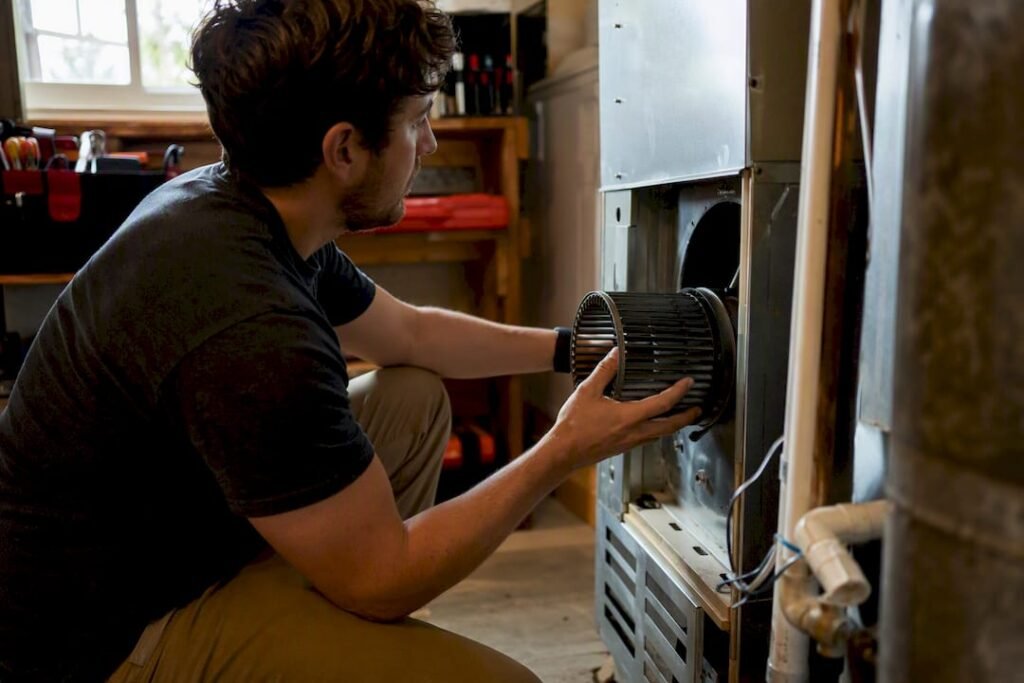
Most furnace noises fall into two camps: harmless thermal or airflow sounds, and mechanical or combustion faults that need service. If you hear a loud bang at ignition, smell gas, or your carbon monoxide alarm sounds, shut the furnace off and get everyone to fresh air before you do anything else.
Before calling for help, a few quick checks can tell you a lot:
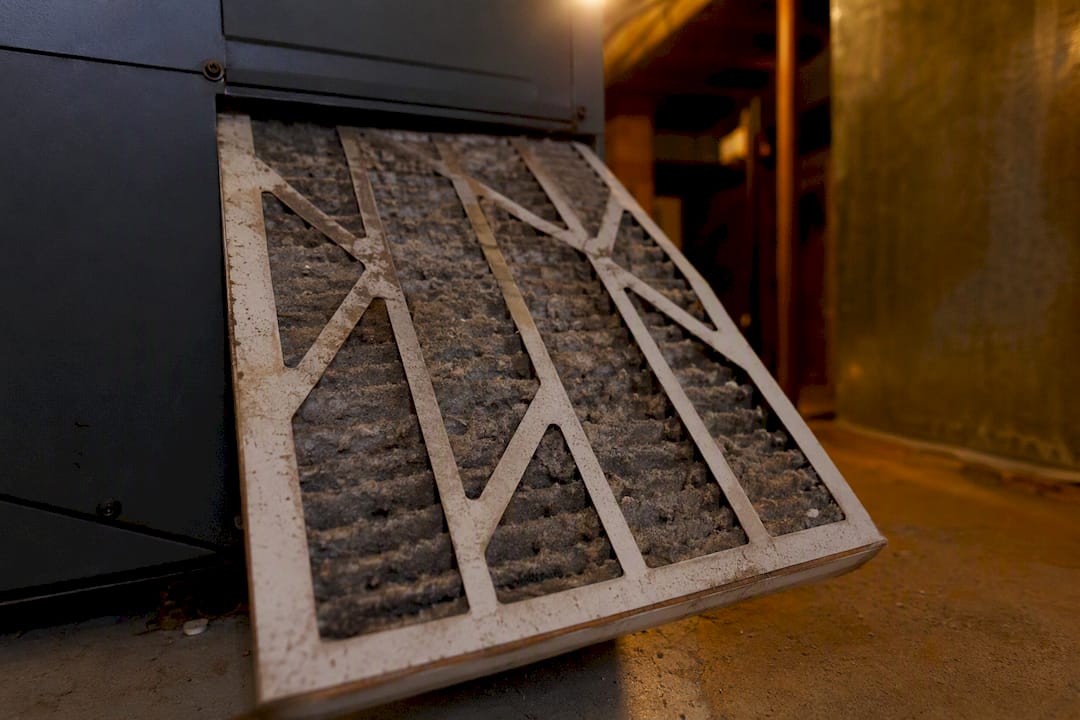
- Check the air filter. A clogged one causes whistling, popping, and airflow strain.
- Tighten any visible access panels. Loose panels rattle against the cabinet.
- Note the timing. Does the noise happen at startup, during the run cycle, or at shutdown?
Pro Tip: Write down exactly when the noise happens and what it sounds like. “A metallic screech right after the blower kicks on” tells a technician far more than “it’s loud.”
Key Takeaways
A noisy furnace almost always falls into one of two categories: a low-cost airflow or thermal issue you can often fix yourself, or a mechanical or combustion fault that needs a technician the same day.
| Point | Details |
|---|---|
| Sort noise by urgency | Rattles and light ticking usually wait; bangs, grinding, and gas smell do not. |
| Check the filter first | A clogged filter causes whistling and airflow strain, often the fastest fix available. |
| Repeated bangs mean delayed ignition | This stresses the heat exchanger and raises carbon monoxide risk over time. |
| Document before you call | Note timing, location, and any smell to speed up technician diagnosis. |
| Call Kcaircontrol for combustion checks | Kcaircontrol’s furnace repair visits include combustion analysis and CO testing alongside noise diagnosis. |
Table of Contents
- Why Is My Furnace Loud? A Sound-by-Sound Guide
- A Diagnostic Checklist to Narrow Down the Source
- When to Shut Off Your Furnace and Call a Professional
- What Furnace Repairs Typically Cost and How Long They Take
- What a Professional Furnace Inspection Actually Involves
- If Your Furnace Won’t Quiet Down, Here’s Your Next Step
- Frequently Asked Questions
- Sources
Why Is My Furnace Loud? A Sound-by-Sound Guide
Not every noisy furnace is a five-alarm problem. Furnace strange sounds usually fall into recognizable categories, and each one points toward a different part of the system. Here’s how to sort them out.
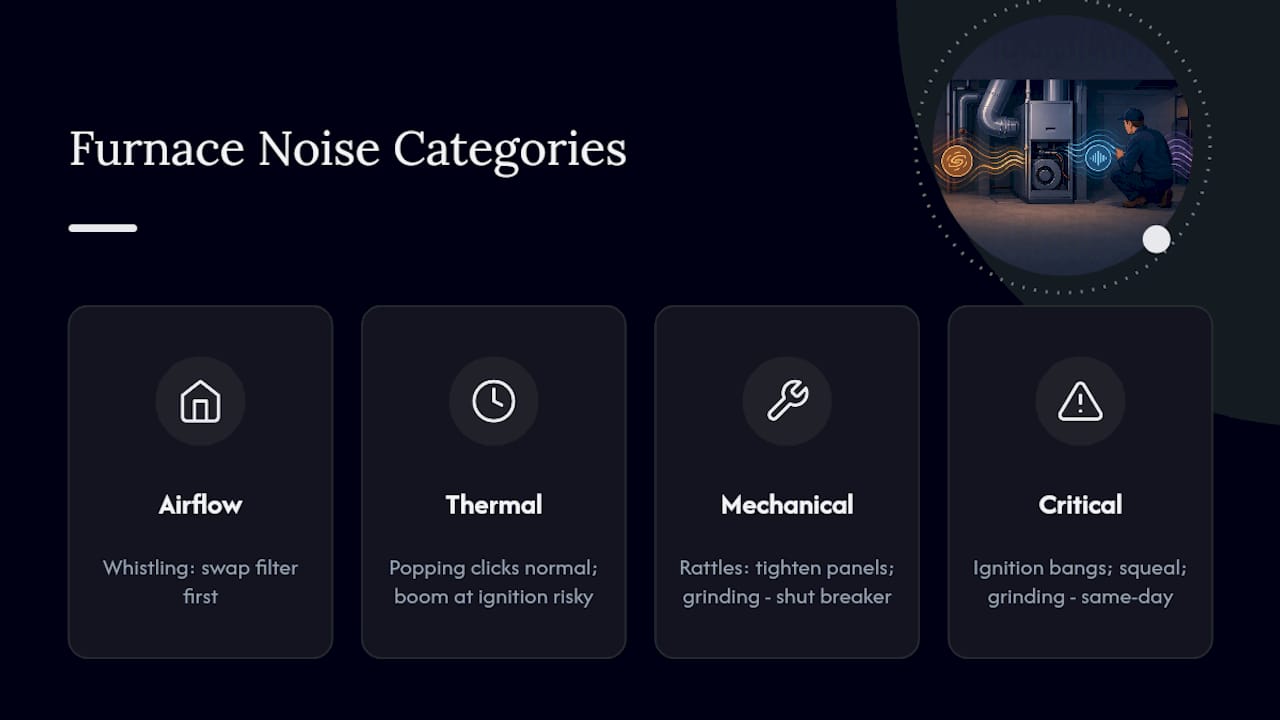
Rattling. Loose panels, screws, or ductwork moving against framing are the usual suspects. This typically happens during the blower’s run cycle and rarely signals danger. Tightening loose access panels and securing duct hangers resolves most rattles without a service call.
Buzzing or humming. A loud furnace blower that hums constantly, even when idle, often points to a loose transformer, a struggling blower motor, a failing run capacitor, or loose wiring. Trane’s troubleshooting guidance notes that persistent buzzing when the unit isn’t actively heating warrants a technician visit rather than a DIY fix, since it usually points to an electrical component wearing out.
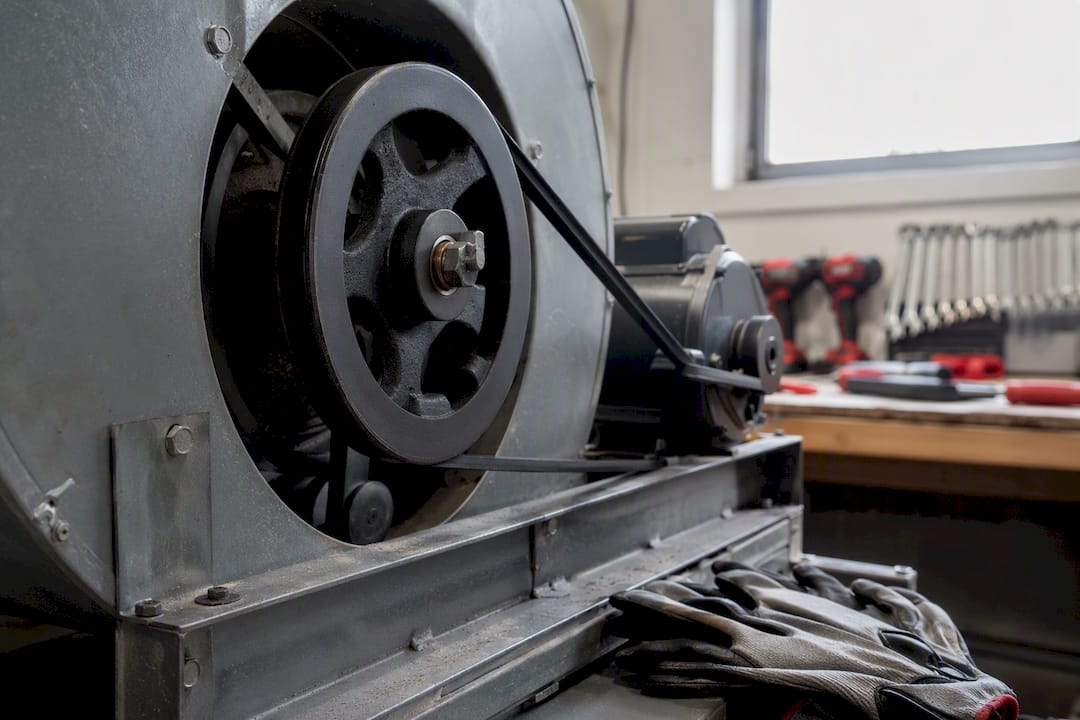
Squealing or screeching. This is the classic furnace screeching sound, and it almost always traces back to the blower assembly. A high-pitched squeal or continuous screech typically means worn bearings, a slipping belt on belt-drive units, or a blower wheel rubbing against its housing. A squeal that doesn’t fade after a few seconds needs same-day attention, since a seized motor can leave you without heat entirely.
Popping or clicking. Light ticking as ductwork heats and cools is normal thermal expansion, no different than a car engine clicking as it cools in your driveway. CenterPoint Energy’s guidance draws a clear line here: gentle ticks in the ducts are fine, but a forceful boom right at ignition is a different animal entirely.
Banging or booming. This is the one that gets homeowners searching for answers at 11 p.m. A single loud bang at startup usually means delayed ignition: gas accumulates in the burner chamber for a beat too long before it catches, then ignites all at once. It’s the furnace equivalent of a gas grill “whoofing” to life. One bang might be a fluke. Repeated bangs stress the heat exchanger and raise carbon monoxide risk, which makes this a same-day call, not a “keep an eye on it” situation.
Grinding or rumbling. A furnace rumbling sound with a metallic scraping edge points to blower wheel contact, failing motor bearings, or debris caught in the blower housing. Shut the unit off at the breaker if you hear grinding. Running it longer risks turning a bearing repair into a full motor replacement.
Whistling or hissing. A furnace whistling sound at the vents is almost always restricted airflow, usually a clogged filter or closed supply registers. Swap the filter first; it solves the problem more often than any other single fix.
One statistic worth remembering: three specific sounds warrant same-day service every time they occur, no exceptions: a loud ignition bang, metal-on-metal grinding, or any noise paired with a sounding CO alarm. Everything else usually allows time to schedule a normal appointment.
A Diagnostic Checklist to Narrow Down the Source
Run through these steps before you call anyone. They take fifteen minutes and give a technician a real head start.
- Note when the noise happens: startup, mid-cycle, or shutdown.
- Check and replace the air filter if it’s visibly dirty.
- Inspect access panels for gaps and tighten exposed screws.
- Walk outside and check the vent termination for blockage from snow, leaves, or nesting birds.
- Switch your thermostat fan setting from auto to on, then off, to help isolate whether the sound follows the blower or the burner.
Power the unit down at the thermostat or breaker for any visual inspection. Never remove the burner compartment cover or touch gas connections yourself.
Pro Tip: If you smell gas, don’t flip light switches or use your phone inside the house. Leave first, then call your gas utility or 911 from outside.
When to Shut Off Your Furnace and Call a Professional
Some signs don’t leave room for judgment calls. Shut the system down immediately and call for help if you notice:
- A loud bang or boom every time the burner ignites, not just once
- Persistent grinding or metal-on-metal scraping from the blower compartment
- Any smell of gas, rotten eggs, or scorched dust that doesn’t clear
- A carbon monoxide alarm sounding, anywhere in the house
- Visible flames outside the burner chamber or any sign of smoke
Turn the thermostat down, flip the breaker if you can do so safely, and call your gas utility or an HVAC technician from a safe distance. Repeated delayed ignition and any suspected heat-exchanger damage both qualify as same-day issues. A cracked heat exchanger can leak combustion gases into your air supply, and that’s not a repair worth postponing for a better afternoon.
What Furnace Repairs Typically Cost and How Long They Take
Repair costs vary by part, model age, and whether you need emergency service after hours, but rough patterns hold across most jobs:
- Ignitor or burner cleaning (for delayed ignition): usually a low-cost, same-day fix.
- Blower motor or bearing replacement (for squealing or grinding): mid-range cost, often completed same-day if the part is in stock.
- Duct or panel fastening (for rattling): typically the least expensive fix, sometimes resolved during a routine visit.
- Heat exchanger replacement (for confirmed cracks): the most expensive repair on this list, and sometimes a signal it’s time to compare replacement against repair.
Treat these as ballpark ranges, not quotes. Get a written estimate before authorizing work, and ask whether the price includes labor, diagnostics, and any applicable trip fee for emergency calls.
What a Professional Furnace Inspection Actually Involves
A proper visit starts with your description of the noise, then moves into a visual and combustion inspection, blower and motor checks, and a duct assessment — learn more about what an HVAC tune-up includes and why it matters. Technicians typically use a combustion analyzer, a CO detector, and direct inspection of the blower wheel to pinpoint the cause rather than guess. Have your notes ready: when the sound happens, where it seems loudest, and any odors you noticed. That five minutes of prep often shaves real time off the visit.
A Local Technician’s Take
After years of furnace service calls, one pattern holds: most “emergency” noise complaints trace back to a filter nobody changed since fall. Regular seasonal checks catch dust buildup and airflow restriction before they turn into 2 a.m. phone calls.
If Your Furnace Won’t Quiet Down, Here’s Your Next Step
Diagnosing a sound over the phone only goes so far. If your furnace has been banging, grinding, or screeching and you’d rather have someone confirm what’s actually wrong, Kcaircontrol sends technicians equipped to run the same combustion and CO checks described above, on the spot, rather than leaving you to guess between a filter swap and a motor replacement.

Kcaircontrol has built its furnace repair service around decades of local HVAC experience, with tune-up packages and financing options for homeowners who’d rather fix the root cause than keep patching symptoms. A visit typically includes a full combustion and CO safety check alongside the noise diagnosis, so you’re not paying for a return trip. If you’re dealing with a bang, screech, or grind right now, book a furnace repair visit and get a technician looking at the actual problem instead of another guess.
Frequently Asked Questions
Why is my furnace making noise all of a sudden?
A sudden new noise often follows a change in airflow, like a filter that finally clogged, or a mechanical part that just started failing, like a bearing or belt. Timing matters: note whether it started right after a temperature swing or filter change.
Is a humming furnace dangerous?
Not usually, but a persistent hum when the unit is idle suggests an electrical component like a transformer or capacitor is wearing out. It’s worth a technician visit before it fails completely and leaves you without heat.
Can a dirty filter cause a furnace to make noise?
Yes. A clogged filter restricts airflow, which commonly causes whistling at the vents and can strain the blower motor over time, sometimes contributing to a louder furnace blower overall.
Should I turn off my furnace if it’s banging?
If the bang happens once and doesn’t repeat, monitor it and schedule service. If it repeats every time the burner fires, shut the furnace off and call a technician the same day, since repeated delayed ignition can damage the heat exchanger.
How much does it cost to fix a noisy furnace?
It depends entirely on the cause. Filter and panel fixes cost little to nothing, blower motor repairs sit in the mid-range, and heat exchanger replacement runs highest. Get a written estimate before approving any work.
Sources
- Why does my furnace make a banging sound? Causes and diagnostics | PickComfort
- Furnace making buzzing noise — Trane Residential troubleshooting
- Furnace noises: what they mean — CenterPoint Energy customer guidance
- Furnace making noise? 9 sounds & best fixes — Aire One Peel
- Furnace making noise: 7 quick fixes — The Cooling Co.