
TL;DR:
- Energy efficiency monitoring continuously tracks and analyzes energy use to reduce costs and support environmental goals.
- It identifies hidden waste, detects faults early, and helps sustain long-term energy savings with real-time data.
Energy efficiency monitoring is defined as the continuous tracking and analysis of your home or property’s energy consumption to identify waste, reduce costs, and support environmental goals. The reason to monitor energy efficiency is straightforward: without real-time data, you cannot see where your money is going or why your bills keep climbing. Commercial buildings waste about 30% of energy on average, and homes face similar hidden losses. Monitoring gives you the visibility to fix those losses before they compound. For homeowners and property managers in Kansas City and beyond, that visibility translates directly into lower utility bills and a smaller carbon footprint.
Why monitor energy efficiency in your home?
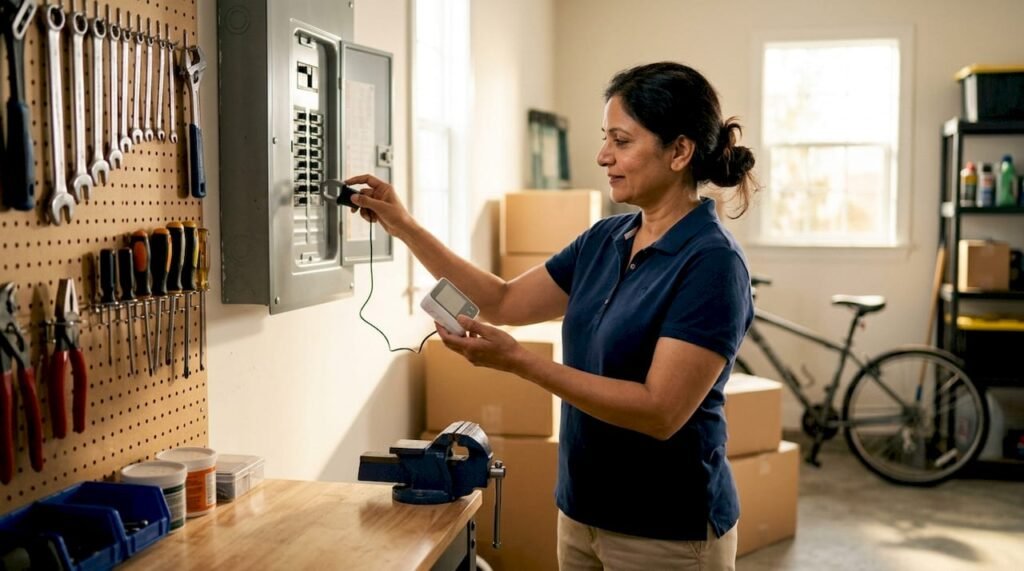
Energy efficiency monitoring, also called energy performance tracking, uses sensors, smart meters, and sub-meters to collect data on your property’s power use in real time. That data can be broken down by individual circuit, piece of equipment, or the whole building. The result is a detailed picture of exactly where electricity and gas are consumed, and when.

Monthly utility bills cannot provide that picture. Utility bills are retrospective summaries that lag your actual consumption by 30–60 days. By the time you see a spike, the waste has already happened and the money is already spent.
| Feature | Monthly utility bill | Real-time energy monitoring |
|---|---|---|
| Data freshness | 30–60 days delayed | Minute-by-minute |
| Fault detection | None | Alerts within days |
| Equipment-level detail | No | Yes |
| Savings identification | Limited | Specific and targeted |
| Demand charge visibility | No | Yes, with reduction potential |
Pro Tip: Install a whole-home energy monitor at your main electrical panel first. It gives you a baseline before you add circuit-level sub-meters for high-draw appliances like your HVAC system or water heater.
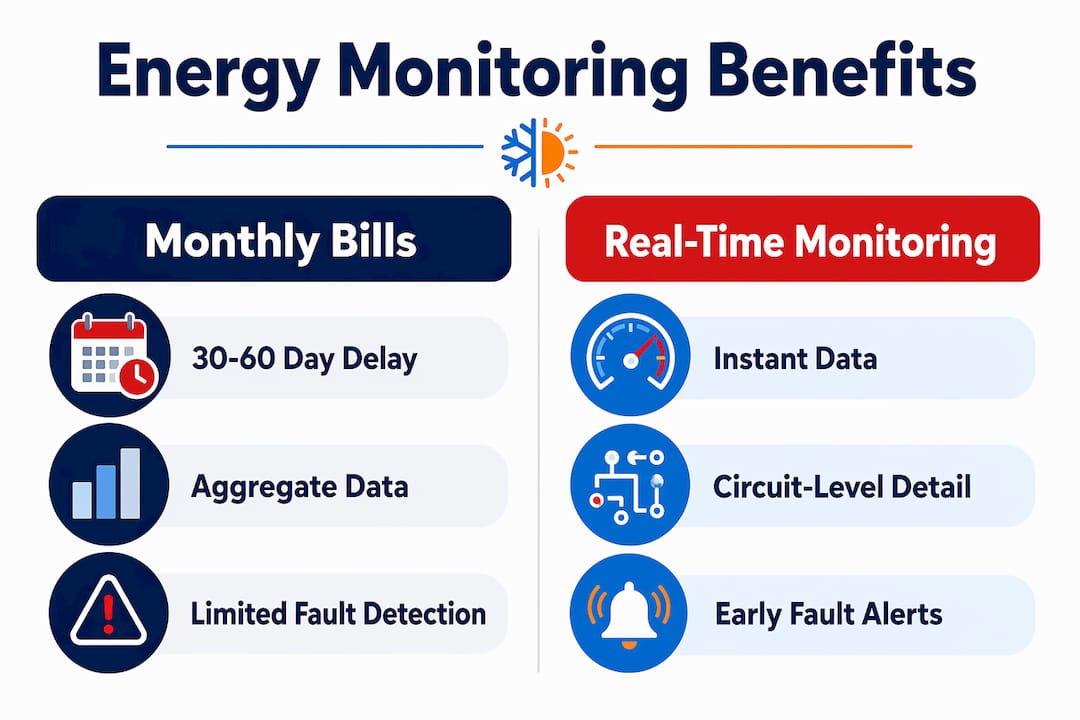
Real-time monitoring catches faults that bills never reveal. Demand charge reductions of 15–25% are achievable through operational adjustments that monitoring makes possible. That is a meaningful reduction for any property manager running multiple units or a homeowner with an aging HVAC system.
Why is monitoring energy efficiency important for long-term savings?
The biggest threat to your energy savings is not a one-time equipment failure. It is a slow, invisible process called savings degradation. Homes and businesses lose 20–40% of projected energy savings within two years without active monitoring. After five years, monitored systems save more than €4,000 cumulatively compared to unmonitored ones. That gap is not theoretical. It reflects real money leaving real households.
Savings degradation happens for four main reasons:
- Equipment drift: Thermostats, HVAC controls, and sensors gradually shift from their optimal settings without triggering any obvious alarm.
- Control overrides: A family member manually overrides a programmed schedule, and the override never gets reversed.
- Occupancy changes: A new tenant, a home office addition, or a seasonal shift changes usage patterns that your original settings did not account for.
- Seasonal variation: Bills mask whether a cost increase comes from colder weather or from a failing heat exchanger. Monitoring separates the two.
Key stat: Homes and businesses lose 20–40% of projected energy savings within two years without active monitoring.
All four causes are detectable only through continuous monitoring. A monthly bill shows you the total damage. A monitoring system shows you the exact moment the drift began and which piece of equipment caused it.
Pro Tip: Set a monthly alert threshold in your monitoring app. If consumption rises more than 10% above your baseline for that season, investigate before the next billing cycle.
For property managers, the math is even more compelling. A single undetected HVAC fault running for two months across multiple units can erase an entire season’s worth of efficiency gains. Monitoring turns that risk into a manageable, scheduled response.
How does energy monitoring support environmental sustainability?
Energy efficiency is the most direct tool available for reducing a building’s carbon footprint without replacing the building itself. Efficiency measures yield greater positive economic impact than supply-side energy interventions, and they also act as a buffer against price volatility. That means monitoring your energy use is both a financial and an environmental decision.
The global case for efficiency is well established. The Paris Agreement identifies energy efficiency as a primary mechanism for meeting national carbon reduction targets. At the property level, the connection is direct: every kilowatt-hour you avoid generating is one less unit of fossil fuel burned at the grid level.
“Energy efficiency significantly reduces climate vulnerability and increases readiness, acting as a key strategy for climate change mitigation and adaptation.” Research published in Energy Policy confirms that efficiency correlates with improved climate resilience scores globally, meaning properties and communities that prioritize efficiency are better prepared for environmental disruptions.
Monitoring also supports ESG and net-zero reporting requirements. Monitoring data supports sustainability reporting and regulatory compliance, which matters increasingly for property managers who answer to investors, lenders, or local ordinances. Tracking your consumption is no longer just good practice. For many properties, it is becoming a requirement.
Practical ways to track and improve your property’s energy usage
Getting started with energy monitoring does not require a full building retrofit. The steps below move from basic to detailed, so you can start where your budget and comfort level allow.
- Install a whole-home energy monitor. Devices that connect to your main electrical panel give you a real-time view of total consumption. This is your baseline.
- Add sub-meters to high-draw systems. Your HVAC system, electric water heater, and electric dryer are the top energy consumers in most homes. Sub-metering them reveals their individual contribution.
- Set consumption alerts. Most monitoring platforms allow you to set thresholds. An alert at 110% of your normal baseline gives you time to investigate before costs escalate.
- Review data weekly for the first month. Patterns emerge quickly. You will see which appliances run during off-peak hours and which ones cycle more than expected.
- Schedule a professional HVAC inspection. Monitoring data often points to HVAC inefficiency first. An HVAC tune-up corrects the mechanical issues that monitoring identifies.
- Upgrade based on data, not guesswork. Replace equipment only when your monitoring data shows a sustained performance decline, not just because a unit is old.
Common problems that monitoring catches include HVAC refrigerant leaks, abnormal consumption spikes, equipment running during unoccupied hours, and standby power waste from devices left plugged in. Each of these is invisible on a utility bill but obvious on a monitoring dashboard.
Pro Tip: Check your energy-efficient HVAC options before upgrading. A higher-efficiency unit paired with active monitoring delivers compounding savings that a unit upgrade alone cannot match.
For homeowners managing water heating costs alongside HVAC, understanding hot water recirculation systems can also reduce standby energy losses that monitoring frequently flags as a hidden drain.
How energy monitoring empowers proactive home and property management
Reactive bill management means you learn about a problem after you have already paid for it. Proactive energy management means your monitoring system alerts you the day a problem starts. That shift changes how you budget, how you schedule maintenance, and how you make equipment decisions.
The practical advantages of proactive monitoring include:
- Planned maintenance instead of emergency repairs. Early fault detection reduces emergency repairs and extends equipment lifespan. A furnace that shows a gradual efficiency decline over three weeks gets serviced on your schedule, not on a cold January night.
- Accurate budget forecasting. When you know your baseline consumption by season, you can predict utility costs within a tight range. That matters for property managers setting annual operating budgets.
- Faster investment decisions. Monitoring data tells you whether a new HVAC unit will pay back its cost in three years or seven. That is a decision you cannot make accurately from utility bills alone.
- Automated responses. Many monitoring platforms integrate with smart thermostats and building controls to automatically reduce load when consumption spikes, cutting demand charges without manual intervention.
The principle is simple: you cannot manage what you cannot see. Turning real-time data into scheduled responses is what separates properties that sustain their efficiency gains from those that watch savings erode year after year.
Key Takeaways
Monitoring energy efficiency is the only reliable method for sustaining long-term savings, catching equipment faults early, and meeting environmental goals with verified data.
| Point | Details |
|---|---|
| Real-time data beats monthly bills | Utility bills lag 30–60 days; monitoring catches faults within days and prevents compounding waste. |
| Savings degradation is real | Without monitoring, homes lose 20–40% of projected savings within two years. |
| HVAC is the top monitoring target | HVAC faults, refrigerant leaks, and control overrides are the most common issues monitoring detects. |
| Environmental benefits are measurable | Efficiency reduces carbon output and supports climate resilience, ESG reporting, and regulatory compliance. |
| Proactive management cuts emergency costs | Early fault detection replaces expensive emergency repairs with planned, scheduled maintenance. |
What I’ve learned from watching homeowners manage energy without data
After working with homeowners across Kansas City for years, the pattern is consistent. Homeowners who rely only on utility bills are always surprised. They see a high bill, assume it was the weather, and move on. The real cause, often a failing HVAC component or a control that got overridden months earlier, keeps draining money until something breaks completely.
The homeowners who monitor their energy use behave differently. They notice a 12% consumption increase in october, check their monitoring dashboard, and find their furnace cycling twice as often as normal. They call for service before the furnace fails. That one catch typically saves more than the cost of a year’s worth of monitoring equipment.
What I find most underappreciated is the habit that monitoring builds. Once you can see your consumption in real time, you start making small behavioral changes automatically. You notice the electric dryer running at 2:00 PM on a peak-rate day and shift it to the evening. You see the water heater holding temperature all night for an empty house and adjust the schedule. None of these changes require a major investment. They just require visibility.
The environmental side of this is not abstract either. Every household that sustains its efficiency gains contributes to a measurable reduction in grid demand. That reduction matters at the community level, especially during peak summer and winter periods when the grid is most stressed. Monitoring is not just a personal finance tool. It is a responsible home management practice.
— AB
Kcaircontrol’s HVAC services support your efficiency goals

Kcaircontrol has served Kansas City homeowners for over 70 years, and we see the same thing every season: properties that monitor their energy use catch HVAC problems early, while those that don’t end up calling us for emergency repairs that could have been avoided. Our team specializes in HVAC tune-ups, furnace repairs, duct cleaning, and full system upgrades that address exactly the inefficiencies your monitoring data will flag. When your dashboard shows a problem, we fix it fast. If you need urgent help, our emergency HVAC repair service gets your system back on track with minimal disruption. Schedule a service call with Kcaircontrol and put your monitoring data to work.
FAQ
What does energy efficiency monitoring actually measure?
Energy efficiency monitoring measures electricity and gas consumption at the whole-building, circuit, or equipment level in real time. It tracks when energy is used, how much, and by which system, giving you data that utility bills cannot provide.
How much can monitoring reduce my energy costs?
Fault detection through real-time monitoring achieves a 9% median savings by correcting inefficiencies, with demand charge reductions of 15–25% possible through operational adjustments.
What is savings degradation and why does it matter?
Savings degradation is the gradual loss of energy efficiency gains over time due to equipment drift, control overrides, and occupancy changes. Homes lose 20–40% of projected savings within two years without active monitoring to catch these shifts.
Do I need a professional to set up energy monitoring?
Basic whole-home monitors are designed for homeowner installation at the main electrical panel. For circuit-level sub-metering or integration with your HVAC controls, a professional installation from a qualified technician delivers more accurate and reliable results.
How does monitoring help with environmental sustainability?
Monitoring provides verified consumption data that supports carbon footprint reduction, ESG reporting, and compliance with local energy regulations. Efficiency correlates with improved climate resilience globally, making monitoring a direct contribution to both household and community sustainability goals.