
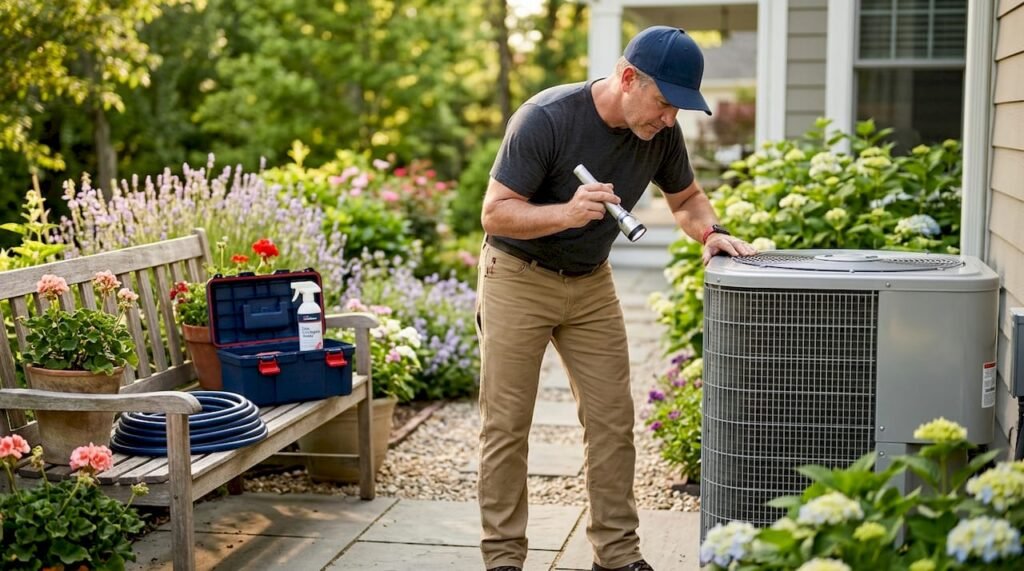
TL;DR:
- Dirty AC coils reduce heat transfer efficiency, leading to higher energy bills and system wear. Poor maintenance can also promote mold growth, worsening indoor air quality and causing respiratory issues. Regular professional cleaning of indoor and outdoor coils is essential for optimal system performance and health safety.
Dirty AC coils are the leading cause of reduced cooling performance, higher energy bills, and poor indoor air quality in residential systems. The coils in your air conditioner, specifically the evaporator coil indoors and the condenser coil outdoors, handle all heat transfer between your home and the outside air. When dirt, dust, and debris coat these surfaces, that heat exchange slows down. The U.S. Department of Energy confirms that dirt buildup reduces coil heat-absorbing capacity, forcing your system to run longer and work harder to reach the same temperature. Understanding why clean AC coils matter gives you the power to protect your investment and keep your home comfortable all summer.
Why dirty AC coils hurt your system’s performance and energy use
Dirty coils create two problems at once: restricted airflow and reduced heat transfer. When a layer of grime coats the evaporator or condenser coil fins, air cannot move through them freely. The DOE identifies airflow resistance from coil and fin issues as the central driver of AC efficiency loss. Less airflow means the refrigerant inside the coil cannot absorb or release heat at the rate your system was designed for.
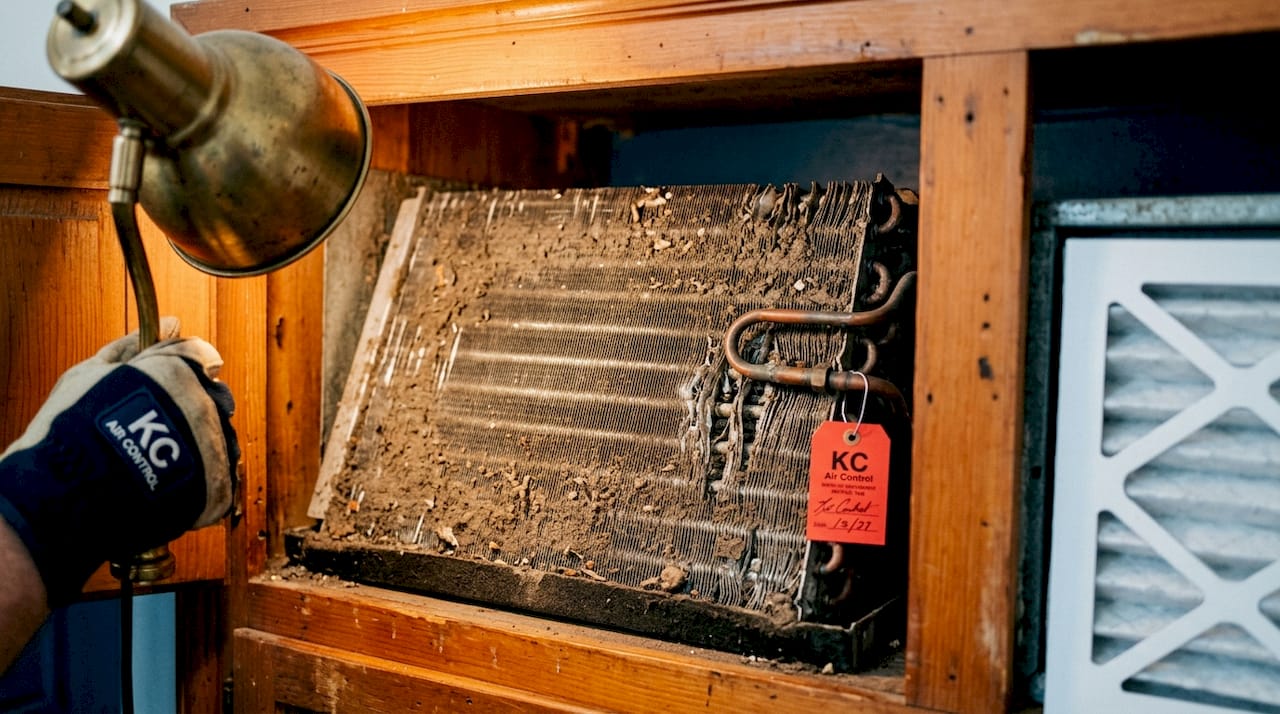
The compressor pays the price. When heat transfer slows, the compressor runs longer cycles trying to compensate. Southern Living reports that unclean coils accelerate equipment degradation and inefficiency, shortening the system’s usable life. Longer run times also push your electricity bill up month after month, even though you are getting less cooling for the money.
Bent or damaged fins make the problem worse. The DOE notes that bent fins restrict airflow and reduce heat transfer, and that fin combs can straighten them. A fin comb is an inexpensive tool available at most hardware stores, and using one during a cleaning session takes only a few minutes.
Here is what dirty coils actually cause in practice:
- Longer cooling cycles that never quite reach your thermostat setting
- Blower motors working at higher loads, increasing wear
- Reduced humidity control, making your home feel sticky even when the AC runs
- Higher monthly electricity costs with no improvement in comfort
- Compressor overheating, which is one of the most expensive AC repairs you can face
Pro Tip: Inspect your condenser coil fins at the start of each cooling season. If you can see visible debris packed between the fins or notice fins that look crushed or bent, address both issues before the heat of summer arrives. Catching them early costs nothing. Ignoring them can cost hundreds.
What are the health risks of not cleaning AC coils?
Dirty AC coils do not just hurt your system. They hurt the people inside your home. Medical experts quoted by Khaleej Times link poor AC maintenance to respiratory symptoms including coughing, sneezing, headaches, and worsening allergies. The mechanism is straightforward: moisture collects on evaporator coils during normal operation, and when dirt is present, that moisture creates ideal conditions for mold and bacteria growth.
Once mold establishes itself on a coil, every time the blower runs, it pushes contaminated air through your ducts and into every room. People with asthma, seasonal allergies, or compromised immune systems feel this first, but anyone in the home is affected over time. The air quality problem compounds because dirty coils also allow more dust and particulates to bypass the filter and settle deeper into the system.
Here are the most common health warning signs that your AC coils may need attention:
- Persistent sneezing or runny nose that worsens when the AC runs
- Musty or stale odors coming from vents, especially at startup
- Increased allergy symptoms during cooling season compared to other times of year
- Headaches or fatigue that improve when you spend time outdoors
- Visible dust buildup around supply vents despite regular filter changes
“Dirty air conditioning systems with mold, dust, and moisture buildup are a direct contributor to indoor respiratory symptoms. Regular coil cleaning is not optional maintenance. It is a health measure.” — Medical experts cited by Khaleej Times, 2026
Monitoring your household’s symptoms alongside your AC maintenance schedule gives you a practical early warning system. If symptoms appear and your last coil cleaning was more than a year ago, that connection is worth taking seriously.
Outdoor vs. indoor AC coil maintenance: what you need to know
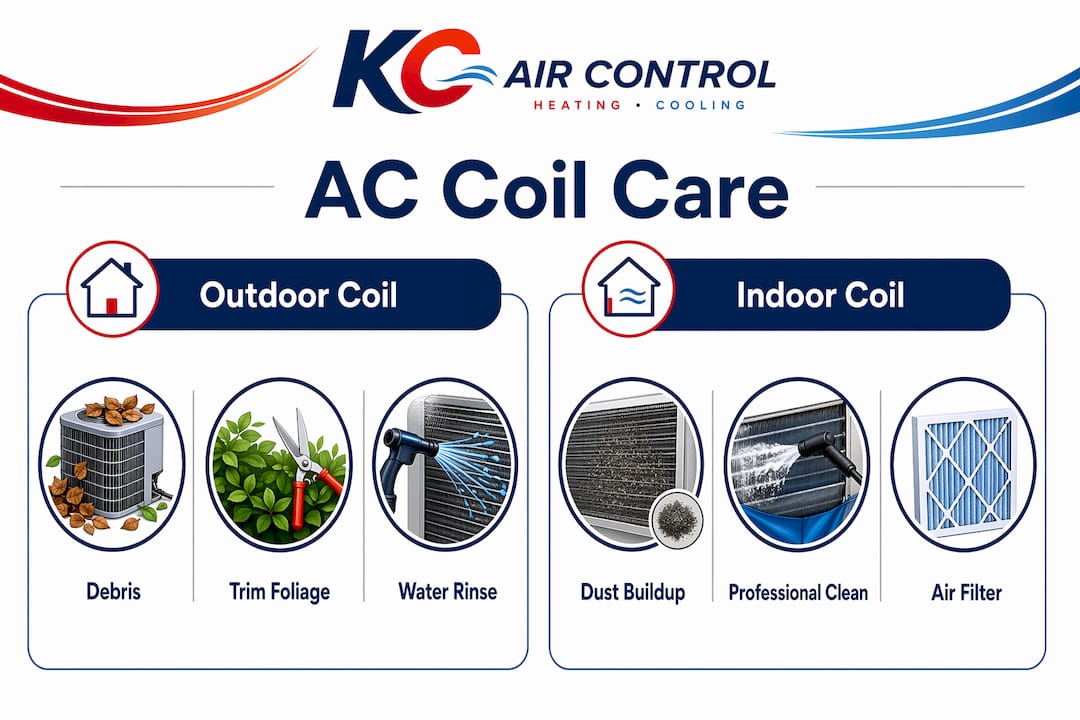
Your AC system has two coils, and they live in very different environments. Understanding that difference helps you prioritize maintenance correctly.
| Feature | Evaporator coil (indoor) | Condenser coil (outdoor) |
|---|---|---|
| Location | Inside air handler or furnace cabinet | Inside outdoor unit |
| Primary contaminants | Dust, mold, moisture, skin particles | Dirt, grass clippings, cottonwood, leaves |
| DIY accessibility | Low. Requires cabinet access and care | Moderate. Visible and reachable |
| Cleaning method | Coil cleaner spray, professional service | Gentle water rinse, fin comb, debris removal |
| Cleaning frequency | Annually, by a qualified technician | Annually, with seasonal debris checks |
The DOE recommends keeping debris away from outdoor units and trimming foliage at least two feet back from all sides. This is not just about aesthetics. Overgrown shrubs and grass clippings pulled into the condenser coil re-contaminate it within weeks of cleaning. Managing the outdoor environment around your condenser is one of the most cost-effective maintenance habits you can build.
Indoor evaporator coils are a different challenge. They sit inside a closed cabinet, often stacked above a furnace, and accessing them without damaging refrigerant lines or electrical components requires experience. Most homeowners can safely rinse a condenser coil with a garden hose on a gentle setting, but evaporator coil cleaning is better handled by a qualified HVAC contractor. The DOE guidance on coil inspection makes clear that professional service is the right call for indoor coils.
Pro Tip: After cleaning your outdoor condenser, take five minutes to clear a two-foot perimeter of weeds, mulch, and low branches. This single habit extends the time between cleanings and keeps airflow consistent all season.
When and how often should homeowners clean their AC coils?
The standard recommendation from HVAC professionals and the DOE is at least once per year, ideally in spring before the cooling season begins. However, that schedule assumes average conditions. Homes near construction sites, in areas with heavy cottonwood or pollen, or with pets that shed heavily may need coil attention twice per year.
A critical point that many homeowners miss: even with clean filters, evaporator coils accumulate dirt over time. Filters catch large particles, but fine dust and airborne oils pass through and coat the coil surface gradually. Relying on filter changes alone and skipping coil inspection is one of the most common maintenance oversights in residential HVAC systems.
Watch for these signs that your coils need cleaning now, regardless of your last service date:
- Your home takes noticeably longer to cool than it did last season
- Energy bills have risen without a change in usage habits
- You notice a musty smell when the system first starts up
- Humidity feels higher indoors even when the AC runs continuously
- Ice forms on the refrigerant lines near the indoor unit
For condenser coils, a yearly cleaning with gentle water spray is a manageable DIY task for most homeowners. For evaporator coils, schedule a professional inspection annually. Many HVAC contractors, including Kcaircontrol, bundle coil inspection into a standard AC tune-up service, which makes it easy to stay on schedule without tracking multiple appointments.
How to safely clean AC coils and when to call a professional
Cleaning your outdoor condenser coil is a practical DIY task when done correctly. Here is a safe process that protects the coil and gets real results:
- Turn off power to the unit at the disconnect box near the condenser before touching anything.
- Remove large debris by hand. Pull out leaves, grass, and cottonwood from around and inside the unit.
- Rinse from the inside out using a garden hose on a gentle spray setting. Spraying from outside pushes dirt deeper into the fins. Spraying from inside pushes it out.
- Straighten bent fins with a fin comb, working carefully in the direction of the fin channels.
- Restore power only after the unit is fully dry and you have replaced any panels you removed.
Evaporator coil cleaning follows a different set of rules. The coil sits in a confined space with refrigerant lines, electrical connections, and a condensate drain. Using the wrong cleaner or too much water pressure can damage the coil coating, create drainage problems, or introduce moisture into areas that should stay dry. HVAC experts recommend professional service for indoor coils to avoid these risks.
A professional cleaning also includes a full inspection. A technician checks refrigerant levels, tests electrical components, clears the condensate drain line, and confirms the system is operating within spec. That combination of cleaning and inspection catches problems before they become breakdowns. For homeowners who want to learn more about AC maintenance best practices, building a relationship with a trusted local HVAC provider is the most reliable path to consistent system health.
Pro Tip: Change your air filter every 30 to 90 days depending on your home’s dust load. A clean filter is the first line of defense for your evaporator coil. The less particulate that reaches the coil, the longer you go between professional cleanings.
Key takeaways
Cleaning AC coils restores the airflow and heat transfer your system needs to cool efficiently, and skipping this maintenance leads directly to higher energy costs, system wear, and degraded indoor air quality.
| Point | Details |
|---|---|
| Coil dirt reduces efficiency | Grime on coils slows heat transfer and forces longer run times, raising energy bills. |
| Health risks are real | Mold and dust on dirty coils circulate contaminants that worsen allergies and respiratory symptoms. |
| Indoor and outdoor coils differ | Condenser coils are DIY-friendly with a hose; evaporator coils require professional service. |
| Annual cleaning is the minimum | Clean at least once per year, more often in dusty or high-pollen environments. |
| Filters alone are not enough | Even with regular filter changes, evaporator coils accumulate dirt and need separate inspection. |
What years of AC maintenance taught me about coil cleaning
Most homeowners I talk to assume that if their filter is clean, their AC is fine. That assumption is the single most expensive mistake in residential HVAC maintenance. The filter catches what it catches. Everything finer than the filter’s rating goes straight to the evaporator coil and stays there.
What surprises people most is how subtle the performance loss is at first. Your system does not suddenly stop working. It just runs a little longer each week. Your bill goes up five dollars, then ten. You turn the thermostat down a degree to compensate. By the time the problem is obvious, the compressor has been under strain for months. I have seen systems that needed a full compressor replacement that could have been avoided with two annual coil cleanings.
The outdoor condenser is the one homeowners can actually see, and even that gets overlooked. Cottonwood season in the Kansas City area is particularly brutal. A condenser coil can go from clean to packed with white fluff in two weeks during peak season. Checking it once a month during May and June costs you ten minutes. Replacing a failed compressor costs you thousands.
My honest recommendation: treat coil cleaning the same way you treat an oil change. You do not wait until the engine light comes on. You schedule it, you do it, and you move on. The cooling system maintenance tips that actually protect your system long-term are the boring ones. Consistent, scheduled, and not skipped.
— AB
Keep your AC running right with Kcaircontrol
If your system has not had a professional coil inspection this year, now is the right time to schedule one. Kcaircontrol has served Kansas City homeowners for over 70 years, and our technicians handle everything from condenser coil cleaning to full evaporator inspections as part of a thorough seasonal tune-up.

We make it easy to stay on top of your AC maintenance without the guesswork. Our AC repair and maintenance team checks coil condition, refrigerant levels, condensate drainage, and electrical components in a single visit. Whether you need a routine tune-up or suspect your system is already struggling from dirty coils, we are ready to help. Schedule your appointment online today and keep your home comfortable all season long.
FAQ
Why is cleaning AC coils so important?
Cleaning AC coils restores proper heat transfer and airflow, which are the two functions your system depends on to cool your home. The DOE confirms that dirt buildup directly reduces a coil’s heat-absorbing capacity, leading to longer run times and higher energy costs.
How often should AC coils be cleaned?
Most HVAC professionals recommend cleaning AC coils at least once per year, ideally before the cooling season begins. Homes in dusty environments or areas with heavy pollen may benefit from cleaning twice per year.
Can dirty AC coils make you sick?
Yes. Medical experts cited by Khaleej Times link dirty AC systems with mold and dust buildup to respiratory symptoms including coughing, sneezing, and worsening allergies. Contaminated coils circulate those particles through your ductwork every time the system runs.
Can I clean my AC coils myself?
Outdoor condenser coils are safe for most homeowners to clean with a gentle water rinse and a fin comb. Indoor evaporator coils require professional service because of the risk of damaging refrigerant lines, electrical components, and the coil coating itself.
Do clean air filters mean my coils are clean too?
No. Even with regular filter changes, fine dust and airborne particles pass through and accumulate on evaporator coils over time. The DOE specifically notes that coil inspection and cleaning is necessary beyond filter maintenance to sustain system efficiency.