

TL;DR:
- Mini split systems are ductless heating and cooling units that deliver conditioned air directly to individual rooms. They use inverter technology to improve efficiency and eliminate duct loss, offering benefits like zoned control, quiet operation, and long service life. Installation requires a licensed technician and proper planning but provides a cost-effective, energy-efficient alternative to traditional HVAC systems, especially for older homes.
A mini split system is a ductless heating and cooling solution that delivers conditioned air directly to individual rooms through a compact indoor unit connected to an outdoor compressor. Unlike central air, it requires no ductwork at all. That single difference drives most of its advantages: lower energy waste, flexible installation, and room-by-room temperature control. If you are researching energy-efficient HVAC upgrades for your home, understanding what mini split systems offer is the right place to start.
What are mini split systems and how do they work?
A mini split system has two main components: an outdoor compressor unit and one or more indoor air handlers. A set of refrigerant lines, a power cable, and a condensate drain connect the two through a small hole in the wall, typically about 3 inches wide. The indoor unit mounts on a wall or ceiling and delivers heated or cooled air directly into the room.
The system works on the heat pump principle. Rather than burning fuel or using electric resistance to generate heat, it moves heat from one place to another. In summer, it pulls heat out of your home and releases it outside. In winter, it extracts heat from outdoor air and brings it inside. This process makes mini splits 200%–400% more efficient than electric resistance heating.
The technology that makes this possible is the inverter-driven compressor. Traditional systems run at full speed or not at all. An inverter compressor adjusts its speed continuously to match the exact demand of the room. Inverter technology increases efficiency by 30%–50% over non-inverter systems. That means steadier temperatures and lower electricity bills.
Pro Tip: Run your mini split continuously at a moderate setting rather than switching it on and off. Inverter technology is designed for constant low-speed operation, which is where it achieves peak efficiency.
Traditional ducted systems lose a significant amount of energy before air ever reaches a room. Duct leakage and thermal transfer can waste over 30% of a system’s total energy output. Mini splits eliminate that loss entirely by delivering air directly where it is needed.
What are the main benefits of mini split systems for homeowners?
Mini splits offer five advantages that matter most to homeowners weighing an HVAC upgrade.
-
Zoned temperature control. Each indoor unit operates independently. You set the bedroom to 68°F and the living room to 72°F without any conflict. Independent room temperature control avoids heating or cooling empty spaces, which cuts energy waste directly.
-
High energy efficiency. The combination of no duct losses and inverter technology produces real savings on monthly utility bills. HVAC professional Jason Krieg notes that eliminating duct losses is the single biggest efficiency advantage mini splits hold over central systems.
-
Quiet operation. Modern indoor units run at noise levels as low as 19–30 dB, which is quieter than a whispered conversation. That makes them well suited for bedrooms, home offices, and nurseries.
-
Long service life. With proper maintenance, mini splits last 15–20 years on average. That lifespan is comparable to or longer than many central air systems, making the upfront investment more defensible over time.
-
Better indoor air quality. Each indoor unit contains its own filter. You clean it regularly and it traps dust, allergens, and particulates before they circulate through the room. For homeowners concerned about home air quality, this is a meaningful benefit that ducted systems cannot match without additional filtration equipment.
Mini splits also solve a specific problem that older homes face. Installers recognize ductless systems as the only practical HVAC option for many older homes where adding ductwork is structurally impractical or prohibitively expensive. A finished basement, a converted garage, or a sunroom addition are all strong candidates.
What should homeowners know about mini split installation?
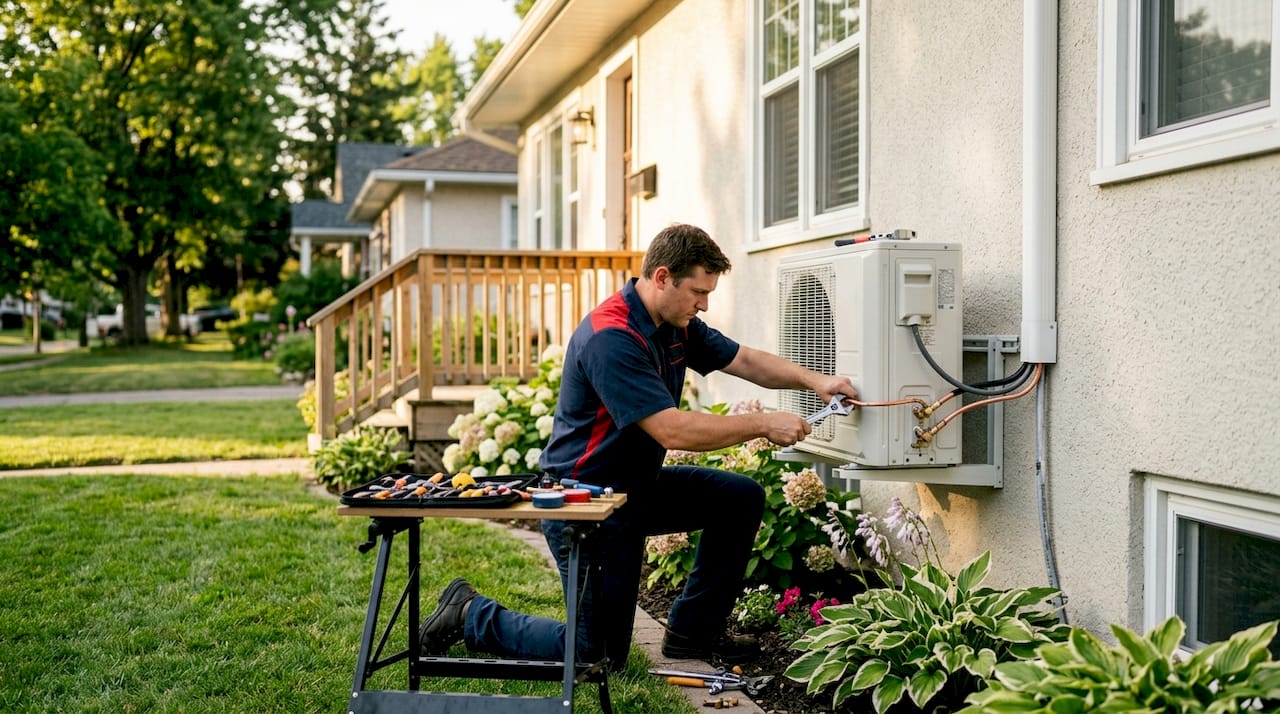
Installation is simpler than adding ductwork, but it is not a DIY project. A licensed HVAC technician mounts the indoor unit, drills the wall penetration, runs the refrigerant lines, and vacuums the line set to remove moisture before charging the system with refrigerant. Improper vacuuming or sealing causes refrigerant leaks and performance problems that are expensive to fix after the fact.
The wall penetration and refrigerant line routing deserve careful planning. Lines running along the exterior of your home are functional but visible. A professional installer can route lines through walls or use line-set covers that blend with your home’s exterior. Underestimating this step leads to results that work well mechanically but look unfinished.
Here is what to expect during a standard installation:
- The outdoor compressor unit is mounted on a pad or wall bracket with clear airflow on all sides.
- The indoor air handler is positioned high on a wall for even air distribution across the room.
- A 3-inch hole through the wall connects the two units with refrigerant lines, a power cable, and a condensate drain.
- The technician vacuums the line set, checks for leaks, and charges the system.
- The condensate drain routes water away from the unit, either through the wall or into a drain line.
Ongoing maintenance is straightforward but specific. Clean the indoor unit’s filters every two to four weeks during heavy use. Check the condensate drain line for clogs at least once a season. A blocked drain causes water to back up and leak inside your home. This is the maintenance step homeowners most often overlook, and it is the one most likely to cause visible damage.
Pro Tip: Schedule a professional seasonal HVAC maintenance visit once a year. A technician checks refrigerant levels, inspects electrical connections, and clears the condensate drain before problems develop.
Preparing your home before installation also pays off. Reviewing home preparation steps for heating season helps you identify gaps in insulation or air sealing that reduce any HVAC system’s effectiveness.
How do mini splits compare in cost and performance to other HVAC options?
Cost is the most common objection to mini splits, and the numbers deserve a clear look.
| Category | Mini split (single zone) | Mini split (multi-zone) | Conventional ductwork |
|---|---|---|---|
| Installed cost | $1,500–$4,500 | $4,000–$18,000 | $5,000–$15,000 |
| Duct energy loss | None | None | Over 30% |
| Average lifespan | 15–20 years | 15–20 years | Varies by system |
| Noise level (indoor) | 19–30 dB | 19–30 dB | 40–60 dB typical |
A single-zone mini split installation costs $1,500–$4,500, while adding conventional ductwork to a home runs $5,000–$15,000. For homeowners adding a room or upgrading a space without existing ducts, the mini split is frequently the more affordable path.
Multi-zone systems that serve an entire home cost more upfront but eliminate duct installation costs entirely. The efficiency gains from inverter technology and zero duct losses reduce monthly operating costs compared to older central systems. Efficiency ratings to look for include SEER2 for cooling and HSPF2 for heating. Higher numbers in both categories mean lower operating costs year over year.
Window air conditioners cost less upfront but deliver none of the heating capability, efficiency, or longevity that a mini split provides. They also require seasonal removal and storage, create security vulnerabilities in windows, and produce significantly more noise.
Practical tips for selecting and using mini splits effectively
Choosing the right system starts with sizing. An undersized unit runs constantly and never reaches your target temperature. An oversized unit short-cycles, which wastes energy and causes humidity problems. A licensed HVAC technician performs a Manual J load calculation to determine the correct capacity for each room.
Key selection and usage tips:
- Match zones to your lifestyle. A two-bedroom home where one bedroom sits empty most of the day benefits from a two-zone system that lets you stop conditioning the unused room entirely.
- Use the continuous mode. Inverter systems work best when left running at a steady, moderate setting. Turning the unit off and on repeatedly forces the compressor to work harder each restart.
- Place the indoor unit correctly. Mount it on an interior wall where airflow reaches the entire room. Avoid positioning it directly above a bed or desk where constant airflow causes discomfort.
- Keep filters clean. Dirty filters reduce airflow, force the system to work harder, and degrade indoor air quality. A quick rinse every few weeks takes less than five minutes.
- Review air conditioning tips specific to your climate. Kansas City summers are demanding, and knowing how to set your system for peak season makes a real difference in comfort and cost.
Pro Tip: Ask your installer about ENERGY STAR-certified models. These meet strict efficiency standards set by the U.S. Environmental Protection Agency and often qualify for federal tax credits or utility rebates that reduce your net cost.
Key Takeaways
Mini split systems deliver the strongest combination of energy efficiency, zoned control, and installation flexibility available in residential HVAC today.
| Point | Details |
|---|---|
| Ductless design eliminates energy waste | Mini splits avoid the 30%+ energy loss that duct leakage causes in central systems. |
| Inverter technology cuts operating costs | Continuous speed adjustment improves efficiency by 30%–50% over non-inverter systems. |
| Installation costs compare favorably | Single-zone systems cost $1,500–$4,500, often less than adding new ductwork. |
| Maintenance requires drain line attention | Clean filters every 2–4 weeks and check the condensate drain each season to prevent leaks. |
| Zoned control reduces waste directly | Independent room setpoints stop you from conditioning spaces no one is using. |
Why I think mini splits are underused in older American homes
Most homeowners I talk to assume mini splits are a niche product for new construction or additions. That assumption is wrong, and it costs people money. The homes that benefit most from ductless systems are the ones built before 1980, the ones with plaster walls, finished basements, and no practical path for duct installation. Those homes exist all over Kansas City, and their owners are paying more than necessary to heat and cool them with window units or electric baseboard heaters.
The efficiency argument is not theoretical. Moving heat rather than generating it, at 200%–400% the output of electric resistance, is a physics advantage that shows up on every utility bill. Homeowners who switch from electric baseboard heating to a mini split heat pump often see the largest savings of any HVAC upgrade they have ever made.
The installation concern is real but manageable. Line concealment requires planning and a skilled installer. The homeowners who end up unhappy with their mini split usually had a rushed installation where refrigerant line routing was an afterthought. Spend time with your installer discussing line placement before work begins. That conversation costs nothing and prevents regret.
My honest recommendation: if your home lacks central air, has one or two rooms that never reach a comfortable temperature, or relies on any form of electric resistance heating, a mini split deserves serious consideration. The technology is mature, the efficiency gains are proven, and the installation process is far less disruptive than adding ductwork.
— AB
Kcaircontrol is ready to help you with mini split installation
Kcaircontrol has served Kansas City homeowners for over 70 years, and mini split installation is one of the services we handle with the most care. Getting the system sized correctly, the lines routed cleanly, and the refrigerant charged properly requires experience that protects your investment from day one.

If you are ready to find out whether a ductless system fits your home, the fastest next step is to book a service appointment with our team. We assess your space, explain your options, and give you a clear picture of costs before any work begins. Homeowners who want to review current offers first can also claim a current promotion before scheduling.
FAQ
What are mini split systems used for?
Mini split systems provide both heating and cooling for individual rooms or zones in a home without requiring ductwork. They work year-round as heat pumps, making them a complete HVAC solution rather than just an air conditioner.
How long do mini split systems last?
Modern mini splits last 15–20 years with proper maintenance, including regular filter cleaning and annual professional service. That lifespan is comparable to most central air systems.
Are mini splits expensive to run?
Mini splits are among the most efficient residential HVAC options available. They eliminate duct energy losses and use inverter technology to reduce electricity consumption by 30%–50% compared to non-inverter systems.
Can a mini split heat a home in cold weather?
Yes. Mini split heat pumps extract heat from outdoor air even at low temperatures and deliver it inside. They are significantly more efficient than electric resistance heating at temperatures well below freezing, depending on the model’s cold-climate rating.
Do mini splits require professional installation?
Professional installation is required for refrigerant handling, which is regulated by the U.S. Environmental Protection Agency. Improper installation also causes refrigerant leaks, poor performance, and voided manufacturer warranties.