
TL;DR:
- Duct sealing closes leaks in home HVAC systems, reducing air loss and lowering energy costs. It improves indoor air quality and balances room temperatures, enhancing comfort. Professional sealing costs between $1,500 and $3,200, with savings and safety benefits lasting for years.
Duct sealing is the process of closing leaks and gaps in your home’s HVAC ductwork to stop conditioned air from escaping before it reaches your living spaces. Why homeowners need duct sealing comes down to one hard fact: typical duct systems lose 20–30% of the air your furnace or AC produces, meaning you pay to condition air that never reaches you. That loss drives up energy bills, strains your equipment, and pulls dust, allergens, and even combustion gases into your home’s air supply. Sealing your ducts fixes all three problems at once, and the industry term for this work is duct air sealing, recognized by ENERGY STAR and the Department of Energy as a top home efficiency upgrade.
Why homeowners need duct sealing: the real cost of leaky ducts
Duct leaks are not rare. They are the default condition in most American homes, especially those built before modern energy codes required tighter ductwork. Understanding where leaks form and what they cost you makes the case for sealing impossible to ignore.
Where leaks form
Leaks concentrate at predictable weak points in any duct system:
- Joints and slip connections where two duct sections meet and can separate over time
- Boots and registers where ducts connect to floor, wall, or ceiling vents
- Plenums at the air handler where multiple ducts branch off
- Flex duct kinks that crack the inner liner under repeated temperature cycling
Every one of these points loses conditioned air into your attic, crawlspace, or wall cavities. That air is gone. Your HVAC system never recovers it.
The efficiency math
A 3-ton HVAC system with 25% duct leakage delivers only about 2 to 2.5 tons of actual cooling or heating. That means you paid for a 3-ton system and get the performance of a smaller one. Your blower motor and compressor compensate by running longer cycles, which accelerates wear. Sealing ducts reduces this workload, helping HVAC systems reach their intended 15–20 year service life instead of failing early.
Pro Tip: Schedule a duct leakage test, called a blower door test, before any sealing work. It gives you a baseline number so you can measure real improvement after sealing is complete.
Building codes under the IECC and IMC already require joints and seams to be sealed with approved materials. If your home was built or renovated under older codes, your ducts may not meet current standards, and that gap costs you money every month.
What are the real benefits of duct sealing for homeowners?
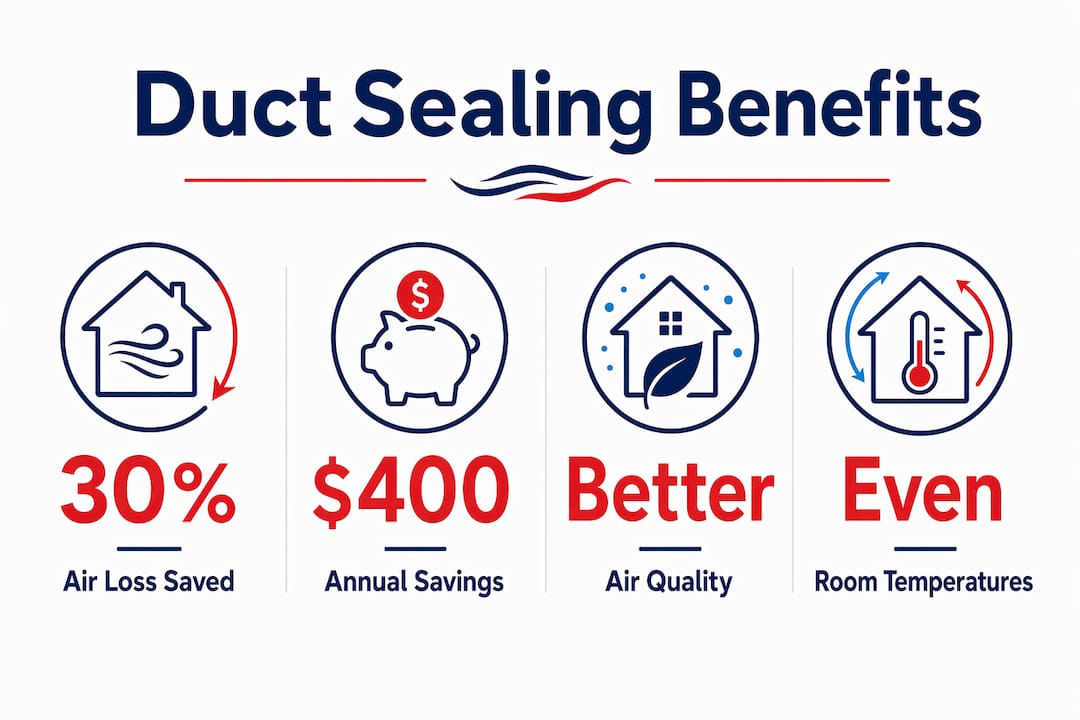
Sealing your ducts delivers three categories of benefit: lower bills, cleaner air, and more consistent comfort. Each one is measurable and shows up quickly after the work is done.
Energy savings you can count on
Properly sealed ductwork produces 11–15% average annual energy savings, sometimes exceeding $600 per year. That number reflects real reductions in heating and cooling loads because your system stops working overtime to compensate for lost air. Over a full year in a Kansas City home with both hot summers and cold winters, those savings add up fast.
Sealing also reduces the environmental footprint of your home. Less energy consumed means fewer emissions from the power grid, which matters if you care about your household’s carbon output.
Duct sealing is one of the few home upgrades that pays you back in comfort before the utility bill even arrives. Homeowners consistently report that rooms that were always too hot or too cold become noticeably more comfortable within days of sealing.
Indoor air quality improvements
Leaky ducts create a venturi effect that actively pulls dust, allergens, and mold spores from attics and crawlspaces into your air supply. You breathe what your ducts pull in. Sealing those gaps stops the contamination at the source, which is far more effective than running an air purifier to clean air that keeps getting re-contaminated.
Experts identify duct sealing as a vital indoor air quality upgrade, not just an energy measure. If anyone in your home has asthma, allergies, or respiratory sensitivities, sealing ducts removes a major pollution pathway. Pair sealing with regular duct cleaning for the most complete air quality result.
Consistent temperatures room to room
Hot and cold spots in different rooms are almost always a duct problem. Supply ducts that leak before reaching a far bedroom deliver less air to that room, leaving it uncomfortable regardless of your thermostat setting. Sealing restores balanced airflow so every room gets its designed share of conditioned air.
Pro Tip: If one room in your home is always uncomfortable, check whether its supply duct runs through an unconditioned space like an attic. That section is the most likely leak point and the highest priority for sealing.
How does duct sealing work, and what does it cost?
Two main methods exist for sealing residential ductwork. The right choice depends on how accessible your ducts are and how severe the leakage is.
Manual mastic sealing
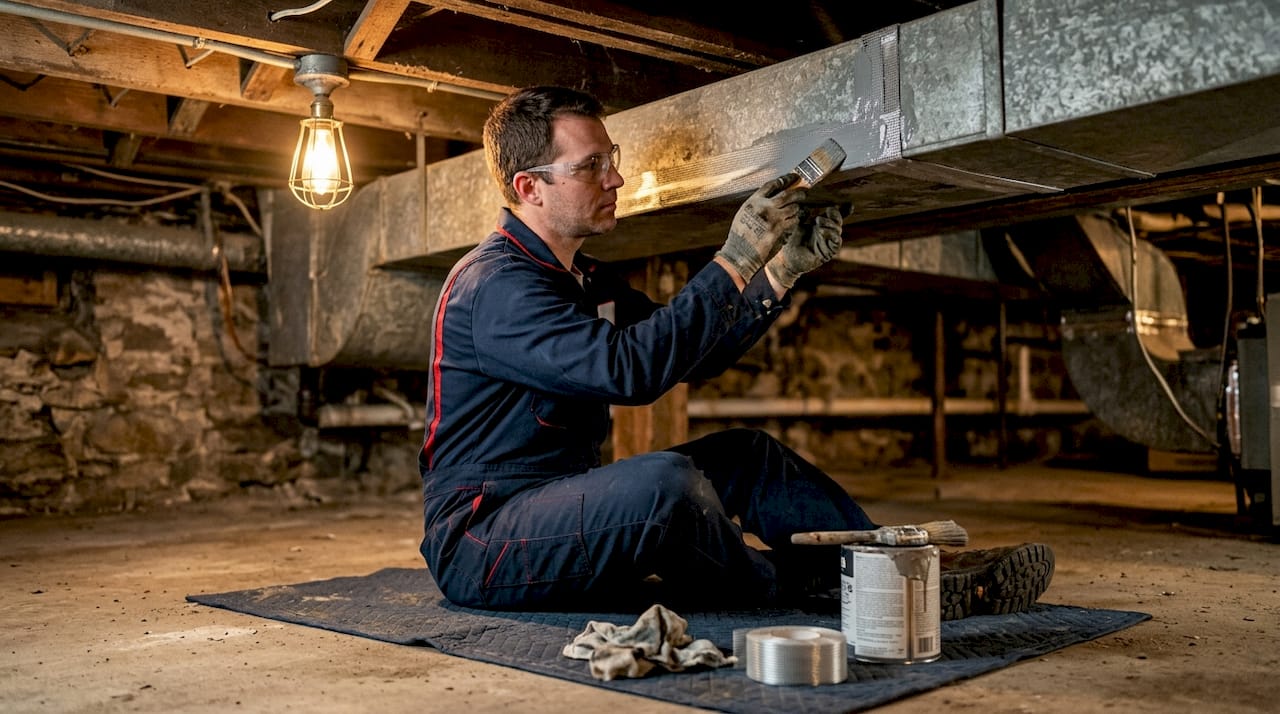
Manual sealing uses a brush-applied compound called mastic, reinforced with fiberglass mesh tape at joints and seams. A technician physically accesses each duct section, cleans the surface, and applies the compound. The IMC and energy standards strictly forbid cloth-backed duct tape as a permanent seal. Mastic with fiberglass mesh is the code-approved standard because it stays flexible and bonded through decades of temperature cycling.
Manual sealing works well in unfinished basements, attics with accessible ductwork, and crawlspaces. It does not work well in finished walls or ceilings where ducts are hidden.
Aerosol injection sealing
Aerosol sealing pressurizes the duct system and injects a fine polymer mist that seeks out and seals leaks from the inside. This method reduces leakage by 80–95% in a single application. It reaches leaks inside walls without any drywall removal, making it the preferred solution for retrofit homes where physical access is limited.
Aerosol sealing costs more per job, but it solves access problems that manual sealing simply cannot address. For finished homes, it is often the only practical option.
| Method | Best for | Access needed | Relative cost |
|---|---|---|---|
| Manual mastic sealing | Unfinished basements, attics, crawlspaces | Full physical access to seams | Lower |
| Aerosol injection | Finished homes, inaccessible ducts | No drywall removal required | Higher |
What does duct sealing cost?
Professional duct sealing costs between $1,500 and $3,200, with payback periods of 3–6 years based on energy savings. That payback timeline assumes average utility rates and typical leakage levels. Homes with severe leakage or high energy costs often see faster returns. Pair sealing with an HVAC tune-up to maximize the efficiency gains from both services at once.
Pro Tip: Ask your utility company about rebates before scheduling duct sealing. Many Kansas City area utilities offer incentives for verified duct leakage reduction, which can cut your out-of-pocket cost significantly.
Just as garage door weather seal replacement stops energy loss at another common weak point in your home envelope, duct sealing addresses the largest hidden source of conditioned air loss inside the house itself.
What health and safety risks do leaky ducts create?
Leaky ducts are not just an energy problem. They create real health and safety hazards that most homeowners never connect to their ductwork.
Carbon monoxide backdrafting
Return-duct leaks near combustion appliances create negative pressure that can siphon flue gases, including carbon monoxide, back into your living spaces. This is called backdrafting. It happens when the return side of your duct system pulls harder than the flue can exhaust. Sealing return ducts near your furnace or water heater eliminates this pressure imbalance and removes the backdraft risk.
Carbon monoxide is odorless and colorless. A leaky return duct near a gas furnace or water heater can pull flue gases into your home’s air supply without any visible warning. Duct sealing is a direct safety measure, not just a comfort upgrade.
Contaminant infiltration from unconditioned spaces
Attics and crawlspaces contain insulation fibers, rodent droppings, mold spores, and soil gases. When supply or return ducts run through these spaces with unsealed gaps, the HVAC system draws those contaminants directly into your breathing air. Sealing stops this pathway completely.
The health benefits are especially significant for:
- Children, whose developing lungs are more sensitive to airborne particles
- Older adults with reduced respiratory capacity
- Anyone with asthma, COPD, or seasonal allergies
- Households with pets that already contribute to indoor allergen loads
Understanding why air quality matters for your family’s health puts duct sealing in its proper context. It is a preventative health measure with a financial payback, which is a rare combination in home improvement.
Key Takeaways
Duct sealing is the single most effective step most homeowners can take to reduce energy waste, improve indoor air quality, and protect their HVAC system from premature failure.
| Point | Details |
|---|---|
| Energy loss is significant | Leaky ducts waste 20–30% of conditioned air, directly raising your monthly utility bills. |
| Savings are measurable | Sealing delivers 11–15% annual energy savings, sometimes exceeding $600 per year. |
| Health risks are real | Leaky return ducts can pull allergens, mold spores, and carbon monoxide into your home’s air. |
| Code-approved materials matter | Mastic with fiberglass mesh is required by the IECC and IMC; standard duct tape is not acceptable. |
| Professional cost pays back | Sealing costs $1,500–$3,200 with a 3–6 year payback through energy savings. |
What I’ve learned after years of watching homeowners skip this repair
Most homeowners I talk to know their energy bills are high. They replace thermostats, upgrade insulation, and buy new HVAC equipment. Very few think about their ducts. That gap in awareness costs them real money every month.
The most common misconception I hear is that duct sealing is only worth it for older homes. That is wrong. Homes built in the 1990s and early 2000s frequently have duct systems that were never tested for leakage. They meet the code of their era, which was far less strict than current IECC requirements. A 20-year-old home can have just as much duct leakage as a 50-year-old one.
The second misconception is that the comfort improvement is minor. Homeowners who seal their ducts consistently report that the comfort change is the first thing they notice, often before the next utility bill arrives. Rooms that were always a problem become normal. That immediate result matters because it confirms the investment was right.
My honest recommendation: treat duct sealing as part of your regular HVAC maintenance schedule, not a one-time emergency fix. Have your ducts tested every 5–7 years, especially after any major renovation that involved cutting into walls or ceilings. Sealing is not glamorous, but it is one of the most reliable ways to get more out of the HVAC system you already own.
— AB
Kcaircontrol can inspect and seal your ducts in Kansas City
Kcaircontrol has served Kansas City area homeowners for over 70 years, and duct sealing is one of the most requested services we handle. Our technicians test your system before and after sealing so you see the actual leakage reduction in numbers, not just a promise.

If your home has rooms that never reach the right temperature, or if your energy bills seem high for your home’s size, a duct inspection is the right first step. We also offer indoor air quality solutions and duct cleaning to complement sealing work. If a leak has already pushed your system to the breaking point, our HVAC repair options are available fast. Schedule your inspection online or call us directly to get started.
FAQ
How much conditioned air do leaky ducts waste?
Typical residential duct systems lose 20–30% of conditioned air through leaks. That means a 3-ton system may only deliver 2 to 2.5 tons of effective heating or cooling.
Is duct tape acceptable for sealing ducts?
No. The IMC and IECC prohibit cloth-backed duct tape as a permanent seal. Mastic compound with fiberglass mesh is the code-required material for lasting, compliant duct sealing.
How long does duct sealing take to pay for itself?
Professional duct sealing costs $1,500–$3,200 and typically pays back through energy savings in 3–6 years. Homes with high utility rates or severe leakage often see faster returns.
Can duct sealing improve my home’s air quality?
Yes. Sealing eliminates the venturi effect that pulls dust, allergens, and mold spores from attics and crawlspaces into your air supply. The result is measurably cleaner indoor air.
Who needs duct sealing most urgently?
Homeowners with hot or cold spots in specific rooms, high energy bills relative to home size, or combustion appliances near return ducts should prioritize sealing. Older homes built before current IECC standards are also high-priority candidates.