
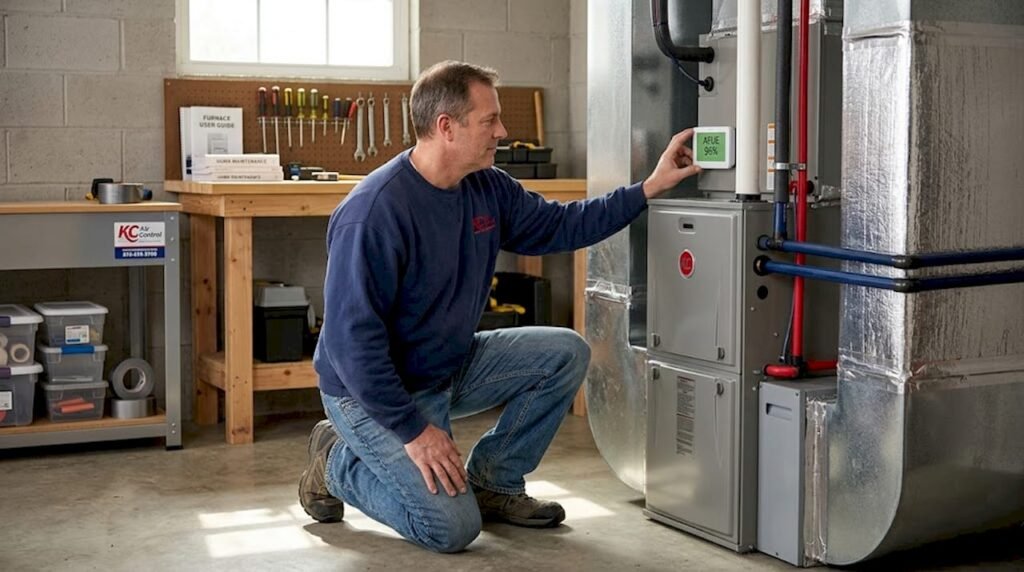
TL;DR:
- Upgrading to a high-efficiency furnace with a higher AFUE can reduce heating fuel use by up to 20%. Cold climate homes benefit most, often recouping costs within 5 to 10 years through savings and rebates. Proper system sizing, duct sealing, and considering rebates ensure maximum efficiency, comfort, and environmental benefits.
Deciding whether to replace your furnace is one of the most financially significant home improvement choices you can make. Understanding the furnace upgrade benefits before you commit helps you avoid surprises, set realistic expectations, and choose the right system for your home. The problem is that most information out there either oversimplifies the savings or buries homeowners in technical details they cannot use. This article breaks down the real advantages of furnace upgrades with specific numbers, honest payback timelines, and practical guidance so you can make a confident, informed decision.
Table of Contents
- Key takeaways
- 1. Furnace upgrade benefits start with AFUE efficiency ratings
- 2. How much fuel you actually save each year
- 3. Cost savings from furnace upgrades and payback periods
- 4. Additional comfort improvements you will notice immediately
- 5. Environmental benefits of upgrading your furnace
- 6. Reliability and warranty improvements with newer systems
- 7. Furnace types compared: which one fits your home
- 8. Bonus savings: replacing furnace and AC together
- My honest take on when a furnace upgrade actually makes sense
- How Kcaircontrol helps Kansas City homeowners get it right
- FAQ
Key takeaways
| Point | Details |
|---|---|
| AFUE rating drives savings | Moving from 80% to 96% AFUE can cut heating fuel use by 10–20% annually. |
| Cold climates gain the most | Homeowners in colder regions can save $300–$500 per year and recoup upgrade costs faster. |
| Upfront cost is offset by rebates | Federal tax credits and utility rebates can reduce your out-of-pocket cost by up to $2,000. |
| Furnace type affects comfort | Multi-stage and modulating furnaces reduce temperature swings and operate more quietly. |
| Duct quality shapes real savings | Poor ductwork can cancel out efficiency gains even from a top-rated furnace. |
1. Furnace upgrade benefits start with AFUE efficiency ratings
The single most important number when evaluating a new furnace is its Annual Fuel Utilization Efficiency (AFUE) rating. AFUE tells you how much of the fuel your furnace burns actually becomes heat inside your home, versus how much escapes as exhaust. An 80% AFUE furnace wastes about 20% of the fuel it consumes. A 92% AFUE unit wastes around 8%. A 96% AFUE furnace wastes only 4% as flue losses, compared with the 20% wasted at 80%.
Most older furnaces in American homes run at 80% AFUE or below. Upgrading to a modern high-efficiency unit means that far more of every dollar you spend on natural gas actually warms your living space. The energy efficiency of new furnaces is a direct result of better heat exchangers, sealed combustion, and condensing technology that extracts heat even from exhaust gases before they vent out.
Pro Tip: AFUE is the most reliable metric to compare furnaces. Ignore marketing labels like “eco mode” or “smart ready” unless the AFUE number backs them up. Look for AFUE first, then evaluate features.
2. How much fuel you actually save each year
Upgrading from an approximately 80% AFUE to 95–99% AFUE reduces your heating fuel use by about 10–20% annually. The exact figure depends on your climate, how well your ducts are sealed, and your thermostat habits.
To put that in real terms: if you currently spend $1,800 per year on heating fuel, a 15% reduction saves you $270 annually. Over 15 years, that adds up to $4,050 in fuel savings from a single upgrade decision. Homes in colder climates with longer heating seasons see the higher end of those savings, while homes in mild climates see smaller but still meaningful reductions.
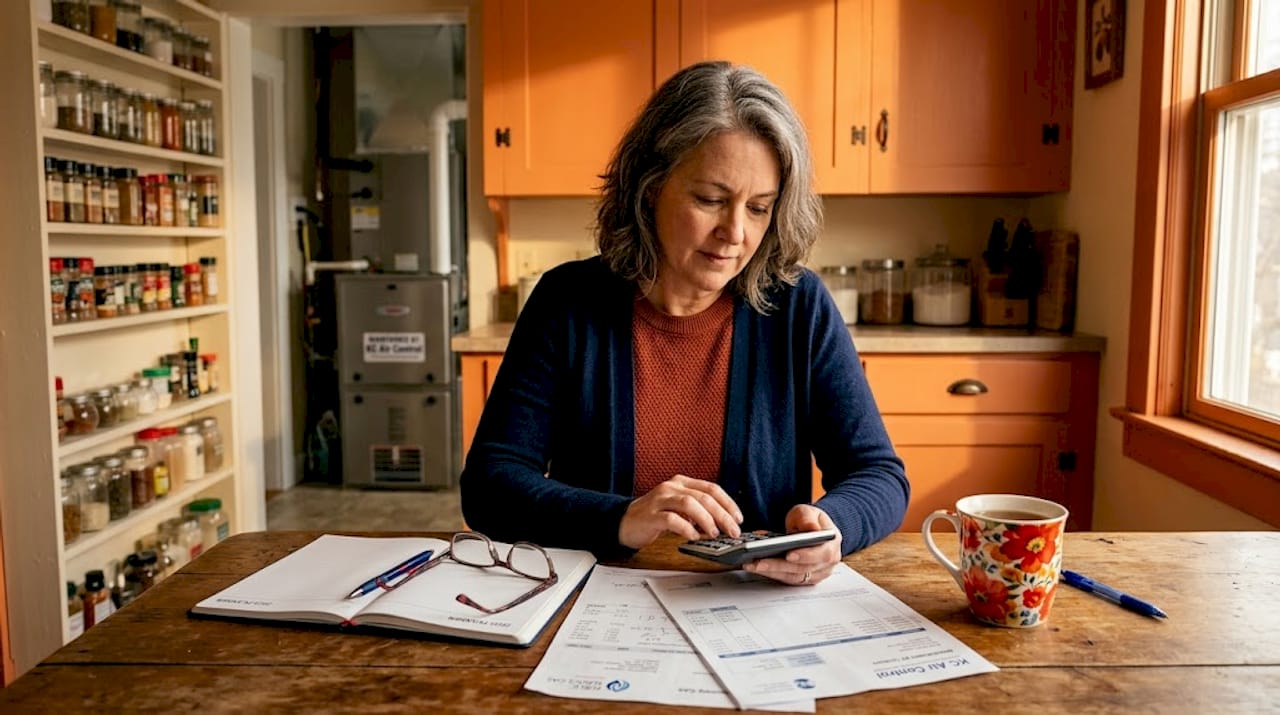
Climate and duct performance are the two biggest modifiers. A high-efficiency furnace in a home with leaky ductwork will not deliver its advertised savings because conditioned air escapes before it reaches your rooms. Sealing your ducts before or during an upgrade can significantly close that gap and boost the real-world results.
3. Cost savings from furnace upgrades and payback periods
Understanding the cost savings from furnace upgrades means looking at both sides of the ledger. High-efficiency furnaces cost about $1,500–$3,000 more upfront than standard 80% AFUE models. That premium is real, but it is recoverable through reduced fuel bills.
Here is a simple payback calculation using realistic numbers:
- Identify your annual heating fuel cost. Assume $1,800 per year.
- Calculate annual savings. A 15% reduction equals $270 per year.
- Determine the cost premium. The high-efficiency unit costs $2,000 more than a standard model.
- Divide cost by annual savings. $2,000 divided by $270 equals approximately 7.4 years to break even.
- Factor in rebates. Federal tax credits and utility rebates can reduce upfront cost by $500 to $2,000, which could cut that payback period in half.
Payback periods vary meaningfully by climate. In cold-climate regions like the Kansas City area, payback typically runs 5 to 8 years. In mixed climates, expect 8 to 12 years. In warmer southern regions with short heating seasons, payback can stretch to 15 years or longer, making the financial case weaker there. Homes in colder climates that upgrade from 80% to 96% AFUE can save $300–$500 per year, accumulating $4,500–$7,500 over a typical 15-year lifespan.
4. Additional comfort improvements you will notice immediately
Energy savings are the headline, but many homeowners say the comfort improvements are what they notice first. Modern furnaces deliver heat differently than older single-stage units, and that difference shows up in how your home feels day to day.
Multi-stage and modulating furnaces improve comfort by reducing temperature swings and operating more quietly than older single-stage systems. A modulating furnace adjusts its output continuously, running at lower capacity most of the time and ramping up only when needed. The result is a home that stays within a degree or two of your set temperature rather than swinging several degrees above and below it.
Here are the key comfort advantages you gain with a modern furnace:
- Quieter operation: Newer units run at lower fan speeds more often, reducing the on-off cycling noise common in older systems.
- More even heat distribution: Longer, lower-output cycles push air through the home more consistently, eliminating cold spots near exterior walls.
- Better air filtration: Higher-quality air handlers and longer run times give filters more opportunity to capture dust, allergens, and particulates.
- Improved humidity control: Modern systems can work more effectively with whole-home humidifiers to maintain comfortable indoor humidity levels during dry winter months.
Pro Tip: Pairing your furnace upgrade with a smart thermostat and professional duct sealing can extend these comfort gains significantly. The furnace upgrade does the heavy lifting, but those two additions help you get the full benefit.
5. Environmental benefits of upgrading your furnace
Burning less fuel does not just save money. It also reduces your home’s carbon output, which is a real and measurable benefit. A furnace running at 96% AFUE produces significantly fewer combustion byproducts per unit of heat delivered than one running at 80%. Over a 15-year lifespan, that adds up to a substantial reduction in your household’s greenhouse gas emissions.
ENERGY STAR sets the bar at 95% AFUE or higher for northern U.S. installations, which reflects how meaningful the efficiency gains are in colder regions. If reducing your environmental footprint matters to you alongside cutting bills, choosing an ENERGY STAR certified furnace accomplishes both goals. It is one of the few home upgrades where the financial and environmental cases reinforce each other rather than competing.
6. Reliability and warranty improvements with newer systems
An aging furnace does not just cost more to run. It costs more to maintain. Repair calls increase as components wear out, heat exchangers develop cracks, and ignitors fail. Each repair bill chips away at the money you would have saved by upgrading sooner.
New furnaces come with manufacturer warranties that typically cover parts for 10 to 20 years and heat exchangers for as long as the unit’s life. That warranty coverage represents a real financial cushion. You are not just buying heating capacity. You are buying a decade or more of predictable, lower-maintenance operation. For homeowners with a furnace already older than 15 years, the repair-vs-replace math often tips clearly toward replacement, particularly when a repair estimate approaches or exceeds 50% of a new unit’s cost.
Knowing when to replace your furnace versus continuing to repair it is one of the most practical decisions you can make to protect your household budget over time.
7. Furnace types compared: which one fits your home
Not all high-efficiency furnaces are the same. Understanding the differences helps you match the right unit to your home’s needs and avoid overpaying for features that do not deliver value in your specific situation.
| Furnace type | Typical AFUE range | Best suited for | Key consideration |
|---|---|---|---|
| Single-stage | 80%–92% | Mild climates, tighter budgets | Lower upfront cost, more temperature swings |
| Two-stage | 90%–96% | Mixed or cold climates | Better comfort, moderate price premium |
| Modulating | 95%–98%+ | Cold climates, larger homes | Highest efficiency and comfort, highest cost |
High-efficiency condensing furnaces (95% AFUE and above) require additional installation work including condensate drainage lines and special PVC venting, which partly explains their higher installation costs. If your home’s existing venting or ductwork needs modification, factor that into your budget upfront.
One critical warning: oversizing a furnace wastes money and harms comfort. A furnace that is too large for your home short-cycles constantly, which reduces efficiency, increases wear, and creates temperature swings. Proper sizing through a Manual J load calculation is not optional. It is the foundation that determines whether you actually receive the efficiency and comfort gains the unit is capable of delivering. Proper furnace sizing via Manual J and duct sealing are crucial to realizing the efficiency gains you paid for.
8. Bonus savings: replacing furnace and AC together
If your air conditioning system is also aging, there is a financially sound case for replacing both systems at the same time. Replacing both furnace and AC simultaneously saves on labor and improves system compatibility, which enhances long-term efficiency. Installers can complete the ductwork, venting, and wiring in a single visit rather than two separate projects, reducing total labor costs. Beyond that, a matched system from the same manufacturer operates more efficiently because the components are designed to communicate and work together.
My honest take on when a furnace upgrade actually makes sense
I have worked with enough homeowners to know that the furnace upgrade conversation rarely starts at the right place. Most people focus on the equipment cost and stop there. That is the wrong frame.
In my experience, the homeowners who get the most out of an upgrade are the ones who treat it as a system decision, not just a box swap. The furnace matters, but so does the ductwork, the thermostat, and the sizing calculation. I have seen expensive high-efficiency furnaces installed in homes with leaky ducts deliver results no better than the old 80% unit they replaced. The real-world savings depend heavily on climate, duct losses, and thermostat behavior. That is not a disclaimer. It is actionable information.
My honest position: if your furnace is over 15 years old and you live in a region with cold winters, a high-efficiency upgrade almost always makes financial sense. You will likely recoup the cost premium within 7 to 10 years. But if your furnace is 8 years old and has a single repair need, replacing it now is probably not the right call financially. Upgrading an old 80% AFUE furnace in a colder climate generally pays off in 5 to 10 years, but in warmer regions or with younger units, repair is often more cost-effective.
The other thing most homeowners miss: rebates and tax credits. Federal and utility incentives can change the math significantly. Before you decide anything, find out what is available in your area. A contractor who does not mention rebates during the upgrade conversation is leaving your money on the table.
— AB
How Kcaircontrol helps Kansas City homeowners get it right
Knowing the benefits is one thing. Getting the right system installed correctly is another. At Kcaircontrol, we have spent over 70 years helping Kansas City homeowners make smart, cost-effective heating decisions. We do not just sell furnaces. We assess your home’s duct system, calculate proper sizing, walk you through available rebates, and match you with a unit that fits your budget and comfort goals.
Whether you need a full furnace upgrade or want to start with a professional furnace tune-up to assess your current system’s condition, we are ready to help. If your furnace is showing signs of age or inefficiency, our furnace repair team can evaluate whether repair or replacement makes more financial sense for your specific situation. We also offer flexible HVAC financing options to make high-efficiency upgrades more affordable, and we help you identify every rebate and tax credit you qualify for. Schedule a consultation with Kcaircontrol today and get a clear, honest picture of what an upgrade would save you.
FAQ
What does AFUE mean for my heating bills?
AFUE measures what percentage of fuel your furnace converts to usable heat. Moving from 80% to 96% AFUE can reduce your annual heating fuel use by 10–20%, depending on your climate and ductwork.
Is a furnace upgrade worth it in a cold climate?
Yes, in most cases. Homeowners in cold climates can save $300–$500 per year after upgrading from 80% to 96% AFUE, with payback periods typically falling between 5 and 10 years.
How do I choose a furnace upgrade that fits my home?
Start with a Manual J load calculation to determine the correct furnace size, then compare AFUE ratings across single-stage, two-stage, and modulating models based on your climate and budget.
Can rebates reduce my furnace upgrade cost?
Yes. Federal tax credits and utility rebates can reduce your upfront investment by $500 to $2,000, which meaningfully shortens the payback period on a high-efficiency furnace.
What is the biggest mistake homeowners make when upgrading?
Installing an oversized furnace without addressing duct leaks. Both problems reduce efficiency and comfort, and they can cancel out the savings from even a top-rated unit.
Recommended
- Why upgrade heating systems? Unlock savings and comfort – KC Air Control – Heating & Cooling
- Why replace your furnace? Savings, comfort, and smart timing – KC Air Control – Heating & Cooling
- Furnace tune-up – Air Control
- Furnace Efficiency Explained: Save Energy and Boost Comfort – KC Air Control – Heating & Cooling