
TL;DR:
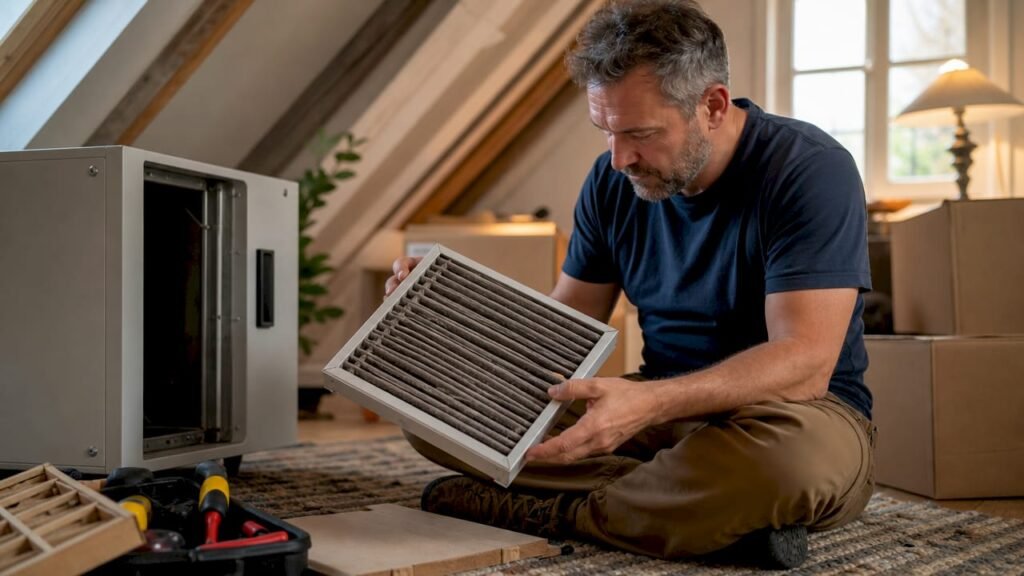
- Air filters remove airborne particles and protect HVAC systems from dust and debris buildup.
- Choosing the right MERV rating and replacing filters regularly ensures optimal system performance and indoor air quality.
Air filters are devices designed to remove airborne particles and contaminants from the air circulating through your home’s HVAC system. Air filters serve two critical purposes: protecting your health by removing airborne impurities, and protecting your equipment from dust buildup. The role of air filters extends far beyond basic dust collection. Indoor air can be 2 to 5 times more polluted than outdoor air due to dust, pet dander, mold, and cooking fumes. That gap makes the filter in your HVAC system one of the most consequential components in your home.
What are the main types of air filters?
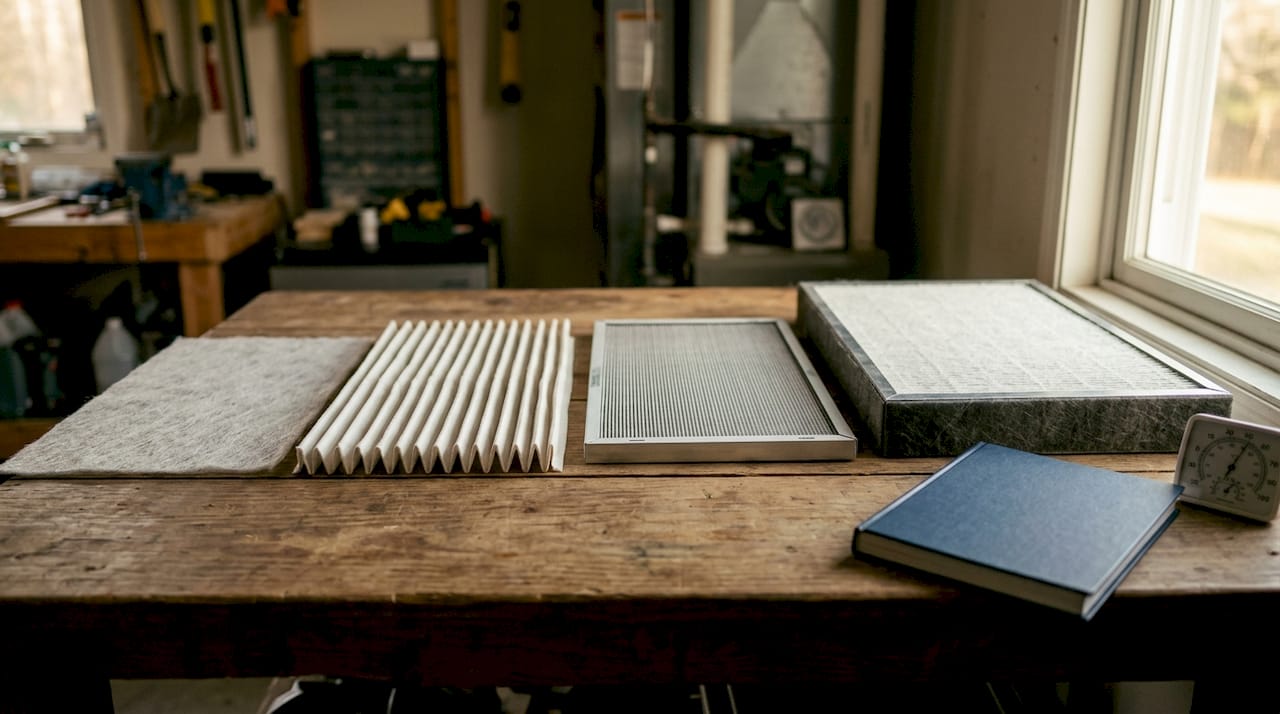
Air filters fall into five main categories, each built around a different filtration approach. Understanding how each type works helps you match the right filter to your home’s needs.
- Fiberglass filters are the most basic option. They catch large particles like lint and dust but offer minimal protection against fine allergens or pathogens.
- Pleated filters use folded polyester or cotton paper media to increase surface area. More surface area means more particle contact and better capture rates.
- MERV-rated filters are the industry standard for measuring residential filter performance. MERV 8 filters achieve roughly 90% efficiency for dust and pollen, while MERV 13 filters capture approximately 98% of fine particles like smoke.
- HEPA filters meet the highest residential standard. They capture 99.97% of particles at 0.3 microns in size, including mold spores, bacteria, and fine dust.
- Activated carbon filters target odors and volatile organic compounds (VOCs) through chemical adsorption rather than physical trapping.
Filters capture particles through four physical mechanisms: straining, interception, impaction, and diffusion. Straining blocks particles too large to pass through filter fibers. Interception catches particles that follow airflow but graze a fiber. Impaction pulls heavier particles out of the airstream as they collide with fibers. Diffusion causes ultrafine particles to move erratically and eventually contact a fiber. Electrostatic attraction adds a fifth layer in some filters, drawing charged particles to oppositely charged media.
| Filter type | Typical MERV rating | Best for | Limitation |
|---|---|---|---|
| Fiberglass | 1–4 | Basic dust protection | Misses fine particles |
| Pleated | 5–13 | General residential use | Needs regular replacement |
| HEPA | 17–20 | Allergy and asthma households | May restrict airflow in standard systems |
| Activated carbon | Varies | Odors and VOCs | Does not capture fine particles alone |
Pro Tip: Pair an activated carbon filter with a MERV 11 or higher pleated filter to address both particles and odors without overloading your HVAC system.
How do air filters affect HVAC performance and energy use?
A clogged or mismatched filter does real damage to your HVAC system. Neglecting filter changes increases static pressure, forces the blower motor to work harder, and raises your energy bills. Left unchecked, that strain leads to premature mechanical failure.
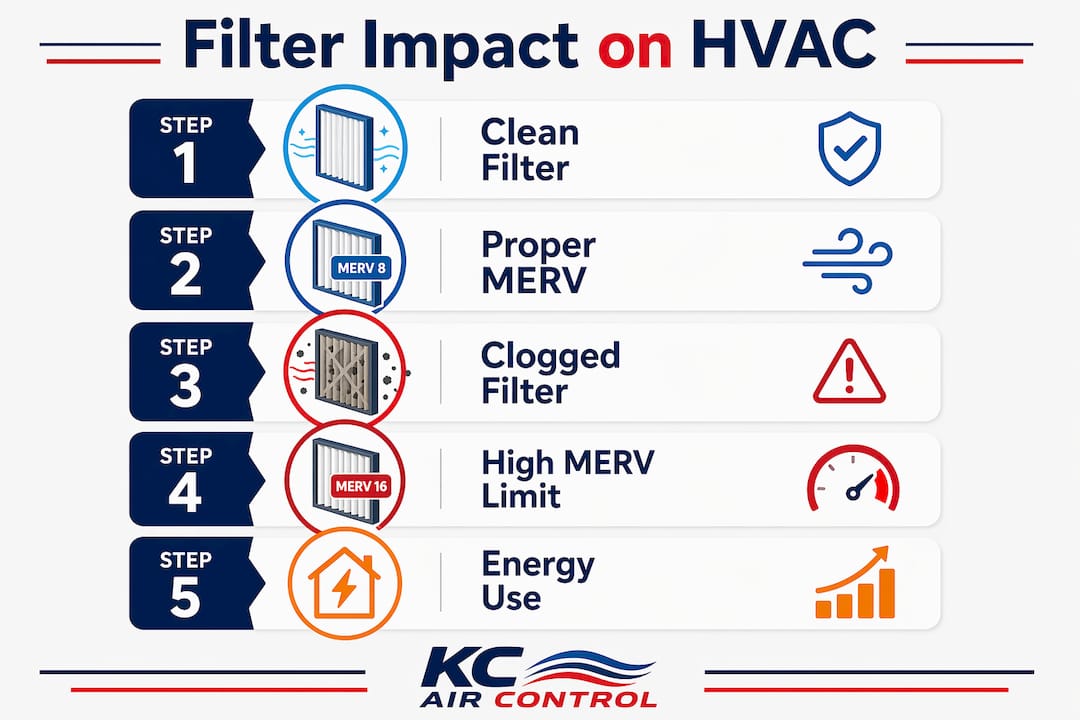
The relationship between filter condition and system performance is direct. A clean filter at the right MERV rating allows air to flow freely through the system. A dirty filter acts like a partial blockage, reducing airflow volume and forcing your equipment to run longer cycles to reach the set temperature. Longer cycles mean higher electricity consumption and more wear on moving parts.
Choosing a filter with too high a MERV rating creates the same problem as a clogged filter. High-MERV filters restrict airflow in systems not designed for them, causing blower motor strain, poor temperature regulation, and no net energy savings. A MERV 13 filter in a system built for MERV 8 can cause more harm than a basic fiberglass filter would.
The table below shows how filter condition affects system behavior:
| Filter condition | Airflow impact | Energy impact | Risk level |
|---|---|---|---|
| Clean, correct MERV | Full airflow | Normal consumption | Low |
| Dirty, correct MERV | Reduced airflow | Higher bills | Medium |
| Overly restrictive MERV | Severely restricted | Highest bills | High, motor risk |
Pro Tip: Check your HVAC system’s documentation or ask a technician for the maximum MERV rating your equipment supports before upgrading your filter. Going one step above the recommended rating is usually safe. Going three or more steps above is not.
Regular filter changes are the single most cost-effective form of HVAC system maintenance you can perform at home. They protect the blower, the coils, and the heat exchanger from dust accumulation that shortens equipment life.
Why does air filtration matter for your health?
Approximately 99% of the global population is exposed to air quality below WHO safety standards. For most homeowners, the air inside the house is the air they breathe most. That makes indoor air quality a direct health issue, not just a comfort concern.
Common indoor pollutants that filters address include:
- Dust and dust mites, which trigger allergic reactions and worsen asthma
- Pollen, which enters through doors, windows, and on clothing
- Pet dander, which is microscopic and stays airborne for hours
- Mold spores, which thrive in humid conditions and spread through ductwork
- Smoke particles, including tobacco smoke and cooking byproducts
- VOCs, released by paints, cleaning products, and furniture off-gassing
High-efficiency filters make a measurable difference for allergy and asthma sufferers. A MERV 13 filter removes the fine particles that trigger respiratory symptoms far more effectively than a basic MERV 4 fiberglass filter. For households with pets or multiple allergy sufferers, the upgrade from MERV 8 to MERV 11 or 13 often produces noticeable relief within days of installation.
Filters alone cannot remove all pollutants. Activated carbon and multi-stage systems address gaseous contaminants and odors that physical filtration misses. UV-C light systems handle biological contaminants like bacteria and viruses. A complete indoor air quality strategy combines mechanical filtration with targeted technologies for the pollutants your filter cannot trap. You can find a full breakdown of pollutant sources and solutions in this practical guide to home air quality.
How to choose and maintain the right filter for your home
Selecting the right filter starts with an honest look at your household’s specific conditions. Follow these steps to make the right call:
- Assess your household’s health needs. Allergy or asthma sufferers benefit from MERV 11–13. Healthy households with no pets can often use MERV 8 effectively.
- Check your HVAC system’s rated capacity. Your system’s manual or a technician can confirm the maximum MERV rating your equipment handles safely.
- Factor in pets and smoking. Pets add dander and hair that clog filters faster. Smokers need activated carbon layers in addition to a high-MERV particulate filter.
- Set a replacement schedule. Most standard filters need replacement every 60–90 days. Homes with pets or allergy sufferers should replace filters every 30–45 days.
- Watch for visual and performance cues. A visibly gray or brown filter is overdue for replacement. Rising energy bills or reduced airflow from vents are also clear signs.
Signs your filter needs immediate replacement include visible dirt buildup on the filter surface, dust rings around supply vents, increased allergy symptoms indoors, and your HVAC system running longer than usual to reach the set temperature.
Pro Tip: Buy filters in multi-packs and store them near your HVAC unit. Having a replacement on hand removes the excuse to delay a change. Set a phone reminder for the same date each month to check the filter.
For households with advanced HEPA filtration needs, whole-home HEPA systems integrated into the HVAC ductwork provide the highest level of particle removal without the airflow restrictions of a standalone HEPA unit in a standard filter slot.
Key Takeaways
Air filters protect both your health and your HVAC system, and the right filter at the right MERV rating, changed on schedule, is the most cost-effective home maintenance step you can take.
| Point | Details |
|---|---|
| Dual function of filters | Filters protect occupant health and shield HVAC components from dust damage simultaneously. |
| MERV rating matters | MERV 8 suits most homes; MERV 13 is the standard for allergy or asthma households. |
| Clogged filters cost money | Dirty or overly restrictive filters raise energy bills and risk blower motor failure. |
| Filters have limits | Gaseous pollutants and biological contaminants require activated carbon or UV-C systems beyond standard filtration. |
| Replace on schedule | Most filters need replacement every 60–90 days; homes with pets or allergy sufferers need changes every 30–45 days. |
What I’ve learned from watching homeowners skip filter changes
After years of working in and around HVAC systems, the pattern I see most often is this: homeowners invest in a quality system and then neglect the one maintenance task that costs less than a restaurant meal. A skipped filter change is not a minor oversight. It is the starting point for a chain of problems that ends with a repair bill or a full system replacement.
The second thing I see is homeowners buying the highest-rated HEPA filter they can find, assuming more filtration is always better. That logic is understandable but wrong. A filter your system cannot handle is worse than a modest filter your system runs cleanly through. Matching the filter to the system is just as important as matching the filter to your air quality goals.
The broader lesson is that air filtration works best as part of a maintained system, not as a standalone fix. A clean filter in a dirty duct system still delivers poor air quality. A MERV 13 filter in a system with a failing blower still drives up your bills. The filter is one piece of a connected whole. Treat it that way, and it will do exactly what it promises.
— AB
Kcaircontrol’s approach to filter maintenance and air quality
Kcaircontrol has served Kansas City homeowners for over 70 years, and filter maintenance is one of the most common service calls the team handles. The reason is simple: most homeowners know filters matter but are unsure which filter fits their system or how often to change it.

Kcaircontrol’s technicians assess your HVAC system’s capacity, your household’s air quality needs, and your current filter setup during every HVAC maintenance visit. They recommend the right MERV rating for your equipment and set you up with a replacement schedule that protects both your system and your family’s health. If your system needs more than a filter upgrade, the team handles full diagnostics, duct cleaning, and indoor air quality solutions under one roof. Schedule a visit and get a clear picture of what your home’s air actually needs.
FAQ
What is the role of air filters in an HVAC system?
Air filters remove airborne particles like dust, pollen, and mold spores from circulating air while protecting HVAC components from debris buildup. They serve both a health function and an equipment protection function simultaneously.
How often should I replace my home air filter?
Most filters need replacement every 60–90 days. Homes with pets, smokers, or allergy sufferers should replace filters every 30–45 days for best results.
What MERV rating is best for a residential home?
MERV 8 is the standard recommendation for most homes. Households with allergy or asthma sufferers benefit from MERV 11–13, provided the HVAC system supports that rating.
Can air filters remove odors and VOCs?
Standard particulate filters do not remove odors or VOCs. Activated carbon filters address these gaseous contaminants, and multi-stage systems combining both filter types provide the most complete coverage.
Is a higher MERV rating always better?
A higher MERV rating is not always better. Installing a filter with a MERV rating above your system’s design limit restricts airflow, strains the blower motor, and can cause premature equipment failure.
Recommended
- Role of humidifiers in HVAC: a Kansas City homeowner’s guide – KC Air Control – Heating & Cooling
- How UV lights improve HVAC air quality in Kansas City homes – KC Air Control – Heating & Cooling
- The Role of Regular Maintenance for Your HVAC System – KC Air Control Heating & Cooling – Expert HVAC Services – Kansas City, MO