
TL;DR:
- Air balancing ensures HVAC systems deliver the correct airflow to each room, enhancing comfort, efficiency, and equipment longevity. It corrects energy-wasting issues caused by static pressure, duct imbalances, and improper damper adjustments, reducing utility bills and preventing system wear. Regular rebalancing after renovations or equipment changes maintains optimal performance, indoor air quality, and cost savings.
Air balancing is the precise measurement and adjustment of airflow throughout an HVAC system so every room receives the correct volume of conditioned air, measured in cubic feet per minute (CFM), to match the original design targets. When your system runs out of balance, some rooms bake while others stay cold, your equipment works harder than it should, and your energy bills climb without explanation. ASHRAE guidelines set the standard: measured supply air should stay within ±10% of design CFM for a system to perform as intended. Understanding why prioritize air balancing matters starts with recognizing that comfort, efficiency, and equipment health all depend on getting airflow right from the start.
How does air balancing improve HVAC efficiency and reduce energy costs?
An unbalanced HVAC system wastes energy in a straightforward way. Rooms that receive too little conditioned air never reach the thermostat setpoint, so the system keeps running to compensate. Rooms that receive too much air overshoot the target and trigger short cycling. Both patterns increase runtime, wear components faster, and push utility bills higher than necessary.
Proper air balancing corrects this by aligning actual airflow with design intent. When static pressure and duct resistance are adjusted correctly, the blower motor operates within its designed range rather than fighting excessive back pressure. That translates directly into lower electricity consumption and reduced mechanical strain.
Here are the most common energy-wasting airflow problems that balancing resolves:
- Oversupplied rooms that cause the thermostat to satisfy too quickly, leaving other zones under-conditioned
- Undersupplied rooms that force extended runtimes and unnecessary cycling
- Excessive static pressure from improperly adjusted dampers, which forces the blower to work harder
- Leaky or unbalanced duct branches that redirect conditioned air into unconditioned spaces like attics or crawl spaces
- Mismatched return air that creates negative pressure in living areas, pulling in unconditioned outside air
For homeowners with systems under ten years old, air balancing restores near-new performance without the cost of equipment replacement. That makes it one of the most cost-effective maintenance steps available.
Pro Tip: Never close supply registers to fix a hot or cold room. Closing registers raises static pressure throughout the duct system and forces the blower to work against greater resistance, which reduces efficiency and can shorten equipment life. Damper adjustment inside the duct branch is the correct fix.
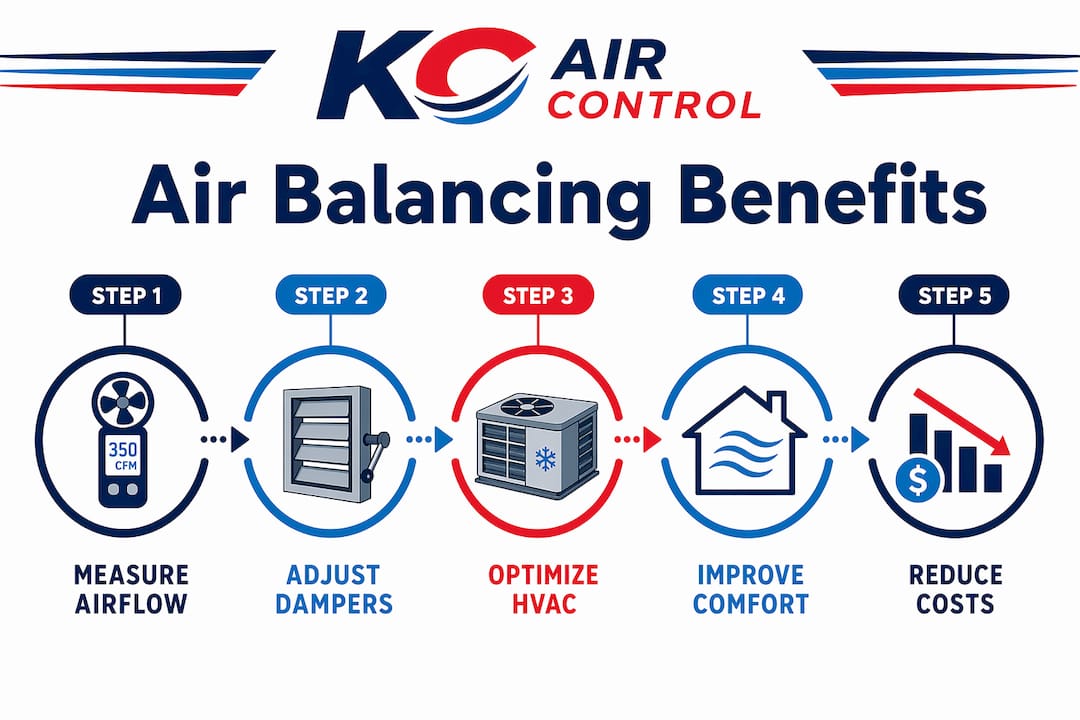
Pairing balanced airflow with energy-efficient HVAC practices compounds the savings further, since a balanced system extracts maximum value from every efficiency upgrade you make.
What are the comfort and indoor air quality benefits of air balancing?
Consistent airflow distribution is what separates a comfortable home from one where you argue over the thermostat. When every room receives its designed CFM, temperatures stabilize across the entire floor plan and drafts disappear. Occupants stop noticing the HVAC system because it simply works.
The comfort improvements follow a clear sequence:
- Uniform temperature delivery. Each room reaches and holds its setpoint because supply air volume matches the room’s heat load, calculated through Manual J load calculations.
- Eliminated hot and cold spots. Rooms at the end of long duct runs, which are typically the most under-supplied, receive proper airflow once dampers are proportionally adjusted.
- Stable humidity control. Balanced airflow allows the system to dehumidify consistently. Rooms with excess airflow tend to feel drafty and dry, while under-supplied rooms feel stuffy and humid.
- Improved air circulation. Proper airflow keeps air moving through filters and ventilation pathways, which directly supports contaminant removal and fresh air exchange.
The indoor air quality connection is direct. Balanced airflow stabilizes humidity, improves ventilation, and removes stale air more effectively than an unbalanced system can. Filtration works best when air actually passes through the filter at the designed velocity. When airflow is too low in certain zones, particulates settle rather than being captured. When airflow is too high, air bypasses the filter media before it can be cleaned.
For Kansas City homeowners dealing with seasonal humidity swings, this matters more than most realize. A balanced system gives your dehumidification and filtration equipment the airflow they need to perform as designed.
When and why should you prioritize air balancing maintenance?
Systems rarely stay perfectly balanced after installation. Building use changes, renovations alter duct resistance, and equipment ages in ways that shift airflow patterns. Periodic rebalancing is not optional maintenance. It is the only way to sustain the performance your system was designed to deliver.
The clearest triggers for scheduling a balancing inspection include:
- Home renovations that add, remove, or relocate walls, which change how air moves through the space
- Finishing a basement or bonus room that adds new conditioned square footage to an existing duct system
- Replacing HVAC equipment with a different capacity unit, which changes the total airflow the system produces
- Adding or removing registers during a remodel or room conversion
- Persistent temperature differences of 2°F or more between rooms, which signal an imbalance requiring professional attention
- Unexplained increases in energy bills without a change in usage habits or weather patterns
One of the most persistent homeowner mistakes is closing supply registers in unused rooms to redirect airflow. This feels logical but creates the opposite effect. Closing face grilles raises system static pressure, reduces blower efficiency, and can cause the blower motor to overheat over time. The register face is designed to diffuse and direct air, not to control volume. Volume control belongs at the branch damper inside the duct.
Pro Tip: If you notice that one room is consistently warmer or cooler than the rest of the house, check whether any registers in adjacent rooms have been partially or fully closed. Restoring those registers to open and scheduling a damper inspection is a faster and safer fix than any register adjustment you can make yourself.
Common HVAC problems in Kansas City homes, including uneven airflow and comfort complaints, trace back to imbalance more often than equipment failure. Catching imbalance early prevents the secondary damage that comes from a system running outside its design parameters.
How to perform air balancing: professional techniques vs. DIY limits
Air balancing uses specific measurement tools and adjustment methods that go well beyond what a homeowner can accomplish with a register cover and a thermometer. Understanding the process helps you know what to expect when a technician performs a balance and why the work takes time.
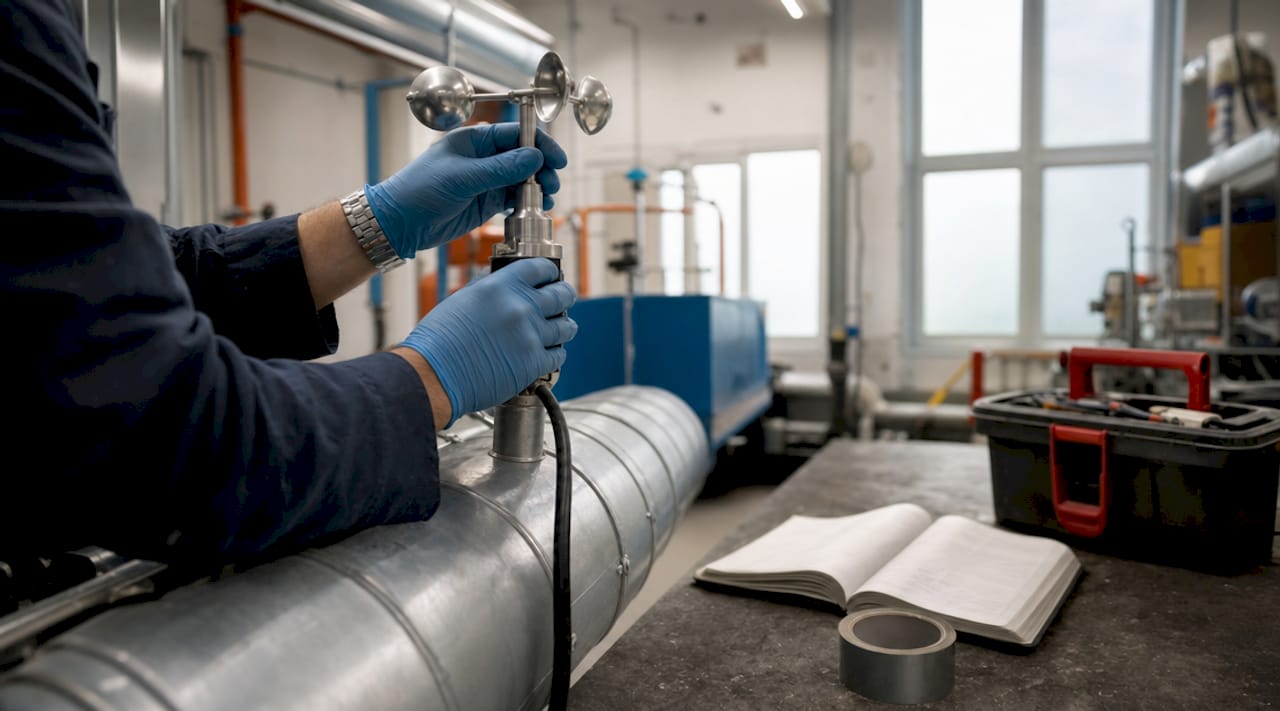
The core measurement unit is CFM, cubic feet per minute. Technicians use a device called a flow hood or an anemometer to measure actual airflow at each supply and return register. Those readings are compared against the design CFM values from the original Manual J and Manual D calculations for the home. Manual J determines the heating and cooling load for each room. Manual D determines the duct sizes and airflow targets needed to meet those loads.
| Method | Who performs it | Tools required | Best for |
|---|---|---|---|
| Register flow measurement | HVAC technician | Flow hood, anemometer | Baseline airflow mapping |
| Branch damper adjustment | HVAC technician | Manometer, flow hood | Correcting zone imbalances |
| Static pressure testing | HVAC technician | Manometer | Diagnosing blower and duct issues |
| Register redirection | Homeowner | None | Minor airflow direction only |
| Thermostat zoning review | Homeowner or technician | Smart thermostat app | Multi-zone system checks |
The adjustment process itself is iterative. Proportional balancing methods set the farthest duct branch from the air handler as the baseline and adjust all other branches relative to it. This preserves system static pressure while redistributing airflow evenly. Because closing one damper affects pressure throughout the entire duct system, technicians make multiple measurement passes before the system reaches true balance.
Homeowners can support the process by keeping all registers open, replacing air filters on schedule, and noting which rooms feel uncomfortable and when. That information helps a technician identify problem zones before measurements begin. For duct systems that have not been cleaned recently, professional duct cleaning before a balance removes debris that can restrict airflow and skew measurements.
A balanced HVAC system also operates closer to design specifications, which extends equipment life and reduces repair frequency. Uneven static pressure accelerates wear on the blower motor, heat exchanger, and coil. Balancing protects all of those components by keeping operating conditions within their designed range.
Key takeaways
Air balancing is the single most cost-effective step a homeowner can take to restore HVAC performance, reduce energy waste, and protect equipment from premature wear.
| Point | Details |
|---|---|
| Design CFM is the target | Airflow should stay within ±10% of design CFM in every room for the system to perform correctly. |
| Closing registers causes harm | Shutting supply registers raises static pressure and reduces blower efficiency. Use branch dampers instead. |
| Rebalance after major changes | Renovations, equipment replacements, and room additions all require a fresh balancing inspection. |
| IAQ depends on airflow | Balanced airflow keeps air moving through filters and ventilation pathways, directly improving indoor air quality. |
| Balancing beats replacement | For systems under ten years old, proper balancing can restore near-new performance without new equipment costs. |
Why I consider air balancing the most overlooked maintenance task
After years of working with homeowners on HVAC performance, the pattern is consistent. Homeowners invest in new equipment, programmable thermostats, and UV air purifiers, then wonder why certain rooms still feel wrong. The answer is almost always airflow. No upgrade performs at its rated efficiency if the air delivering it is not reaching the right places in the right amounts.
The part that surprises most people is how rarely balancing gets done after installation. A system gets installed, passes a basic startup check, and then runs for years without anyone verifying that each room is actually receiving its designed CFM. Building changes, filter neglect, and duct settling all shift that balance quietly over time.
What I find most valuable about prioritizing balancing is that it forces a full system review. A technician measuring airflow at every register will catch duct leaks, undersized returns, and damper failures that would otherwise go unnoticed until they cause a breakdown. It is preventive care that pays for itself in avoided repairs and lower monthly bills.
The myth worth addressing directly: many homeowners believe that if the system is heating and cooling the house, it must be balanced. That is not accurate. A system can condition a home while running significantly out of balance, burning extra energy and wearing components faster than necessary. Comfort is not the same as efficiency, and efficiency is not the same as balance. All three require deliberate attention.
— AB
How KC Air Control can help you achieve balanced airflow
KC Air Control brings over 70 years of HVAC expertise to Kansas City homeowners who want their systems performing at full capacity. Our technicians use calibrated flow hoods, manometers, and digital airflow meters to measure and adjust every supply and return in your home against your system’s design targets.

Whether you are dealing with persistent hot and cold spots, rising energy bills, or a system that has never felt quite right since a renovation, we diagnose the root cause and correct it with precision. For homeowners who need urgent help, our emergency HVAC repair options are available when comfort cannot wait. Schedule an air balancing inspection with KC Air Control and get your system working the way it was designed to.
FAQ
What is air balancing in an HVAC system?
Air balancing is the process of measuring airflow at each supply and return register and adjusting branch dampers so every room receives its designed CFM. The goal is to bring actual airflow within ±10% of design targets, as defined by ASHRAE standards.
How do I know if my HVAC system needs balancing?
A temperature difference of 2°F or more between rooms is the clearest sign of imbalance. Other indicators include rooms that never reach the thermostat setpoint, unusual increases in energy bills, and persistent stuffiness or dryness in specific areas.
Can I balance my HVAC system myself?
Homeowners can keep all registers open and replace filters regularly, but true balancing requires a flow hood, manometer, and knowledge of proportional damper adjustment. Closing registers is not a balancing method and raises system static pressure, which reduces efficiency.
How often should air balancing be performed?
Balancing should be inspected after any renovation, equipment replacement, or room addition. Even without major changes, a balancing check every three to five years helps catch gradual drift caused by duct settling, filter buildup, and normal system aging.
Does air balancing improve indoor air quality?
Yes. Balanced airflow keeps air moving through filters and ventilation pathways at the designed velocity, which improves filtration efficiency, stabilizes humidity, and removes stale air more effectively than an unbalanced system can achieve.