
TL;DR:
- Two-stage cooling systems operate at two different capacity levels, providing greater energy efficiency and comfort. They run mostly at low capacity, improving humidity control and reducing noise, with full capacity reserved for peak heat days. Most homeowners in humid climates benefit from their balanced performance and long-term savings over single-stage systems.
Most homeowners assume all air conditioners work the same way. They flip on the thermostat, the unit kicks in at full power, and eventually the house cools down. But what is two stage cooling, and why does it matter? A two-stage cooling system gives your AC the ability to run at two different output levels instead of just one, which changes how efficiently and comfortably your home gets cooled. Understanding this difference can directly affect your energy bills, your indoor comfort, and how long your system lasts.
Table of Contents
- Key takeaways
- What is two-stage cooling and how does it work?
- Benefits of two-stage cooling for home comfort and efficiency
- Comparing two-stage to single-stage and variable-speed systems
- Is two-stage cooling right for your home?
- My honest take on two-stage cooling
- Ready to upgrade your cooling system?
- FAQ
Key takeaways
| Point | Details |
|---|---|
| Two speeds, not one | Two-stage compressors run at low capacity most of the time, only shifting to full power on the hottest days. |
| Better humidity control | Longer low-speed cycles pull more moisture from indoor air than short, full-blast cooling bursts. |
| Quieter and longer-lasting | Less frequent on/off cycling reduces noise and mechanical wear on the system. |
| Sweet spot for most homes | Two-stage cooling balances real comfort improvements with a more affordable price tag than variable-speed systems. |
| Professional assessment matters | Ductwork, insulation, and thermostat compatibility all affect how well a two-stage system performs in your home. |
What is two-stage cooling and how does it work?
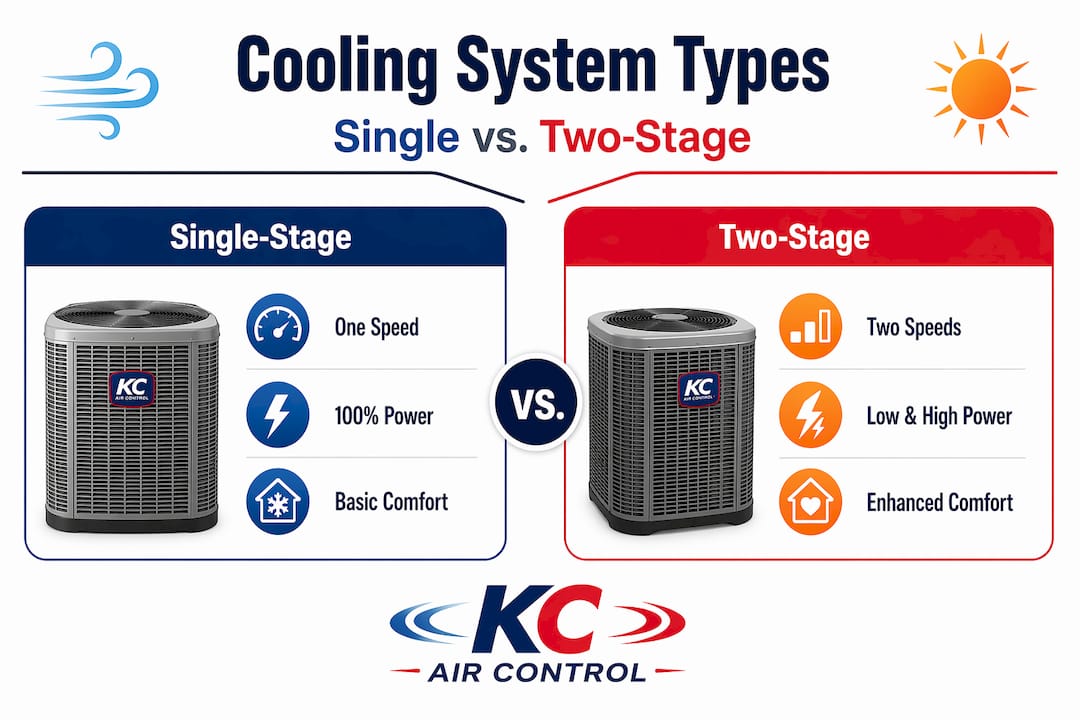
A two-stage cooling system is an air conditioner or heat pump with a compressor that operates at two distinct capacity levels: a lower stage and a higher stage. This is the key difference between a two-stage system and a conventional single-stage unit. Single-stage systems have only one setting. They run at 100% capacity every time they turn on, then shut off completely when the thermostat is satisfied. Two-stage systems can do something in between.
The compressor in a two-stage system runs at roughly 65 to 70% capacity in its low stage, and at full 100% capacity in its high stage. On a mild day when temperatures are manageable, the system stays in low stage for the entire cooling cycle. On a scorching Kansas City afternoon, it shifts up to high stage to meet the demand. Two-stage air conditioners operate mostly in low mode about 80% of the time, which saves energy and reduces wear significantly.
Here is what that looks like in practical terms for your home:
- Compressor low stage: Runs at 65 to 70% of full capacity, handles mild-to-moderate cooling demand quietly and efficiently.
- Compressor high stage: Kicks in at 100% capacity during peak heat to bring the home down to temperature quickly.
- Thermostat signals: A two-stage system uses two cooling wires at the thermostat to communicate which stage is needed.
- System components: The air handler, refrigerant lines, and ductwork all work with the two-stage compressor; no extra hardware is required for the basic setup.
- Cycling behavior: Instead of short, aggressive on/off cycles, the system runs longer at lower power, which is gentler on every component involved.
The result is a system that feels less intrusive. You get steady, quiet cooling rather than the cold blast followed by silence that many homeowners recognize from single-stage units.
Benefits of two-stage cooling for home comfort and efficiency
The advantages of a two-stage cooling system go beyond just saving a little electricity. They show up in ways you feel every day inside your home.
Energy savings you can measure. Because the system spends the majority of its runtime at low capacity, it draws significantly less power on most days. The energy savings are real and show up on your monthly utility bill, especially during the long Kansas City summers when your AC runs regularly.
Humidity control that single-stage systems simply cannot match. This is one of the most underappreciated benefits. Two-stage cooling systems provide better humidity control thanks to longer run times at lower speeds, which removes more moisture from the air. A single-stage unit blasts cold air for a short cycle and shuts off. That short cycle does not give the system enough time to pull adequate moisture out of the air. A two-stage system running long, slow cycles at low capacity is far more effective at dehumidifying, which is critical for homes in humid climates. If you have ever had a home that felt clammy even when the temperature was right, this is likely why. Pairing your system with proper HVAC humidity management can further improve indoor air quality year-round.
More even temperatures throughout your home. Longer run times mean air circulates through your ductwork more consistently. Hot spots in upstairs bedrooms or rooms far from the air handler are less common with a two-stage system because the airflow never fully stops between cycles.
Here is a quick summary of the key benefits:
- Lower energy consumption during mild weather when low stage is sufficient
- Improved indoor humidity levels due to extended low-speed cycles
- Fewer temperature swings and hot spots throughout the home
- Quieter operation because the compressor runs softly at low stage most of the time
- Reduced mechanical wear that extends the life of the equipment since less frequent cycling reduces stress on the compressor
Pro Tip: If your home regularly feels humid even after the AC runs, a two-stage system could solve the problem without requiring a separate dehumidifier.
Comparing two-stage to single-stage and variable-speed systems
Understanding where two-stage cooling fits among your options makes the decision much clearer. There are three main types of residential cooling systems on the market today.
| Feature | Single-stage | Two-stage | Variable-speed |
|---|---|---|---|
| Capacity levels | 1 (100% only) | 2 (low and high) | Many (continuous range) |
| Energy efficiency | Lower | Moderate to high | Highest |
| Upfront cost | Lowest | Moderate | Highest |
| Humidity control | Basic | Good | Excellent |
| Comfort consistency | Inconsistent | Good | Excellent |
| Noise level | Louder cycling | Quieter | Quietest |
| Ductwork demands | Standard | Standard | Requires optimized sizing |
Single-stage systems are the most common and least expensive to purchase. They get the job done, but they are not gentle about it. Every cooling cycle runs at full blast, which creates those noticeable temperature swings and the on/off cycling noise many homeowners find disruptive.
Variable-speed systems offer the highest efficiency and comfort but come with a significantly higher upfront cost. They also require properly sized and optimized ductwork to deliver on their efficiency promises. If your ductwork is older or not ideally sized, the performance advantage over a two-stage system can shrink considerably.
Two-stage cooling lands in a practical middle ground. It delivers meaningful upgrades in comfort and savings without requiring a premium investment or ductwork overhaul. For most homeowners replacing an aging single-stage system, two-stage air conditioning is the upgrade that makes the most sense financially and practically.
Pro Tip: If you are replacing a system that is 10 or more years old, jumping from single-stage to two-stage is one of the highest-value upgrades you can make for comfort and long-term savings. Going directly to variable-speed is only worth the extra cost if your ductwork has already been properly sized.
Is two-stage cooling right for your home?
Not every home benefits equally from a two-stage cooling system, and a few key factors determine how much value you will get from the upgrade.
Your climate matters a lot. Two-stage AC units perform especially well in hot, humid climates. Kansas City summers fit that description well. The combination of heat and humidity means longer run times and better dehumidification make a noticeable difference in daily comfort. Homes in milder climates may not see the same dramatic improvement.
Here are the factors to evaluate before upgrading:
- Insulation and air sealing: Homes with well-insulated and sealed envelopes get the maximum benefit from two-stage cooling. If your home has air leaks or poor insulation, address those first to get the most from any new system.
- Ductwork condition and sizing: Upgrading to two-stage cooling requires evaluating ductwork compatibility. Older or undersized ducts can limit airflow and reduce efficiency gains.
- Thermostat compatibility: Two-stage systems need a compatible thermostat with the proper wiring to communicate between stages. Most modern thermostats support this, but older models may need replacement.
- Budget and payback period: A two-stage system costs more upfront than a single-stage unit, but lower operating costs help recover that difference over time. Getting a full efficiency comparison from a qualified HVAC technician helps you understand your realistic payback window.
- Professional system assessment: No checklist replaces an in-home evaluation. A qualified technician reviews your load calculations, duct condition, and existing equipment to recommend the right system size and type. You can learn more about how HVAC systems improve home efficiency to get a broader picture before your consultation.
The bottom line is that two-stage cooling rewards homes that are already reasonably tight and well-maintained. It is not a fix for a leaky, poorly insulated house. But for a well-kept home in a climate like Kansas City’s, the difference in comfort and efficiency is real and lasting.
My honest take on two-stage cooling
I have talked with a lot of homeowners over the years, and the most common mistake I see is treating the AC upgrade decision as purely a price comparison. People look at the price tag on a single-stage unit versus a two-stage unit, see the difference, and go with the cheaper option. I understand that thinking, but it misses what the two-stage system actually delivers day to day.
What I have learned from seeing these systems perform in real homes is that the comfort difference is immediate and obvious to anyone who lives in the house. The humidity control alone changes how a home feels in July. That clammy, sticky feeling even when the temperature reads 72 degrees is a humidity problem, and two-stage systems address it far better than single-stage units ever will.
The other thing I want homeowners to understand is that two-stage systems hit a sweet spot that variable-speed systems sometimes miss in practice. Variable-speed technology is impressive, but it requires the right ductwork to deliver on its full potential. I have seen homeowners spend significantly more on variable-speed systems and end up with performance that a properly installed two-stage unit could have matched at a lower cost. Know your home before you commit to the most expensive option.
My recommendation for most homeowners replacing an older system is simple. Go two-stage. It is the upgrade that delivers real, daily comfort improvements at a price point that makes financial sense.
— AB
Ready to upgrade your cooling system?
If you are weighing a two-stage cooling upgrade for your home, Kcaircontrol is ready to help you make the right decision. With over 70 years of experience serving Kansas City homeowners, our team evaluates your home’s specific needs, from ductwork and insulation to thermostat compatibility, so you get a system that actually performs as expected.
Start by learning what HVAC systems can do for your home and then connect with our team to schedule an assessment. We can also walk you through current energy incentives and rebates that may reduce your upfront investment on a new two-stage system. When you are ready to move from research to action, Kcaircontrol is the local expert you can count on. Schedule your AC system consultation today and find out exactly what a two-stage system can do for your comfort and your utility bills.
FAQ
What is a two-stage cooling system in simple terms?
A two-stage cooling system is an air conditioner with a compressor that runs at two output levels: a lower capacity for mild days and full capacity for peak heat. This lets the system cool your home more efficiently than a standard single-stage unit that only runs at full power.
How does two-stage cooling help with humidity?
Because the system runs longer cycles at low capacity, it has more time to pull moisture out of the air. Single-stage units cycle on and off too quickly to remove humidity effectively, leaving homes feeling damp even when the temperature is correct.
Is two-stage cooling more efficient than single-stage?
Yes. Two-stage systems spend the majority of their runtime at lower capacity, which consumes less electricity on most days. The efficiency gains are most noticeable during mild weather when the low stage handles all the cooling demand without ever engaging full power.
How do I know if my current system is two-stage?
Check your thermostat wiring. Two-stage systems typically connect with two separate cooling wires at the thermostat. You can also check your outdoor unit’s model number or ask an HVAC technician to confirm the system type during a service call.
Does a two-stage system cost more than a single-stage unit?
A two-stage system has a higher upfront cost than a single-stage unit, but lower monthly energy costs help offset the difference over time. For most homeowners in hot, humid climates like Kansas City, the long-term savings and comfort improvements make it a worthwhile investment.