

TL;DR:
- High heating bills and cold spots indicate your system is working harder than necessary and require a whole-house approach.
- Start with system assessments, regular maintenance, sealing leaks, and optimizing smart thermostats to achieve around 30% energy savings.
High heating bills and cold spots in your home are not just annoying. They are signs that your heating system is working harder than it needs to. Learning how to optimize home heating means more than just turning down the thermostat. It means treating your home as a complete system where your equipment, your insulation, and your thermostat settings all work together. A whole-house approach saves around 30% on energy bills, and this guide walks you through every step to get there.
Table of Contents
- Key takeaways
- How to optimize home heating: assess your system first
- Equipment maintenance and smart thermostat strategies
- Air sealing, insulation, and windows
- Common heating mistakes and how to fix them
- Verifying your heating optimization results
- What I have learned from watching homeowners optimize their heating
- Let Kcaircontrol help you heat smarter
- FAQ
Key takeaways
| Point | Details |
|---|---|
| Start with a system assessment | Know your equipment type and condition before making any changes. |
| Filter maintenance matters | Replacing filters monthly directly reduces energy use and system strain. |
| Seal leaks before adjusting thermostats | Air sealing and insulation deliver faster results than thermostat tuning alone. |
| Smart thermostats prevent wasted heat | Programmable controls stop you from heating empty rooms for hours. |
| Avoid closing vents in unused rooms | Closed vents create system pressure problems that hurt efficiency. |
How to optimize home heating: assess your system first
Before you change a single setting or buy any new equipment, you need to know what you are working with. Your heating system type determines which optimization steps apply to you. The main types are forced-air furnaces, boilers, heat pumps, and electric baseboard heaters. Each has different maintenance needs and different thermostat strategies.
Start by pulling your maintenance history. If your furnace has not had a professional inspection in more than a year, that is your first priority. Check the age of the equipment too. Systems older than 15 years often operate well below their rated efficiency, even with regular maintenance.
Next, walk your home and evaluate where heat is escaping. Common problem areas include:
- Gaps around window frames and exterior door frames
- Unsealed attic hatches and pull-down stairs
- Penetrations in walls where pipes and wiring enter
- Ductwork running through unheated crawl spaces or attics
Here is a quick reference for what you will need as you work through this home heating optimization guide:
| Tool or Material | Purpose |
|---|---|
| Caulk gun and foam sealant | Seal gaps around windows, pipes, and wall penetrations |
| Weatherstripping tape | Seal moving parts like doors and operable windows |
| Programmable or smart thermostat | Automate heating schedules for efficiency |
| Replacement air filters | Maintain proper airflow through your HVAC system |
| Smoke pencil or incense stick | Detect air leaks by watching for smoke movement |
Pro Tip: Run your hand along the bottom edge of exterior doors on a cold day. If you feel cold air moving in, that gap is costing you money every single day of the heating season.
Equipment maintenance and smart thermostat strategies
This is where most homeowners see the fastest, most measurable results. Regular filter changes reduce system strain and improve airflow, which directly lowers energy use. Most standard 1-inch filters should be checked monthly and replaced every one to three months depending on dust levels and whether you have pets.
Beyond filter changes, here are the core maintenance steps every homeowner should follow each heating season:
- Schedule a professional furnace tune-up before temperatures drop. A technician checks heat exchangers, burners, blower motors, and electrical connections for issues you cannot see.
- Check your ductwork for visible gaps or disconnected joints, especially in the basement and attic. Cleaning visible duct sections with a shop vacuum between professional cleanings also contributes to efficiency.
- Clear the area around your furnace or air handler. Objects stored near the unit restrict airflow and create fire hazards.
- Test your carbon monoxide detectors and confirm they are functioning correctly before you run your heating system heavily.
- Inspect the flue pipe on gas furnaces for gaps, corrosion, or blockages. Even a small separation can allow combustion gases to enter your living space.
Ignoring professional HVAC tune-ups leads to unresolved inefficiencies that compound over time, resulting in higher bills and earlier equipment failure.
Smart thermostat settings that actually work
Smart thermostats learn your schedule and stop heating empty rooms, which is their biggest practical benefit. The Department of Energy recommends setting your thermostat as low as comfortably possible in winter and lowering it further when you are sleeping or away from home.
Heat pump owners need to handle this differently. Heat pumps benefit from a “set and forget” approach because large temperature setbacks force them to use electric resistance backup heat, which is far less efficient. If you have a heat pump, keep your thermostat at a consistent comfortable temperature rather than programming dramatic drops overnight.
Pro Tip: Place your thermostat on an interior wall, away from windows, exterior doors, and direct sunlight. A poorly placed thermostat reads false temperatures and causes your system to run more than it needs to.
Also explore the energy reports built into your smart thermostat’s app. These show daily runtime, which is the clearest indicator of whether your system is working efficiently or struggling. For more on getting the most from your HVAC controls, the guide on smart HVAC benefits covers the full picture.
Air sealing, insulation, and windows
Here is something most heating guides get wrong. They jump straight to thermostat settings when the biggest efficiency gains come from stopping heat from leaving your home in the first place. Sealing air leaks and adding insulation reduces how long your heating system needs to run to reach your target temperature. Fix the envelope first, then tune the controls.
The most cost-effective places to focus your air sealing efforts:
- Attic floor penetrations. Wiring, plumbing, and HVAC chases that run into the attic are often completely unsealed. Spray foam works well here.
- Rim joists in the basement. These are the boards that sit on top of your foundation wall. Insulating and sealing them with rigid foam and caulk pays off quickly.
- Around recessed light fixtures. Older can lights that open directly into the attic are significant heat escape points. Use an airtight cover rated for insulation contact.
- Ductwork in unconditioned spaces. Ducts that pass through unheated crawl spaces lose a significant portion of the heat they carry before it ever reaches your living areas.
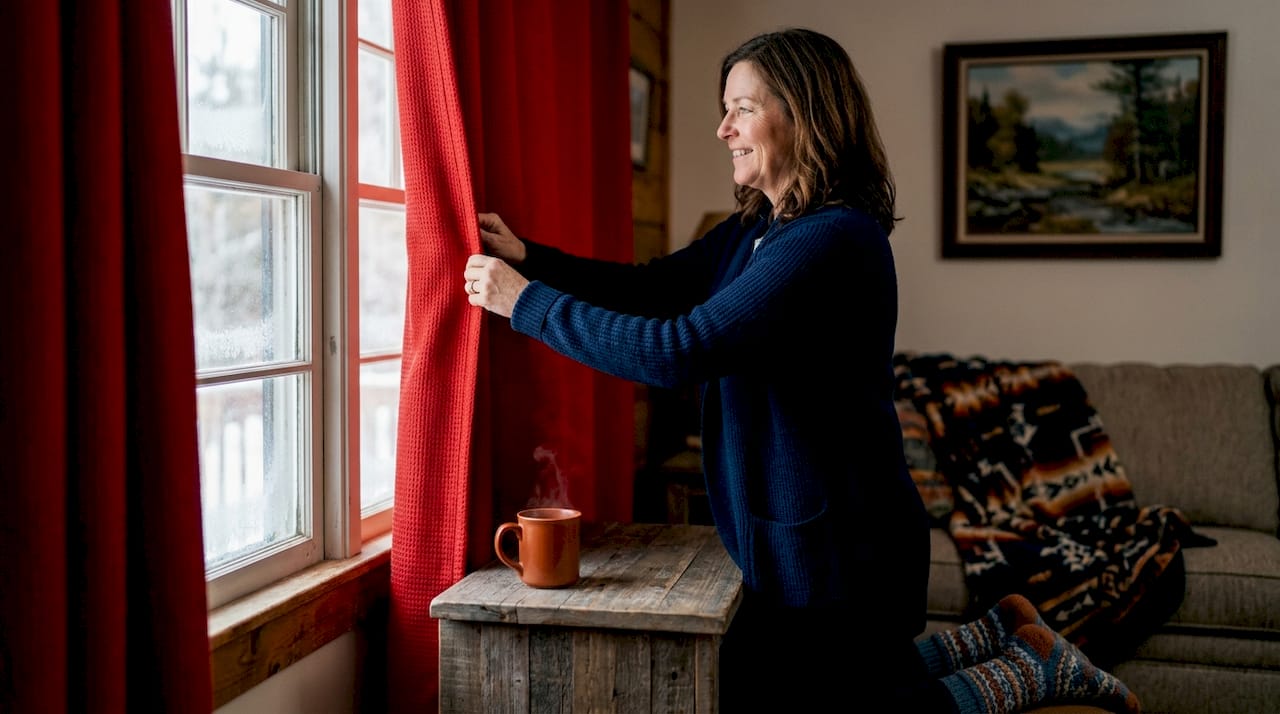
For windows, heavy insulated curtains or cellular shades reduce heat loss noticeably on single-pane or older double-pane windows. During the day, open curtains on south-facing windows to capture free solar heat gain. Close them at night to keep that warmth inside.
Weatherstripping on exterior doors is one of the cheapest fixes with one of the highest returns. A door that does not seal tightly at the threshold can leak as much air as a small open window running all day.
Pro Tip: Before buying new windows, test your current ones with a smoke pencil. You may find that simple weatherstripping and a door sweep eliminate most of the cold air you have been blaming on the glass itself.
Common heating mistakes and how to fix them
Homeowners often make small decisions that quietly undercut all their other optimization efforts. The following table covers the most common mistakes HVAC professionals see and the straightforward fixes for each.
| Common mistake | What actually happens | The fix |
|---|---|---|
| Closing vents in unused rooms | Closed vents cause pressure problems that strain the blower and push conditioned air into wall cavities | Keep all supply vents fully open |
| Setting thermostat too high to “heat up faster” | Furnaces deliver heat at a fixed rate regardless of the setpoint | Set your target temperature and wait |
| Running kitchen and bath exhaust fans for hours | These fans pull heated air out of your home and replace it with cold outdoor air | Use exhaust fans only as long as needed |
| Placing furniture over floor registers | Blocks airflow and forces the system to run longer to reach temperature | Keep registers clear by at least 18 inches |
| Skipping annual maintenance | Small issues compound into expensive repairs and efficiency loss | Schedule a professional inspection every fall |
One mistake that surprises most homeowners is the exhaust fan issue. Running a bathroom fan for 30 minutes after a shower can pull a noticeable volume of conditioned air out of your home. In winter, that warm air gets replaced by cold outdoor air that your furnace then has to heat back up.
Verifying your heating optimization results
Once you have done the work, you need to confirm it is actually paying off. The clearest sign of improved efficiency is a shorter system runtime to maintain your target temperature. Your smart thermostat’s app will show this directly in its runtime or energy reports.
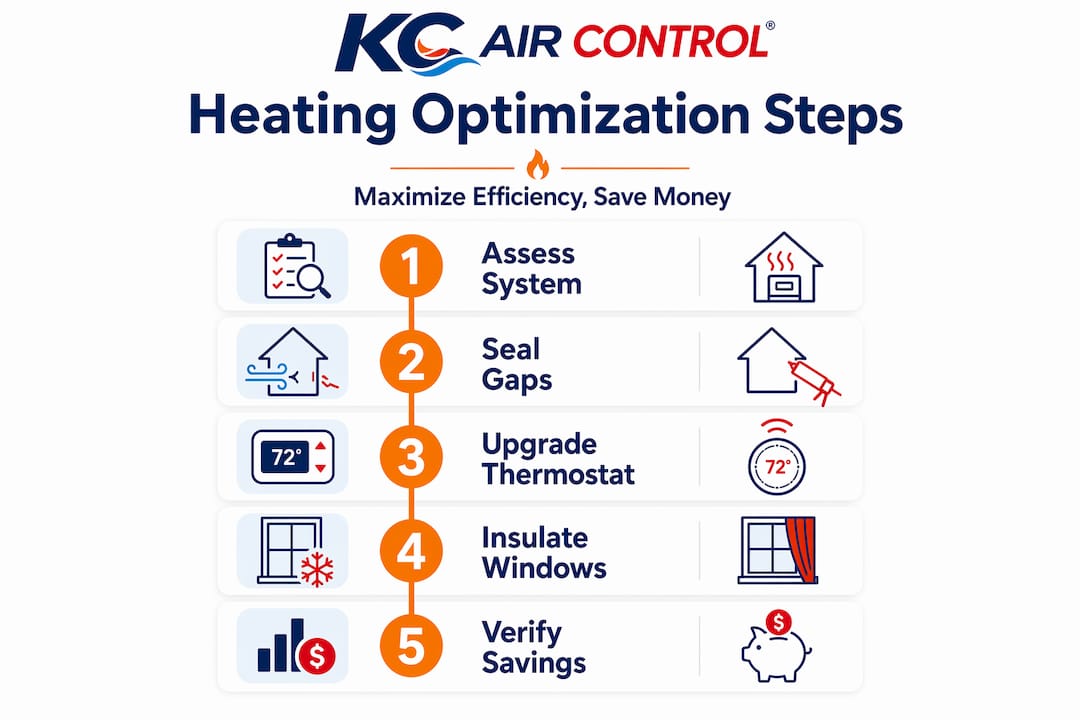
For verification without a smart thermostat, compare your utility bills month over month against the same period from the prior year, adjusting for any unusually cold or mild weather. A 10 to 20 percent reduction is realistic after addressing air sealing and maintenance together.
Simple tools that help you track results:
- Utility bill comparison. Pull your last 12 months of gas or electric bills and mark the month you made changes. Smart thermostat analytics and utility data together give the clearest picture.
- Indoor thermometers in different rooms. Temperature consistency across rooms is a strong indicator that your system is distributing heat correctly.
- A comfort check. If cold spots are gone and the system runs less often, your optimization worked.
Pro Tip: Prioritize envelope improvements first, then verify results for a full billing cycle before making thermostat adjustments. This sequencing helps you attribute savings accurately and avoid double-guessing changes that are already working.
Schedule a maintenance review every fall. Heating systems that get checked annually stay efficient longer and avoid the kind of sudden failures that happen on the coldest days of the year.
What I have learned from watching homeowners optimize their heating
I have seen homeowners spend hundreds on new thermostats while living with gaps under their front door that you can feel from across the room. The thermostat helps, but it cannot fix heat that is walking out of the building before it reaches the people living there. The whole-house approach is not just a theory. It is what actually moves the needle on your bill.
The other lesson that surprises people is how much the sequencing matters. Fix your air leaks and insulation first. Then tune your thermostat. If you flip that order, your thermostat is trying to compensate for a leaky house, and the savings never show up the way they should.
I also want to push back on one common belief: that closing vents in rooms you do not use saves energy. It does not. It creates back pressure that can damage your equipment over time and push conditioned air into wall cavities where no one benefits from it.
Finally, do not underestimate professional tune-ups. DIY steps matter, but a trained technician catches things a homeowner cannot see. Cracked heat exchangers, failing ignitors, gas pressure issues. These problems do not announce themselves. They just cost you money quietly, month after month, until they stop working entirely. Schedule that annual inspection and treat it the same way you treat an oil change. It is not optional.
— AB
Let Kcaircontrol help you heat smarter

If you are ready to put this home heating optimization guide into action but want professional support, Kcaircontrol is here to help Kansas City homeowners get it done right. Our team handles furnace tune-ups, duct cleaning, furnace repairs, and smart thermostat installation, backed by over 70 years of local HVAC experience. We inspect what you cannot see, fix what is quietly costing you money, and make sure your system is ready to perform all winter. Schedule your appointment online today or call us to claim current seasonal offers and start saving.
FAQ
How much can I save by optimizing my home heating?
A whole-house approach that combines maintenance, air sealing, and thermostat optimization can save around 30 percent on energy bills. Individual results vary based on your current system condition and home size.
How often should I replace my furnace filter?
Check your filter monthly and replace it every one to three months. Regular filter replacements improve airflow and reduce how hard your system has to work to heat your home.
Should I close vents in rooms I do not use?
No. Closing vents increases system pressure, reduces airflow balance, and can push heated air into wall cavities rather than into your living space. Keep all vents fully open.
Do heat pumps need different thermostat settings?
Yes. Unlike gas furnaces, heat pumps work best when set to a consistent temperature rather than large overnight setbacks. Dramatic drops force the system to use less efficient electric resistance backup heat.
When should I call a professional instead of doing it myself?
Call a professional for annual tune-ups, any time you notice unusual smells or sounds, or if your bills are rising without explanation. Annual HVAC maintenance catches small problems before they become expensive repairs.
Recommended
- Practical HVAC energy saving tips for Kansas City homes – KC Air Control – Heating & Cooling
- Why upgrade heating systems? Unlock savings and comfort – KC Air Control – Heating & Cooling
- Smart HVAC budgeting: save money and boost comfort in Kansas City – KC Air Control – Heating & Cooling
- Energy efficient HVAC: lower bills and better comfort – KC Air Control – Heating & Cooling