
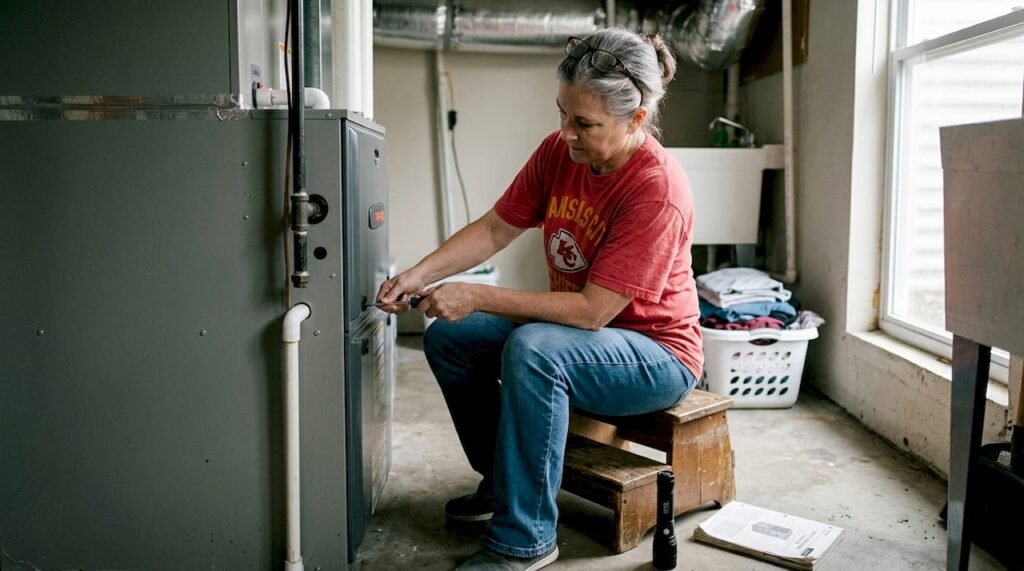
Your home comfort depends on a well-functioning HVAC system, but when something goes wrong, it can be tough to know what’s happening behind the walls or inside the equipment. Many Kansas City homeowners struggle to recognize HVAC problems early, leading to costly emergency repairs and uncomfortable living conditions. This guide walks you through clear, practical steps to spot issues before they escalate, understand what different symptoms mean, and determine when it’s time to call in professional help. By learning to identify these warning signs, you’ll save money, maintain consistent comfort, and make informed decisions about your home’s heating and cooling needs.
Table of Contents
- Key takeaways
- Common signs of HVAC problems and what they mean
- Tools and preparation for inspecting your HVAC system safely
- Step by step guide to identifying HVAC issues at home
- When to call a professional and how to choose a reliable HVAC service in Kansas City
- Find trusted HVAC repair services in Kansas City
- FAQ
Quick Navigation to Identify & Fix Kansas City HVAC Issues
| Point | Details |
|---|---|
| Early detection saves money | Recognizing problems early helps you avoid costly emergency repairs and keeps your home comfortable. |
| Unusual sounds signal issues | Grinding noises often indicate worn bearings in motors or blowers, while squealing suggests loose or damaged belts that need adjustment. |
| Odors reveal system issues | A musty odor points to mold growth in ducts or on the evaporator coil while burning odors suggest overheating motors or dust burning off heating elements. |
| Check thermostat and filters | Before assuming major problems verify thermostat settings and replace dirty air filters to resolve many common HVAC complaints. |
Common signs of HVAC problems and what they mean
Recognizing the early warning signs of HVAC trouble gives you a crucial advantage in maintaining your system and avoiding breakdowns. Your heating and cooling equipment communicates problems through distinct symptoms that, once understood, become easy to identify during daily life in your Kansas City home.
Unusual sounds or odors often indicate mechanical or electrical HVAC problems. Grinding noises typically point to worn bearings in motors or blowers, while squealing suggests loose or damaged belts that need adjustment or replacement. Banging sounds during startup or shutdown often mean loose components or debris inside the ductwork. Rattling can indicate anything from loose screws to failing compressor mounts.
Odors provide equally important clues about system health. A musty smell usually signals mold growth in ducts or on the evaporator coil, common in Kansas City’s humid summers. Burning odors might indicate overheating motors, electrical shorts, or dust burning off heating elements during the first use of the season. A rotten egg smell demands immediate attention as it could mean a gas leak, requiring you to evacuate and call emergency services right away.
Performance issues manifest in ways you’ll notice during everyday use. Reduced airflow from vents suggests clogged filters, blocked ducts, or failing blower motors. Some rooms staying warmer or cooler than others indicates ductwork problems, inadequate insulation, or a system struggling to distribute conditioned air evenly. When your system cycles on and off more frequently than normal, it’s working harder than it should, pointing to thermostat issues, refrigerant leaks, or an oversized unit for your space.
Pro Tip: Check your thermostat settings and replace filters before assuming major problems. These simple fixes resolve many common HVAC complaints and take just minutes to address, potentially saving you a service call.
Watch for longer run times without achieving desired temperatures. If your furnace or air conditioner runs constantly but your home never reaches the set temperature, you’re likely dealing with refrigerant issues, failing compressors, or inadequate system capacity. Higher energy bills without increased usage also signal inefficiency worth investigating.
Tools and preparation for inspecting your HVAC system safely
Before you begin any HVAC inspection, gathering the right tools and taking proper safety precautions protects both you and your equipment. Proper preparation and tools are essential before inspecting HVAC equipment to ensure safety and effectiveness.
You’ll need several basic items for a thorough yet safe inspection. A reliable flashlight or headlamp illuminates dark spaces around furnaces and air handlers. Work gloves protect your hands from sharp metal edges and dirty components. A basic multimeter helps check electrical connections if you’re comfortable using one, though you should never attempt electrical repairs yourself. Keep a notepad or use your phone to document observations, take photos of unusual findings, and record model numbers for future reference.
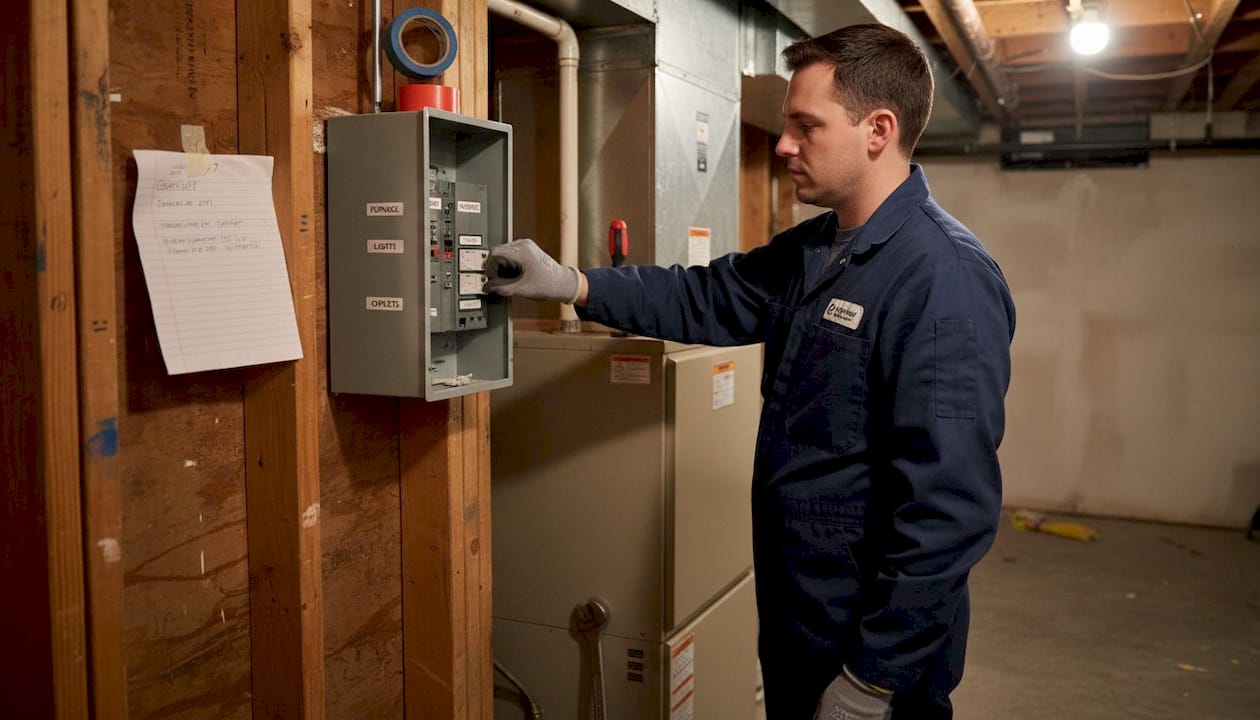
Safety must come first during any HVAC inspection. Always turn off power to your system at both the thermostat and the circuit breaker before touching any components. Most systems have a dedicated shutoff switch near the unit itself. Locate this switch and the main circuit breaker for your HVAC system before you need them in an emergency. Never bypass safety switches or override protective mechanisms.
| Preparation Step | Why It Matters | Time Required |
|---|---|---|
| Turn off power at breaker | Prevents electrical shock and accidental startup | 1 minute |
| Locate emergency shutoffs | Enables quick response to problems | 5 minutes |
| Clear workspace around unit | Provides safe access and prevents trips | 10 minutes |
| Gather inspection tools | Ensures efficient, complete examination | 5 minutes |
| Review system documentation | Identifies normal vs. abnormal conditions | 10 minutes |
Create a clear workspace around your HVAC equipment. Remove stored items, boxes, and clutter from around furnaces, air handlers, and outdoor units. You need at least two feet of clearance on all sides for proper inspection and to meet fire safety codes. Clean up any water, oil, or debris that could cause slips or falls.
Pro Tip: Use colored tape or a permanent marker to clearly label your HVAC circuit breakers and emergency shutoff switches. In a real emergency, you won’t waste precious time searching for the right switch.
Familiarize yourself with your system’s normal operation before problems arise. Spend a few minutes each season observing how your equipment sounds, how long it runs, and how quickly it heats or cools your home. This baseline knowledge makes abnormal behavior immediately recognizable. Take photos of proper filter installation, note normal pressure gauge readings if visible, and record typical cycle times.
Step by step guide to identifying HVAC issues at home
A systematic approach to inspecting your HVAC system helps you identify problems accurately and communicate findings effectively to service technicians when needed. A structured inspection helps homeowners identify root causes before deciding on repairs or service calls.
-
Start with your thermostat. Verify it’s set to the correct mode (heat, cool, or auto) and that the temperature setting makes sense for current conditions. Check that the display is clear and responsive. Dead batteries cause many service calls that aren’t really equipment problems. Look for loose mounting or wires visible behind the faceplate, which might indicate installation issues.
-
Inspect all accessible filters throughout your system. Most homes have filters at return vents or inside the air handler. Hold the filter up to light. If you can’t see through it easily, it needs replacement regardless of how long it’s been installed. Check the filter frame for proper fit, as gaps allow unfiltered air to bypass the media and deposit dust directly on sensitive components.
-
Examine every supply and return vent in your home. Make sure furniture, curtains, or storage items aren’t blocking airflow. Feel the air coming from supply vents. All vents should deliver similar volumes of conditioned air. Significant differences between rooms suggest ductwork problems or damper issues worth investigating further.
-
Inspect visible ductwork in basements, crawlspaces, and attics. Look for disconnected sections, large gaps at joints, or damaged insulation. Feel along duct seams for air leaks while the system runs. Any air escaping represents wasted energy and reduced comfort in living spaces.
-
Check condensate drain lines and pans. Air conditioners and high efficiency furnaces produce water that must drain properly. Look for standing water in drain pans, which indicates clogs. Trace drain lines to ensure they’re not kinked or disconnected. Algae growth in drain pans appears as dark slime and blocks water flow.
-
Examine outdoor units for air conditioners and heat pumps. Clear away leaves, grass clippings, and debris from around the unit. Inspect the fins on the condenser coil. Bent fins restrict airflow and reduce efficiency. Look for ice formation during cooling season, which signals serious refrigerant or airflow problems.
-
Document everything you find with photos and notes. Record unusual sounds using your phone’s voice recorder. Write down when problems occur, how long they last, and what conditions trigger them. This information helps technicians diagnose issues faster and more accurately.
| Symptom | DIY Fixable | Requires Professional |
|---|---|---|
| Dirty filter | ✓ Replace immediately | |
| Blocked vents | ✓ Clear obstructions | |
| Tripped breaker | ✓ Reset once, call if repeats | ✓ If repeatedly trips |
| Strange noises | ✓ Mechanical issues | |
| No heating/cooling | ✓ Check thermostat | ✓ System failures |
| Ice on coils | ✓ Refrigerant problems | |
| Gas odors | ✓ Emergency service |
When you identify problems during inspection, resist the urge to disassemble components or attempt complex repairs. Your role is recognition and documentation, not fixing mechanical or electrical issues. Homeowners who try to repair refrigerant leaks, replace motors, or rewire controls often create more expensive problems and void equipment warranties.
When to call a professional and how to choose a reliable HVAC service in Kansas City
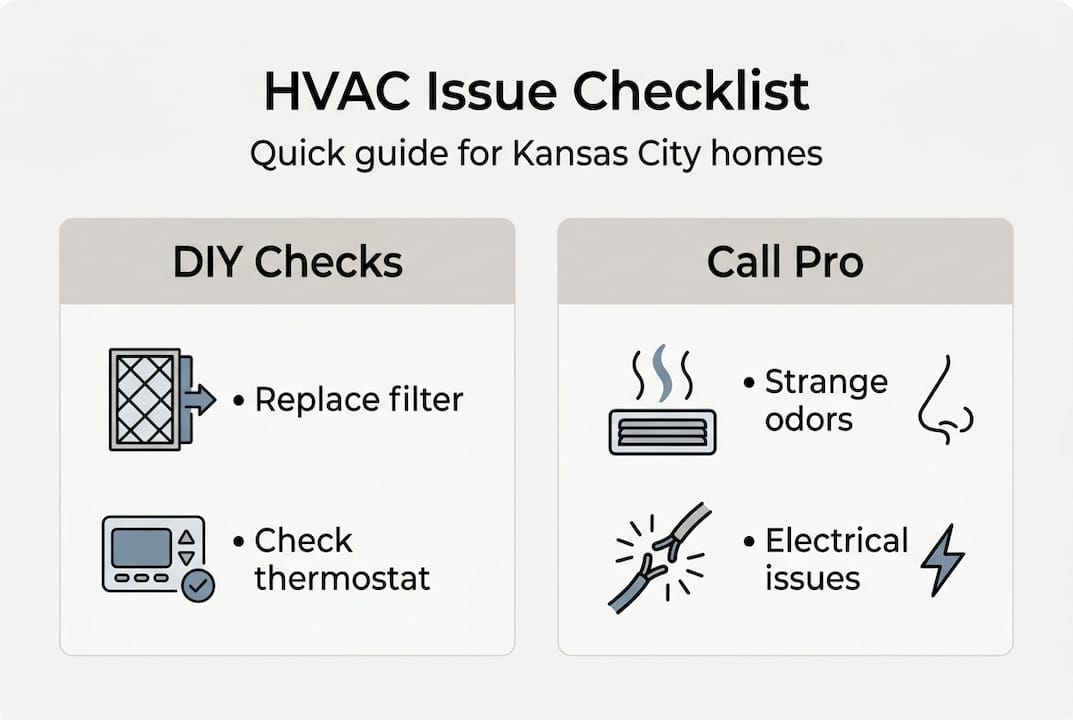
Knowing your limits with DIY diagnostics protects your safety, your equipment, and your wallet. Certain HVAC problems demand immediate professional attention, while others can wait for scheduled service.
Timely professional intervention prevents further damage and costly emergency repairs. Call an HVAC technician immediately if you smell gas, see smoke or flames, hear loud banging or grinding that doesn’t stop, or find water pooling around your equipment. These situations can escalate quickly into safety hazards or major system failures.
Schedule professional service soon when you notice persistent problems that don’t resolve with basic maintenance. Systems that won’t start despite correct thermostat settings need expert diagnosis. Equipment that cycles constantly, produces weak airflow after filter changes, or generates unusual odors beyond initial dust burning requires professional attention. Refrigerant issues, electrical problems, and mechanical failures all fall outside the scope of homeowner repairs.
Choosing the right HVAC service provider in Kansas City makes the difference between quality repairs and recurring problems. Start by verifying proper licensing and insurance. Missouri requires HVAC contractors to hold valid licenses, and legitimate companies carry liability insurance and workers compensation coverage. Ask to see proof of both before allowing work to begin.
Read recent online reviews across multiple platforms. Look for patterns in feedback rather than focusing on single reviews. Companies with consistently positive ratings for response time, work quality, and fair pricing deserve consideration. Pay attention to how businesses respond to negative reviews, as this reveals their commitment to customer satisfaction.
Ask about warranties on both parts and labor. Reputable companies stand behind their work with guarantees, typically offering at least one year on labor and honoring manufacturer warranties on equipment and components. Get all warranty terms in writing before service begins.
When evaluating HVAC companies, ask these important questions:
- What are your response times for emergency calls versus routine service?
- Do you provide written estimates before starting work?
- Which brands of equipment and parts do you install and service?
- What training and certifications do your technicians hold?
- Can you provide references from recent customers with similar systems?
- Do you offer maintenance plans or service agreements?
- What financing options are available for major repairs or replacements?
Price shouldn’t be your only consideration, but you deserve transparent, competitive pricing. Be wary of quotes significantly lower than competitors, as they often indicate shortcuts, inferior parts, or hidden fees that emerge later. The lowest bid rarely delivers the best value. Conversely, the most expensive service doesn’t guarantee superior quality.
Timing matters for non-emergency repairs. Schedule HVAC service during shoulder seasons (spring and fall) when companies are less busy. You’ll often get faster appointments, more flexible scheduling, and sometimes better pricing than during peak summer and winter demand. For strategies on managing Google Ads for HVAC services, consider how contractors optimize their marketing to reach homeowners efficiently.
Find trusted HVAC repair services in Kansas City
When HVAC problems disrupt your home comfort, you need reliable experts who understand Kansas City’s unique climate challenges and can respond quickly. KC Air Control specializes in emergency HVAC repair workflow designed specifically for local homeowners, delivering solutions 35% faster than typical service timelines. Our technicians bring over 70 years of combined experience diagnosing and resolving everything from minor inefficiencies to major system failures.

We know that identifying the problem is just the first step. Our expert HVAC repair tips and thorough diagnostic process confirm the root cause and present you with clear options for restoring comfort efficiently. Whether you’re dealing with strange noises, inadequate heating or cooling, or complete system failure, our team provides transparent pricing and quality workmanship backed by solid warranties. Ready to get your system running right? Book HVAC repair online and schedule service at your convenience.
FAQ
How can I tell if my HVAC filter needs replacement?
Most filters need replacement every one to three months depending on your home’s dust levels, pet ownership, and system runtime. Hold your filter up to a light source. If you can’t see light passing through easily, replace it immediately regardless of the calendar. Reduced airflow from vents and increased dust on surfaces also signal a clogged filter affecting system performance. Regular HVAC filter maintenance prevents many common comfort and efficiency problems.
What are typical HVAC issues unique to Kansas City homes?
Kansas City’s extreme temperature swings between seasons put exceptional stress on HVAC systems, causing premature wear on compressors and heat exchangers. Our region’s high humidity during summer promotes mold growth in ductwork and on evaporator coils, affecting indoor air quality and system efficiency. Many older Kansas City homes also have undersized or poorly designed duct systems that struggle to distribute conditioned air evenly. Understanding these Kansas City HVAC problems helps you anticipate and address issues specific to our climate.
Can I troubleshoot my HVAC system without voiding the warranty?
Basic visual inspections, filter replacements, and thermostat checks are perfectly safe and won’t affect your warranty coverage. You can also clear debris from around outdoor units and ensure vents remain unblocked. However, opening sealed refrigerant systems, attempting electrical repairs, or removing panels marked with warranty seals will void most manufacturer warranties. When in doubt, consult your warranty documentation or stick to safe HVAC troubleshooting techniques that focus on observation rather than repair attempts.
Recommended
- Common HVAC problems and solutions for Kansas City homes – KC Air Control – Heating & Cooling
- HVAC inspections for Kansas City homeowners: 2026 guide – KC Air Control – Heating & Cooling
- How to schedule HVAC inspections for Kansas City homes – KC Air Control – Heating & Cooling
- Signs you need HVAC repair: Kansas City expert tips – KC Air Control – Heating & Cooling
- Google Ads for HVAC explained: boost local leads now