
TL;DR:
- Replacing old AC units improves home comfort and significantly reduces energy costs through higher efficiency standards. Proper sizing, installation, and consideration of new refrigerants and advanced compressor technologies ensure optimal performance and long-term savings. Homeowners should view AC replacement as a strategic decision to maximize efficiency, cost savings, and indoor air quality.
Replacing old AC units is the single most effective way to cut cooling costs, restore home comfort, and avoid the escalating expense of keeping an aging system alive. Modern air conditioners, rated under the SEER2 efficiency standard and certified by ENERGY STAR, deliver measurably better performance than units installed before 2010. Federal tax credits and utility rebates now make the financial case stronger than ever, and new refrigerant regulations in 2026 mean that waiting only adds to future repair costs.
Why replace old AC units: the signs you should not ignore
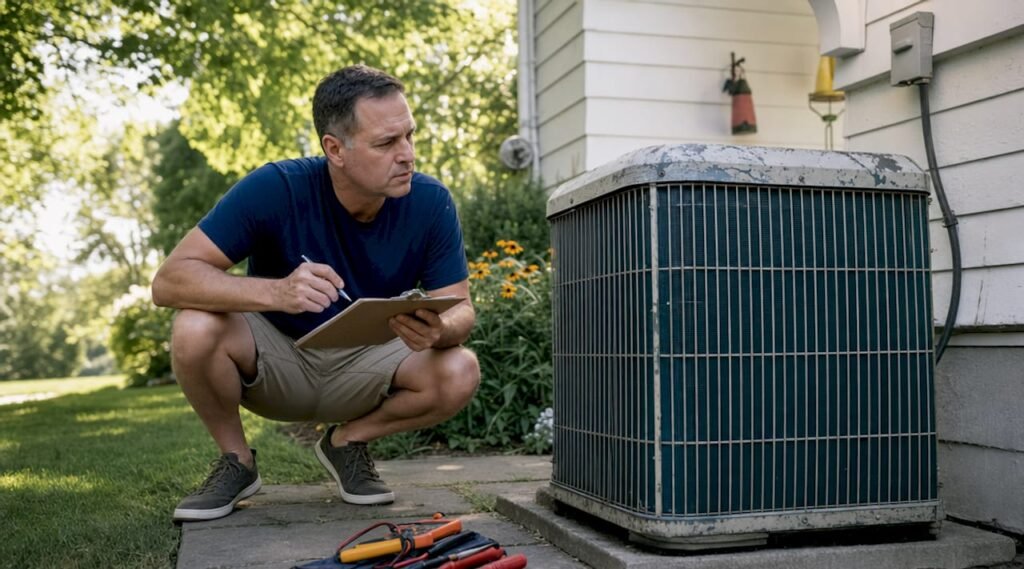
Knowing when to replace rather than repair is the most practical skill a homeowner can develop. Central AC systems last 15 to 20 years, and replacement becomes the smarter financial move when repair costs exceed 50% of what a new system would cost. A compressor replacement alone runs $1,500 to $2,500. Spending that on a 14-year-old unit is rarely worth it.
Well-maintained systems lose 5 to 10% efficiency per decade, and repair parts for older models become increasingly scarce. That combination of declining performance and rising repair bills is the clearest signal that replacement is overdue. You are not just fixing a broken part. You are subsidizing a system that will keep failing.
Here are the most reliable signs to replace your air conditioner:
- Age over 12 years with any history of frequent breakdowns
- Rising energy bills that cannot be explained by rate increases or weather
- Uneven cooling across rooms, indicating the system can no longer distribute air properly
- Persistent humidity problems inside the home during summer months
- R-22 refrigerant use: R-22 was phased out in 2020, and recharging an R-22 system now costs significantly more than it did just a few years ago
- Repair estimates above $1,000 on a unit older than 10 years
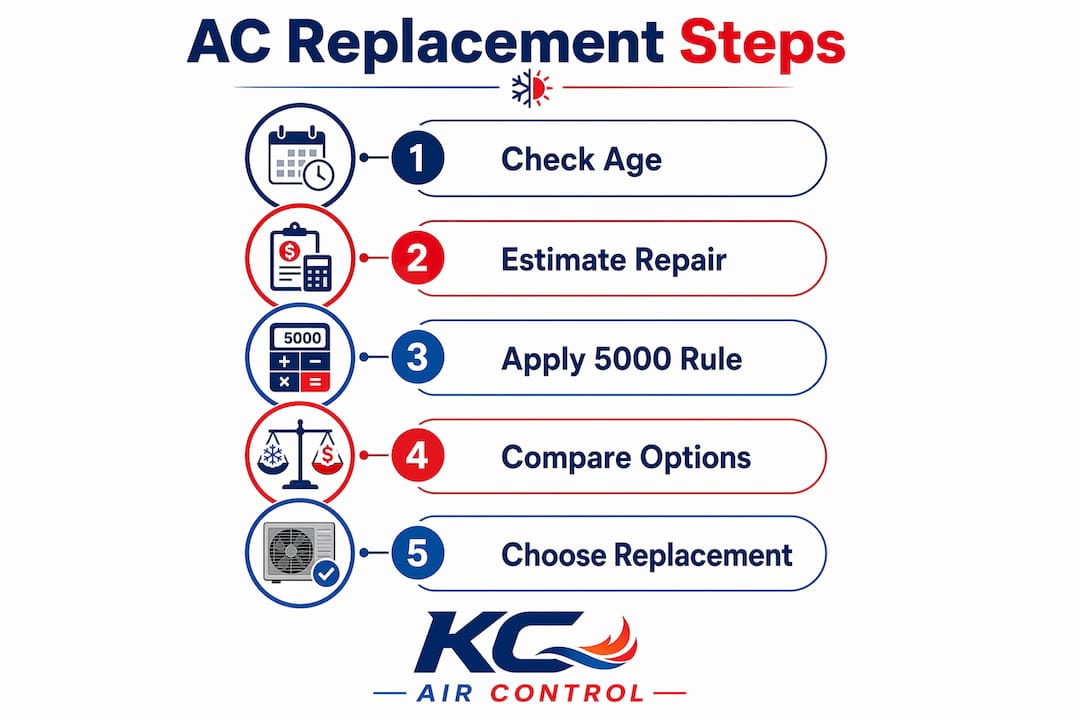
Pro Tip: Apply the “5,000 rule” before authorizing any repair. Multiply the unit’s age by the repair cost. If the result exceeds $5,000, replacement is almost always the better investment.
Checking your repair vs. replace decision against these benchmarks before calling a technician saves you from committing money to a system that is already past its useful life.
How does upgrading your AC unit reduce energy costs?
The energy efficiency of new ACs is the strongest financial argument for replacement. SEER2 is the current federal efficiency rating standard for central air conditioners, replacing the older SEER metric in 2023. A unit rated at 16 SEER2 uses roughly 14% less electricity than a 14 SEER2 model running the same hours. That gap compounds over a full cooling season in a Kansas City summer.
ENERGY STAR-qualified AC units save up to 20% on heating and cooling costs compared to standard models. For a household spending $1,800 annually on energy, that is $360 back in your pocket every year. The savings are not theoretical. They show up on your utility bill within the first full season.
The financial picture improves further when you factor in available incentives. Central AC replacement costs $3,000 to $7,000, but a $300 federal tax credit combined with a $400 utility rebate can reduce the effective premium for a higher-efficiency unit to near zero. Payback periods as short as two years are achievable when upgrading from a 14 SEER2 base model to a 16 SEER2 unit. Understanding how rebates work before you buy is one of the most overlooked steps in the replacement process.
| Efficiency level | Estimated annual savings vs. 10 SEER unit | Typical payback period with incentives |
|---|---|---|
| 14 SEER2 (minimum standard) | Moderate | 4 to 6 years |
| 16 SEER2 | Higher | 2 to 3 years |
| 18 SEER2+ (ENERGY STAR) | Highest | 3 to 5 years |
The benefits of upgrading AC go beyond the utility bill. Modern units with variable-speed and two-stage compressors also deliver better dehumidification, which matters in humid Midwest summers. Two-stage compressors run at about 65% capacity most of the time, maintaining steadier temperatures and pulling more moisture from the air than a single-stage unit cycling on and off at full power.
Why proper sizing and installation matter as much as the unit itself
Buying the right AC unit and having it installed correctly are two separate problems. Many homeowners assume bigger is better, but oversizing is one of the most common and costly mistakes in AC replacement. Oversizing by 20 to 40% increases energy use by 8 to 15% due to short-cycling. A unit that turns on and off too frequently never runs long enough to dehumidify the air properly, leaving your home feeling clammy even when the temperature reads correctly.
Proper sizing starts with a Manual J load calculation, the industry-standard method for determining the exact cooling capacity a home requires. Manual J accounts for square footage, ceiling height, insulation levels, window orientation, and local climate data. Any contractor who quotes a replacement unit without performing this calculation is guessing, and that guess will cost you in comfort and efficiency for the next 15 years.
Follow these steps to protect your investment during the replacement process:
- Request a Manual J calculation from every contractor you consider. If they decline, move on.
- Inspect your ductwork before installation. Leaky or undersized ducts negate efficiency gains from a new unit and cause repeated comfort complaints.
- Ask about your air handler or furnace. Replacing the furnace or air handler alongside the AC avoids compatibility issues and warranty voids with modern equipment. Older components may use incompatible communication protocols that cause the new system to operate inefficiently.
- Verify the contractor’s licensing and manufacturer certification. Improper installation can void the equipment warranty entirely.
Pro Tip: Get at least three quotes and ask each contractor to show you their load calculation results. If two contractors recommend significantly different unit sizes, that is a red flag worth investigating before you sign anything.
Proper sizing not only saves energy but extends equipment lifespan significantly. A correctly sized unit runs longer cycles at lower stress, which reduces wear on the compressor and other components.
What new AC technologies and refrigerants should homeowners consider in 2026?
The importance of new AC units in 2026 goes beyond efficiency ratings. Two major technology shifts are reshaping what homeowners should expect from a replacement system: new refrigerants and advanced compressor designs.
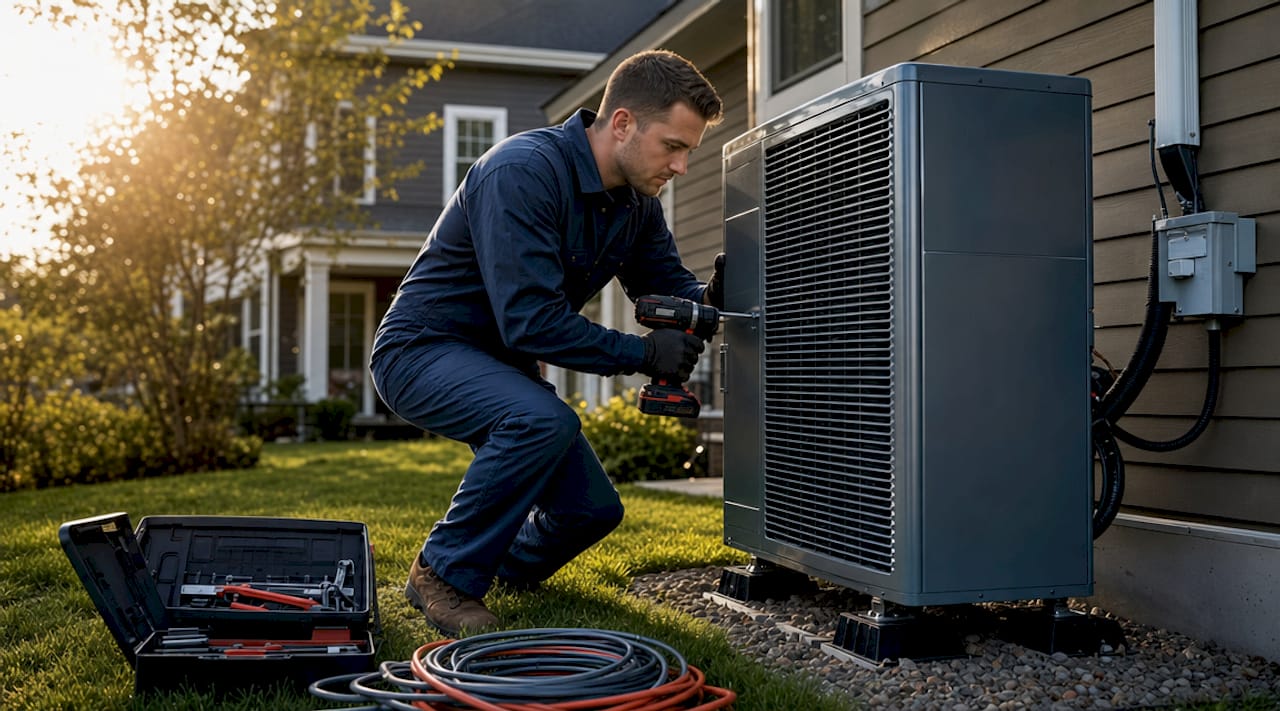
R-410A, the refrigerant used in most systems installed between 2010 and 2023, is being phased out under EPA regulations. New systems now use R-32 or R-454B, both classified as A2L refrigerants, meaning they are mildly flammable. New refrigerants R-32 and R-454B require specialized equipment and training, adding $200 to $700 to installation costs. This is not a reason to delay replacement. It is a reason to choose a contractor who has already invested in the required tools and certifications, because the transition to A2L refrigerants is creating real supply and skill constraints in 2025 and 2026.
Beyond refrigerants, the compressor technology in a new unit has a direct impact on your daily comfort:
- Variable-speed compressors adjust output continuously, maintaining precise temperatures and dramatically reducing humidity. They are the most efficient option available and perform best in climates with long cooling seasons.
- Two-stage compressors offer a strong middle ground, running at low capacity most of the time and stepping up only during peak heat. They cost less than variable-speed units while still outperforming single-stage models on both efficiency and comfort.
- Heat pumps deserve serious consideration if you are also approaching furnace replacement. Heat pumps provide heating at 250 to 300% efficiency using the same ductwork as a central AC system, and they can replace a gas furnace entirely in moderate climates. The cost premium runs $1,500 to $2,500 per ton over a traditional AC unit, but the combined heating and cooling savings can close that gap within a few years.
Improving indoor air quality is another benefit that comes with a properly installed modern system. New units with better filtration and humidity control reduce allergens and airborne contaminants in ways that older systems simply cannot match.
Key takeaways
Replacing an old AC unit delivers lower energy bills, better comfort, and long-term cost savings that outweigh the upfront investment when you choose the right system and have it properly installed.
| Point | Details |
|---|---|
| Replace after 12 to 15 years | Aging units lose efficiency and face rising repair costs that exceed replacement value. |
| ENERGY STAR saves up to 20% | Certified units cut annual cooling costs significantly, with payback periods as short as two years. |
| Sizing determines performance | A Manual J calculation prevents oversizing, which wastes energy and causes humidity problems. |
| New refrigerants add install costs | R-32 and R-454B require certified contractors, adding $200 to $700 but future-proofing your system. |
| Incentives reduce net cost | Federal tax credits and utility rebates can offset hundreds of dollars of the replacement premium. |
What I have learned after years of watching homeowners delay this decision
Most homeowners who delay AC replacement do so because the upfront cost feels large compared to another repair bill. That logic breaks down when you calculate total cost of ownership over five years. A $400 repair on a 15-year-old unit that then fails again in 18 months, followed by another $600 repair, and then a compressor replacement at $2,000, adds up to more than a new system would have cost. And throughout that period, you are paying higher utility bills every single month.
The other mistake I see regularly is choosing a contractor based on the lowest quote without asking how they sized the unit. A cheap installation of an oversized system will underperform for its entire lifespan. You will call for service repeatedly, never quite understand why the house feels uncomfortable, and eventually replace the unit again sooner than you should have to.
My honest recommendation: treat AC replacement as a home infrastructure decision, not a commodity purchase. Get the load calculation done. Ask about rebates before you buy, not after. And if your system is over 12 years old and showing any of the signs covered above, the question is not whether to replace it. The question is how to do it right.
— AB
Ready to replace your AC unit? Kcaircontrol can help
If your system is showing the signs covered in this article, the next step is a professional assessment from a contractor you can trust. Kcaircontrol has served Kansas City homeowners for over 70 years, with certified technicians who perform proper load calculations, handle A2L refrigerant installations, and walk you through every available rebate and financing option.

Whether you need an emergency HVAC repair while you plan your replacement or you are ready to schedule a full system quote today, Kcaircontrol makes the process straightforward. Flexible financing options are available, and our team will help you identify every federal tax credit and utility rebate you qualify for before you commit to a system. Schedule your consultation online and get a clear picture of what a new system will cost and save you.
FAQ
How long does a central AC unit typically last?
Central AC systems last 15 to 20 years under normal conditions. Replacement becomes the better financial choice when the unit is over 12 years old and experiencing frequent breakdowns or repair costs above 50% of replacement value.
What SEER2 rating should I look for in a replacement AC?
A 16 SEER2 unit offers the best balance of upfront cost and long-term savings for most homeowners. Units rated 18 SEER2 or higher qualify for ENERGY STAR certification and the largest utility rebates, making them worth considering if you plan to stay in your home for five or more years.
Will my old ductwork work with a new AC system?
Existing ductwork can often be reused, but it must be inspected before installation. Leaky or undersized ducts reduce the efficiency of even the best new system and cause comfort problems that are frequently misdiagnosed as equipment failures.
What is the federal tax credit for a new AC unit?
The federal tax credit for qualifying ENERGY STAR-certified AC units is $300 as of 2026. Many utility companies add their own rebates on top of this, so check with your local provider before purchasing to maximize your total incentive.
Should I replace my furnace at the same time as my AC?
Replacing the air handler or furnace alongside the AC is often the right call if the furnace is also aging. Mismatched components can cause compatibility issues, reduce efficiency, and void the warranty on your new AC equipment.