Your home cooling efficiency checklist starts here. Change air filters monthly, seal duct leaks with mastic sealant, set your thermostat to 78°F when you leave, schedule a spring HVAC tune-up, and upgrade to ENERGY STAR certified equipment when your system is over 10 years old. These five actions, backed by Department of Energy and ENERGY STAR guidance, deliver the biggest impact on your utility bills and indoor comfort.
- Change or inspect air filters every 1–2 months during cooling season
- Seal duct leaks with mastic sealant or metal foil tape
- Set thermostat to 78°F when away from home
- Schedule a professional pre-season tune-up each spring
- Run ceiling fans to supplement your AC
- Upgrade aging equipment to ENERGY STAR certified models
- Add window treatments to block direct sun
- Insulate accessible ducts in attics, crawlspaces, and garages
- Plant shade trees or install awnings on sun-facing walls
Nearly half of the average home’s annual energy bill goes to heating and cooling. Getting these basics right is the fastest path to lower costs.
1. How to build your home cooling efficiency checklist with routine maintenance
Dirt and neglect are the leading causes of cooling system failure, according to the Department of Energy. A clean, well-maintained system runs longer cycles less often and uses less electricity to reach your set temperature.
Monthly and seasonal tasks:
- Air filters: Check every month; replace every 1–2 months during heavy use. A clogged filter forces your system to work harder, raises energy costs, and can cause premature failure.
- Evaporator and condenser coils: Clean before warm weather arrives. Dirty coils reduce cooling capacity and extend run times.
- Outdoor unit: Keep the area clear of debris and trim foliage back at least two feet for adequate airflow.
- Condensate drain: Clear with a stiff wire periodically to prevent clogs and water damage.
- Coil fins: Have a contractor straighten bent aluminum fins with a fin comb. Never use a pressure washer; a garden hose with a gentle stream is the safe approach.
Pro Tip: Schedule your spring maintenance check around the time change in march or april so it becomes a habit you won’t forget.
- Turn off the system at the thermostat or breaker before any filter or coil work.
- Remove and inspect the filter; replace if visibly dirty.
- Clear debris from around the outdoor condenser unit.
- Flush the condensate drain line with water.
- Call a professional for coil cleaning and refrigerant checks.
2. Thermostat settings that actually save you money
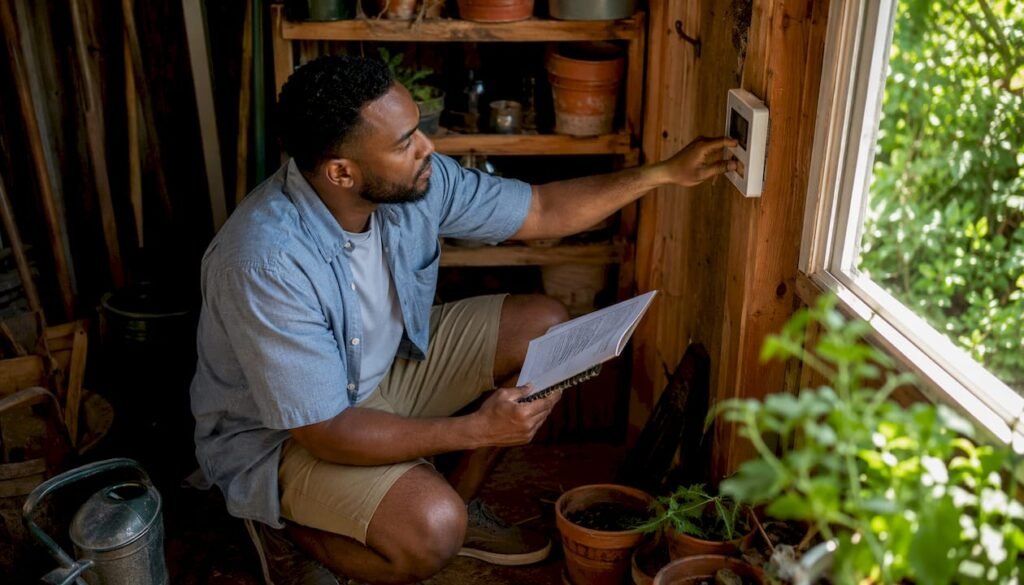
The Department of Energy recommends setting your thermostat to 78°F when you are home and higher when you are away. That setback, held for eight hours, produces meaningful annual savings on cooling costs.
Programmable thermostats let you automate those setbacks with daily schedules, so your home cools down before you return without running the AC all day. An ENERGY STAR certified smart thermostat goes further: it learns your patterns, sends monthly energy reports, and lets you adjust settings remotely from your phone. Homes with high cooling bills can save approximately $100 a year with an ENERGY STAR certified smart thermostat.
Ceiling fans also play a role. Running a ceiling fan alongside your AC lets you raise the thermostat setting comfortably, reducing how hard the compressor works. Turn fans off when you leave the room since they cool people, not spaces.
ENERGY STAR guidance: “A smart thermostat that’s earned the ENERGY STAR is independently certified to deliver energy savings based on extensive field data. Some ENERGY STAR certified smart thermostats provide monthly reports of energy usage which you can use to compare performance over time.”
3. Sealing and insulating ducts to stop wasted cooling
In a typical house, 20–30% of conditioned air escapes through duct leaks before it ever reaches your living spaces. That loss shows up directly on your utility bill.
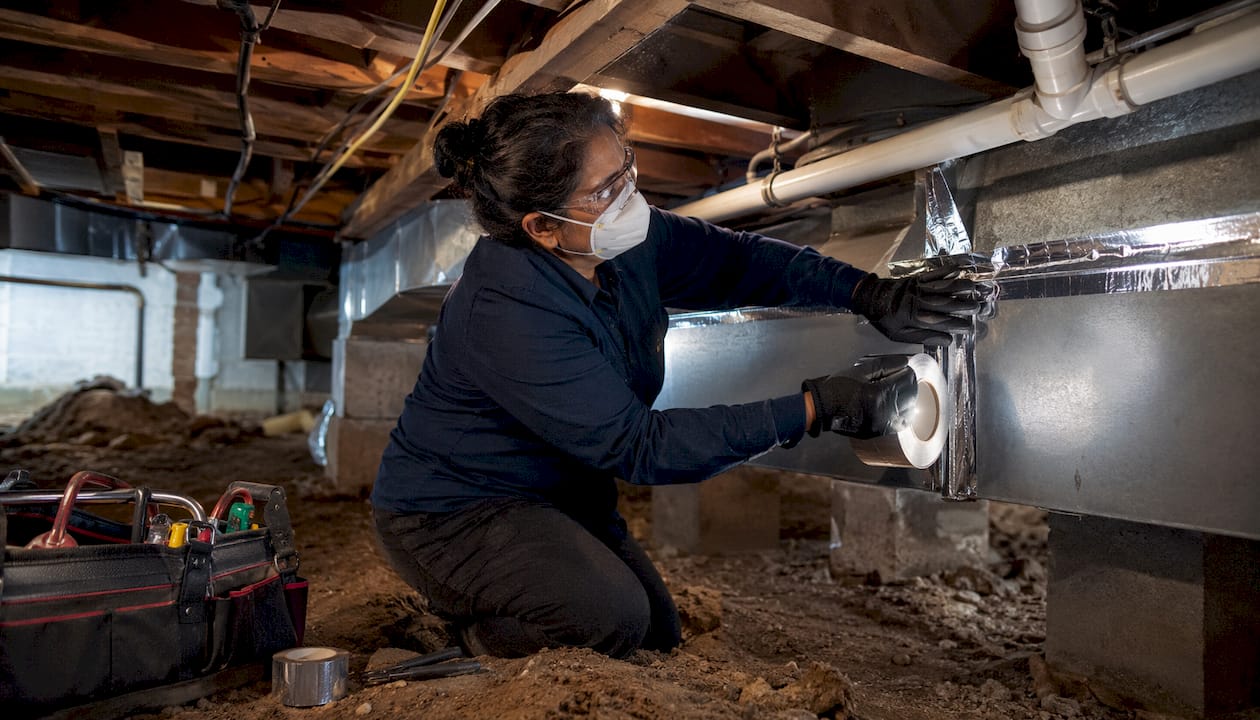
Seal duct seams and connections with mastic sealant or metal foil tape. Never use standard duct tape; it loses adhesion quickly under heat and humidity, leaving gaps that grow over time. After sealing, wrap accessible ducts in insulation, especially those running through attics, crawlspaces, or unheated garages. Also check where vents and registers meet floors, walls, and ceilings, and seal any gaps there.
Good roofing insulation works alongside duct sealing by reducing the heat load your system fights in the first place. Sealing and insulating ducts together can improve HVAC efficiency by as much as 20%.
4. Upgrading cooling equipment for long-term savings
If your system is more than 10 years old and struggling to keep up, replacement often costs less over time than repeated repairs. Look for units that have earned the ENERGY STAR label. Depending on your climate, switching to ENERGY STAR certified equipment can cut your annual energy bill by nearly $140.
Proper sizing matters as much as the equipment itself. An oversized unit short-cycles, leaving your home humid and uncomfortable. An undersized one runs constantly. Insist that your contractor use ACCA Manual J to calculate the correct size for your home.
Cooling system upgrades also require verified refrigerant charge and airflow. Incorrect refrigerant levels can lower efficiency by 5–20% and cause premature component failure.
5. Why professional maintenance and installation protect your investment
Improper installation can reduce system efficiency by up to 30%, raising your utility bills and shortening equipment life. That figure alone makes the case for hiring a qualified contractor rather than cutting corners.
Annual pre-season check-ups catch small problems before they become expensive mid-summer failures. A thorough visit covers thermostat calibration, electrical connection checks, coil cleaning, refrigerant level verification, and airflow testing. Neglected condensate drains and coils can also harbor mold and bacteria, affecting your indoor air quality and your family’s health.
Kcaircontrol’s technicians bring over 70 years of Kansas City HVAC experience to every visit, from routine tune-ups to full system evaluations.
6. Window treatments that reduce heat gain
Direct sunlight through windows can raise indoor temperatures noticeably, forcing your AC to work harder. Closing drapes, blinds, or cellular shades on south and west-facing windows during peak afternoon hours blocks radiant heat before it enters your living space.
Cellular shades offer the best insulating value among common window coverings. Reflective or blackout curtains work well in rooms that get intense afternoon sun. For a longer-term fix, exterior shading options like awnings or solar screens block heat before it reaches the glass, which is more effective than interior treatments alone.
7. Landscaping strategies that keep your home cooler
Strategically placed trees and shrubs reduce the amount of direct sun hitting your walls and roof. Shade trees planted on the south and west sides of your home can lower surface temperatures on those walls during the hottest part of the day. A cool roof works on the same principle, reflecting solar energy rather than absorbing it.
Ground cover plants and mulch around the foundation also reduce heat radiating up from bare soil or pavement. Climbing vines on a trellis positioned away from the wall can shade siding without trapping moisture against it.
8. Behavioral changes that lower your cooling load
Small habit shifts add up across a full summer. Run your dishwasher, oven, and dryer in the early morning or after 8 PM, when outdoor temperatures drop and your AC doesn’t have to fight extra heat from appliances. Use your microwave or outdoor grill instead of the oven on the hottest days.
Keep interior doors open so conditioned air circulates freely. Close off unused rooms only if those rooms have separate zone controls. Check that furniture and rugs aren’t blocking supply or return vents, since restricted airflow forces your system to run longer to reach the set temperature.
Key Takeaways
Consistent maintenance, smart thermostat use, and proper duct sealing are the three actions that deliver the greatest reduction in home cooling costs and system wear.
| Point | Details |
|---|---|
| Filter changes matter most | Replace filters every 1–2 months during cooling season to protect efficiency and equipment life. |
| Duct leaks waste 20–30% of air | Seal with mastic sealant or metal foil tape; never use standard duct tape. |
| Thermostat setback saves money | Set to 78°F when away; an ENERGY STAR smart thermostat can save about $100 a year. |
| Bad installation costs you 30% | Improper setup reduces system efficiency by up to 30% and shortens equipment life. |
| Old equipment warrants replacement | Systems over 10 years old may cost less to replace than to repair, especially with ENERGY STAR models. |
Ready to put this checklist to work? Kcaircontrol’s Kansas City team handles everything from AC tune-ups to full system replacements, with scheduling available online. If your system shows signs it needs repair, don’t wait until the hottest week of summer to find out.