
TL;DR:
- UV-C germicidal irradiation in HVAC systems damages microorganism DNA, reducing mold, bacteria, and viruses. It effectively cleans coils but has limited airborne pathogen inactivation, requiring pairing with filters and humidity control. Proper installation, maintenance, and the use of 254 nm bulbs are essential for safe and effective indoor air quality improvement.
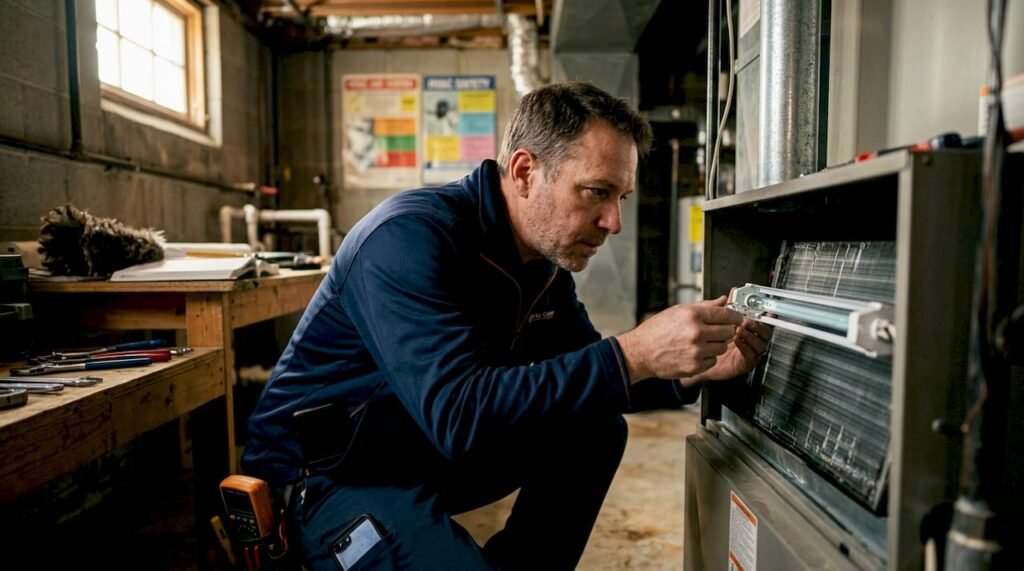
UV-C germicidal irradiation is the recognized industry term for the role of UV lights in air cleaning, defined as the use of ultraviolet-C radiation to inactivate bacteria, mold, and viruses by damaging their DNA and preventing reproduction. This technology works inside your HVAC system, targeting biological contaminants that standard filters never touch. ASHRAE recognizes UV germicidal irradiation as a legitimate tool for controlling microbial growth in air handling systems. The catch is that UV lights do not remove dust, allergens, or chemical pollutants. They work best when paired with high-efficiency filtration and regular HVAC maintenance, a layered approach that Kcaircontrol has built into its indoor air quality services for Kansas City homeowners.
How do UV lights clean air in residential HVAC systems?
UV-C radiation at 254 nm damages the DNA and RNA of microorganisms, stopping them from reproducing. That wavelength is the sweet spot for germicidal action. The damage happens at the cellular level, so bacteria and mold spores become harmless even if they remain physically present in the system.
Two distinct UV system types exist for residential HVAC, and confusing them leads to poor results.
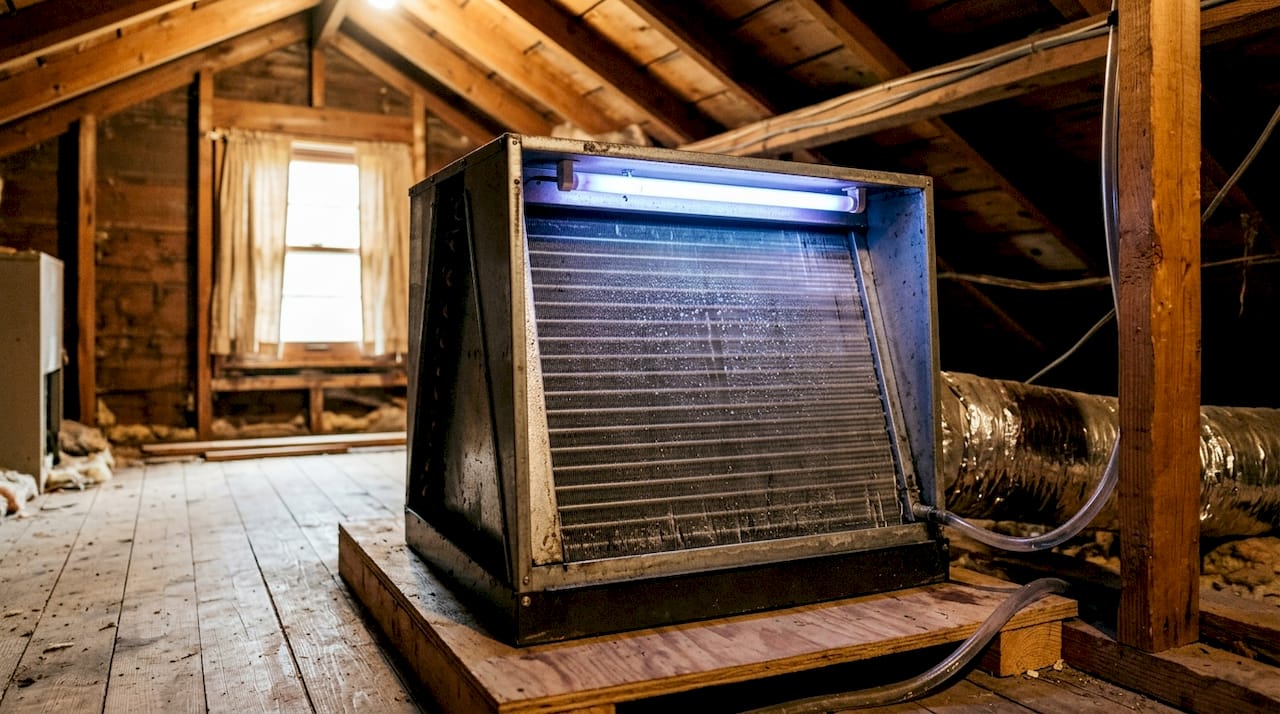
- Coil-sanitizing UV systems mount near the evaporator coil and run continuously. The coil stays wet and warm, making it a prime breeding ground for mold and biofilm. A UV lamp positioned inches away delivers a sustained dose that suppresses mold and biofilm growth over time. This is the more effective of the two types because the lamp has hours, not seconds, to do its work.
- In-duct air-sterilizing UV systems mount inside the ductwork and expose passing air to UV-C light. The problem is physics. Residential airflow moves fast, giving microorganisms only a fraction of a second of UV exposure. That is rarely enough to achieve a meaningful kill rate for airborne pathogens.
- Exposure time matters more than lamp wattage. A more powerful bulb does not compensate for air moving too quickly past it.
- Biofilm prevention is a real win. Coil UV systems reduce the slimy buildup that degrades heat transfer efficiency and creates musty odors throughout the home.
- Not all microbes respond equally. Some bacteria require only seconds of UV exposure. Certain mold spores and viruses need longer contact time, which is why coil placement outperforms in-duct placement for most residential applications.
The bottom line on mechanism: coil sterilization accumulates dose over long periods and delivers reliable results. In-duct air sterilization is limited by short residence times and works best in commercial settings with slower airflow and higher lamp intensity.
What are the benefits and limitations of UV light air purification?
UV light air purification delivers real, measurable benefits for biological contaminants. It also has firm limits that marketing materials frequently ignore.
What UV lights do well
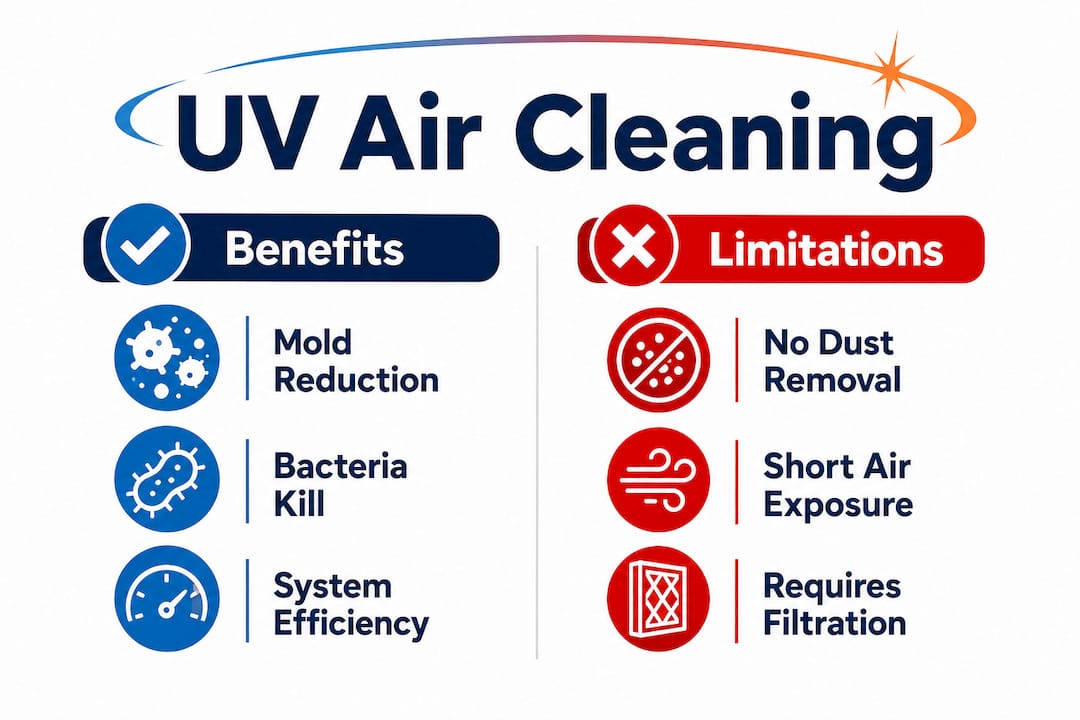
HVAC UV lights reduce mold and bacterial growth on evaporator coils, which directly improves system efficiency and reduces musty odors. A clean coil transfers heat more effectively, which means your system runs shorter cycles and uses less energy. Homeowners who notice a persistent musty smell from their vents often find that coil UV installation eliminates the odor within weeks.
UV systems also reduce the microbial load circulating through your home’s air. While the in-duct kill rate for airborne pathogens is limited, any reduction in active mold spores and bacteria reaching your living space is a genuine benefit, especially for households with allergy or asthma sufferers.
Where UV lights fall short
UV lights do not remove dust, pet dander, pollen, or chemical pollutants. Those require physical filtration. A UV lamp cannot capture a dust particle because it has no filter media. Homeowners who install UV lights expecting relief from seasonal allergies will be disappointed if they skip upgrading their air filter at the same time.
Short residence times in residential systems also limit how much airborne pathogen inactivation actually occurs. Commercial UV systems are engineered with slower airflow and multiple high-intensity lamps to compensate. Most residential in-duct units cannot replicate that performance.
Safety: one rule you cannot skip
Avoid any UV system using 185 nm lamps. Those generate ozone, a respiratory irritant that is unsafe indoors. Only 254 nm UV-C bulbs are appropriate for residential HVAC. Always confirm the wavelength before purchasing or approving an installation.
Pro Tip: Ask your HVAC technician to show you the bulb specification sheet before installation. Confirm it reads 254 nm. If the product description mentions “ozone-generating” or “activated oxygen,” reject it.
How much does UV light installation and maintenance typically cost?
Professional UV light installation costs between $300 and $1,500, depending on system type and the complexity of your HVAC setup. That range covers both labor and equipment.
| System type | Typical installed cost | Annual bulb replacement |
|---|---|---|
| Coil-sanitizing UV | $500–$900 | $50–$150 |
| In-duct air-sterilizing UV | $600–$1,200 | $50–$150 |
| DIY kit (not recommended) | $80–$200 | $30–$100 |
Bulb lifespan runs approximately 9,000 hours, which translates to roughly one replacement per year for a system running continuously. Skipping annual replacement is the most common mistake homeowners make. A degraded bulb emits far less UV-C energy, reducing effectiveness to near zero while still consuming electricity.
DIY UV kits lack proper integration and warranties. Improper placement can expose wiring to moisture or position the lamp where it cannot reach the coil surface. Incorrect installation can also void your HVAC manufacturer’s warranty. Professional installation costs more upfront but eliminates those risks.
Energy consumption for a residential UV lamp is low, typically 15–40 watts, comparable to a standard LED bulb. Operating cost adds only a few dollars per month to your electricity bill.
Pro Tip: Schedule your UV bulb replacement at the same time as your annual HVAC tune-up. Combining visits saves a service call fee and keeps your system performing at its best year-round. Kcaircontrol’s HVAC maintenance plans include bulb replacement reminders.
How do UV light systems complement other indoor air quality measures?
UV lights are a supplementary technology, not a standalone air purifier. Experts recommend pairing UV with MERV 13 or HEPA filters and good ventilation to address the full spectrum of indoor air contaminants. Each layer of protection handles what the others cannot.
| Air quality measure | What it targets | What it misses |
|---|---|---|
| UV-C germicidal irradiation | Mold, bacteria, viruses on surfaces and in air | Dust, dander, allergens, chemicals |
| MERV 13 / HEPA filtration | Dust, pollen, dander, fine particles | Microorganisms that pass through media |
| Ventilation and fresh air | Dilutes indoor pollutants and VOCs | Does not inactivate pathogens |
| Humidity control | Reduces mold growth conditions | Does not kill existing mold |
Moisture management deserves special attention. Mold thrives when indoor humidity exceeds 60%. A UV lamp slows mold growth on the coil, but if your home runs consistently humid, mold will grow faster than the lamp can suppress it. Keeping humidity between 30% and 50% makes UV treatment significantly more effective.
One critical point that most installers skip: UV-C is preventive, not a remedy for existing heavy mold. If your evaporator coil already has visible biofilm or mold growth, professional cleaning must happen before UV installation. Installing a lamp over an already-contaminated coil will not clear the existing buildup. It will only prevent new growth going forward.
Choosing between a coil UV and an in-duct air sterilizer depends on your specific symptoms. If you notice musty odors, reduced airflow, or frequent mold issues, a coil-sanitizing unit is the right choice. If your concern is airborne pathogens and you want an added layer of protection during cold and flu season, an in-duct system adds value when combined with strong filtration. Understanding how air filters work alongside UV systems helps you build the most effective setup for your home.
Key Takeaways
UV-C germicidal irradiation works best as a coil-sanitizing tool inside HVAC systems, and it delivers reliable results only when paired with proper filtration, humidity control, and annual bulb replacement.
| Point | Details |
|---|---|
| Coil UV outperforms in-duct UV | Longer exposure time on coil surfaces delivers more effective microbial control than fast-moving air allows. |
| UV does not replace filtration | Dust, dander, and allergens require MERV 13 or HEPA filters; UV only targets biological contaminants. |
| Use only 254 nm bulbs | Lamps at 185 nm generate ozone, a respiratory irritant that is unsafe for indoor residential use. |
| Replace bulbs annually | UV-C output degrades after approximately 9,000 hours; a spent bulb provides no germicidal benefit. |
| Clean first, then install | Existing mold or biofilm on the coil requires professional cleaning before UV installation is effective. |
Why UV lights are worth it, but only if you set them up right
UV lights are one of the most misunderstood products in the HVAC accessory market. I have seen homeowners spend $1,200 on an in-duct system expecting hospital-grade air sterilization, then feel cheated when their allergies do not improve. That frustration is understandable, but it comes from a mismatch between marketing claims and engineering reality.
The honest truth is that coil-sanitizing UV is a genuinely useful tool. It keeps your evaporator coil cleaner, extends the time between professional coil cleanings, and reduces the musty odors that make a home feel stale. Those are real, tangible benefits. The in-duct air sterilizer is a secondary option that adds modest value when airflow and lamp intensity are matched correctly.
What I tell every homeowner is this: UV lights work best when you have already done the basics. Change your filter on schedule. Keep your ducts clean. Manage your home’s humidity. If you have done all of that and still struggle with mold triggers or recurring microbial issues, a coil UV system is a smart next step. If you are skipping filter changes and expecting a UV lamp to compensate, you will be disappointed.
The installation and wavelength details are not optional fine print. A 185 nm lamp in a residential system is a health hazard. A coil lamp installed six inches from the coil surface is effective. The same lamp installed in the wrong position is just a light bulb. Professional installation by a qualified HVAC technician is the only way to get the placement, wiring, and bulb specification right the first time. That is not a sales pitch. It is the difference between a system that works and one that does not.
— AB
Kcaircontrol’s UV light and indoor air quality services
Kcaircontrol has served Kansas City homeowners for over 70 years, and UV light installation is one of the most requested upgrades we see today. We assess your existing HVAC setup, recommend the right system type for your home’s specific conditions, and handle installation with correct placement and safe wiring.
Beyond UV lights, we offer professional duct cleaning, filtration upgrades, and full HVAC maintenance to build a complete air quality plan for your home. If you are noticing musty odors, increased allergy symptoms, or just want cleaner air for your family, we can help you find the right combination of solutions. Learn more about UV lights in Kansas City homes or schedule an assessment with our team today.
FAQ
What is a UV light in an HVAC system?
A UV light in an HVAC system is a UV-C germicidal lamp installed near the evaporator coil or inside the ductwork to inactivate mold, bacteria, and viruses. It uses 254 nm ultraviolet radiation to damage microorganism DNA and prevent reproduction.
Do UV lights actually improve indoor air quality?
UV lights improve indoor air quality by reducing biological contaminants on HVAC surfaces and, to a lesser degree, in moving air. They do not remove dust, allergens, or chemical pollutants, so they work best alongside high-efficiency filters.
How long do HVAC UV bulbs last?
HVAC UV bulbs last approximately 9,000 hours, which equals roughly one year of continuous operation. Annual replacement is necessary because UV-C output drops significantly as the bulb ages, even if it still appears to glow.
Is UV light in HVAC systems safe for my family?
UV-C lamps at 254 nm are safe when properly installed inside a sealed HVAC system, because the light stays contained and never directly contacts occupants. Avoid any lamp rated at 185 nm, as those generate ozone, which is a respiratory irritant unsafe for indoor use.
Can I install a UV light system myself?
DIY UV kits are available but carry real risks, including improper placement, moisture exposure to wiring, and potential voiding of your HVAC warranty. Professional installation ensures correct positioning, safe wiring, and the right bulb specification for your system.