
TL;DR:
- Whole-home dehumidification uses a centralized system integrated with HVAC ductwork to control humidity across every room. It operates independently of temperature, reducing mold, dust mites, and energy costs while improving comfort year-round. Proper sizing and professional installation ensure optimal performance and system longevity.
Whole-home dehumidification is defined as a centralized system that removes excess moisture from the air throughout your entire house by integrating directly with your HVAC ductwork. Unlike portable units that handle one room at a time, a whole-house dehumidifier treats every living space simultaneously. The EPA recommends keeping indoor relative humidity between 30% and 50% to reduce mold risk and dust mite activity. Staying within that range is exactly what whole-home humidity control is built to do, and it is the reason more Kansas City homeowners are adding these systems to their HVAC setups.

What is whole-home dehumidification and how does it work?
Whole-home dehumidification works by pulling humid air from your home through the return air duct, passing it across refrigerated coils that condense the moisture, and then sending drier air back into your living spaces. This process runs continuously based on humidity readings rather than temperature. That distinction matters: the system operates on humidity parameters, not cooling demand, so it can run even when your air conditioner is off.
The industry term for this type of equipment is a “whole-house dehumidifier,” and it is classified as a dedicated dehumidification system within the HVAC industry. A humidistat, often wired directly to your thermostat, monitors indoor moisture levels and signals the unit to run when humidity climbs above your set point. Collected water drains automatically through a dedicated condensate line, so you never empty a bucket.
Here is what the core process involves:
- Return air intake: Humid air enters the unit from the return duct or plenum.
- Refrigerated coil condensation: Moisture in the air condenses on cold coils and drips into a drain pan.
- Automatic drainage: Water exits through a hardwired drain line, requiring no manual intervention.
- Humidistat control: The unit cycles on and off based on your target humidity setting, not temperature.
- Supply air return: Drier air feeds back into the duct system and distributes evenly through the home.
Pro Tip: Set your humidistat to 45% relative humidity as a starting point. That sits comfortably within the EPA’s recommended 30%–50% range and gives the system room to respond before conditions become uncomfortable.
What are the main benefits of whole-home dehumidification?
The benefits of whole-home dehumidification go well beyond comfort. They affect your health, your energy bill, and the lifespan of your HVAC equipment.
-
Mold and dust mite reduction. Keeping humidity within the EPA-recommended range of 30%–50% directly limits the conditions mold and dust mites need to thrive. Both organisms require elevated moisture to reproduce, so consistent humidity control cuts their population at the source.
-
Lower AC energy costs. A properly sized whole-house dehumidifier reduces the latent cooling load on your air conditioner. That means your AC runs for shorter cycles to reach the same comfort level, which lowers energy use and reduces wear on the compressor over time.
-
Year-round comfort without running the AC. Dehumidification operates independently of temperature control. On a mild but humid spring day, the dehumidifier handles the clammy feeling without forcing your air conditioner to run unnecessarily.
-
Consistent results across every room. Centralized systems address widespread humidity problems better than portable, room-by-room devices. A whole-home system treats the second floor, basement, and main living area at the same time.
-
Pest and structural protection. High indoor humidity attracts pests and accelerates wood rot and paint peeling. Maintaining stable moisture levels protects your home’s structure and reduces conditions that invite pest activity into the living space.
“Whole-home dehumidification is not just a comfort upgrade. It is a health and maintenance investment that pays dividends in lower energy bills, reduced allergen exposure, and a longer-lasting HVAC system.”
For a deeper look at how humidity fits into your overall indoor air quality, the connection between moisture and airborne contaminants is worth understanding before you size a system.
How to determine the right whole-home dehumidifier size
Sizing a whole-house dehumidifier correctly is the single most important decision in the buying process. Get it wrong and you either short-cycle the unit or fail to control moisture at all.
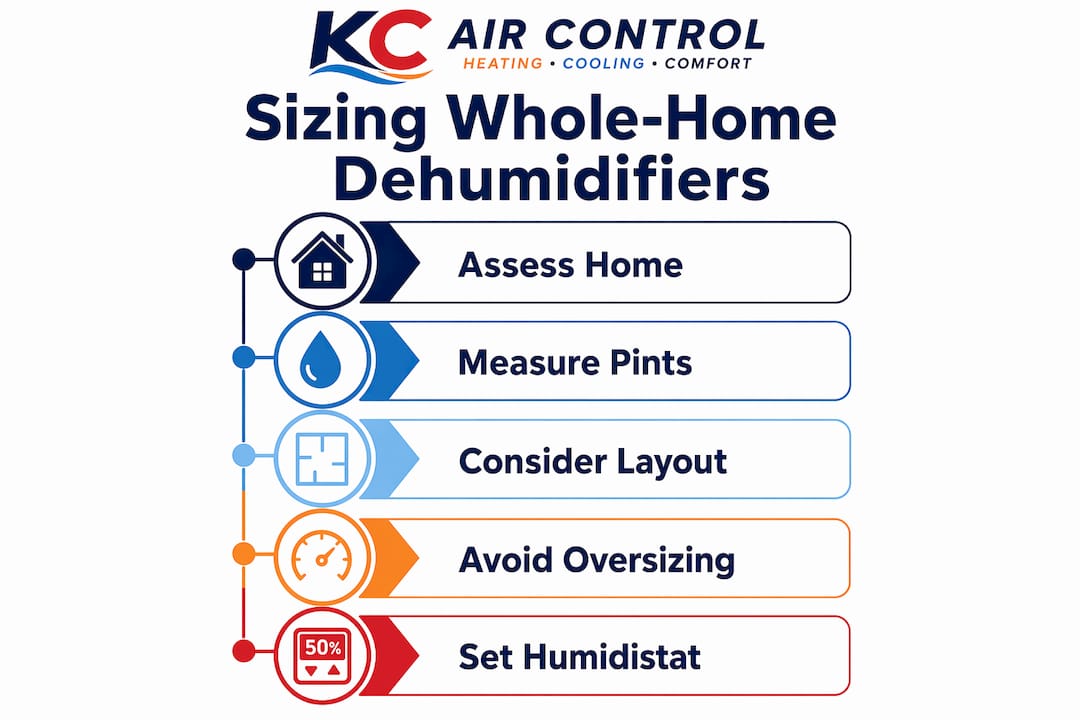
The correct measurement is pints per day (PPD), not square footage. PPD describes how much water the unit can remove from the air in 24 hours. Whole-home systems are rated from approximately 65 PPD for smaller homes up to 200+ PPD for larger homes or high-moisture environments like finished basements.
| Home size and condition | Recommended capacity |
|---|---|
| Under 1,500 sq ft, average humidity | 65–90 PPD |
| 1,500–3,000 sq ft, average humidity | 90–130 PPD |
| 3,000+ sq ft or high moisture load | 130–200+ PPD |
| Finished basement with moisture issues | 90–130 PPD (dedicated unit) |
Sizing based on floor area alone leads to operational problems. A home with poor air sealing, a crawl space, or a basement will have a much higher moisture load than its square footage suggests. A professional assessment measures actual indoor moisture levels and accounts for your home’s construction and local climate before recommending a capacity.
Pro Tip: If your home has a finished basement, consider whether one central unit can serve the full structure or whether a dedicated basement unit makes more sense. Basements often have moisture loads that differ significantly from the floors above.
Oversizing causes short cycling, where the unit turns on and off too frequently without running long enough to dehumidify effectively. Undersizing leaves the system running constantly without reaching your target humidity. Both outcomes waste energy and shorten equipment life.
What does professional installation and maintenance typically involve?
Professional installation of a whole-house dehumidifier is straightforward for an experienced HVAC technician. The process typically takes a few hours and requires minimal modifications to your existing system.
Here is what a standard installation covers:
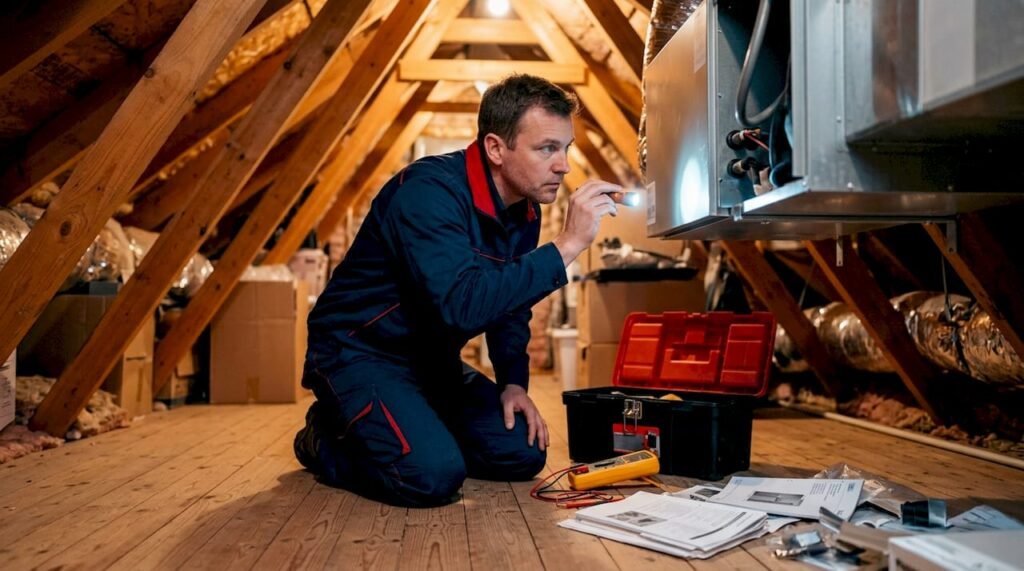
- Placement near the air handler: The unit mounts close to the furnace or air handler to connect directly to the supply and return ductwork.
- Ductwork connection: The technician cuts into the return duct or plenum and connects the unit’s intake and discharge ports.
- Electrical hardwiring: The unit requires a dedicated electrical circuit, which the installer wires during the same visit.
- Condensate drain line: A dedicated drain line routes collected water to a floor drain or utility sink, eliminating the need for manual emptying.
- Humidistat setup: The control humidistat is calibrated and, in most cases, linked to your existing thermostat for unified control.
Once installed, the system needs regular air filter changes every 3–6 months to maintain airflow and efficiency. Skipping filter maintenance reduces moisture removal performance and strains the fan motor. Beyond filter changes, an annual checkup by an HVAC technician covers coil inspection, drain line flushing, and humidistat calibration. Pairing dehumidifier maintenance with your regular HVAC service visit keeps both systems performing at their best without adding extra appointments to your calendar.
Key Takeaways
Whole-home dehumidification is the most reliable method for maintaining healthy indoor humidity across every room, every season, without depending on your air conditioner to do the job.
| Point | Details |
|---|---|
| Centralized moisture control | A whole-house dehumidifier treats every room simultaneously through your existing ductwork. |
| EPA humidity target | Keep indoor relative humidity between 30% and 50% to reduce mold, dust mites, and allergens. |
| Size by PPD, not square footage | Capacity should match your home’s actual moisture load, ranging from 65 to 200+ PPD. |
| AC efficiency benefit | Reducing the latent load on your AC lowers energy costs and extends compressor life. |
| Maintenance is simple | Filter changes every 3–6 months and an annual checkup keep the system running efficiently. |
Why humidity control deserves its own system
Most homeowners I talk to assume their air conditioner handles humidity. It does, but only as a side effect of cooling. The AC removes moisture when it runs, but it shuts off based on temperature, not humidity. On a 68°F day in april or october, your AC may not run at all, and your home can still feel damp and uncomfortable.
That is the gap a dedicated whole-house dehumidifier fills. I have seen homes where the thermostat reads a perfectly comfortable 72°F, but the humidity sits at 65% or higher. The occupants feel sticky and tired, and they cannot figure out why. The temperature is fine. The humidity is the problem.
The other misunderstanding I run into constantly is oversizing. Homeowners see a higher PPD rating and assume bigger is better. It is not. An oversized unit short-cycles, which means it never runs long enough to properly condition the air. You end up with a system that costs more to buy, uses more energy, and delivers worse results than a correctly sized unit would.
The shoulder seasons, spring and fall in the Kansas City area, are when a dedicated dehumidifier earns its keep most clearly. Your AC is not running, the windows are open some days, and humidity swings with every weather system that passes through. A whole-home system handles those swings automatically, without you adjusting anything. That kind of reliable home comfort is what separates a well-designed HVAC setup from one that only works half the year.
— AB
Whole-home humidity control with Kcaircontrol
Kcaircontrol has served Kansas City homeowners for over 70 years, and whole-home dehumidification is one of the most requested upgrades we help residents install. Our technicians assess your home’s actual moisture load before recommending a system, so you get the right capacity from day one.

We carry energy-efficient whole-house dehumidifier options sized for Kansas City’s humid summers and unpredictable shoulder seasons. Installation is completed in a single visit, and we offer ongoing maintenance plans to keep your system running at peak performance year after year. If your home feels sticky, smells musty, or your AC runs constantly without reaching comfort, those are signs you need HVAC attention from a professional. Contact Kcaircontrol to schedule an assessment and find the right humidity solution for your home.
FAQ
What is a whole-home dehumidifier system?
A whole-home dehumidifier is a centralized unit that connects to your HVAC ductwork and removes excess moisture from the air throughout your entire house. It operates based on humidity levels rather than temperature, making it effective year-round.
How does whole-home dehumidification differ from a portable unit?
A whole-house dehumidifier treats every room simultaneously through your duct system, while a portable unit only addresses one room at a time. Centralized systems provide consistent humidity control that portable devices cannot match across a full home.
What humidity level should I set for my whole-home system?
The EPA recommends keeping indoor relative humidity between 30% and 50%. Setting your humidistat to 45% is a practical starting point that stays within that range while giving the system room to respond to changes.
How often does a whole-home dehumidifier need maintenance?
Air filters should be changed every 3–6 months to maintain airflow and efficiency. An annual professional checkup covering coil inspection, drain line flushing, and humidistat calibration keeps the system performing reliably.
Can a whole-home dehumidifier run without the air conditioner?
Yes. A whole-house dehumidifier operates independently of your AC and runs based on humidity readings alone. This makes it effective during mild weather when cooling is not needed but indoor air still feels damp.
Recommended
- The Real Role Of Dehumidifiers In Home Comfort
- What Is a Humidifier for HVAC? A Homeowner’s Guide – KC Air Control – Heating & Cooling
- Role of humidifiers in HVAC: a Kansas City homeowner’s guide – KC Air Control – Heating & Cooling
- What Is Two Stage Cooling? A Homeowner’s Guide – KC Air Control – Heating & Cooling